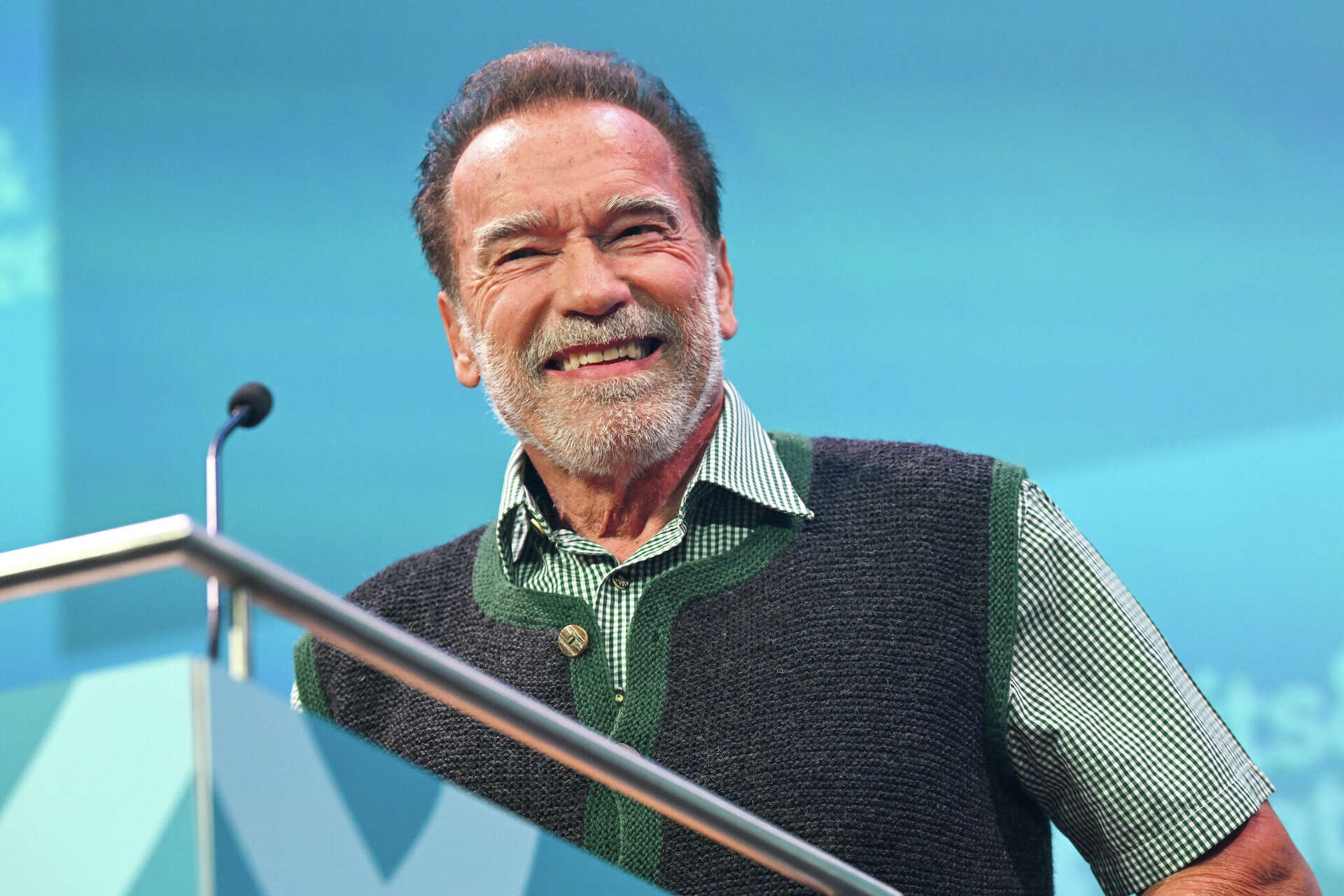
No, Arnold Schwarzenegger is not German. He was born in Thal, Austria, on July 30, 1947, making him Austrian by birth. While he is a native speaker of the German language, he has never held German citizenship. In 1983, he became a naturalized citizen of the United States and currently maintains dual Austrian-American citizenship.
The Geographic and Cultural Origins of the "Austrian Oak"
To understand why the question of Arnold Schwarzenegger's nationality persists into 2026, one must look at the specific geography of his upbringing. Schwarzenegger was born in the village of Thal, which borders the Styrian capital of Graz in south-central Austria. This region is culturally and historically distinct from Germany, despite sharing a common language.
Growing up in post-World War II Austria, Schwarzenegger lived in a country that was re-establishing its own national identity independent of Germany following the end of the Allied occupation. His father, Gustav Schwarzenegger, was a local police chief, and the family lived in a modest environment that emphasized traditional Austrian values. Schwarzenegger’s early identification with his "Styrian" roots remains a cornerstone of his public persona; he is frequently referred to as the "Austrian Oak" (or Die Steirische Eiche), a nickname that explicitly honors his birth province.
The distinction between being Austrian and being German is significant in European geopolitics. While the two nations share deep historical ties and the German language, they are sovereign states with different political systems, traditions, and national characters. Schwarzenegger has consistently championed his Austrian heritage, often returning to Graz to support local initiatives and maintaining a museum dedicated to his life in his childhood home in Thal.
The Linguistic Connection: Why People Mistake Him for German
The primary reason for the persistent misconception that Arnold Schwarzenegger is German is linguistic. As of 2026, he remains the most famous German-speaking individual in global pop culture history. For many English speakers, the "German accent" is synonymous with the specific cadence and phonetic structure of Schwarzenegger’s voice.
However, linguists and native speakers distinguish between "High German" (standard German) and the Austrian dialects. Schwarzenegger speaks with a distinct Styrian accent (Steirisch), which features softer vowels and different rhythmic patterns than the dialects found in Northern or Central Germany. In his early Hollywood career, including his breakout role in Hercules in New York (1970), his accent was considered so thick that his lines were actually dubbed by an American actor.
By the time he achieved superstardom in the 1980s with The Terminator and Conan the Barbarian, his accent became a trademark. Because the international audience often generalizes the German language as belonging strictly to Germany, the nuance of his Austrian origin was frequently lost. Furthermore, in the 1970s and 80s, American media often used the term "German" as a catch-all for any individual from the DACH region (Germany, Austria, Switzerland), further embedding the error in the public consciousness.
The Path to American Citizenship
Arnold Schwarzenegger moved to the United States in September 1968 at the age of 21. His move was motivated by his ambition to become the greatest bodybuilder in the world and to break into the American film industry. Despite his rapid success in fitness, his legal status remained that of a resident alien for many years.
His journey toward U.S. citizenship culminated on September 16, 1983. Becoming an American citizen was a pivotal moment that he has frequently described as one of the proudest days of his life. Citizenship was a legal prerequisite for his eventual transition into American politics, as only U.S. citizens can hold public office in the United States.
The naturalization process required Schwarzenegger to demonstrate proficiency in English, a knowledge of U.S. history and government, and a commitment to the U.S. Constitution. His 1983 ceremony at the Shrine Auditorium in Los Angeles marked his formal entry into the American electorate, though he remained ineligible to run for the presidency because the U.S. Constitution requires the President to be a "natural-born citizen."
The Legal Nuance of Dual Citizenship
One of the most complex aspects of Schwarzenegger's nationality is his dual citizenship. Under standard Austrian law, an Austrian citizen who voluntarily acquires foreign citizenship usually loses their Austrian nationality automatically. However, Schwarzenegger requested a special exemption to maintain his Austrian passport alongside his new American citizenship.
In 1983, the Austrian government granted this request, citing his significant contributions to the image of Austria abroad and his status as a "great son of the province of Styria." This was a rare exception at the time, as Austria generally discourages dual nationality. This legal status allows him to travel freely within the European Union as an EU citizen while exercising all the rights of a U.S. citizen, including the right to vote and hold office in California.
This dual identity was particularly relevant during his tenure as the 38th Governor of California (2003–2011). While he was the "Governator" of an American state, he was also technically a citizen of a foreign nation, a fact that occasionally drew comment from political analysts but never hindered his legal ability to govern.
Comparing Identity: Austria vs. Germany vs. USA
To clarify the differences in Schwarzenegger's various associations, the following table breaks down his relationship with each entity as of 2026.
| Feature | Austria | Germany | United States |
|---|---|---|---|
| Status | Citizen (by birth) | Non-citizen | Citizen (naturalized 1983) |
| Primary Identity | Cultural & Ethnic Heritage | Linguistic Connection only | Civic & Political Identity |
| Language | Native (Austrian dialect) | Native (Standard German) | Fluent (English) |
| Residency | Occasional / Visitor | Visitor | Permanent (since 1968) |
| Political Office | Ineligible (as US Governor) | No standing | Governor of CA (2003-2011) |
| Nickname | "The Austrian Oak" | N/A | "The Governator" |
The "German" Label in Pop Culture and Marketing
The misidentification of Schwarzenegger as German wasn't always accidental; sometimes it was a byproduct of marketing and historical context. In the late 20th century, Hollywood studios often simplified character backstories. If a character had a Central European accent, they were often written as "German" to avoid explaining the nuances of Austrian geography to a domestic audience.
Furthermore, Schwarzenegger’s career began in the world of professional bodybuilding, which had a massive following in Germany. Many of his early competitions took place in German cities like Munich, where he lived and trained for a short period before moving to London and then California. His time in Munich is a key chapter in his biography, but it was a transient phase of his career rather than a change in nationality.
In 2026, looking back at his filmography, we see that Schwarzenegger rarely played characters who were explicitly Austrian. From the Russian officer in Red Heat to the futuristic cyborg in The Terminator, his accent was used as a tool for "otherness" rather than a specific marker of Austrian nationality. This cinematic ambiguity contributed significantly to the general public's confusion.
Historical Context: Why the Distinction Matters
The distinction between being Austrian and German is not merely a matter of trivia; it is rooted in the complex history of Central Europe. For much of the 19th century, Austria and Germany were rivals for dominance over the German-speaking world. The unification of Germany in 1871 excluded Austria, cementing the two as separate political entities.
The most sensitive period of this relationship occurred between 1938 and 1945, when Nazi Germany annexed Austria (the Anschluss). During this time, Austrians were technically German citizens. However, after World War II, the Republic of Austria was restored, and the legal and cultural separation was reinstated. Born in 1947, Schwarzenegger was part of the first generation of the "New Austria," a generation raised with a strong emphasis on a national identity separate from the German state.
By maintaining his Austrian citizenship, Schwarzenegger has honored this post-war independence. He has often spoken about the "Austrian dream" of his youth, which was defined by the desire to escape the limitations of a small, landlocked country to find success on the world stage—a narrative that is uniquely Austrian rather than German.
Frequently Asked Questions
Does Arnold Schwarzenegger have a German passport?
No, Arnold Schwarzenegger does not have a German passport. He holds two passports: one from the United States and one from Austria. He has never been a citizen of the Federal Republic of Germany.
Why is Arnold Schwarzenegger called the "Austrian Oak"?
He earned the nickname "The Austrian Oak" during his bodybuilding career. "Oak" referred to his massive, sturdy physique, and "Austrian" referred to his home country. It was a way to distinguish him from other competitors like Lou Ferrigno or Sergio Oliva.
Can Arnold Schwarzenegger speak German fluently?
Yes, German is his first language. He is completely fluent in standard High German and his native Styrian dialect. He frequently gives interviews in German when visiting Europe or speaking with international media outlets like Deutsche Welle or Austrian national broadcaster ORF.
Did Arnold Schwarzenegger serve in the German army?
No, he served in the Austrian Army. In 1965, he completed his required one year of service in the Austrian Armed Forces (Bundesheer). It was during this time that he famously went AWOL to compete in and win the Junior Mr. Europe contest in Stuttgart, Germany.
Is there a Schwarzenegger Museum in Germany?
No, the official Arnold Schwarzenegger Museum is located in his birthplace of Thal, Austria. It is housed in the former schoolhouse where he grew up and contains memorabilia from his bodybuilding, acting, and political careers.
Why did he choose to become a U.S. citizen?
Schwarzenegger sought U.S. citizenship to fully integrate into American society, participate in the democratic process, and fulfill his political ambitions. He has frequently stated that the United States gave him the opportunities that allowed him to achieve his "American Dream," and he wanted to give back through public service.
Final Recommendation for Fact-Checking
When verifying the nationality of public figures like Arnold Schwarzenegger, it is essential to distinguish between ethnicity, language, and citizenship. While Schwarzenegger is ethnically Central European and a native German speaker, his legal citizenship is strictly limited to Austria and the United States. For researchers and fans in 2026, the most reliable sources for his current status remain his official biographies, the U.S. National Archives for naturalization records, and the official state records of the Republic of Austria. If you are citing his heritage in a formal or academic context, always use the term "Austrian-American" to accurately reflect his dual status.