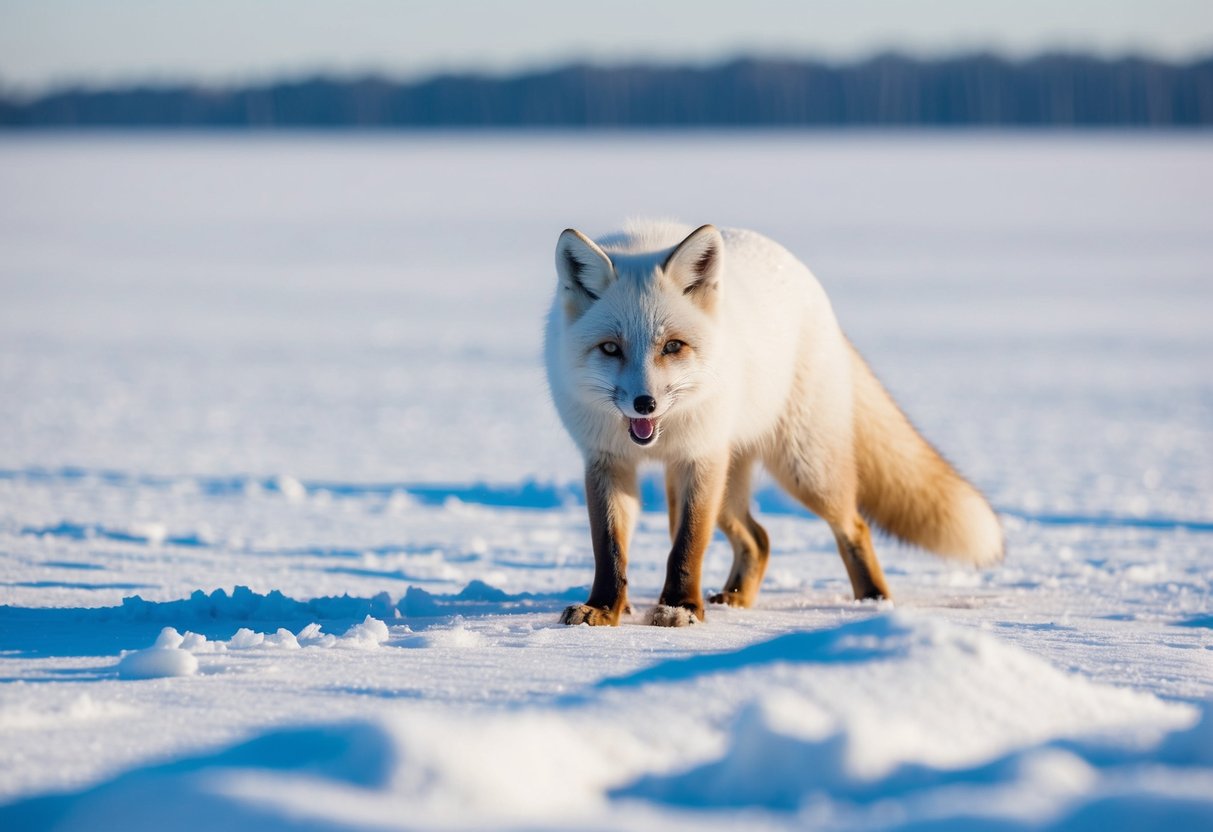
The Arctic fox (Vulpes lagopus) is a biological masterpiece of evolution, specifically engineered to thrive in the Earth’s most inhospitable circumpolar environments. As of 2026, these resilient canids remain the sentinels of the North, but their survival is increasingly dictated by a rapidly shifting climate that alters their habitat, food security, and competitive standing within the tundra ecosystem.
The Arctic fox is uniquely adapted to the extreme cold of the circumpolar North, utilizing specialized multi-layered fur and physiological heat-exchange mechanisms to survive temperatures that frequently drop below -50°C. However, as of 2026, rapid climate shifts are compressing their traditional habitat, increasing competition with encroaching red foxes, and disrupting the cyclic prey populations—specifically lemmings—that are vital for their reproductive success.
The Arctic Biome: A Climate of Extremes
To understand the Arctic fox, one must first understand the climate it calls home. The Arctic tundra is characterized by a "Type ET" climate under the Köppen classification system. This environment is defined by its lack of a true summer; even in the warmest months, the average temperature rarely exceeds 10°C (50°F).
In 2026, the Arctic continues to warm at nearly four times the global average, a phenomenon known as Arctic amplification. This has profound implications for the physical landscape. The permafrost—ground that remains frozen for two or more consecutive years—serves as the foundation for Arctic fox dens. As these layers thaw, traditional denning sites, some of which have been used for centuries, are becoming unstable or prone to flooding.
The seasonality of the Arctic climate dictates every aspect of the fox's life. Winter brings months of total darkness (polar night) and extreme wind chills, while summer offers a brief, intense period of 24-hour sunlight (midnight sun) and a surge in biological productivity. The Arctic fox has developed a suite of biological "tools" to navigate these extremes, but the narrowing window of "deep winter" is beginning to challenge these evolutionary advantages.
Morphological Adaptations to Sub-Zero Climates
The Arctic fox is a study in biological efficiency. Every aspect of its physical form is designed to minimize heat loss, a necessity when the gradient between the animal's internal body temperature and the external environment can exceed 80 degrees Celsius.
The Fur: A Triple-Layered Barrier
The Arctic fox possesses the warmest pelt of any mammal found in the Arctic. Its fur is dense and multi-layered, consisting of a thick, woolly undercoat and longer guard hairs. In winter, the fur's thickness increases by nearly 200%, providing such effective insulation that the fox does not need to increase its metabolic rate to stay warm until temperatures drop below -50°C (-58°F). This "lower critical temperature" is among the lowest recorded in the animal kingdom.
Allen’s Rule and Surface Area
Following Allen’s Rule—which states that animals in colder climates evolve shorter limbs and appendages to minimize heat loss—the Arctic fox has a notably compact frame. Its ears are small and rounded, its muzzle is short, and its legs are relatively stubby compared to its southern cousin, the red fox. By reducing the surface area-to-volume ratio, the fox retains its core body heat more effectively.
Counter-Current Heat Exchange
The fox utilizes a sophisticated physiological mechanism in its paws known as counter-current heat exchange. Warm arterial blood flowing down to the paws passes close to the cool venous blood returning to the heart. This allows the outgoing blood to pre-warm the returning blood while cooling the blood reaching the extremities. This prevents the paws from freezing while ensuring that the animal's core remains warm, even when standing on ice for extended periods.
The Role of Color Morphs in Climate Camouflage
Arctic foxes exhibit two distinct color morphs: "white" and "blue." These variations are not separate species but are instead adaptations to specific micro-climates and terrains within the Arctic circle.
- The White Morph: The most common variety, these foxes turn pure white in the winter to blend with the snow-covered tundra. In the summer, they shed this coat for a brownish-gray fur that matches the rocks and vegetation.
- The Blue Morph: Comprising about 1% to 3% of the total population (though much higher in coastal areas like Iceland and the Aleutian Islands), blue foxes are a dark charcoal or bluish-gray year-round. This morph is an adaptation to coastal climates where snow cover is less consistent and the dark volcanic sand or rocky cliffs provide better concealment.
As of 2026, researchers are monitoring how the reduction in the duration of snow cover affects the survival rates of the white morph. If the "brown" summer landscape arrives earlier and the snow melts faster, white-coated foxes become highly visible to predators like golden eagles and polar bears, a phenomenon known as "camouflage mismatch."
Behavioral Strategies for Survival
Climate resilience is not just physical; it is behavioral. The Arctic fox has mastered the art of energy conservation and resource management.
Denning and Thermal Refugia
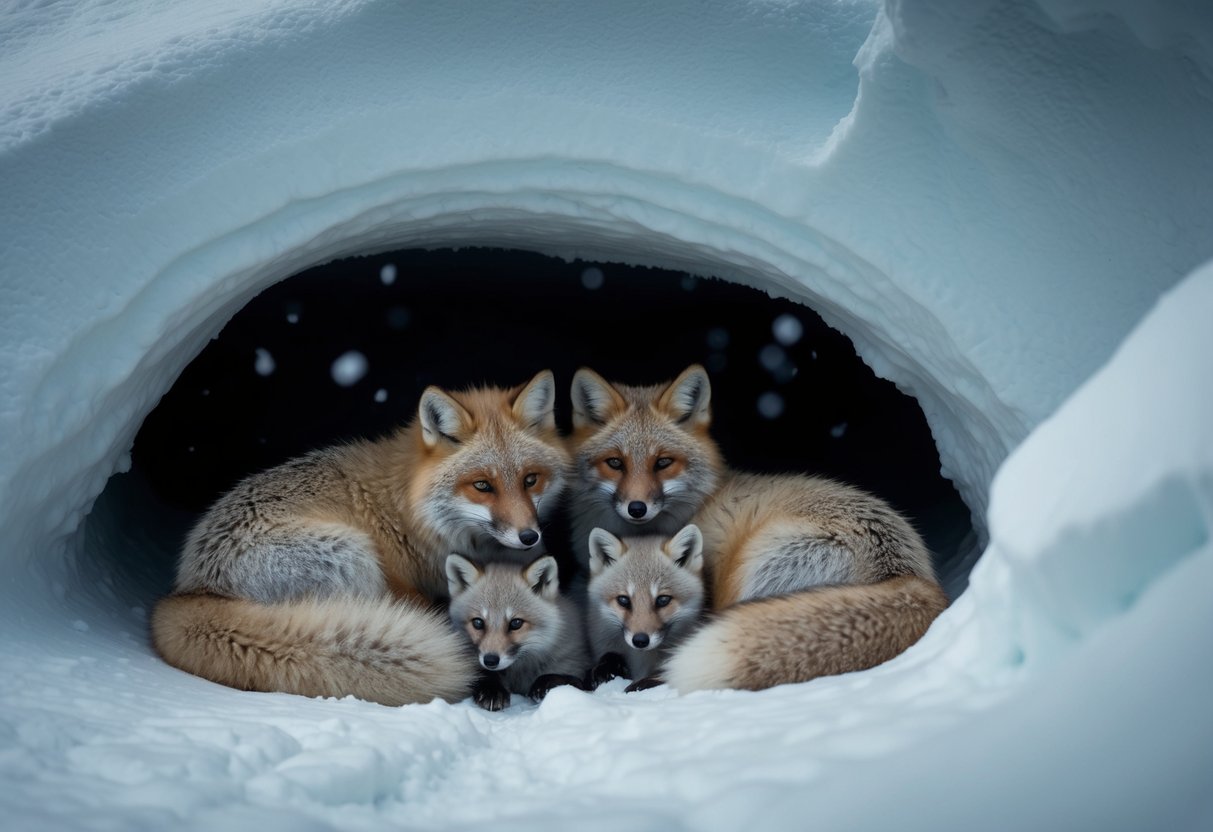
Foxes utilize complex underground tunnel systems known as dens. These dens are often located on eskers (ridges of sand and gravel) or banks where the soil is slightly easier to excavate. In the peak of winter, the temperature inside a snow-covered den can be significantly higher than the outside air, providing a critical thermal refuge. Some dens are incredibly ancient; carbon dating of organic material in certain Siberian dens has shown they have been occupied intermittently for over 1,000 years.
Food Caching and Scavenging
The Arctic climate is one of "feast or famine." During the summer, when lemmings and ground squirrels are abundant, the Arctic fox caches surplus food in the permafrost—essentially a natural freezer. This stored energy is vital for survival during the lean winter months.
In the high Arctic, foxes often become "marine" scavengers. They follow polar bears onto the sea ice, scavenging the remains of seal kills. As sea ice extent reaches record lows in 2026, this traditional foraging strategy is becoming increasingly dangerous and less reliable, forcing foxes to stay inland where food may be scarcer.
The "Red Fox Invasion": A Climate-Driven Competition
Perhaps the most significant threat to the Arctic fox in 2026 is the northward expansion of the Red Fox (Vulpes vulpes). Traditionally, the red fox was limited by its inability to survive the extreme cold and lack of food in the high Arctic. However, as the climate warms and the "borealization" of the tundra occurs—where shrubs and trees move North—the red fox is moving into Arctic fox territory.
The red fox is roughly 25% larger than the Arctic fox and is a dominant competitor. Red foxes are known to kill Arctic foxes, take over their dens, and out-compete them for limited food resources. This "squeezing" of the Arctic fox population toward the northernmost fringes of the continent is a direct consequence of a warming climate.
| Feature | Arctic Fox (Vulpes lagopus) | Red Fox (Vulpes vulpes) |
|---|---|---|
| Average Weight | 3 - 4 kg (6.6 - 8.8 lbs) | 5 - 7 kg (11 - 15 lbs) |
| Lower Critical Temp | -50°C (-58°F) | Approx. -13°C (8°F) |
| Camouflage | Seasonal (White/Brown) | Constant (Red/Orange) |
| Preferred Habitat | Treeless Tundra/Sea Ice | Forest/Edge Habitats |
| Current Trend (2026) | Range contracting Northward | Range expanding Northward |
| Dietary Focus | Specialist (Lemmings/Voles) | Generalist (Rodents, birds, fruit, waste) |
Climate Change and the Lemming Cycle Disruption
The Arctic fox is a "boom and bust" breeder, with its reproductive success tied almost exclusively to the population of lemmings. Historically, lemming populations peaked every three to four years, leading to "fox years" where litters could reach up to 18 pups.
However, the changing Arctic climate is disrupting these cycles. Lemmings require a stable, deep layer of sub-nivean (under-snow) space to survive the winter and reproduce. In 2026, the Arctic is experiencing more "rain-on-snow" events. When rain falls on snow and then freezes, it creates a thick layer of ice on the ground. This ice crust prevents lemmings from accessing the vegetation below and destroys the insulating properties of the snowpack, leading to massive lemming die-offs. Without these peaks in prey, Arctic fox populations in many regions are failing to produce large litters, leading to a gradual decline in population density.
Conservation Status and Efforts in 2026
While the global population of Arctic foxes is currently classified as "Least Concern" by the IUCN, this status masks the precarious nature of specific subpopulations.
- Fennoscandia: In Norway, Sweden, and Finland, the Arctic fox is critically endangered. Intensive conservation programs, including supplemental feeding and red fox culling, have been necessary to prevent local extinction.
- The Commandorskie Islands: Isolated populations face threats from introduced diseases (such as mange) which can spread more easily as the climate permits different insect vectors to survive further North.
- North America and Russia: Populations remain relatively stable in the high Arctic, but the southern boundary of their range is retreating.
In 2026, international cooperation through the Arctic Council and the Conservation of Arctic Flora and Fauna (CAFF) working group has focused on creating "climate corridors"—protected areas that allow species to migrate northward as their traditional habitats become unsuitable. Monitoring efforts now use advanced satellite imagery and AI-driven camera traps to track fox movements and denning success in real-time across the vast Arctic landscape.
Frequently Asked Questions
Can Arctic foxes survive in warm climates?
Arctic foxes are highly specialized for the cold and do not fare well in consistently warm climates. While they can tolerate mild summer temperatures, their high-insulation fur and physiological adaptations make them prone to heat stress if moved to temperate environments. In 2026, "heat waves" in the Arctic (temperatures exceeding 20°C) have been observed to cause behavioral changes, such as foxes spending significantly more time underground to stay cool.
How does melting sea ice affect the Arctic fox?
For many populations, sea ice is a winter hunting ground. Foxes travel hundreds of kilometers onto the ice to scavenge from polar bear kills. With the reduction of multi-year sea ice, foxes are restricted to land-based foraging. This increases competition for land-based prey and isolates island populations, leading to reduced genetic diversity as the "ice bridges" between landmasses disappear.
Is the Arctic fox's fur still used in the fur trade in 2026?
The commercial fur trade has declined significantly over the past several decades due to shifting consumer ethics and increased regulation. While limited indigenous subsistence hunting continues in some regions (protected under international law to preserve cultural heritage), the primary threat to the species is no longer hunting, but habitat loss and climate-induced ecological shifts.
What is the life expectancy of an Arctic fox in the wild?
In the harsh Arctic environment, the average lifespan of an Arctic fox is relatively short, typically 3 to 6 years. While they are capable of living longer in captivity, the combination of extreme climate, predator pressure from wolves and polar bears, and the volatility of food sources results in high mortality rates, particularly for juveniles during their first winter.
Do Arctic foxes hibernate?
No, Arctic foxes do not hibernate. They remain active throughout the winter. To survive, they rely on their extreme insulation, food caches, and the ability to reduce their heart rate and metabolic rate slightly to conserve energy during periods of inactivity, but they must still forage or scavenge to maintain their energy reserves.
Recommended Actions for Conservation Support
For those looking to contribute to the preservation of the Arctic fox and its climate, the following actions are prioritized in 2026:
- Support Climate Mitigation: The primary threat is the loss of the tundra ecosystem. Supporting policies that reduce global carbon emissions remains the most effective long-term strategy for preserving the Arctic climate.
- Fund Sub-Nivean Research: Organizations such as the Arctic Fox Project require funding to study lemming dynamics and the impacts of "rain-on-snow" events. Understanding prey stability is key to predicting fox population crashes.
- Advocate for Habitat Connectivity: Supporting the creation of trans-boundary protected areas helps ensure that foxes can migrate as the climate shifts without being blocked by industrial development or human infrastructure.
- Promote Disease Surveillance: As the climate warms, pathogens once restricted to the south are moving North. Supporting veterinary monitoring of wild populations helps prevent devastating outbreaks of rabies and mange.
The Arctic fox remains a symbol of the North’s wild beauty and resilience. Its ability to endure the planet's harshest climate is legendary, but its future now depends on the global community's ability to stabilize the very climate that shaped its evolution.