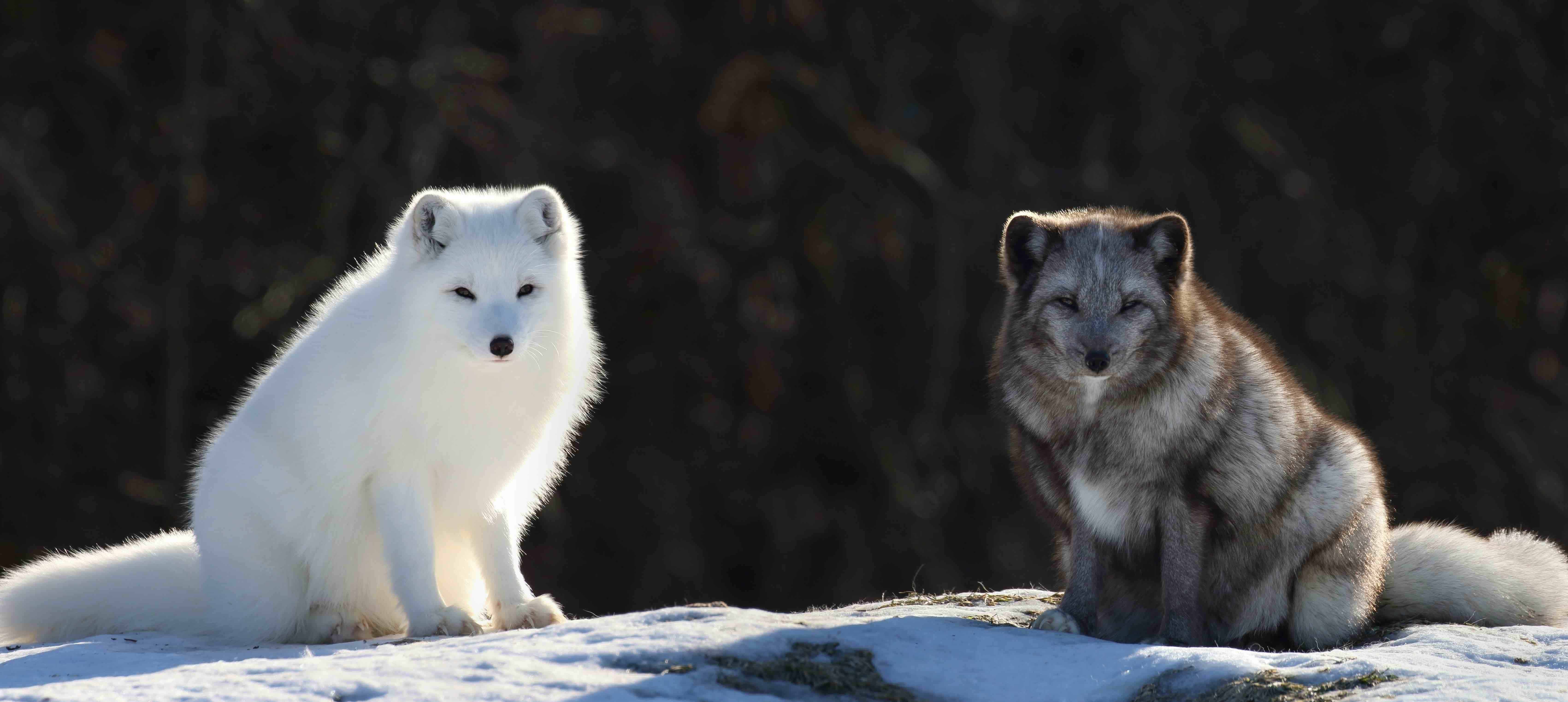
The Arctic fox (Vulpes lagopus) inherits its coat color through two distinct genetic pathways known as the "White" and "Blue" morphs. These traits are governed by specific alleles that determine the production and distribution of melanin. While the White morph transitions from a brown summer coat to a snowy winter coat, the Blue morph remains a charcoal or blue-gray color year-round, representing a specialized adaptation to different Arctic environments.
The Genetic Foundation of Color Morphs
The inheritance of color in the Arctic fox is a classic example of Mendelian genetics influenced by specific loci that regulate pigmentation. In the scientific community, as of 2026, it is well-established that the two primary phenotypes—the White morph and the Blue morph—are the result of allelic variation. Understanding how these traits are passed from parents to offspring requires a look at the molecular mechanisms of the MC1R (Melanocortin 1 receptor) gene and other associated pigment-control regions.
In Vulpes lagopus, the Blue morph is typically the dominant trait, while the White morph is recessive. This means that a fox inheriting even one copy of the Blue allele will express the Blue phenotype. Conversely, for a fox to display the White morph, it must be homozygous for the recessive White allele (inheriting it from both parents). This genetic hierarchy explains why the Blue morph can persist in small numbers within predominantly white populations, as the gene can be carried "silently" by heterozygous individuals.
The biochemical basis for these colors lies in the production of two types of melanin: eumelanin (black/brown pigment) and pheomelanin (red/yellow pigment). The inherited traits dictate the ratio and intensity of these pigments. In the White morph, the genetic "program" allows for a near-total cessation of pigment production in the winter fur, whereas the Blue morph maintains high levels of eumelanin throughout the year.
The White Morph: A Masterclass in Seasonal Camouflage
The White morph is the most common phenotype across the vast majority of the Arctic fox's range, particularly in inland and continental regions. The inheritance of the White trait does not merely provide a static color but rather a high degree of phenotypic plasticity—the ability of one genotype to produce more than one phenotype when exposed to different environments.
The Summer Transition
In the summer months, a fox carrying the White morph genes displays a coat that is brown, grayish-brown, or even yellowish on the back and limbs, with a lighter cream or white underbelly. This inherited trait is essential for camouflage against the rocky, muddy, and vegetated tundra that emerges when the snow melts. The transition is triggered not by temperature, but by the photoperiod (the length of daylight). As days shorten in the autumn, hormonal signals (specifically involving melatonin and prolactin) initiate the growth of the winter coat.
The Winter Transformation
The true characteristic of the inherited White morph is the stunning winter transformation. The brown summer fur is shed and replaced by a thick, multi-layered white coat. This white fur is almost entirely devoid of pigment; the hair shafts are hollow and filled with air, which provides superior insulation against the sub-zero temperatures of the high Arctic. This inherited ability to "turn off" pigment production provides nearly perfect crypsis (camouflage) in snow-covered landscapes, protecting the fox from predators like polar bears and allowing it to sneak up on prey like lemmings.
The Blue Morph: Coastal Specialization and Dominance
The Blue morph is a striking deviation from the typical image of the "snow fox." Despite the name, the fur is not literally blue; it ranges from a dark charcoal gray to a pale bluish-brown or "maltese" color. The inheritance of the Blue trait is most prevalent in coastal areas and on islands, such as parts of Iceland, the Aleutian Islands, and the Pribilof Islands.
Why the Blue Morph Persists
The persistence of the Blue morph is a prime example of natural selection favoring an inherited trait in specific niches. In coastal environments, the ground is often snow-free for longer periods, or the landscape is dominated by dark volcanic rocks, cliffs, and bird colonies. In these settings, a pure white fox would be highly visible to both prey and predators. The inherited Blue trait allows the fox to blend into the darker, maritime environment year-round.
Unlike the White morph, the Blue morph undergoes a much less dramatic seasonal change. In the summer, the coat is often a dark, chocolate brown. In the winter, it may lighten slightly to a steel-gray or charcoal, but it never turns white. Because the Blue allele is dominant, it can spread rapidly through a population if the environmental conditions favor it. Genomic studies reviewed in 2026 suggest that the Blue morph may have originated as a mutation that proved highly beneficial in ice-free coastal refugia during previous glacial periods.
Evolutionary Selection and Geographic Distribution
The geographic distribution of these inherited color traits is not random; it is the result of thousands of years of evolutionary pressure. The ratio of White to Blue morphs in any given population is a direct reflection of the local ecology.
- Inland/Lichen Tundra: These areas experience long, consistent snow cover. The White morph is overwhelmingly dominant here (often making up over 99% of the population). The recessive nature of the White gene ensures that it remains the stable "norm" unless a significant environmental shift occurs.
- Coastal/Maritime Environments: In areas like Iceland, where the climate is moderated by the ocean and snow cover is sporadic, the Blue morph can account for up to 70-80% of the population. The dominance of the Blue allele, combined with its high survival value in these habitats, maintains its prevalence.
The inheritance of these traits is also linked to survival rates. If a "White" fox is born into a dark, coastal habitat, it is less likely to survive to reproductive age, thereby reducing the frequency of the recessive White allele in that specific gene pool. This is the essence of adaptive radiation within the species.
Molecular Mechanisms and Pigment Regulation
At the molecular level, the inherited color traits are managed by the complex interaction of genes that control the "pigment switch." The MC1R gene is the primary gatekeeper. When this receptor is activated, the melanocytes produce eumelanin (dark pigment). When it is inhibited or mutated, the pathway may shift toward pheomelanin or no pigment at all.
In the Arctic fox, recent research highlighted in 2026 indicates that the Blue morph is associated with a specific mutation in the MC1R gene that keeps the receptor in a "permanently active" state, or at least prevents the seasonal "shutdown" of pigment production. This differs from the White morph, where the genetic machinery is finely tuned to respond to external stimuli (light levels), allowing the fox to toggle its pigment production on and off according to the season.
Comparing Inherited Traits: White vs. Blue Morphs
| Feature | White Morph (Recessive) | Blue Morph (Dominant) |
|---|---|---|
| Winter Phenotype | Pure white, hollow hair shafts. | Charcoal, steel-gray, or bluish-brown. |
| Summer Phenotype | Brown/gray back with light belly. | Dark chocolate or charcoal brown. |
| Primary Habitat | Inland tundra, high-latitude snowfields. | Coastal cliffs, islands, ice-free zones. |
| Camouflage Strategy | High-contrast seasonal switching. | Year-round blending with dark terrain. |
| Genetic Inheritance | Homozygous recessive (ww). | Dominant (BB or Bw). |
| Geographic Density | Dominant in 95% of total range. | Localized to specific maritime niches. |
The Role of Environmental Epigenetics
While the "blueprint" for color is inherited, the expression of that color involves a complex interplay between genetics and the environment. This field, known as epigenetics, looks at how external factors can influence gene activity. In the case of the Arctic fox, the inheritance of the "White" trait includes the inheritance of a biological clock that is sensitive to sunlight.
If an Arctic fox is moved from a high-latitude environment to a more temperate one, its inherited genes will still attempt to trigger the white winter coat based on light levels, even if there is no snow on the ground. This demonstrates that the color trait is deeply hard-coded and not a direct reaction to the presence of snow itself. However, the timing and density of the fur growth can be slightly modulated by the health and nutritional status of the fox, which are also influenced by inherited metabolic efficiencies.
Inheritance and Interspecies Interaction
The Arctic fox does not exist in a vacuum. Its inherited color traits also play a role in its interactions with the Red fox (Vulpes vulpes). As the climate changes in 2026, Red foxes are moving further north into Arctic fox territory. Red foxes are larger and more aggressive.
The inherited color of the Arctic fox, while perfect for the tundra, offers no protection against the Red fox. In fact, as snow cover becomes less predictable, the White morph's inherited trait is becoming a liability in some regions. This is leading to a shift in population genetics where, in some southern "hybrid" zones, the frequency of different color alleles is being tested by new selective pressures. Interestingly, there is no evidence of widespread hybridization resulting in "intermediate" colors; the Mendelian nature of the color morphs generally results in a fox being clearly either "White" or "Blue."
Frequently Asked Questions
Can a White Arctic fox have Blue offspring?
Yes, but only if both White parents carry the Blue gene, which is impossible because White is a recessive trait. If a fox is White, it must have two White alleles (ww). Therefore, two White foxes can only produce White offspring. However, a Blue fox (which could be Bw) mating with a White fox (ww) could produce both Blue and White offspring.
Is the Blue morph a different species?
No. The White and Blue morphs are the same species (Vulpes lagopus). They are simply different "color phases" or phenotypes, much like humans can have different hair colors while belonging to the same species. They interbreed freely where their ranges overlap.
Why is the Blue morph called "blue"?
The term "blue" is a traditional trapping and biological term used to describe the smoky, steel-gray, or maltese coloration of the fur. In certain light conditions, especially against snow or at dusk, the charcoal-colored fur can take on a distinct bluish cast.
Does the fur color affect the fox's personality or health?
There is no verified scientific evidence to suggest that the inherited color traits are linked to temperament. However, the Blue morph's coat is often slightly less insulating than the White morph's winter coat because the Blue fur contains more pigment granules, which can displace some of the insulating air pockets found in the hollow white hairs.
How does the fox "know" when to change color?
The fox doesn't "know" in a conscious sense. Its retina senses the change in daylight hours (photoperiod), which sends a signal to the pineal gland. This gland regulates hormones like melatonin, which in turn triggers the follicles to start growing the new seasonal coat. This response mechanism is itself an inherited trait.
Recommendation for Further Study
To gain a deeper understanding of Arctic fox inherited traits, students and researchers should focus on the genomic mapping of the MC1R and ASIP (Agouti Signaling Protein) genes. These are the primary regulators of the "pigment switch" in most mammals. Observing these foxes in their natural habitats—specifically comparing the inland populations of Scandinavia with the coastal populations of Iceland—provides a living laboratory for seeing these genetic traits in action. For those interested in the impact of global shifts, monitoring the "selection flip" where the White morph becomes less advantageous due to reduced snow cover is a critical area of study in 2026.