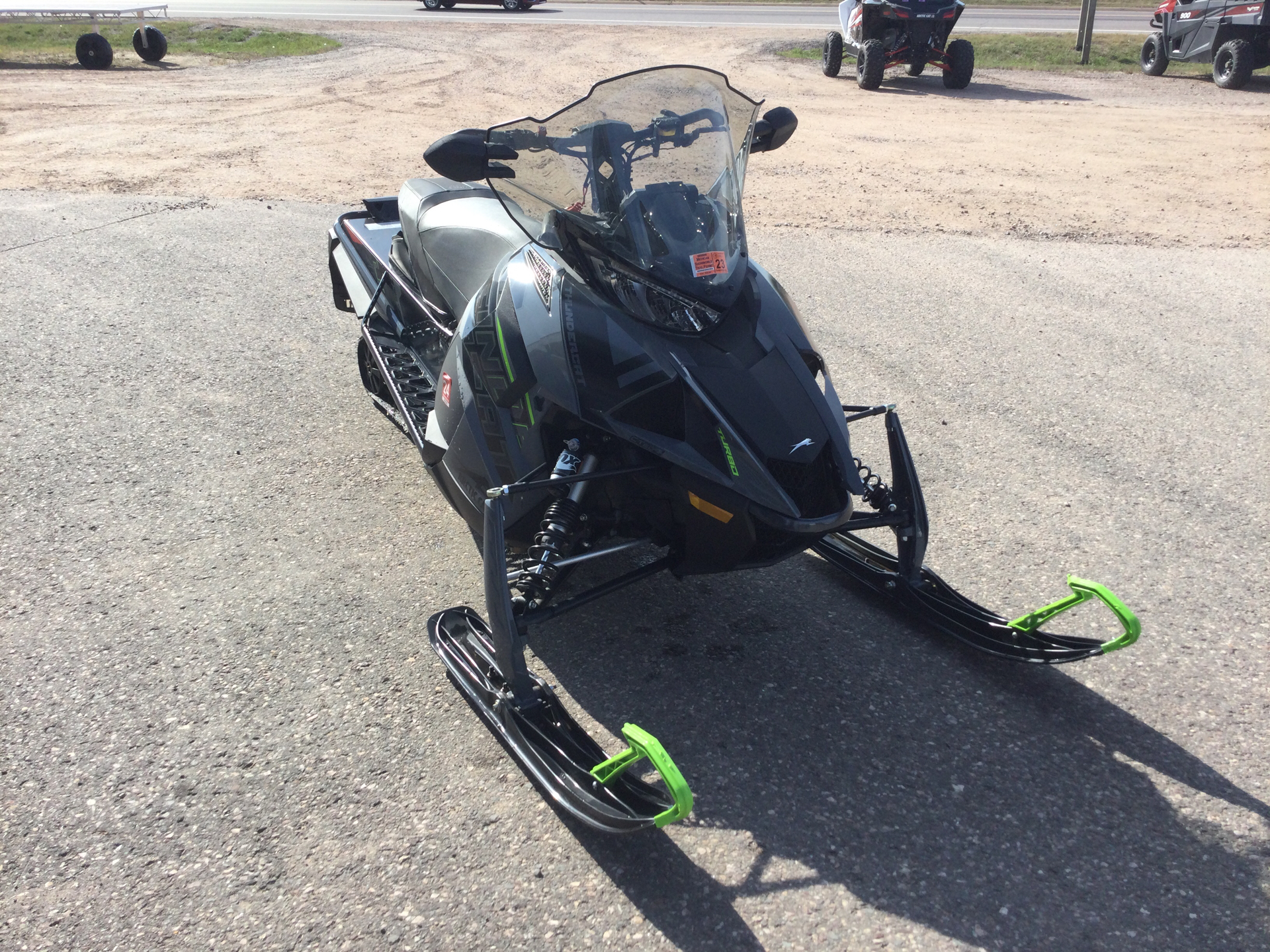
The Arctic Cat ZR 9000 Thundercat reaches a factory-limited top speed of approximately 100 to 110 mph (161–177 km/h) under optimal conditions. With aftermarket ECU tuning and clutching adjustments, this 200+ horsepower turbocharged snowmobile is capable of exceeding 125 mph (201 km/h) on hard-packed surfaces or ice.
The Engineering Behind the Speed: The 998cc Turbocharged Engine
The heart of the Arctic Cat ZR 9000 Thundercat’s performance is the C-TEC4 engine. Since its introduction in the 2017 model year, this power plant has defined the "hyper-sled" category. Manufactured by Yamaha and integrated into the Arctic Cat chassis, the engine is a 998cc, three-cylinder, four-stroke unit equipped with an intercooled turbocharger.
Turbocharger Mechanics and Efficiency
Unlike naturally aspirated engines that lose power as elevation increases, the Thundercat’s turbocharger maintains consistent manifold pressure. The system uses a sophisticated wastegate to manage boost, ensuring that the engine produces its rated 200 horsepower regardless of whether you are at sea level or in the high mountains. In 2026, this engine remains the gold standard for reliability in high-output snowmobile applications.
The intercooler plays a critical role in reaching top speeds. By cooling the compressed air before it enters the combustion chamber, it increases oxygen density, allowing for a more potent explosion when mixed with fuel. This thermal management is why the Thundercat can sustain high speeds over long distances on frozen lakes without suffering from heat soak as quickly as smaller-displacement engines.
Power-to-Weight Dynamics
While the Thundercat is a heavy machine compared to 600cc or 850cc two-stroke trail sleds, its power-to-weight ratio is optimized for top-end velocity rather than flickable agility in deep powder. The weight provides stability at 100+ mph, acting as a ballast that keeps the skis planted and the track engaged with the surface.
Factory Specifications vs. Real-World Speed Results
When discussing the top speed of the ZR 9000 Thundercat, it is vital to distinguish between "speedometer speed" and "GPS speed." Snowmobile speedometers are notoriously optimistic, often over-reporting actual velocity by 5% to 10% due to track spin and sensor calibration.
Stock Performance Limits
Out of the box, a 2026 Arctic Cat ZR 9000 Thundercat is geared and clutched for a balance of acceleration and top-end speed. On a long, flat stretch of hard-packed snow, most riders will see 102–105 mph on a calibrated GPS. On glare ice, where rolling resistance is minimized, that number can creep toward 110 mph.
The primary limiting factors for a stock Thundercat are:
- Electronic Governance: The ECU (Engine Control Unit) has safety parameters to prevent over-revving.
- Gearing: The physical gear ratio in the chaincase determines the maximum theoretical speed the track can spin at a specific engine RPM.
- Aerodynamics: At speeds above 90 mph, wind resistance becomes the primary obstacle. The Thundercat’s bodywork is designed to deflect wind around the rider, but the "frontal area" of a snowmobile is inherently un-aerodynamic.
Technical Specifications Overview (2026 Model Year)
| Feature | Specification |
|---|---|
| Engine Type | 998cc, 4-stroke, 3-cylinder Turbocharged |
| Horsepower | 200+ HP (Official), ~211 HP (Dyno Verified) |
| Drive Clutch | ADAPT CVT |
| Track Dimensions | 137" x 15" x 1.0" or 1.25" Ripsaw II |
| Front Suspension | ARS II with ATAC Adjustable On-the-Fly |
| Rear Suspension | SLIDE-ACTION with Tri-hub Rear Axle |
| Estimated Top Speed (Stock) | 105–110 MPH |
| Estimated Top Speed (Tuned) | 120–130+ MPH |
Factors That Influence Top Speed
Achieving the maximum possible velocity on a Thundercat isn't just about pinning the throttle; it requires a combination of environmental conditions and mechanical optimization.
Surface Conditions
The type of snow beneath the track is the most significant external variable.
- Deep Powder: Significant drag; top speeds may drop to 80–90 mph.
- Groomed Trail: Ideal for high-speed cruising, providing enough cooling for the sliders (hyfax) while allowing for 100+ mph runs.
- Ice: Offers the lowest rolling resistance but requires studs for traction. Without studs, the track will simply spin, and the sled will not accelerate efficiently.
Track Selection and Lug Height
The Thundercat usually comes with a 137-inch track. The lug height (the height of the rubber "paddles" on the track) dramatically affects top speed. A 1.0-inch lug height is superior for top speed because it has less wind resistance and less "folding" of the lugs at high speeds compared to a 1.5-inch or 2.0-inch track.
The ADAPT Clutch System
Introduced to improve response and longevity, the ADAPT clutch system in the Thundercat helps maintain the engine's power band. For top-speed runs, the clutching must be perfectly weighted to ensure the engine sits at its peak horsepower RPM (typically around 7,500–7,850 RPM for the 998 Turbo) without hitting the rev limiter.
Pushing the Limits: Aftermarket Modifications
For many Thundercat owners, "stock" is only the starting point. The 998cc engine has massive untapped potential because it is built to handle significantly more boost than the factory provides.
ECU Flashing and Tuning
Companies like Precision EFI or DynoJet offer "tunes" that rewrite the engine's software. By increasing boost pressure and optimizing fuel maps, these tunes can easily push the Thundercat from 200 hp to 240, 270, or even 300+ hp.
- Stage 1 Tune: Typically adds 30–40 hp and removes the electronic speed delimiters. This is the most common path to reaching 115–120 mph.
- Stage 2 and Beyond: Requires hardware changes, such as a high-flow exhaust and upgraded intake, pushing speeds toward the 130 mph mark.
Gearing Changes
To go faster than 120 mph, the physical gears in the chaincase usually need to be swapped. By installing a larger top gear or a smaller bottom gear, the "final drive" ratio is increased. While this reduces low-end "snap" and acceleration off the line, it allows the track to reach higher rotational velocities at the same engine RPM.
Studding for Traction and Safety
At 100+ mph, track spin is a major concern. High-speed runs on ice or hard-pack require a minimum of 192 studs (for a 137" track) to ensure that the power is actually being transferred to the ground. Furthermore, at these speeds, centrifugal force can cause the track to "balloon" or expand, which can lead to it hitting the tunnel if not properly tensioned.
Comparison with Market Rivals
In the hyper-sled category, the Arctic Cat ZR 9000 Thundercat competes primarily with the Yamaha Sidewinder and the Ski-Doo Mach Z.
Thundercat vs. Yamaha Sidewinder
Mechanically, these two sleds are nearly identical. They share the same engine and much of the chassis design. The differences lie in the suspension calibration and brand-specific features like Arctic Cat's ATAC system. In terms of top speed, they are virtually equal, with the winner usually being determined by who has the better-prepped track or the lighter rider.
Thundercat vs. Ski-Doo Mach Z
The Mach Z uses the Rotax 900 ACE Turbo R engine. While the Mach Z features sophisticated Launch Control and semi-active suspension, the Thundercat’s 998cc engine generally has a slight edge in raw top-end potential when both machines are modified. In stock form, they are separated by 1–3 mph, making them direct competitors in "lake racer" scenarios.
Suspension and Stability: The ATAC Advantage
Speed is useless without control. One of the reasons the Thundercat is a favorite for high-speed trail riding is the ATAC (Adaptive Terrains and Control) suspension system.
ATAC allows the rider to adjust the firmness of the Fox Zero iQS shocks on the fly via a thumb switch on the handlebars.
- Firm Setting: Crucial for top-speed runs. It minimizes chassis pitch and roll, keeping the sled flat and stable as it cuts through the air.
- Soft Setting: Ideal for stutter bumps on the trail, preventing rider fatigue.
The Electronic Power Steering (EPS) also plays a vital role at high speeds. It reduces the physical effort required to keep the skis pointed straight, which is particularly important when the front end gets "light" under heavy acceleration.
Safety Considerations for High-Speed Operation
Operating a snowmobile at speeds exceeding 100 mph carries inherent risks. As of 2026, safety technology has improved, but physics remains constant.
- Braking Distance: A snowmobile traveling at 110 mph covers approximately 161 feet per second. Stopping distances on snow are significantly longer than on asphalt. The Thundercat uses a high-performance hydraulic brake system, but it can still take several hundred feet to come to a complete stop from top speed.
- Ice Conditions: When performing high-speed runs on frozen lakes, ensure the ice is at least 12 inches thick and free of pressure ridges or hidden obstacles.
- Protective Gear: At these velocities, a full-face helmet, chest protector, and high-quality cold-weather gear are mandatory. Wind chill at 110 mph can cause frostbite in minutes if any skin is exposed.
- Mechanical Inspection: Before attempting a top-speed run, check the track tension, look for loose studs, and ensure the belt is in good condition. A belt failure at 100 mph can cause significant damage to the clutches and the side panels.
Troubleshooting Performance Issues
If a Thundercat is failing to hit its expected top speed, several common issues may be at play:
- Worn Drive Belt: A belt that has "thinned" out will not sit as high in the primary clutch, effectively lowering the gear ratio. Replace the belt every 1,000–1,500 miles on high-horsepower sleds.
- Boost Leaks: Check the silicone hoses connecting the turbo to the intercooler and the throttle bodies. Even a small leak can result in a loss of 10–15 horsepower.
- Old Fuel: Turbocharged engines are sensitive to octane. Using 87 or 89 octane fuel instead of the recommended 91+ can cause the ECU to pull timing to prevent engine knock, significantly reducing power.
- Slider Drag: If the hyfax (the plastic runners the track slides on) are worn or lack lubrication from snow, they create friction that acts like a brake.
Frequently Asked Questions
Does the Arctic Cat ZR 9000 Thundercat require premium fuel?
Yes, the 998cc turbocharged engine requires 91 octane or higher. Using lower-grade fuel can trigger the knock sensor, which causes the ECU to reduce boost and retard ignition timing to protect the engine, resulting in a noticeable drop in top speed and performance.
How does the Thundercat’s top speed compare to a 2-stroke 850?
A stock 850cc two-stroke typically tops out between 95 and 100 mph. While the 850 might be quicker from 0 to 60 mph due to its lighter weight, the Thundercat will inevitably pass it on the "big end" because of its superior horsepower and the consistent power delivery of the turbocharger.
Can the Thundercat be used for deep snow riding?
The Thundercat is primarily a trail and lake-racing machine. Its weight and 137-inch track with short lugs make it poorly suited for deep powder. It lacks the flotation and "flickability" required for technical mountain riding or boondocking.
Is the Thundercat's top speed electronically limited?
Yes, most modern Arctic Cat snowmobiles have a rev limiter in the ECU. While there isn't a "hard" speed governor like in a car, the combination of the RPM ceiling and the factory gear ratios creates a functional limit. Aftermarket tunes can raise these limits.
What is the life expectancy of the turbocharger?
The IHI turbo used in the ZR 9000 is extremely durable. With proper maintenance—specifically regular oil changes using high-quality synthetic oil—the turbocharger can easily last the life of the engine, often exceeding 10,000 miles.
Expert Recommendation for Speed Enthusiasts
If your goal is to achieve the highest possible top speed on an Arctic Cat ZR 9000 Thundercat, start with the basics: ensure you are running 91+ octane fuel, install a fresh drive belt, and use a 1.0-inch Ripsaw II track with at least 192 studs. For those looking to break the 120 mph barrier, an ECU flash from a reputable tuner is the most cost-effective modification. Always prioritize safety by verifying ice thickness and wearing appropriate protective equipment before attempting high-speed runs.