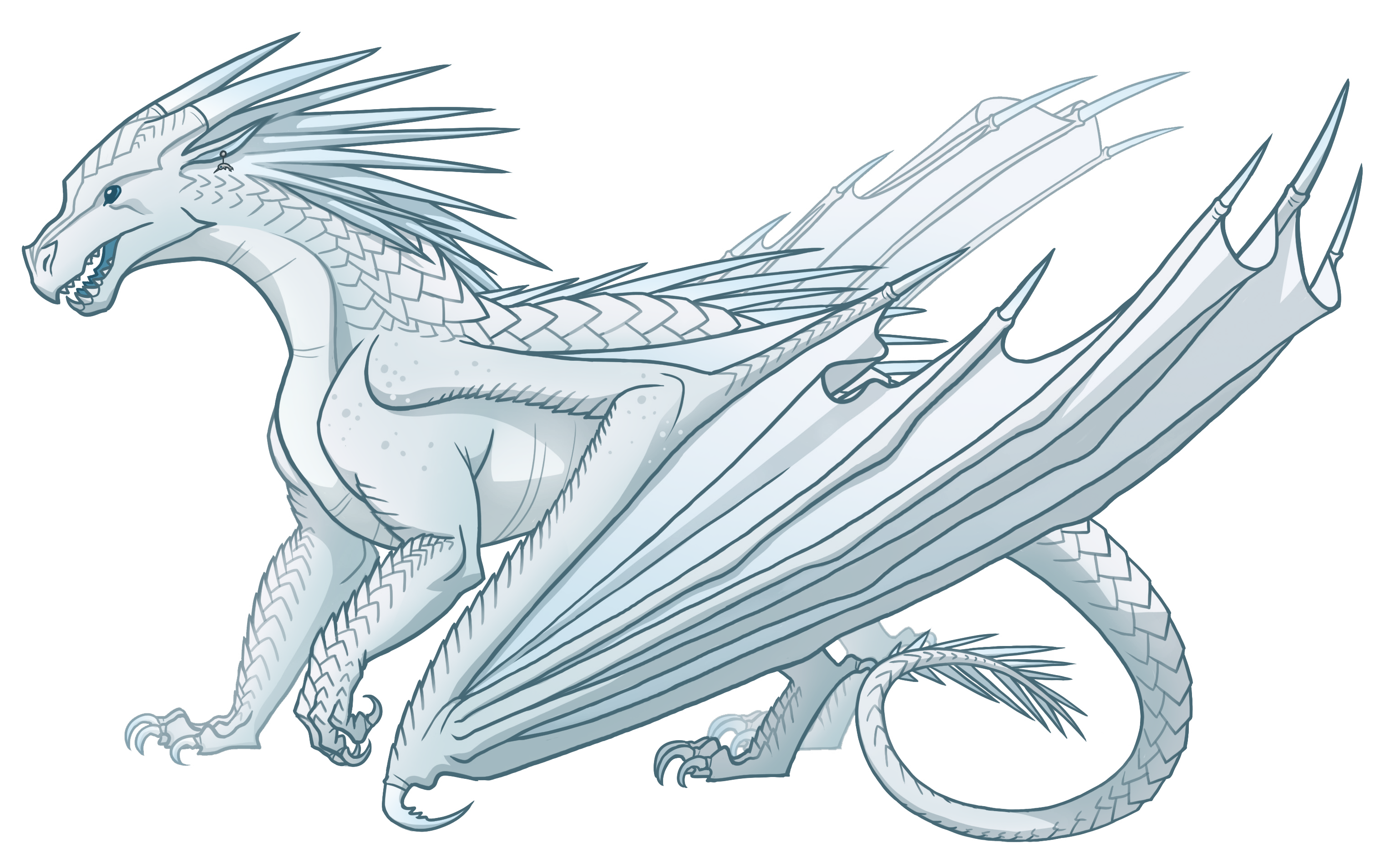
Prince Arctic is a foundational figure in the Wings of Fire legendarium, serving as the primary catalyst for the events in the prequel novel Legends: Darkstalker. An IceWing animus prince who defected to the NightWing tribe, his forbidden union with Foeslayer produced Darkstalker and Whiteout, fundamentally altering the course of dragon history for over two thousand years.
The Identity and Royal Origin of Prince Arctic
In the intricate hierarchy of the IceWing tribe, Prince Arctic occupied a position of immense prestige and agonizing pressure. Born into the royal family as the son of Queen Vigilance (or Queen Diamond, depending on the specific historical record being analyzed within the Legends timeline), Arctic was not merely a prince but a rare animus dragon. In IceWing culture, animus magic was viewed as a tribal resource to be strictly regulated through "The Gift of Order," a tradition ensuring that magic was used only once per generation for the benefit of the entire tribe.
Arctic’s early life was defined by the rigid structures of the IceWing Circles. The IceWings utilized a meritocratic social system where dragons were ranked from the First Circle down to the Seventh. As a prince and a biological "weapon" or "tool" for the tribe, Arctic was sequestered and monitored. This environment fostered a cold, detached personality, yet it also sowed the seeds of deep-seated resentment. His primary duty was to marry a high-ranking IceWing, such as Snowflake, to maintain the royal bloodline and the presence of magic within the tribe. However, the discovery of his magic and the weight of tribal expectations made him feel more like a prisoner than a royal.
The Forbidden Romance: Arctic and Foeslayer
The "Arctic phenomenon" began in earnest with a chance meeting between Arctic and a NightWing named Foeslayer. At the time, the IceWings and NightWings were not in an active state of war, but deep suspicions existed between the tribes. Foeslayer, a bold and charismatic dragon, represented everything the IceWing hierarchy lacked: spontaneity, warmth, and freedom.
Their romance is often analyzed by scholars of Pyrrhian history as a classic tragedy. To be with Foeslayer, Arctic committed the ultimate act of treason: he deserted the IceWing tribe. This event, known in IceWing history as the "Great Theft," was not just a personal desertion; it was the loss of the tribe’s only remaining animus gene. When Arctic fled with Foeslayer to the Night Kingdom, he took with him the future of IceWing magical supremacy.
This decision was the first domino in a series of events that would lead to the "War of SandWing Succession" millennia later. The IceWings never forgave the NightWings for "stealing" their prince, and the NightWings viewed Arctic as a valuable, albeit difficult, asset.
Animus Magic and the Psychological Toll
One of the most complex aspects of Arctic’s character is his relationship with his own magic. In the Wings of Fire universe, animus magic is often believed to "chip away" at a dragon’s soul. Whether this is a literal supernatural tax or a psychological erosion caused by the absolute power of magic is a subject of much debate among readers and characters alike.
For Arctic, the use of magic was a source of constant anxiety. Before leaving the Ice Kingdom, he had already used his magic to create the "Gift of Order" or other tribal artifacts. Once in the Night Kingdom, he was pressured by the NightWing Queen and even his own family to use his magic for their benefit.
Arctic's Key Enchantments
Arctic’s magic was characterized by its precision and, later, its cruelty. Some of his most notable enchantments included:
- The Earrings: Enchantments designed to protect his children or manipulate his surroundings.
- The Soul-Protection Attempt: While he feared for his own soul, he failed to implement the same rigorous safeguards that his son, Darkstalker, would later attempt (and fail) to master.
- The Final Command: Though technically a victim of magic at the end, his life was defined by the items he created to bridge the gap between his IceWing heritage and his NightWing present.
The Night Kingdom Era: A Descent into Bitterness
Life in the Night Kingdom was not the paradise Arctic had envisioned. While he loved Foeslayer, he found the NightWing environment—humid, dark, and crowded—repugnant compared to the pristine, cold expanse of the Ice Kingdom. This environmental dissonance mirrored his internal struggle.
Arctic became a "dragon without a tribe." To the NightWings, he was an outsider and a biological curiosity. To the IceWings, he was a traitor. This isolation turned his personality from merely cold to actively bitter. His relationship with Foeslayer deteriorated as he blamed her for his exile, and his relationship with his son, Darkstalker, became a toxic rivalry. Arctic saw the worst of himself reflected in Darkstalker’s burgeoning power, leading to a cycle of fear and control that ultimately proved fatal.
The Legacy of the Half-Blood Heirs
The union of Arctic and Foeslayer produced two of the most significant figures in Pyrrhian history: Darkstalker and Whiteout.
- Darkstalker: Inheriting Arctic's animus magic and Foeslayer’s NightWing foresight and mind-reading, Darkstalker became the most powerful dragon to ever live. The conflict between Arctic’s rigid IceWing discipline and the NightWings’ ambitious nature created a volatile cocktail in Darkstalker. Arctic’s inability to mentor his son—choosing instead to fear and antagonize him—directly contributed to Darkstalker’s descent into villainy.
- Whiteout: Arctic’s daughter, Whiteout, was a unique blend of both tribes. While she did not possess animus magic, her perspective was "colorful" and synesthetic. Arctic appeared to have a softer, albeit still strained, relationship with Whiteout, seeing her perhaps as the only "pure" thing to come from his defection.
The contrast between these two siblings highlights the "Arctic phenomenon": his bloodline was capable of both absolute destruction and profound, quiet beauty.
Technical Comparison: Animus Dragons of the Era
To understand Arctic’s power level and historical context, it is helpful to compare him to other known animus dragons from the early eras of Pyrrhia.
| Dragon | Tribe | Primary Role | Ultimate Fate |
|---|---|---|---|
| Prince Arctic | IceWing | Prince / Defector | Executed by his own son via magical compulsion. |
| Albatross | SeaWing | Royal Architect | Went "mad" and committed the Royal SeaWing Massacre. |
| Darkstalker | Night/Ice | King / Aspiring Conqueror | Enchanted into a multi-millennial sleep; later transformed into Peacemaker. |
| Prince Fathom | SeaWing | Royal Moral Compass | Lived in hiding/seclusion to avoid using magic. |
This table illustrates that during this era, animus magic was almost exclusively tied to royalty and almost always resulted in tragedy or forced isolation. Arctic’s fate was not an anomaly but rather a symptom of the era’s inability to handle absolute power.
The Final Confrontation: A Tragic Resolution
The death of Prince Arctic remains one of the most visceral and dark moments in the Wings of Fire series. By the end of Legends: Darkstalker, the animosity between father and son reached a breaking point. Arctic, desperate to return to the Ice Kingdom or at least escape the NightWing influence, attempted to betray the NightWings.
In a horrifying display of power, Darkstalker used his animus magic to enchant Arctic’s own body. He stripped Arctic of his free will on a public stage, forcing him to walk onto a platform and perform a series of self-destructive acts, culminating in Arctic being forced to "disembowel" himself.
This moment was the definitive end of the "Arctic phenomenon" in the physical sense, but it marked the beginning of Darkstalker’s true reign of terror. Arctic’s death proved that the "IceWing soul" he was so worried about losing was nothing compared to the darkness he had helped foster in his own offspring.
Analyzing the "Arctic Phenomenon" in the 2026 Literary Landscape
As we look at the Wings of Fire series from the perspective of 2026, the character of Arctic has aged into a classic example of a "tragic catalyst." He is not a traditional villain—he did not seek world domination or the destruction of tribes. Instead, he was a deeply flawed individual whose desire for personal agency led to unintended global consequences.
The "phenomenon" of Arctic lies in the narrative's exploration of nature versus nurture. Was Arctic born to be bitter, or did the rigid IceWing system and the subsequent isolation of the Night Kingdom break him? Modern readers often view Arctic as a victim of a system that treated magic as a commodity rather than a gift, leading to the very "soul-loss" the tribes were so desperate to prevent.
Common Misconceptions About Arctic
- Was he evil? Most literary analyses categorize him as an antagonist or a tragic anti-villain rather than "evil." His actions were driven by misery and self-preservation rather than malice.
- Did he hate Foeslayer? No, his initial desertion was based on genuine love. However, the resentment of his circumstances eventually poisoned his feelings toward her.
- Was he a "weak" animus? Far from it. His magic was potent and functional; his "weakness" was psychological, not magical.
Exploring the Wings of Fire Lore
For those looking to dive deeper into the "Arctic phenomenon," the primary source remains Wings of Fire Legends: Darkstalker. However, the short story Runaway provides crucial context regarding his initial escape from the Ice Kingdom. These texts provide the technical details of his enchantments and the specific political climate of the time.
In 2026, the series continues to be a staple of middle-grade and young-adult fantasy, with Arctic remaining a favorite subject for character studies due to his complexity. His story serves as a cautionary tale about the weight of expectation and the danger of power without emotional intelligence.
Frequently Asked Questions
Why did Arctic leave the Ice Kingdom?
Arctic left the Ice Kingdom primarily because he fell in love with Foeslayer, a NightWing. However, he was also motivated by a desire to escape the suffocatingly rigid hierarchy of the IceWing tribe and the pressure of being their only animus dragon. He felt that the IceWing Queen saw him more as a tool than a son or a prince.
How did Arctic’s magic affect his personality?
In the lore of Wings of Fire, using animus magic is said to corrupt a dragon's soul. In Arctic’s case, his personality became increasingly cold, paranoid, and bitter. While it is unclear if this was a literal magical effect or the result of the extreme stress and isolation he faced, his use of magic certainly coincided with his moral decline.
What was the "Gift of Order"?
The Gift of Order was a specific tradition within the IceWing tribe where animus dragons were required to create a magical object that would benefit the tribe for generations. Arctic was expected to contribute to this legacy, but his desertion effectively ended the IceWings' access to "Gifts" until the modern era of the series.
Is Arctic responsible for Darkstalker’s actions?
While Darkstalker is responsible for his own choices, Arctic’s parenting played a significant role in his son’s development. Arctic’s fear, coldness, and eventual attempts to control Darkstalker through magic and intimidation created a domestic environment of mistrust that pushed Darkstalker toward his more extremist views.
What happened to Arctic's soul?
By the end of his life, Arctic was a shell of his former self. He had lost his connection to his home, his partner, and his children. Whether his soul was "lost" to magic or simply crushed by the weight of his choices, he died in a state of complete emotional and spiritual bankruptcy.
Practical Recommendation for Readers
To fully grasp the "Arctic phenomenon," readers should approach the series in a specific order. Start with the first five books of the main series to understand the "modern" state of Pyrrhia and the mystery surrounding the NightWings. Then, read Wings of Fire Legends: Darkstalker. This provides the necessary contrast between the legend of Arctic and the reality of his character. Finally, read the "Winglets" short story Runaway to see the exact moment his journey began. This chronological approach allows for a deeper appreciation of how one prince’s decision echoed through two thousand years of history.