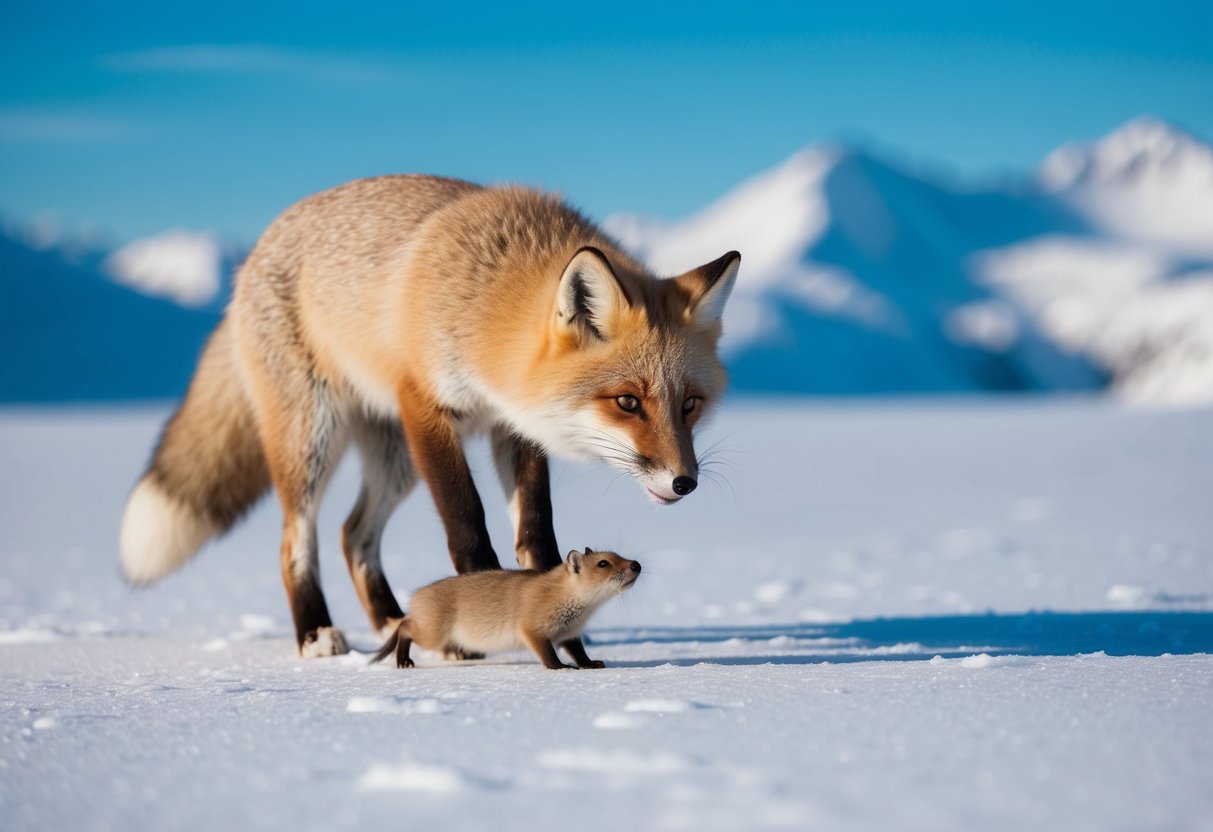
The Arctic fox (Vulpes lagopus) survives the harsh tundra through a suite of specialized adaptations, including extremely dense multi-layered fur, a compact body shape to minimize heat loss, and a counter-current vascular heat exchange system in its paws. These biological features allow it to maintain core body temperature in environments reaching -50°C.
As we look at the state of the Arctic in 2026, the Arctic fox remains a primary indicator species for the health of the circumpolar north. This small canid, often no larger than a domestic cat, thrives in one of the most inhospitable biomes on Earth. To understand how this animal persists where most life fails, we must examine the intersection of its morphology, physiology, and complex behavioral strategies. Each adaptation is a precise evolutionary response to the twin challenges of the tundra: lethal cold and extreme seasonal food scarcity.
Morphological Adaptations: The Engineering of Insulation
The most visible arctic fox tundra adaptations are morphological—physical traits that have been refined over millennia to optimize heat retention and provide camouflage. Unlike their cousins in temperate climates, every aspect of the Arctic fox’s exterior is designed to reduce the surface area exposed to the elements.
Specialized Pelage and Seasonal Dimorphism
The fur of the Arctic fox is the most effective insulation of any mammal living today. It consists of a dense, woolly undercoat and a layer of longer guard hairs that trap a boundary layer of air against the skin. In winter, this coat increases in thickness by nearly 140%, allowing the fox to maintain its basal metabolic rate without shivering even when external temperatures drop to -50°C (-58°F).
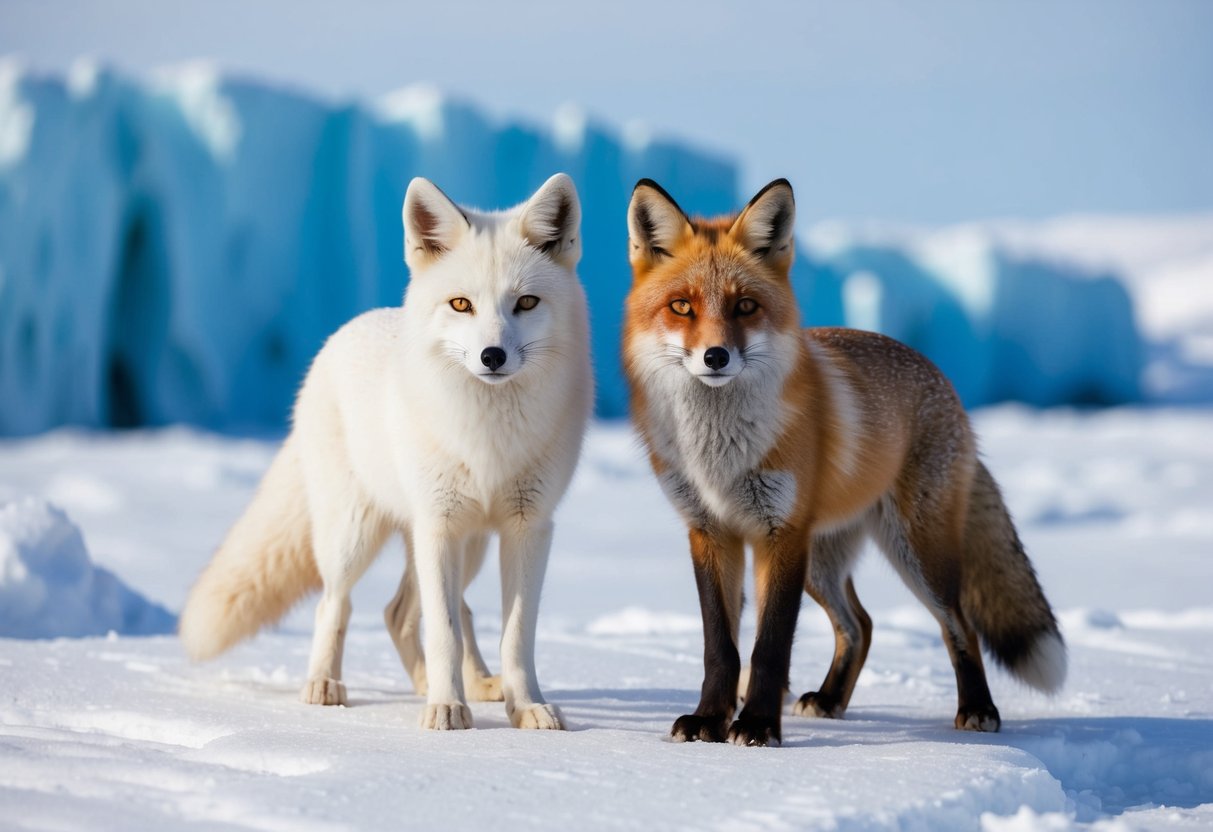
Beyond insulation, the fox utilizes seasonal color changes for survival. There are two distinct color morphs: the "white" fox and the "blue" fox.
- White Morph: During winter, these foxes are almost entirely snow-white, allowing them to blend into the vast ice fields and snow-covered tundra. As the snow melts in the spring, they shed this coat for a brown-and-grey summer pelage that matches the rocks and tundra vegetation.
- Blue Morph: Found primarily in coastal areas where snow cover is less consistent, this morph remains a charcoal-blue or pale grey year-round. This provides superior camouflage against the dark, volcanic rocks and shoreline debris of coastal habitats.
Allen’s Rule and Reduced Surface Area
In evolutionary biology, Allen’s Rule states that animals in colder climates evolve shorter limbs and appendages to minimize heat loss. The Arctic fox is a textbook example of this principle. Compared to the red fox (Vulpes vulpes), the Arctic fox has noticeably shorter legs, a shorter muzzle, and small, rounded ears.
By reducing the size of these extremities, the fox minimizes the amount of blood that must be circulated through thin, poorly insulated tissue. The small, fur-lined ears are particularly important; they sit low on the head to prevent wind chill from stripping heat away from the skull and brain. Even the soles of their feet are covered in thick fur—an adaptation shared by the polar bear—which provides both traction on slick ice and vital insulation against the frozen ground.
Physiological Mechanisms: Internal Heat Management
While the fur provides a passive barrier, the Arctic fox possesses sophisticated internal systems to manage its thermal economy. These physiological adaptations allow the fox to survive in the "high Arctic" where winter sun may not appear for months.
Counter-Current Heat Exchange
The most remarkable internal adaptation is the counter-current vascular heat exchange system located in the fox's legs and paws. In most mammals, warm blood flowing to the extremities loses heat to the cold environment, and the returning blood is cold, which can lower the core body temperature.
The Arctic fox has a specialized arrangement of arteries and veins in its legs. The warm arterial blood flowing down the leg passes in close proximity to the cool venous blood returning from the paws. Through simple conduction, the heat from the outgoing blood is transferred to the incoming blood. This ensures that the blood returning to the heart is already pre-warmed, while the paws are kept at a temperature just above the tissue-freezing point. This mechanism prevents frostbite while simultaneously conserving the animal's precious core caloric energy.
Metabolic Plasticity and Fat Storage
Survival in the tundra requires an "economic" metabolism. During the brief summer of 2026, when food is relatively abundant, Arctic foxes engage in intensive hyperphagia—eating as much as possible to build up thick layers of subcutaneous fat. This fat serves a dual purpose: it acts as an extra layer of insulation and provides a metabolic reserve during the lean winter months.
During periods of extreme food scarcity or severe storms, the Arctic fox can lower its metabolic rate. While not a true hibernator, the fox can enter a state of reduced activity to stretch its energy reserves. This metabolic flexibility allows it to wait out several days of blizzard conditions inside a den without needing to hunt.
Behavioral Strategies: Navigating the Tundra Landscape
Adaptation is not merely a matter of biology; it is also a matter of strategy. The Arctic fox exhibits complex behaviors that allow it to maximize the limited resources of the tundra.
Complex Denning Systems
Arctic foxes do not simply dig holes; they create vast, multi-generational subterranean complexes. In the permafrost of the tundra, digging is difficult, so foxes often reuse the same den sites for centuries. Some documented dens are estimated to be over 300 years old.
These dens are usually located on slightly elevated ground, such as eskers or ridges, where the soil is better drained and the snow thaws earlier. A single den may have up to 100 entrances and cover an area of several hundred square meters. These complexes provide essential protection from predators like wolves and polar bears, and they offer a stable microclimate for raising kits. The high nitrogen and phosphorus levels from fox waste often lead to lush "green oases" of vegetation around these dens, which in turn attract lemmings—the fox’s primary prey.
The "Arctic Larder": Food Caching
The tundra is a land of boom and bust. To survive the "bust" periods, the Arctic fox is a compulsive cacher. During the summer nesting season of migratory birds, a single fox may collect hundreds of eggs and dozens of lemmings.
Instead of consuming everything immediately, the fox buries these items in the permafrost, which acts as a natural freezer. These caches are meticulously remembered and revisited during the winter. This behavior is so effective that it has been observed that foxes can survive significantly longer in territories with high-quality caching sites than in areas with high immediate prey density but poor storage conditions.
Comparative Ecology: Arctic Fox vs. Red Fox
To understand the specificity of arctic fox tundra adaptations, it is helpful to compare them to the red fox, which has begun encroaching on Arctic territories due to the warming trends observed up to 2026.
| Feature | Arctic Fox (Vulpes lagopus) | Red Fox (Vulpes vulpes) |
|---|---|---|
| Ear Shape | Small, rounded, fur-covered | Large, pointed, thin fur |
| Leg Length | Short (low surface-to-volume ratio) | Long (optimized for speed/jumping) |
| Paws | Fully furred pads | Naked or lightly furred pads |
| Metabolic Threshold | Shivering begins at -50°C | Shivering begins at -13°C |
| Primary Winter Diet | Cached food, lemmings, scavenged kills | Small mammals, carrion, human waste |
| Color Morphs | Seasonal (White/Brown) or Blue | Consistently Red/Grey/Black |
The data in the table illustrates that while the red fox is a larger and more aggressive competitor, it lacks the specialized thermal "armor" of the Arctic fox. The Arctic fox’s ability to remain active at -40°C without increasing its metabolic cost gives it a distinct advantage in the high latitude regions where the red fox would simply freeze.
Trophic Dynamics and the Lemming Cycle
The survival of the Arctic fox is inextricably linked to the population cycles of lemmings. In the tundra, lemming populations typically peak every three to five years. During "peak" years, Arctic foxes respond with massive reproductive efforts, sometimes producing litters of up to 18 kits—the largest litter size of any wild carnivore.
When lemming populations crash, the foxes must pivot their strategy. This is when their role as "the tundra's scavenger" becomes most apparent. In 2026, as in previous decades, many Arctic foxes follow polar bears onto the sea ice during the winter. They survive by scavenging the remains of seals killed by the bears. This relationship is a precarious one, as it places the fox in the path of a much larger predator, but the caloric payoff of seal blubber is often the only thing that prevents starvation during lemming lows.
The 2026 Outlook: Challenges to Adaptation
While the Arctic fox is a master of its environment, its adaptations are highly specialized for a cold, stable Arctic. In 2026, the primary threat to the species is not the cold, but the loss of it. As the "treeline" moves north, the red fox—which is larger and more dominant—is moving into traditional Arctic fox territories.
The very traits that make the Arctic fox successful in the deep cold (small body size, short legs) make it a poor fighter against the red fox. Furthermore, the stabilization of lemming cycles due to changing snow conditions (which prevents lemmings from burrowing effectively in winter) is putting pressure on the fox's reproductive success.
To help preserve the species, conservation efforts are focusing on:
- Red Fox Management: Controlling the northward expansion of red foxes in sensitive breeding areas.
- Den Protection: Identifying and protecting the ancient denning complexes that are essential for kit survival.
- Supplementary Feeding: In specific Scandinavian populations, supplementary feeding during lemming "lows" has prevented local extinctions.
FAQ
How do Arctic foxes find food under deep snow?
The Arctic fox has an incredibly acute sense of hearing, which it uses to detect the movement of lemmings in sub-nivean (under-snow) tunnels. Once a prey item is located, the fox performs a "mousing" jump—leaping high into the air and diving head-first through the snow crust to pin the lemming with its front paws.
Do Arctic foxes hibernate during the winter?
No, Arctic foxes do not hibernate. They remain active throughout the winter, although they will seek shelter in dens or snow burrows during the most severe storms. Their thick fur and specialized metabolism allow them to stay active and hunt in temperatures that would be fatal to other small mammals.
Why are some Arctic foxes blue instead of white?
The "blue" morph is a genetic variation that is most common in coastal populations. These foxes do not turn white in winter; instead, they remain a dark charcoal or bluish-grey. This color provides better camouflage in coastal environments characterized by dark rocks, seaweed, and open water, rather than the pure white snow of the inland tundra.
Can an Arctic fox survive in a warm climate?
While they are highly adapted for the cold, Arctic foxes can survive in temperate climates (such as in zoos or sanctuaries), but they are at a disadvantage. They are prone to overheating in high temperatures and are highly susceptible to diseases common in warmer areas, such as sarcoptic mange and canine distemper, which are often carried by red foxes.
What is the biggest predator of the Arctic fox?
On the tundra, the snowy owl and the golden eagle are the primary predators of fox kits. For adults, the main threats are wolves, wolverines, and increasingly, the red fox. Polar bears may occasionally kill Arctic foxes, though the two species often exist in a commensal relationship where the fox follows the bear for food.
Strategic Recommendation for Observation and Conservation
For researchers and wildlife enthusiasts in 2026, the best way to support the Arctic fox is to advocate for the preservation of large, contiguous tracts of tundra that remain free from industrial development. Maintaining the integrity of the permafrost is not just a climate necessity; it is a direct requirement for the preservation of the ancient denning systems these foxes rely on. If you are involved in Arctic tourism, ensure that you maintain a distance of at least 500 meters from known den sites, as human disturbance can cause mothers to abandon their kits during the critical summer months.