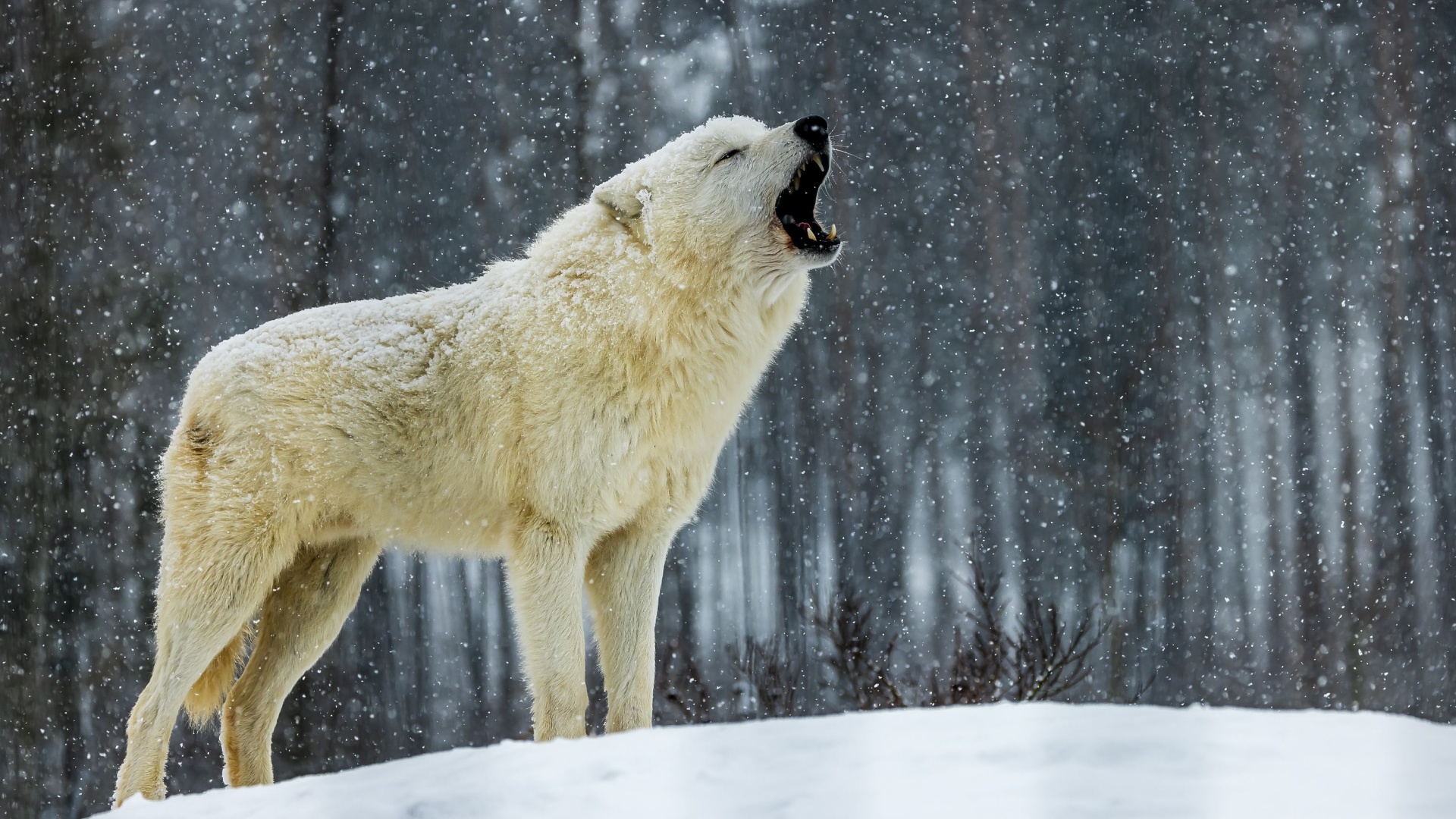
Arctic wolves (Canis lupus arctos) are specialized subspecies of the gray wolf distinguished by their stark white coats, compact builds, and extraordinary physiological adaptations to the High Arctic. Unlike other wolf species, they live in the world’s most inhospitable climates, maintaining stable populations across North America’s Arctic islands and Greenland.
The Arctic wolf is a master of survival, uniquely adapted to endure sub-zero temperatures, months of total darkness, and the scarcity of prey in the polar tundra. As a primary apex predator of the High Arctic, its physical morphology and social behaviors have evolved specifically to minimize heat loss and maximize hunting efficiency across vast, frozen territories. Understanding these characteristics requires looking beyond their iconic white fur into the complex biological mechanisms that allow a large mammal to thrive where few others can.
Taxonomy and Evolutionary Context
The Arctic wolf is a subspecies of the gray wolf (Canis lupus). While closely related to the timber wolf and the Northwestern wolf, the Arctic variant has been isolated for thousands of years by the geography of the High Arctic. This isolation led to a distinct evolutionary path, resulting in a predator that is generally smaller and more robust than its southern cousins.
In the hierarchy of the Canidae family, the Arctic wolf represents one of the few subspecies whose habitat remains largely undisturbed by human encroachment. In 2026, researchers continue to utilize genomic sequencing to better understand the divergence between the Arctic wolf and the wolves of the boreal forests. These studies suggest that the Arctic wolf’s lineage developed specific genetic markers related to fat metabolism and cold resistance, which are not present in more temperate wolf populations.
Physical Morphology and Anatomical Adaptations
The most striking characteristic of the Arctic wolf is its appearance, but every physical trait serves a vital functional purpose for survival in the "Polar Desert."
Pelage and Camouflage
The Arctic wolf’s fur is almost entirely white, occasionally tinted with shades of gray or light cream. This provides essential camouflage against the snow and ice, allowing the wolf to stalk prey like muskoxen and Arctic hares without being easily detected.
The coat is composed of two distinct layers:
- The Undercoat: A dense, soft layer of wool-like fur that traps air close to the skin, providing a high-performance thermal barrier.
- The Guard Hairs: A longer, coarser outer layer that is water-resistant and windproof. This layer prevents snow from reaching the skin and melting, which would lead to lethal hypothermia.
Compact Extremities and Allen’s Rule
In biological terms, Allen’s Rule states that endothermic animals from colder climates tend to have shorter limbs and appendages than those from warmer climates. The Arctic wolf is a textbook example of this. Compared to a gray wolf, the Arctic wolf has:
- Smaller, Rounded Ears: Reduced surface area minimizes the risk of frostbite and prevents precious body heat from escaping.
- Shorter Muzzle: A more compact snout helps warm the air before it reaches the lungs.
- Shorter Legs: While still capable of incredible endurance, their legs are shorter in proportion to their body than those of the timber wolf, which aids in maintaining a lower center of gravity and reducing heat dissipation.
Paws and Locomotion
Arctic wolf paws are significantly larger than expected for their body size, acting like natural snowshoes. The pads are covered in thick fur to provide traction on ice and insulation against the frozen ground. A sophisticated biological mechanism known as counter-current heat exchange keeps the paws at a temperature just above freezing, preventing the tissue from freezing while ensuring the wolf doesn't lose excessive core body heat to the snow.
Thermoregulation and Survival Strategies
Surviving the High Arctic requires more than just thick fur; it requires an advanced metabolic system. During the winter months, temperatures frequently drop to -50°C (-58°F). The Arctic wolf’s body is optimized to maintain a constant internal temperature despite these extremes.
Their fat storage capability is significantly higher than that of southern wolves. They can consume up to 20 pounds of meat in a single feeding session, which is then processed and stored as subcutaneous fat. This "feast or famine" metabolic cycle is crucial because prey sightings can be weeks apart during the height of the polar winter.
Furthermore, the Arctic wolf has adapted to the Polar Night—a period of several months when the sun never rises. Unlike many animals that enter a state of torpor or hibernation, the Arctic wolf remains active year-round. Their eyes have a highly developed tapetum lucidum, a reflective layer behind the retina that enhances night vision, allowing them to hunt effectively in near-total darkness.
Hunting and Diet in the High Arctic
The Arctic wolf’s diet is dictated by the limited biodiversity of its environment. Because the tundra cannot support large numbers of herbivores, Arctic wolves must be opportunistic and highly skilled hunters.
Primary Prey Species
- Muskoxen: These are the primary targets for packs. A single muskox provides enough caloric density to sustain a pack for several days. However, muskoxen are formidable, often forming defensive circles to protect their young, forcing wolves to use complex flanking maneuvers.
- Arctic Hares: Often referred to as the "bread and butter" of the Arctic wolf diet, these hares provide a consistent, if smaller, food source.
- Caribou and Peary Caribou: Migratory herds are followed over hundreds of miles.
- Small Mammals and Birds: Lemmings, ptarmigans, and nesting geese are consumed when larger prey is unavailable.
Pack Hunting Dynamics
Because prey is scarce and often dangerous (like the 600-pound muskox), Arctic wolves are social animals. They live in packs typically numbering between 5 and 10 individuals, though larger packs have been recorded. These packs are highly disciplined, led by an alpha pair. The cooperation within the pack is essential; a solitary wolf would struggle to take down a muskox or defend its kill from other scavengers like polar bears.
Social Structure and Communication
The social hierarchy of an Arctic wolf pack is one of the most sophisticated in the animal kingdom. The pack is essentially a family unit, consisting of the breeding pair and their offspring from several years.
The Alpha Pair
The alpha male and female are the only individuals in the pack that typically breed. They make the decisions on when the pack moves, where it hunts, and how it defends its territory. This centralized leadership ensures the pack's survival by preventing internal conflict over resources.
Communication Methods
- Vocalizations: Howling is the primary long-distance communication tool. It is used to assemble the pack, warn off rival packs, and reinforce social bonds.
- Body Language: Subtle movements of the ears, tail, and muzzle communicate dominance, submission, or playfulness.
- Scent Marking: Wolves use urine and specialized scent glands to mark the boundaries of their territory, which can span over 1,000 square miles (2,600 square kilometers).
Reproduction and the Life Cycle
In the High Arctic, the window for raising young is incredibly short. Breeding typically occurs in March, with pups being born in late May or June. This timing ensures the pups have the maximum amount of "warmer" weather to grow before the winter return.
Denning Challenges
Unlike other wolves that dig dens in the soil, Arctic wolves often face the challenge of permafrost, which is too hard to dig into. Instead, they use natural rock outcroppings, caves, or abandoned dens of other animals. The mother gives birth to 2 to 3 pups on average—a smaller litter size than southern wolves, reflecting the difficulty of providing enough food in the Arctic.
Pup Development
Pups are born blind and deaf, relying entirely on the mother for warmth. By the age of three months, they begin to travel with the pack and learn the basics of hunting. The entire pack participates in the rearing of the pups, with subordinate members often "babysitting" while the alphas lead the hunt.
Comparative Overview: Arctic Wolf vs. Gray Wolf
The following table highlights the key physiological and behavioral differences that define the Arctic wolf as a distinct subspecies.
| Feature | Arctic Wolf (C. l. arctos) | Gray/Timber Wolf (C. l. lupus) |
|---|---|---|
| Coat Color | Pure white to light cream year-round | Gray, brown, black, or mottled |
| Ear Shape | Small, rounded, and heavily furred | Larger, more pointed |
| Average Weight | 70 – 125 lbs (32 – 56 kg) | 80 – 175 lbs (36 – 80 kg) |
| Muzzle Length | Shorter and broader | Longer and more slender |
| Litter Size | 2 – 3 pups (Small) | 4 – 7 pups (Large) |
| Human Contact | Very low; often unafraid due to isolation | High; generally avoids humans |
| Territory Size | Massive (>1,000 sq miles) | Smaller (100 – 500 sq miles) |
Conservation Status and Environmental Challenges in 2026
As of 2026, the Arctic wolf remains listed as "Least Concern" by most conservation bodies, largely because its remote habitat shields it from hunting and habitat destruction. However, the species faces burgeoning threats from climate change.
The primary concern is not the wolves' ability to handle warmth, but the impact of changing weather patterns on their prey. For example, increased winter rain-on-snow events can create a layer of ice over the tundra, preventing muskoxen and caribou from reaching the vegetation beneath. If prey populations crash, the wolf populations inevitably follow. Furthermore, as the Arctic ice melts, industrial activities like mining and oil exploration are moving further north, potentially fragmenting territories that have been untouched for millennia.
The International Wolf Center and the World Wildlife Fund continue to monitor these populations. In 2026, satellite tracking has become the primary tool for researchers to understand how these wolves are shifting their migratory patterns in response to the changing polar landscape.
Frequently Asked Questions
Are Arctic wolves dangerous to humans?
Arctic wolves are generally not aggressive toward humans, but they are also not fearful. Because they have so little contact with people in the High Arctic, they often exhibit a sense of curiosity rather than the flight response seen in timber wolves. However, as apex predators, they should be treated with extreme caution and never approached.
Why is the Arctic wolf's fur white?
The white fur serves as permanent camouflage. In the High Arctic, snow and ice cover the ground for the majority of the year. Unlike the Arctic fox, which changes color with the seasons, the Arctic wolf remains white year-round because the High Arctic environment remains predominantly white or gray even during the short summer.
How long do Arctic wolves live?
In the wild, Arctic wolves typically live between 7 and 10 years. Life in the High Arctic is physically demanding, and injuries sustained during hunts or periods of prolonged starvation often limit their lifespan. In captivity, they have been known to live up to 15 years.
Can Arctic wolves be kept as pets?
No, Arctic wolves are wild animals with highly specialized biological needs and a strong pack instinct. They are not domesticated and do not behave like dogs. In most jurisdictions, it is illegal to own a pure Arctic wolf, and they require highly specific environments that are impossible to replicate in a domestic setting.
How do Arctic wolves find water in the frozen tundra?
Wolves get most of their hydration from the moisture in their prey's flesh. During the winter, they may also consume snow. Their bodies are remarkably efficient at processing moisture, reducing the need for open water sources which are unavailable for much of the year.
Recommendations for Further Engagement
If you are interested in the preservation of this unique subspecies, consider supporting organizations that focus on Arctic ecology. Monitoring the health of the Arctic wolf is a key indicator of the health of the entire polar ecosystem. For those wishing to see these animals, specialized wildlife expeditions are available in places like Ellesmere Island, though these should only be undertaken with expert guides who prioritize the safety of the animals and the integrity of the environment.
Education remains the most powerful tool for conservation. Sharing accurate information about the Arctic wolf's role in the ecosystem helps build global support for protecting the remote wilderness areas they call home.