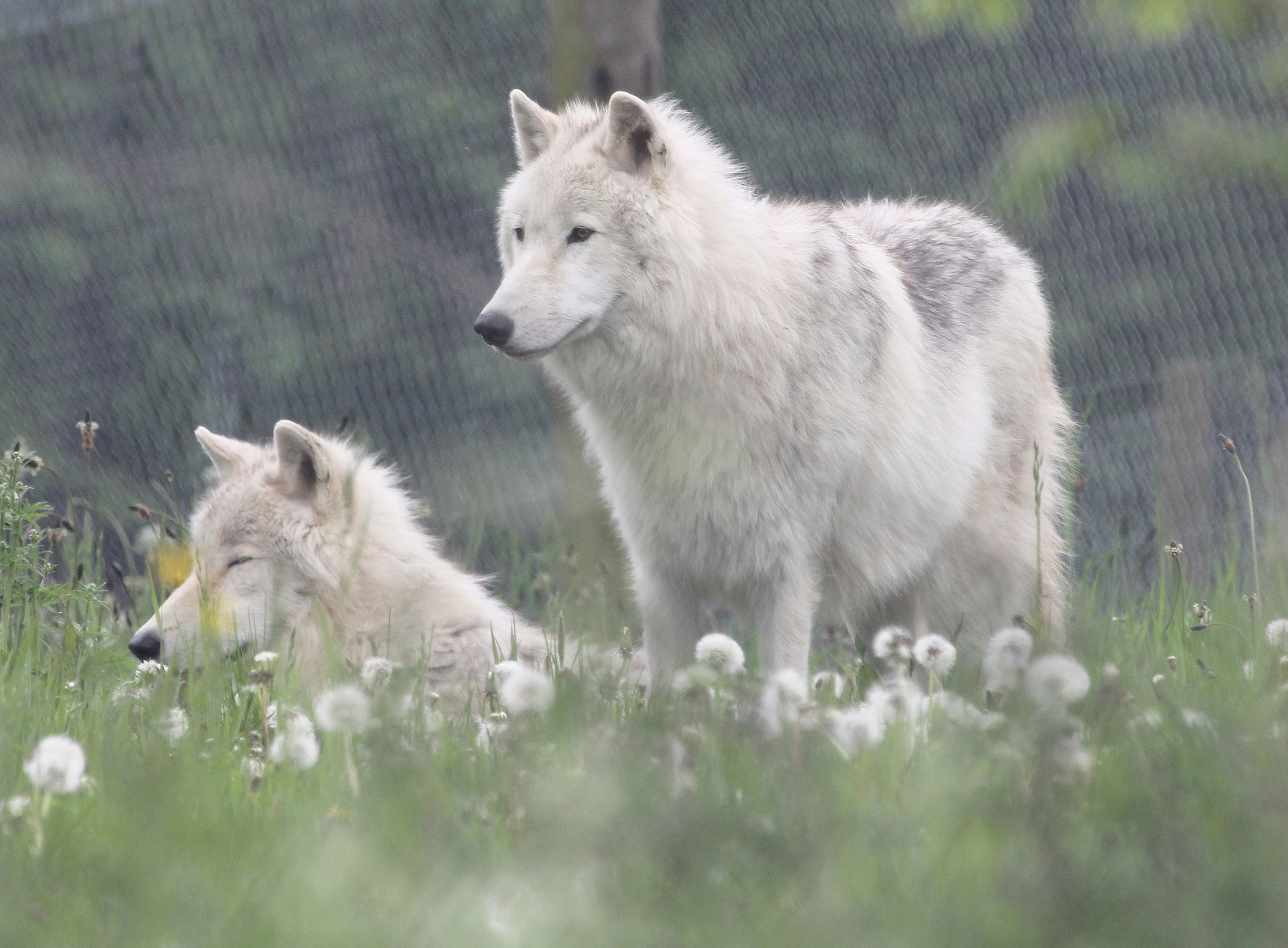
Arctic wolves exhibit highly specialized behaviors adapted to the High Arctic’s extreme conditions, characterized by flexible pack dynamics, nomadic hunting patterns across vast territories exceeding 1,000 square miles, and unique denning habits in rock crevices due to the impenetrable permafrost. Their survival relies on extreme social cooperation and an opportunistic "feast or famine" metabolic strategy.
The Social Architecture of the Arctic Pack
The social behavior of the Arctic wolf (Canis lupus arctos) is a masterpiece of evolutionary adaptation. Unlike their southern counterparts, the gray wolves of the continental United States or Eurasia, Arctic wolves live in an environment where resources are incredibly scarce. This scarcity dictates a pack structure that is both rigid in its hierarchy and flexible in its size.
In the wild, a typical pack consists of 2 to 20 individuals, though the average is closer to 5 to 8. This smaller size compared to some timber wolf packs is a direct result of the limited prey biomass available in the High Arctic. The pack is governed by a dominant breeding pair—formerly referred to as the alpha male and female. In 2026, wildlife biologists prefer the term "breeding pair" or "parents," as the pack is essentially a nuclear family consisting of the parents and their offspring from several consecutive years.
Cooperation is not just a social preference; it is a survival requirement. Every member of the pack plays a role in the upbringing of the pups. This "alloparenting" behavior involves older siblings bringing food to the nursing mother or regurgitating meat for pups once they are weaned. This shared responsibility ensures that even if one or both parents are injured during a hunt, the next generation has a higher probability of survival. The social bonds are reinforced through complex rituals, including muzzle-licking, tail-wagging, and communal howling, which serve to reduce intra-pack aggression and synchronize the group for high-stakes activities like hunting.
Hunting Patterns and the Feast-Famine Cycle
The hunting behavior of Arctic wolves is defined by endurance rather than raw speed. In the vast, treeless tundra of the Canadian Arctic and Greenland, there is nowhere to hide. Consequently, Arctic wolves have developed a "testing" behavior when approaching prey. When a pack encounters a herd of muskoxen or caribou, they do not immediately charge. Instead, they observe and provoke the herd to movement, looking for signs of weakness, illness, or age.
Muskoxen, the primary large prey for many Arctic packs, have a formidable defense mechanism: they form a defensive circle with their horns facing outward. Breaking this circle requires immense patience and coordination. Arctic wolves may circle a herd for hours, or even days, waiting for a single individual to panic or for the formation to break.
Because prey is migratory and often widely dispersed, Arctic wolves must be prepared to travel 30 to 50 miles in a single day. Their metabolism is adapted to a "feast or famine" lifestyle. A single wolf can consume up to 20 pounds of meat in one sitting when a kill is finally made. This behavior allows them to store energy for the lean days ahead, which can sometimes last weeks. In 2026, satellite tracking data continues to show that these wolves have some of the largest home ranges of any land mammal, often covering 1,000 to 2,500 square kilometers to find sufficient food.
Territoriality and Migration in the High Arctic
Territorial behavior in Arctic wolves is unique because the "territory" itself is often in flux. While southern wolves maintain strictly defined borders marked by scent and vocalization, Arctic wolves are often nomadic. They must follow the seasonal migrations of caribou and the movements of muskoxen.
However, during the denning season (typically May through August), the wolves become "central place foragers." Their behavior shifts from wide-ranging nomadism to a more localized defense of the den site. In the High Arctic, the ground is permanently frozen (permafrost), making it impossible for wolves to dig the deep earthen burrows common among other subspecies. Instead, they exhibit a specialized behavior of seeking out natural rock caves, outcroppings, or ancient den sites that have been used by generations of wolves for centuries.
Territorial disputes between different packs are rare compared to southern wolves, primarily because the population density is so low. However, when two packs do encounter one another, the behavior is highly aggressive. Vocalizations play a key role here; howling serves as a long-distance spacing mechanism, informing neighboring packs of a group’s location to prevent accidental—and potentially lethal—encounters.
Communication and Sensory Acuity
The behavior of an Arctic wolf is guided by senses that are fine-tuned for a world of white-outs and months of total darkness. Their communication is a blend of vocal, postural, and chemical signals.
- Vocalizations: Howling is the most recognizable behavior. It serves to assemble the pack before a hunt, to warn off intruders, and to reinforce social bonds. In the thin, cold air of the Arctic, a wolf’s howl can carry for several miles, acting as a beacon for lost pack members.
- Postural Signals: Because they live in open terrain, visual signals are highly effective. A raised tail and erect ears signal dominance, while a tucked tail and flattened ears signal submission. These behaviors prevent physical fighting, which is dangerous in an environment where an injury can lead to starvation.
- Scent Marking: Wolves use urine and feces to mark "signposts" along their travel routes. In 2026, researchers are still studying how these chemical markers can survive the extreme cold to convey information about the individual's reproductive status and the time since they last passed through the area.
Adaptations to Extreme Cold
Behavioral thermoregulation is a critical component of Arctic wolf life. During the winter, when temperatures can drop to -50°C (-58°F), wolves change their activity patterns to conserve energy. They often sleep in a curled position, tucking their sensitive noses and footpads under their thick, bushy tails. This behavior minimizes the surface area exposed to the wind.
Their white fur, while providing camouflage for hunting, is also a behavioral tool. By remaining still against the snow, they can observe prey for long periods without detection. Furthermore, they have a specialized circulatory system in their paws—a "counter-current heat exchanger"—that keeps their feet just above freezing, preventing tissue damage while walking on ice. This allows them to maintain a high level of activity even in conditions that would cause frostbite in most other mammals.
Comparison of Wolf Behaviors by Subspecies
To understand the specific behaviors of the Arctic wolf, it is helpful to compare them to the more commonly known Gray (Timber) wolf.
| Feature | Arctic Wolf (Canis lupus arctos) | Gray Wolf (Canis lupus) |
|---|---|---|
| Pack Size | Small (2–20), highly nomadic. | Variable (2–30+), more sedentary. |
| Denning Behavior | Uses rock crevices and caves due to permafrost. | Digs deep earthen burrows. |
| Territory Size | Massive (up to 2,500 sq km). | Moderate (200–500 sq km). |
| Human Interaction | Generally unafraid due to lack of exposure. | Often wary and elusive near humans. |
| Dietary Habit | "Feast or famine"; highly opportunistic. | More consistent kill frequency in prey-rich areas. |
| Coloration | Year-round white for camouflage and insulation. | Gray, black, or brown; varies by season/habitat. |
Reproductive Behavior and Pup Development
Reproduction in the High Arctic is a race against time. Because the "summer" window of relative warmth and food abundance is so short, the breeding pair usually mates in March. The gestation period is approximately 63 days, with pups born in late May or early June.
A fascinating behavioral trait of Arctic wolves is their site fidelity to dens. Because suitable rock shelters are rare, a pack may return to the exact same cave for decades. The pups are born blind and deaf, weighing only about a pound. Their early behavior is focused entirely on nursing and staying warm.
By the age of three months, the pups begin to participate in "play-fighting." This behavior is critical for developing the coordination and muscles needed for hunting. It also establishes the future social hierarchy of the pack. Unlike other wolf subspecies, Arctic wolf pups must grow and gain fat stores rapidly; they have less than five months to prepare for their first full Arctic winter, where they will be expected to keep up with the pack on long-distance treks.
Interactions with Other Species and Humans
Arctic wolves occupy the top of the food chain, but their behavior toward other predators is one of cautious avoidance or competition. They frequently compete with Arctic foxes for smaller prey like lemmings. While a wolf can easily kill a fox, they often tolerate their presence at a distance unless the fox attempts to scavenge from a fresh wolf kill.
Toward humans, Arctic wolves exhibit a behavior that is often misinterpreted as tameness. Because they live in areas largely uninhabited by people, they have not developed the "fear response" associated with centuries of hunting and persecution seen in European or American gray wolves. They are often curious, sometimes approaching researchers or film crews to investigate. However, this is not a sign of domestication; it is the behavior of a pinnacle predator that does not recognize humans as a threat—or as a traditional prey source.
Frequently Asked Questions
How do Arctic wolves survive the months of total darkness?
Arctic wolves rely on their superior sense of smell and hearing during the "Polar Night." Their behavior becomes more focused on scavenging and following the scent trails of muskoxen. Their eyes are also highly adapted to low-light conditions, allowing them to detect movement against the snow even in near-total darkness.
Why don't Arctic wolves hibernate?
As carnivores, Arctic wolves cannot hibernate because they do not have the physiological ability to slow their metabolism to that extent. Instead, they remain active year-round to hunt. Their thick double-layered coat and behavioral adaptations, such as huddling together, allow them to survive temperatures that would kill most other animals.
Are Arctic wolf packs led by an "Alpha" male?
In the wild, the pack is led by the breeding pair (the parents). The "Alpha" terminology largely comes from studies of captive wolves in the mid-20th century. In 2026, biologists recognize that wild packs function more like human families, where the parents lead and the offspring follow their guidance based on experience and social bonds.
What is the biggest threat to Arctic wolf behavior in 2026?
Climate change is the primary disruptor. Changing ice patterns and unpredictable snowmelts affect the migration of caribou and the population of lemmings. When prey patterns change, wolves are forced to travel even further, which can lead to higher pup mortality and the fragmentation of established packs.
Do Arctic wolves bark like dogs?
Arctic wolves rarely bark. Their vocal behavior is dominated by howls, whimpers, and growls. Barking is typically a "warning" sound used in short bursts, but howling is their primary method of long-distance communication and social cohesion.
Final Recommendation for Wildlife Observation
For those interested in the behavior of Arctic wolves, the best way to support their conservation and study is through reputable organizations such as the World Wildlife Fund (WWF) or the International Wolf Center. If you are seeking to observe them in the wild, look for guided expeditions in Ellesmere Island or Greenland that prioritize non-invasive viewing. Observing these animals requires extreme caution and respect for their environment, as any disruption to their hunting or denning behavior can have life-threatening consequences for the pack in such a harsh climate.