Arctic survival hinges on three fundamental pillars: heat preservation, moisture management, and high-caloric intake. By utilizing a modular layering system to prevent sweating, maintaining physiological warmth through high-fat nutrition, and carrying specialized gear like satellite messengers and multi-stage fire starters, individuals can mitigate the lethal threats of hypothermia and frostbite in environments reaching -40°C or below.
Survival in the Arctic is not merely a matter of endurance; it is a technical challenge involving thermodynamics, biology, and specialized equipment. In the extreme latitudes, the environment is actively seeking to strip heat from your body. To survive, you must create a micro-climate that remains stable despite external temperatures that can freeze exposed skin in under sixty seconds. As we look at the standards for 2026, advancements in material science and satellite communication have improved safety margins, but the biological requirements for human life remain unchanged.
The Physiological Challenge of the High Arctic
The human body is designed to maintain a core temperature of approximately 37°C (98.6°F). In the Arctic, four mechanisms of heat loss work in tandem to compromise this homeostasis: radiation, conduction, convection, and evaporation. Understanding these is the first "essential" of survival.
Heat Loss Mechanisms
Radiation is the primary source of heat loss, where the body simply emits infrared heat into the surrounding air. In a survival situation, reflecting this heat back toward the body using space blankets or specialized liners is critical. Conduction occurs when you are in direct contact with a cold surface, such as sitting on frozen ground or handling metal tools without gloves. Thermal conductivity of the ground is significantly higher than that of air, making an insulated sleeping pad or "sit pad" mandatory.
Convection is often the most dangerous factor in the Arctic, commonly known as wind chill. Moving air strips the thin layer of warm air trapped against your skin. At -30°C, a 20 mph wind can create an effective temperature that causes frostbite in minutes. Finally, evaporation is the "silent killer." When you sweat due to overexertion, the moisture travels through your clothing. As it evaporates, it consumes heat, cooling your body far faster than dry air ever could. This is why the mantra "if you sweat, you die" remains the most important rule in Arctic survival.
Hypothermia and Frostbite
Survival requires constant self-monitoring for the "Umbles"—stumbling, mumbling, fumbling, and grumbling. These are the early signs of mild hypothermia. As the core temperature drops, the body shunts blood from the extremities to the vital organs. This peripheral vasoconstriction is a survival mechanism for the heart and brain, but it leaves the fingers, toes, nose, and ears vulnerable to frostbite. In the Arctic, frostbite can be "dry" (freezing of the tissue) or "wet" (immersion foot), both of which require immediate, controlled rewarming to prevent permanent tissue loss or gangrene.
The Layering System: Your First Line of Defense
Clothing in the Arctic is not a single heavy garment; it is a complex, modular system designed to manage moisture and trap air. The goal is to create dead air space, which is the most effective insulator known to man.
Base Layer: Moisture Management
The base layer (next-to-skin) must be non-absorbent. By 2026, ultra-fine Merino wool and advanced synthetics like recycled polypropylene are the industry standards. Never wear cotton. Cotton is hydrophilic; it absorbs up to 25 times its weight in water and loses all its insulating properties when wet. A high-quality base layer should fit snugly to wick moisture away from the skin toward the outer layers where it can evaporate.
Mid-Layer: Thermal Insulation
The mid-layer is responsible for trapping the heat your body generates. This is where high-loft materials come into play. In 2026, we see a heavy reliance on high-fill power down (800+) and synthetic alternatives like PrimaLoft Gold. Down offers the best warmth-to-weight ratio but fails if it gets wet. Synthetic insulation is heavier and bulkier but continues to provide warmth even when damp. For extended Arctic stays, a combination of a fleece "active" mid-layer and a heavy "static" insulation jacket (often called a "puffy") is essential.
Outer Layer: The Shell
The shell layer must be windproof and water-resistant. While "waterproof-breathable" membranes like Gore-Tex are common, in extreme Arctic cold (below -20°C), traditional hard shells can sometimes fail because moisture freezes inside the pores of the fabric. Many Arctic experts prefer highly breathable, tightly woven cotton-polyester blends (like Ventile) or specialized softshells that allow moisture to escape as vapor before it can freeze into a sheet of ice inside the garment.
Essential Gear and Hardware for 2026
Beyond clothing, your survival kit must contain tools that are functional in sub-zero temperatures. Plastics become brittle and batteries lose capacity in the Arctic, necessitating specialized selections.
Navigation and Communication
In 2026, the reliance on satellite technology is near-universal. While traditional maps and compasses are required backups (bearing in mind that magnetic declination is extreme near the poles), a dedicated satellite messenger is the most important piece of electronics you can carry.
- Satellite Messengers: Devices using the Iridium network provide global coverage, ensuring you can call for help even in the most remote tundra.
- Emergency SOS: Modern smartphones now feature direct-to-satellite emergency messaging, but their batteries are notorious for failing in the cold. Always keep electronics in an internal pocket close to your body heat.
- GPS Units: Dedicated ruggedized GPS units are preferred over phones for their physical buttons, which can be operated with gloves.
Fire Starting and Snow Melting
Hydration is a massive challenge in the Arctic. You cannot simply eat snow; doing so lowers your core temperature and can trigger hypothermia. You must melt snow into water.
- Stove Systems: Liquid fuel stoves (white gas) are superior to canister stoves (isobutane) in extreme cold because they can be manually pressurized. Canisters often lose pressure as the temperature drops.
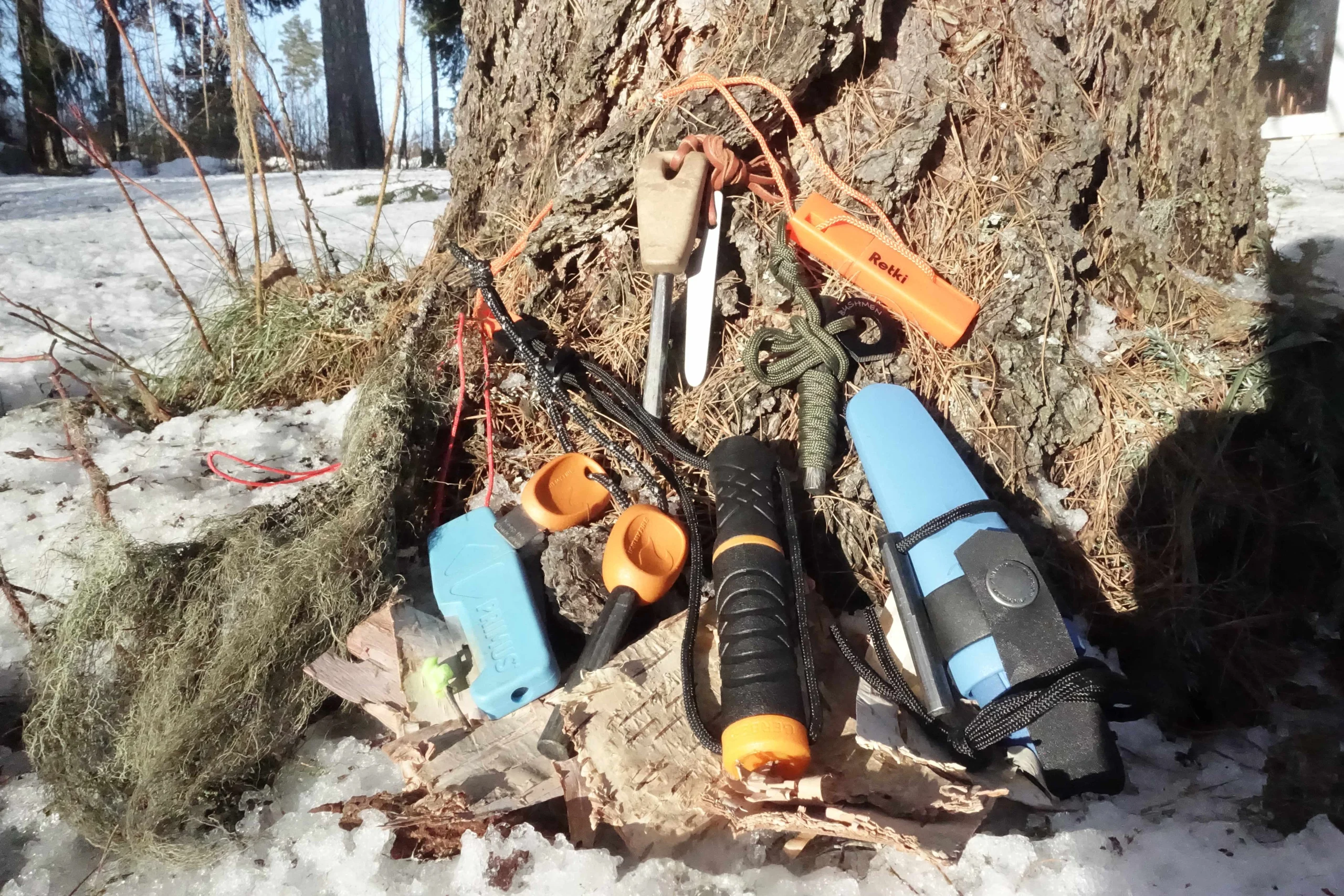
- Fire Starters: Carry three methods of ignition. A ferrocerium rod is the most reliable because it has no moving parts and works when wet. Backup these with stormproof matches and a butane lighter kept warm in a pocket.
- Tinder: Natural tinder is scarce in the Arctic. Carry "fatwood" or petroleum-soaked cotton balls in a waterproof container.
Shelter Systems
If you are stranded, your priority is to get out of the wind. An Arctic survival kit should include a lightweight, four-season bivy sack or a specialized sil-nylon floorless shelter. For long-term survival, building a snow shelter—such as a quinzee or an igloo—is a life-saving skill. Snow is an incredible insulator; while it may be -40°C outside, the interior of a well-constructed snow cave can hover around 0°C using only your body heat for warmth.
Insulation Comparison: Choosing Your Materials
The choice of insulation can be the difference between a manageable situation and a life-threatening one.
| Material | Warmth-to-Weight | Performance When Wet | Durability | Best Use Case |
|---|---|---|---|---|
| Merino Wool | Moderate | Good | High | Base layers and socks; odor resistant. |
| Goose Down | Excellent | Poor | High | Static insulation (sleeping bags, parkas). |
| Synthetic (PrimaLoft) | Good | Excellent | Moderate | High-activity mid-layers in damp cold. |
| Aerogel Liners | Extreme | Excellent | Low | Boot insoles and glove liners (NASA tech). |
| Fleece (Polyester) | Low | Good | Very High | Active mid-layers; highly breathable. |
Nutrition and Hydration in the Deep Freeze
In the Arctic, your metabolism is your furnace. Shivering alone can burn up to 500 calories per hour. To stay warm, you must fuel the fire.
Caloric Requirements
An average person in a survival situation in the Arctic may require 4,000 to 6,000 calories per day just to maintain body temperature and perform basic tasks. The focus should be on fats and proteins, which burn slower and provide more sustained energy than simple sugars. Pemmican, nuts, chocolate, and butter are survival staples. Eating a high-fat snack right before bed can help your body generate heat throughout the night.
The Hydration Paradox
The Arctic is a desert. The air is incredibly dry, and every breath you exhale carries moisture out of your body. Because you don't feel "sweaty" in the traditional sense, dehydration can go unnoticed until it manifests as fatigue, headaches, and increased susceptibility to cold. You must proactively drink water. Aim for 3 to 4 liters a day. Avoid caffeine and alcohol; caffeine is a diuretic that increases fluid loss, and alcohol is a vasodilator that makes you feel warm while actually causing your core temperature to drop rapidly.
The Psychology of Survival: The S.T.O.P. Rule
The most important tool in any survival kit is the mind. Panic leads to poor decision-making, which in the Arctic, is usually fatal. Survival instructors use the S.T.O.P. acronym:
- Sit: As soon as you realize you are lost or in trouble, sit down. Do not keep moving and exhausting yourself.
- Think: Evaluate your surroundings. What are your immediate threats? (Usually wind and cold).
- Observe: Look for resources. Is there a natural windbreak? Is there snow deep enough for a cave? What do you have in your pack?
- Plan: Formulate a plan for the next hour, the next four hours, and the night. Prioritize shelter and fire.
Common Arctic Survival Mistakes
- Over-dressing during exertion: If you work hard while wearing all your layers, you will sweat. This moisture will eventually freeze or cause rapid cooling. Always "start cold" and layer up the moment you stop moving.
- Touching metal with bare skin: At -30°C, the moisture on your skin will cause it to instantly bond to metal, leading to "contact frostbite." Always wear thin liner gloves when performing fine-motor tasks.
- Neglecting the "Floor": Many people focus on their jacket but forget that they lose massive amounts of heat to the ground. Always put an insulating barrier between you and the snow.
- Using a white-gas stove inside a sealed tent: Carbon monoxide poisoning is a very real threat. Always ensure ventilation when melting snow.
Frequently Asked Questions
What is the most important item in an Arctic survival kit?
While no single item can save you, a high-quality, liquid-fuel stove is often cited as the most critical. It allows you to create drinkable water from snow and provides a heat source for rewarming extremities and cooking high-calorie meals. Without the ability to melt snow, dehydration and hypothermia will set in within 24 to 48 hours.
Can I use a space blanket for Arctic survival?
Mylar "space" blankets are useful as a secondary tool to reflect heat, but they are not a replacement for proper insulation. They are fragile and do not breathe, meaning they can trap condensation against your body. They are best used to line the inside of a shelter or to wrap around a person who is already in a sleeping bag to add a few degrees of warmth.
How do I protect my electronics from the cold?
Batteries rely on chemical reactions that slow down significantly in the cold. To preserve battery life, keep your phone, GPS, and spare batteries in an inner pocket close to your chest. When using them, minimize screen time and try to keep them inside your glove or sleeve as much as possible. Using a portable power bank stored in a warm spot is also a 2026 survival standard.
Is it better to stay with a vehicle or move for help?
In almost all Arctic scenarios, it is better to stay with your vehicle or aircraft. A vehicle is a massive "signal" that is much easier for Search and Rescue (SAR) to spot than a lone human. It provides a ready-made windbreak and contains materials (tires, oil, upholstery) that can be burned as a distress signal. Only move if you are certain of your location and the distance to safety is manageable.
How do I prevent snow blindness?
Snow blindness (photokeratitis) is essentially a sunburn on the cornea caused by UV rays reflecting off the snow. It can cause temporary blindness and intense pain. If you lose your sunglasses, you can fashion "Inuit goggles" by cutting thin horizontal slits into a piece of wood, bark, or plastic. This limits the amount of light entering the eye while still allowing for a wide field of vision.
Final Recommendations for Arctic Preparation
The Arctic is an unforgiving environment where the margin for error is razor-thin. Before heading into extreme cold, ensure you have a "communication plan" shared with at least two people on the grid, detailing your route and expected return time. Invest in a high-quality 4-season sleep system and practice building a snow shelter in a controlled environment before you need to do it for real. Finally, prioritize your "big three": a reliable heat source (stove), high-loft insulation (down or synthetic), and a satellite-based communication device. Survival in the Arctic is a victory of preparation over circumstance.