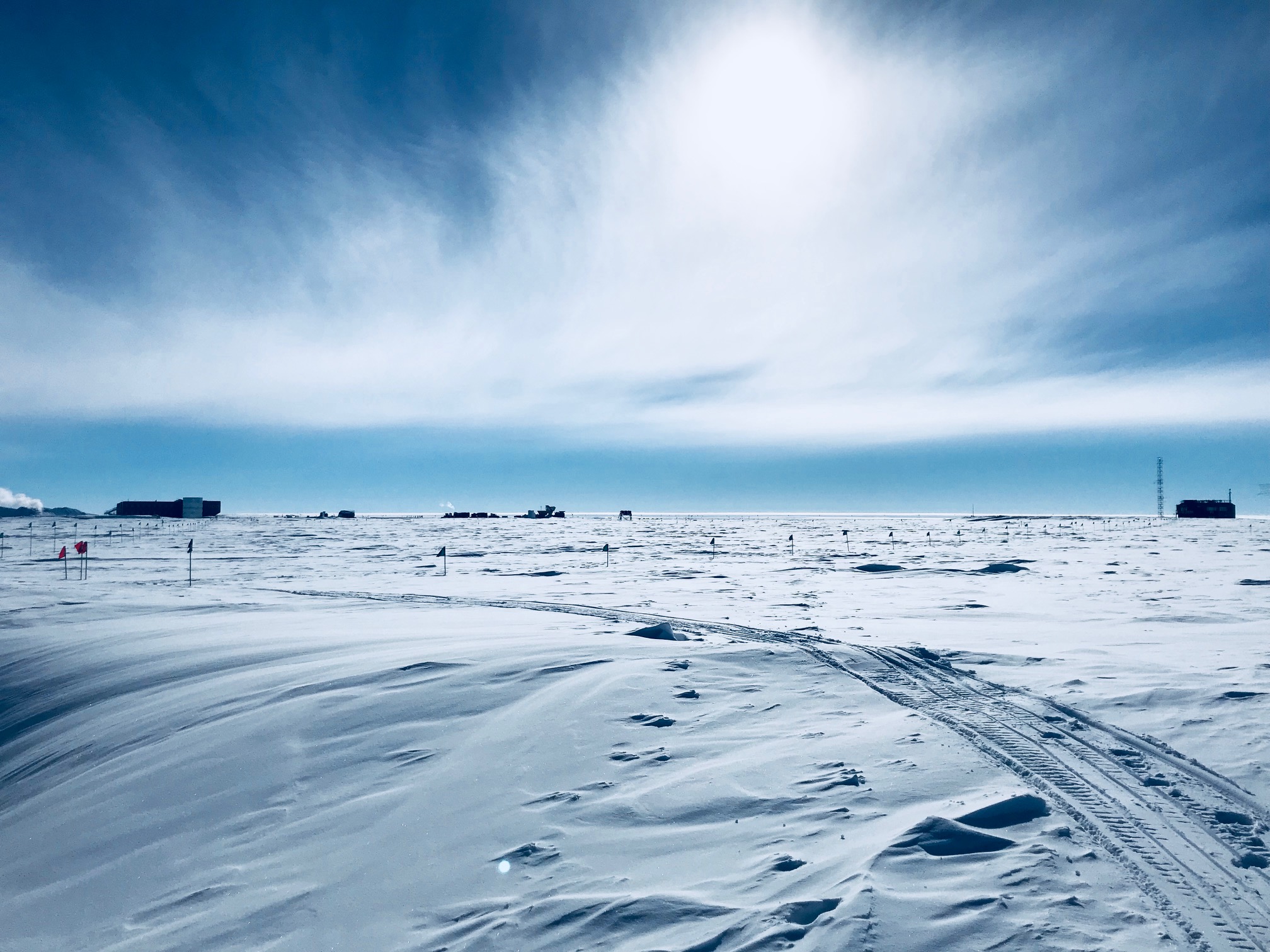
The Amundsen-Scott South Pole Station is a United States scientific research facility located at the geographic South Pole in Antarctica, operated by the National Science Foundation through the United States Antarctic Program. Positioned at an elevation of 2,835 meters on a shifting ice sheet, the station serves as a year-round hub for groundbreaking research in astrophysics, climatology, seismology, and upper-atmosphere physics, enduring months of absolute darkness, high-altitude hypoxia, and temperatures routinely dropping below minus 73 degrees Celsius.
Historical Context and Establishment
The presence of the United States at the geographic South Pole began during the International Geophysical Year in 1956–1957. A team of scientists and U.S. Navy personnel flew in to construct the original station, named in honor of polar explorers Roald Amundsen and Robert F. Scott, who led the historic, competitive expeditions to reach the pole in 1911 and 1912, respectively.
That original facility, known historically as Old Pole, was built directly on the surface snow sheet. Over the decades, the relentless accumulation of wind-blown snow and the immense weight of the overlying ice compacted the surface, eventually crushing the structures beneath meters of solid ice. A second station, characterized by a geodesic dome, was completed in 1975. This iconic structure shielded living quarters and scientific laboratories from wind and blowing snow for nearly three decades. However, by the late 1990s, the dome facility also faced structural limitations due to ice accumulation and increasing population demands. This led to the design and phased construction of the modern Elevated Station, which was dedicated in 2008 and remains the operational baseline of the complex.
Architectural Engineering and Design of the Elevated Station
Building and maintaining a permanent research base at the bottom of the world requires specialized engineering to counteract brutal environmental stressors. The current Elevated Station is an architectural marvel designed to address two primary challenges: accumulating snow drifts and the movement of the underlying ice sheet.
Aerodynamic Form and Elevation
The station is elevated on stilts above the snow surface. This design prevents snow from burying the buildings by utilizing aerodynamic principles. High-velocity winds sweep beneath the structure, carrying loose snow past the compound rather than allowing it to form massive drifts against exterior walls. The hydraulic stilts can be individually adjusted, allowing engineers to raise sections of the station as the snowpack accumulates over time.
Modular Pod Architecture
The facility consists of a series of interconnected pavilion-style pods. These modules divide the station functionally into scientific laboratories, administrative offices, dormitories, a galley, and recreational areas. The modular design enhances safety by compartmentalizing fire risks, limiting noise transmission between heavy machinery and quiet sleeping quarters, and simplifying future expansions or maintenance shutdowns.
| Primary Function | Key Features | Environmental Focus |
|---|---|---|
| Astrophysics | IceCube Observatory, SPT, BICEP arrays | Dark matter, neutrinos |
| Atmospheric Science | Clean Air Facility and balloons | Baseline trace gases, ozone |
| Logistics & Support | Elevated station pods, utility arch | Power generation, waste management |
Scientific Missions and Research Facilities
The geographic South Pole offers a uniquely pristine environment for scientific observation. The extreme altitude, dry atmosphere, minimal carbon dioxide interference, and absence of local light and radio pollution make it an unparalleled terrestrial platform for observing the cosmos and monitoring planetary health.
Astrophysics and Cosmology
The high-altitude dry air reduces atmospheric distortion, allowing telescopes to peer deep into the early universe. Major installations include:
- The IceCube Neutrino Observatory: A massive particle detector encompassing a cubic kilometer of clear Antarctic ice deep below the surface. IceCube uses thousands of digital optical sensors to detect Cherenkov light emitted by secondary particles produced in interactions between high-energy cosmic neutrinos and atomic nuclei.
- The South Pole Telescope (SPT): A 10-meter telescope designed to map the cosmic microwave background radiation, aiding research into dark energy, dark matter, and cosmological inflation.
- BICEP and Keck Array Telescopes: Specialized instruments focused on measuring the polarization of the cosmic microwave background to search for primordial gravitational waves.
Atmospheric and Climate Monitoring
The Global Monitoring Laboratory of the National Oceanic and Atmospheric Administration operates the Atmospheric Research Observatory at the station. This facility tracks long-term trends in greenhouse gases, ozone depletion, aerosol properties, and solar radiation. Because the station sits atop a stable plateau with minimal regional industrial pollution, its air samples provide a pristine baseline for global climate change metrics.
Logistics, Supply Chains, and Operations
Operating an isolated research outpost requires complex logistical coordination. The station experiences two distinct operational periods: the fleeting summer research season and the grueling winter isolation phase.
Summer Season Operations
During the austral summer—spanning from October to February—temperatures are relatively mild, hovering around minus 25 to minus 35 degrees Celsius. This window brings a surge in population, expanding from a skeleton crew of winter-overs to roughly 150 personnel. Heavy cargo, construction materials, fuel, and scientific equipment are brought in via Operation Deep Freeze, a joint service effort heavily reliant on the New York Air National Guard's ski-equipped LC-130 Hercules aircraft. These aircraft fly a grueling route from McMurdo Station on the Antarctic coast across the Transantarctic Mountains to the polar plateau.
Winter Isolation and Survival
When the sun sets in late March, the station enters winter isolation. For nearly nine months, no aircraft can land due to extreme cold that freezes hydraulic fluid and aviation fuel. Temperatures routinely plunge below minus 73 degrees Celsius, with windchills reaching dangerous extremes. A dedicated crew of roughly 50 to 80 individuals remains behind to keep the station powered, heated, and maintained.
The winter crew faces profound psychological and physical challenges. The high altitude imposes chronic mild hypoxia, as atmospheric pressure at the pole mimics an altitude of over 3,200 meters. Coupled with months of unbroken darkness, social isolation, and limited medical evacuation options, winter-over personnel undergo rigorous psychological and physical screening before deployment.
Environmental Management and Sustainability
Operating in a pristine wilderness demands stringent adherence to environmental protocols established under the Antarctic Treaty and the Protocol on Environmental Protection to the Antarctic Treaty, commonly known as the Madrid Protocol.
- Waste Management: All solid waste generated at the station, including wastewater residues, is sorted, packaged, and retrograded off the continent via cargo flights to facilities capable of recycling or safe disposal.
- Energy Efficiency: The station relies on a centralized power plant fueled by AN-8 aviation fuel. Waste heat from the generators is captured and repurposed to melt snow for domestic water supply and to heat the living pods, significantly reducing fuel consumption.
- Conservation Zones: Strict boundaries protect clean-air sectors from localized vehicle and generator emissions, ensuring that atmospheric samples remain uncompromised.
Comparative Overview of Antarctic Research Stations
To understand the unique role of the Amundsen-Scott station, it helps to compare its operational parameters with other major Antarctic facilities.
| Station Name | Operator / Nation | Location Characteristics | Primary Focus |
|---|---|---|---|
| Amundsen-Scott | United States | Geographic South Pole (2,835m elevation) | Astrophysics, neutrino detection, atmospheric baseline |
| McMurdo Station | United States | Ross Island (Coastal, sea level) | Logistics hub, marine biology, broad science support |
| Concordia Station | France / Italy | Dome C, Antarctic Plateau (3,233m elevation) | Deep ice core drilling, astronomy, human physiology |
| Vostok Station | Russia | Inland Antarctic Plateau (3,488m elevation) | Glaciology, subglacial lake exploration |
Frequently Asked Questions
Can tourists visit the Amundsen-Scott South Pole Station?
The station itself is a secure scientific facility and is not open to general tourism. Visitors cannot wander through the laboratories or stay in station dormitories. However, specialized private expedition companies coordinate permitted overflights or overland excursions to the geographic South Pole monument area, subject to strict National Science Foundation regulations and environmental reviews.
How cold does it get at the South Pole?
Temperatures are consistently extreme. During the summer months, temperatures average around minus 28 degrees Celsius. In the dead of winter, ambient temperatures frequently drop below minus 60 degrees Celsius, with extreme records plunging past minus 80 degrees Celsius before factoring in windchill.
Why is the station elevated on stilts?
The stilts prevent snow from accumulating against the sides of the buildings. By elevating the structures above the surface, wind blows underneath the buildings, scouring the snow away and keeping the facilities from being buried over time.
How do people and supplies reach the station?
During the summer operating window, supplies and personnel arrive primarily via ski-equipped LC-130 cargo aircraft operated by the military and civilian contractors. During the dark winter months, no aircraft can land, completely cutting off physical access until the return of light and warmer weather in the spring.
What is the purpose of the IceCube Neutrino Observatory?
IceCube detects ghost-like subatomic particles called neutrinos. By capturing the rare flashes of light produced when high-energy cosmic neutrinos interact with the Antarctic ice sheet, scientists can trace the origins of high-energy cosmic rays from deep space, black holes, and distant galaxies.
Conclusion and Operational Outlook
The Amundsen-Scott South Pole Station remains an indispensable cornerstone of global scientific infrastructure. By enduring some of the most hostile conditions on Earth, researchers and support staff unlock mysteries of the universe that cannot be probed anywhere else. Future operations will continue to prioritize energy efficiency, infrastructure resilience, and cutting-edge experimentation, ensuring that human presence at the bottom of the world continues to drive scientific discovery for decades to come.