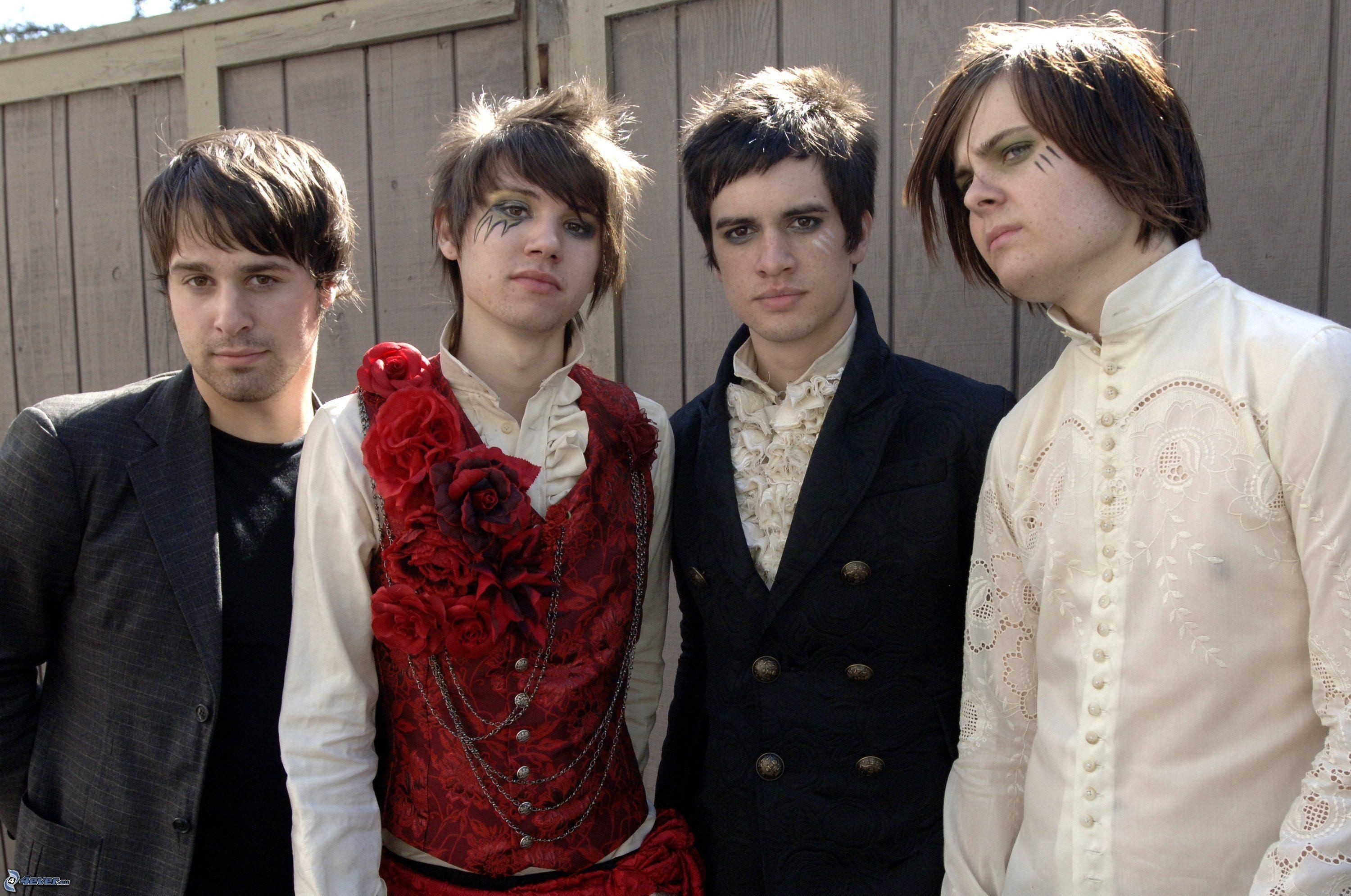
The catalog of Panic! at the Disco represents two decades of evolving alternative rock, from the baroque-pop theatricality of 2005’s A Fever You Can't Sweat Out to the polished pop-rock sensibilities of 2022’s Viva Las Vengeance. As the primary creative project of Brendon Urie, the catalog serves as a sonic timeline documenting shifts in production styles, lyrical themes, and the transition from a full band collective to a solo-led endeavor.
The Foundations: Baroque Pop and Vaudevillian Roots (2005–2007)
The band’s debut album, A Fever You Can't Sweat Out, remains a landmark release in the mid-2000s emo and pop-punk landscape. It challenged conventions by blending synth-pop with vaudevillian influences and baroque instrumentation. Tracks like "I Write Sins Not Tragedies" and "The Only Difference Between Martyrdom and Suicide Is Press Coverage" defined the band's identity through biting, narrative-driven lyrics and high-energy synthesizers.
During this era, the composition process was heavily influenced by the contributions of original guitarist Ryan Ross. The songwriting focused on cynicism, social critique, and theatrical stage presence. The sound was characterized by unconventional song structures and the inclusion of accordions, strings, and piano, which set them apart from their peers in the contemporary scene. For collectors and listeners, this period is often cited as the most distinct era, establishing a baseline of high-concept performance that would characterize much of Urie’s later work.
The Psychedelic Shift and Internal Reconfiguration (2008–2010)
With the release of Pretty. Odd. in 2008, the band underwent a radical stylistic pivot. Moving away from the electronic-infused pop-punk of their debut, they embraced a folk-inspired, psychedelic rock sound heavily influenced by The Beatles and The Beach Boys. Songs such as "Nine in the Afternoon" demonstrated a softer, more organic approach to instrumentation.
This era is particularly significant for understanding the evolution of the catalog, as it marked the final collaboration between the original lineup. Following the departure of Ross and bassist Jon Walker, the project entered a period of transition. The subsequent single "New Perspective" for the Jennifer's Body soundtrack bridged the gap between the psychedelic era and the more pop-centric sound that would follow. This period highlights the band's willingness to experiment with genre, a trait that allowed the project to survive significant changes in its membership.
The Rise of the Solo-Led Era (2011–2016)
The albums Vices & Virtues (2011) and Too Weird to Live, Too Rare to Die! (2013) solidified the band’s transition into a more modern, dance-heavy rock sound. Vices & Virtues retained some of the baroque flair of the debut while incorporating more straightforward melodic hooks. However, it was Too Weird to Live, Too Rare to Die! that fully embraced an electronic, synth-pop aesthetic, characterized by tracks like "Miss Jackson" and "This Is Gospel."
By the time Death of a Bachelor was released in 2016, the project was functionally a solo venture for Brendon Urie. This album effectively merged Sinatra-esque crooning with modern production, resulting in some of the band's highest-charting hits, including "Victorious" and the title track. This phase of the catalog is marked by a focus on vocal dexterity and a shift toward larger, arena-ready anthems.
Final Evolution: From Pop Spectacle to Retro Rock (2018–2022)
In the final years of the project, the catalog moved toward a refined, high-production pop sound, peaking with Pray for the Wicked (2018). This album included the record-breaking hit "High Hopes," which utilized brass arrangements and anthemic choruses to achieve massive mainstream success. It solidified Urie’s reputation as a vocalist capable of bridging the gap between underground rock roots and top-40 pop popularity.
The final album, Viva Las Vengeance (2022), offered a surprising conclusion to the catalog. Recorded live to tape, it moved away from the digital polish of previous albums in favor of a raw, 1970s-inspired rock sound. This decision to prioritize analog warmth and live performance underscored Urie’s desire to close the Panic! at the Disco chapter on his own terms, focusing on the craft of classic rock composition.
Structural Comparison of Key Albums
The following table outlines the stylistic progression across the core studio album catalog, highlighting the sonic identity of each era.
| Album | Primary Genre | Key Production Features | Notable Shift |
|---|---|---|---|
| A Fever You Can't Sweat Out | Baroque Pop/Emo | Synths, accordions, narrative lyrics | Debut establishing theatricality |
| Pretty. Odd. | Psychedelic/Folk Rock | Acoustic guitars, string arrangements | Move toward vintage 60s rock |
| Vices & Virtues | Alternative Rock | Orchestral elements, melodic hooks | Transition to pop-sensibility |
| Too Weird to Live, Too Rare to Die! | Synth-Pop | Heavy electronic beats, dance focus | Modernized, club-oriented sound |
| Death of a Bachelor | Pop-Rock/Jazz-Fusion | Brass, high-octave vocals, polished pop | Solo-led arena rock peak |
| Pray for the Wicked | Pop/Anthem Rock | Horn sections, high-energy hooks | Mainstream radio saturation |
| Viva Las Vengeance | Classic/Garage Rock | Live-to-tape, analog, retro-focused | Raw, performance-centric conclusion |
Frequently Asked Questions
1. Is Panic! at the Disco still releasing new music? No. As of 2026, the project has concluded. Brendon Urie announced the end of the project in early 2023 following the conclusion of the Viva Las Vengeance tour to focus on his family and personal life. There have been no new releases since that time.
2. Why did the band’s sound change so drastically over time? The sound evolved due to shifting creative leadership. The early era featured a collaborative songwriting process between multiple band members with diverse influences. As members left, the songwriting responsibilities fell primarily to Brendon Urie, whose tastes evolved from theatrical pop and electronic dance music toward arena-pop and classic rock.
3. Which album is considered the most successful commercially? Death of a Bachelor and Pray for the Wicked are generally considered the most successful in terms of mainstream reach. Death of a Bachelor was the first Panic! at the Disco album to reach number one on the Billboard 200, while Pray for the Wicked produced massive radio hits like "High Hopes" and "Say Amen (Saturday Night)."
4. Are all the members of the band original? No. The lineup changed frequently after the release of Pretty. Odd., with Ryan Ross, Jon Walker, and Spencer Smith eventually leaving the project. By the end of the band's tenure, the entity was essentially a solo project under the name Panic! at the Disco, with Urie as the sole permanent member.
5. Is the live-to-tape approach of the final album common in their catalog? It was not. The move to record Viva Las Vengeance live to tape was a specific artistic choice to capture the raw energy of 1970s rock. Most of the band’s previous albums, particularly from Too Weird to Live, Too Rare to Die! onward, relied heavily on digital production, multi-tracking, and precise studio editing.
Expert Guidance for Listeners
For those looking to explore the catalog, the best approach is to categorize the discography by the era that suits your specific musical preferences. If you gravitate toward narrative-heavy, dramatic music, prioritize the debut. If you prefer polished, anthemic pop-rock, the later albums from 2016 to 2018 provide the most consistent experience.
Listeners should note that because the project spanned seventeen years of development, no single album acts as a perfect representative for the whole. Understanding the timeline of these releases—and the personnel changes that accompanied them—is essential for appreciating why the sound changed so radically between 2005 and 2022. For those using streaming platforms, it is recommended to listen to the albums in chronological order to hear the evolution of the production techniques and the maturation of Urie's vocal range.