Aquaporins are specialized integral membrane proteins that function as highly selective pores, facilitating the rapid movement of water molecules across cellular membranes while excluding ions and other solutes. By maintaining fluid homeostasis, these channels are essential for physiological processes ranging from kidney concentration and ocular transparency to brain volume regulation and skin hydration, with their dysfunction directly implicated in numerous clinical pathologies.
The Molecular Architecture of Aquaporins
Aquaporins (AQPs) are evolutionarily conserved proteins belonging to the Major Intrinsic Protein (MIP) family. Structurally, they exist as homotetramers within the plasma membrane, but each individual monomer functions as an independent water channel. The architecture of an AQP monomer is characterized by six transmembrane alpha-helices that enclose the central water-conducting pore.
The selectivity of these channels is defined by two primary filters. First, the size-exclusion filter—a narrow constriction point formed by the ar/R (aromatic/arginine) selectivity filter—physically prevents larger molecules from passing through. Second, the electrostatic repulsion filter, provided by two conserved NPA (asparagine-proline-alanine) motifs, reorients water molecules as they pass through the channel. This reorientation breaks the "Grotthuss mechanism" of proton hopping, effectively ensuring that water moves through the pore without allowing the transmembrane proton gradient to dissipate.
While classical aquaporins are strictly water-selective, a subset known as aquaglyceroporins (such as AQP3, AQP7, and AQP9) possesses a wider pore diameter, allowing for the transport of small solutes like glycerol, urea, and arsenite alongside water. This structural diversity allows the body to fine-tune transmembrane transport according to specific metabolic demands.
Physiological Roles in Human Health
The distribution of aquaporins across various organs reflects their critical roles in fluid balance. Understanding their healthy function provides the necessary baseline for identifying when their expression or localization patterns contribute to disease.
The Renal System
The kidneys are perhaps the most prominent site of AQP expression. AQP1, AQP2, AQP3, and AQP4 are expressed in distinct segments of the renal tubule. AQP1 is constitutively expressed in the proximal tubule and the descending limb of the loop of Henle, where it facilitates the bulk reabsorption of water. AQP2, however, is regulated by vasopressin (antidiuretic hormone). When vasopressin levels rise, AQP2 is trafficked from intracellular vesicles to the apical membrane of collecting duct cells, enabling the final concentration of urine.
The Central Nervous System
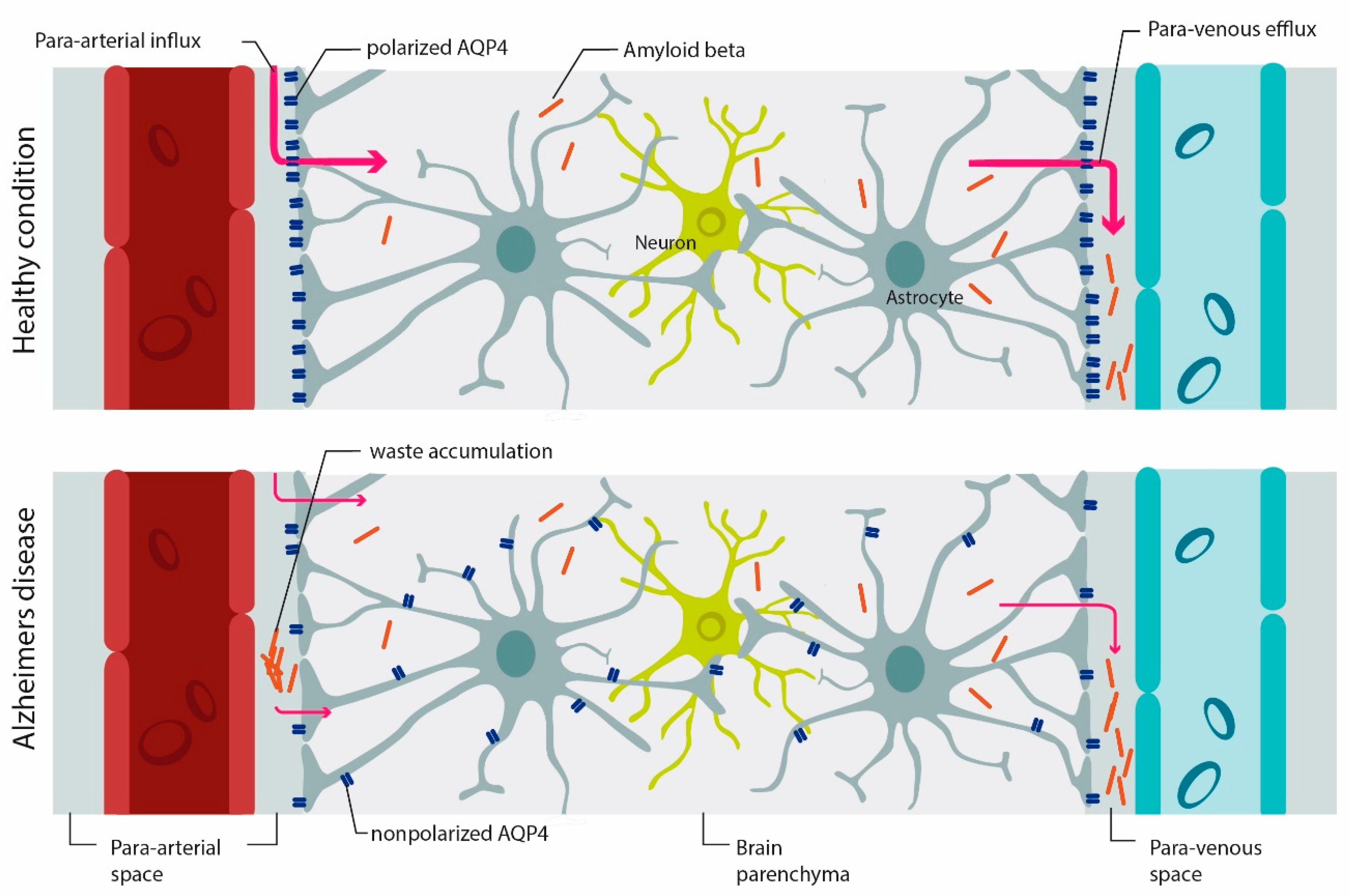
In the brain, AQP4 is highly localized to the perivascular endfeet of astrocytes. It plays a pivotal role in the glymphatic system—a macroscopic waste clearance pathway—by facilitating the exchange of cerebrospinal fluid and interstitial fluid. This movement is essential for clearing metabolic byproducts, including amyloid-beta, and for maintaining intracranial pressure.
Ocular and Exocrine Function
AQP0 is found in the lens of the eye, where it contributes to lens transparency and homeostasis. Mutations in AQP0 are a known cause of congenital cataracts. Similarly, aquaporins facilitate saliva production in the salivary glands and sweat secretion in the skin, showcasing their systemic importance beyond major organ systems.
Pathophysiological Implications and Clinical Conditions
When aquaporin function is lost, gained, or mislocalized, the resulting physiological imbalances manifest as significant clinical conditions. The study of these "aquaporinopathies" has deepened our understanding of cellular transport mechanics.
Nephrogenic Diabetes Insipidus
This condition arises primarily from mutations in the AQP2 gene or the vasopressin V2 receptor. When AQP2 cannot be correctly expressed or trafficked, the kidneys lose the ability to concentrate urine, leading to the excretion of massive volumes of dilute urine (polyuria) and extreme thirst (polydipsia). While hereditary forms are well-documented, acquired forms can occur due to lithium toxicity, which interferes with AQP2 expression.
Neurological Disorders
Dysfunction of AQP4 is strongly implicated in cerebral edema. Following a stroke or traumatic brain injury, the breakdown of the blood-brain barrier often leads to the influx of water into the brain parenchyma, exacerbated by AQP4-mediated transport. Conversely, in Neuromyelitis Optica (NMO), the body produces autoantibodies against AQP4, leading to the destruction of astrocytes and subsequent demyelination in the optic nerves and spinal cord.
Metabolic and Skin Disorders
The role of aquaglyceroporins extends to metabolic health. In adipose tissue, AQP7 deficiency has been linked to the accumulation of glycerol and the development of obesity and insulin resistance. In the integumentary system, AQP3 is critical for skin hydration; reduced expression of this protein is observed in aging skin and contributes to the xerosis (dryness) often seen in chronic dermatological conditions.
Comparative Overview of Select Aquaporin Types
| Aquaporin Type | Primary Location | Key Function | Clinical Association |
|---|---|---|---|
| AQP0 | Eye Lens | Fiber cell permeability | Congenital cataracts |
| AQP1 | Kidney Proximal Tubule | Bulk water reabsorption | Renal water handling |
| AQP2 | Kidney Collecting Duct | Vasopressin-regulated water transport | Diabetes Insipidus |
| AQP3 | Epidermis / Kidney | Water and glycerol transport | Xerosis, skin hydration |
| AQP4 | Brain Astrocytes | CSF/ISF fluid balance | Cerebral edema, NMO |
| AQP7 | Adipose Tissue | Glycerol transport | Obesity, insulin resistance |
Diagnostic and Therapeutic Frontiers in 2026
As of 2026, clinical approaches to addressing aquaporin-related issues have shifted toward more targeted interventions. Diagnostics rely heavily on genetic sequencing to identify mutations in AQP genes, particularly for patients presenting with suspected nephrogenic diabetes insipidus. Imaging modalities, such as advanced magnetic resonance imaging (MRI) sequences, are increasingly capable of mapping water movement in the brain, providing indirect insights into AQP4 activity.
Therapeutic research focuses on modulating AQP activity. Small-molecule inhibitors are being studied as potential treatments for cerebral edema and various tumor types, where AQP overexpression is associated with increased cell migration and angiogenesis. Conversely, research into small-molecule "chaperones" aims to rescue misfolded or mislocalized AQP2 proteins, potentially offering a therapeutic route for patients with specific forms of diabetes insipidus.
Frequently Asked Questions
What happens if aquaporins are blocked in the body?
Blocking aquaporins causes immediate fluid imbalances. If renal AQP2 is blocked, the body cannot concentrate urine, leading to severe dehydration. In the brain, inhibiting AQP4 could potentially reduce edema in the short term but might also disrupt waste clearance, indicating that precision is required for therapeutic targeting.
Are aquaporins involved in cancer progression?
Yes, many cancer cells show upregulated expression of AQP1 and AQP3. These proteins facilitate the high metabolic requirements of rapidly dividing cells and contribute to cell migration, which is a critical step in tumor metastasis. Developing AQP-selective inhibitors is an active area of oncology research.
How does the body regulate the number of aquaporins on cell surfaces?
Regulation occurs through trafficking pathways. For example, in the kidney, vasopressin triggers a signaling cascade involving cAMP that causes storage vesicles containing AQP2 to fuse with the plasma membrane. Once the stimulus (vasopressin) is removed, these channels are internalized via endocytosis.
Can diet or lifestyle affect aquaporin function?
While direct clinical evidence is still evolving, systemic hydration and the maintenance of a healthy metabolic profile are essential for optimal protein function. Certain medications, such as lithium, are known to negatively impact AQP2 function, which is a vital consideration for patient management.
Are there any drugs currently on the market that target aquaporins?
As of 2026, there are no FDA-approved drugs specifically categorized as "aquaporin modulators." Clinical management currently focuses on addressing the symptoms of aquaporinopathies—such as vasopressin analogues or thiazide diuretics for water balance—rather than the direct modulation of the protein channels themselves.
Conclusion and Recommendations
The field of aquaporin research highlights the intricate link between molecular-scale protein function and whole-body health. For clinicians, recognizing the symptoms of an underlying aquaporinopathy—such as unexplained polydipsia or specific neuro-inflammatory presentations—is the first step toward effective management. For researchers, the continued development of highly selective, cell-permeable small-molecule modulators remains the next frontier in treating localized disorders of fluid transport.
If you suspect an aquaporin-related condition, such as chronic polyuria or unexplained neurological symptoms, consult with a specialist in endocrinology or neurology. Genetic testing and specialized imaging are the current gold standards for verifying these complex transport disorders, and early diagnosis remains key to mitigating long-term structural tissue damage.