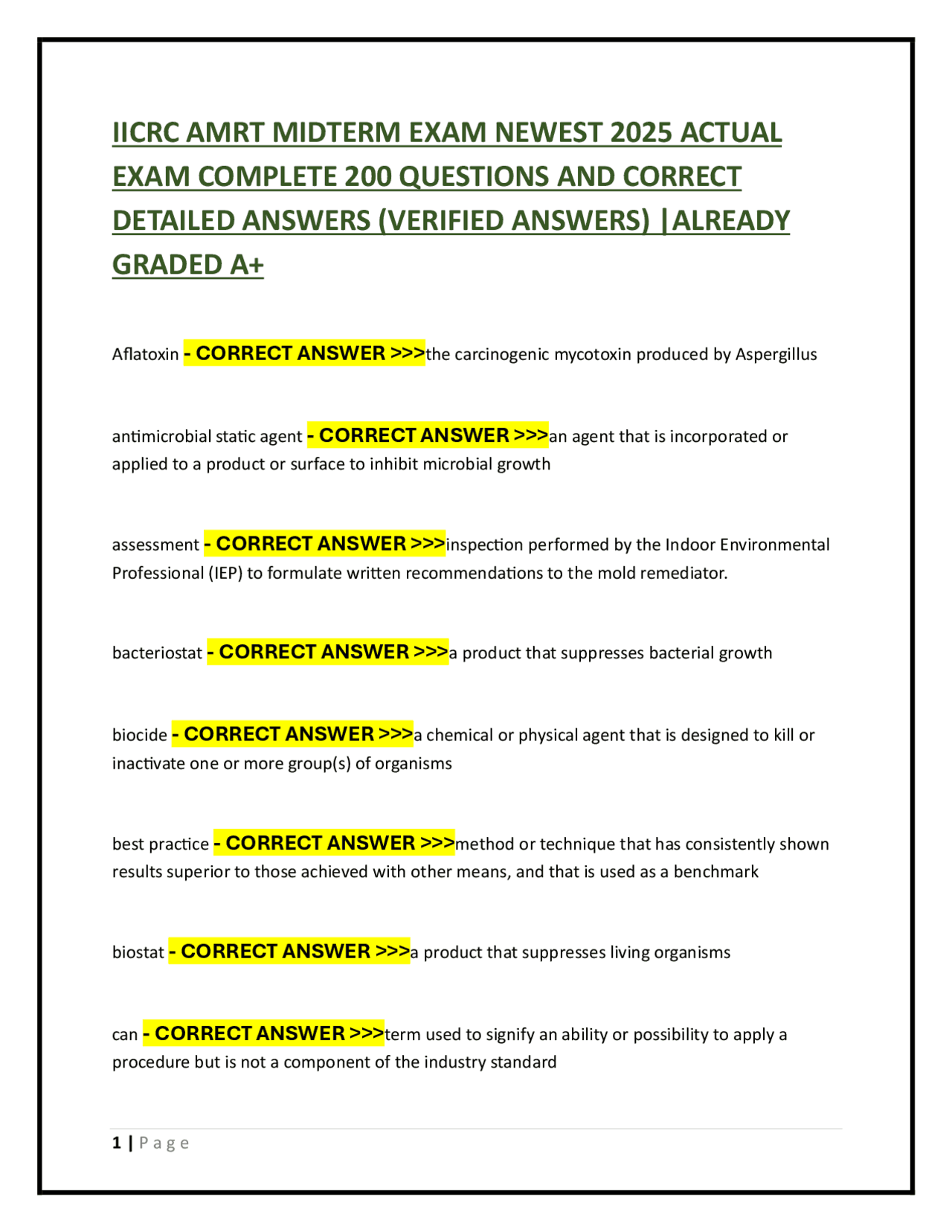
The Institute of Inspection, Cleaning and Restoration Certification (IICRC) establishes the industry-standard framework for mold remediation through the S520 Standard for Professional Mold Remediation. Professionals and property owners seeking "approved" methods must align their practices with these consensus-based guidelines, which focus on safety, documentation, and the scientific containment of microbial growth, whether learned through formal online training or field application.
Defining the IICRC Standard in Mold Remediation
The IICRC does not "approve" specific companies or contractors in the sense of providing a seal of endorsement; rather, it certifies individuals who have demonstrated knowledge of its standards. The "approved" designation often refers to adherence to the ANSI/IICRC S520 Standard. This document serves as the global benchmark for the remediation of mold-damaged environments.
Mold remediation, as defined by the IICRC, is not merely the act of cleaning surfaces. It is a systematic process that includes assessment, containment, moisture control, source removal, and verification. The core philosophy of the S520 is based on the "precautionary principle"—the idea that since mold can pose health risks, the remediation process must minimize the exposure of occupants and workers alike.
The Role of Certification
When individuals seek "IICRC mold remediation online" training, they are typically looking for the Applied Microbial Remediation Technician (AMRT) certification. This certification ensures that the technician understands the chemistry of microbial growth, the importance of structural drying, and the legal and ethical requirements of professional remediation. Online modules provide the theoretical foundation, while examinations and field experience solidify the practitioner’s status as a certified professional.
The Pillars of Professional Practice
Following the S520 standard requires a strict, methodical approach to every project. Deviating from these principles often leads to failed clearance tests or, more dangerously, the cross-contamination of unaffected areas of a building.
1. Assessment and Preliminary Determination
Before any physical remediation begins, a qualified professional must assess the extent of the contamination. This involves:
- Moisture Mapping: Identifying the moisture source—such as a roof leak, plumbing failure, or high humidity—that allowed the mold to colonize.
- Condition Classification: Determining whether the mold is in Condition 1 (normal fungal ecology), Condition 2 (settled spores), or Condition 3 (actual growth/amplification).
2. Containment Protocols
Containment prevents the migration of spores to clean areas. Depending on the scale of the growth, professionals utilize:
- Source Containment: Covering the affected area with plastic sheeting during small-scale removal.
- Local Containment: Creating an enclosure around the work area with negative air pressure systems to ensure that if the seal is breached, air flows into the containment rather than out into the rest of the home.
3. Filtration and Cleaning
High-Efficiency Particulate Air (HEPA) filtration is the backbone of IICRC-aligned remediation. Air scrubbers are used to capture microscopic spores that remain suspended in the air. Cleaning involves the removal of mold from non-porous surfaces and the professional disposal of porous materials (such as drywall or insulation) that cannot be effectively sanitized.
Online Training: Expectations and Limitations
In 2026, the availability of online education for IICRC-related topics has expanded, but it is critical to distinguish between theoretical training and hands-on certification.
The Digital Classroom
Many training providers offer online versions of the foundational coursework for AMRT certification. These courses cover:
- Microbiology Basics: Understanding fungal structures and growth requirements.
- Safety and PPE: Requirements for respiratory protection, hazardous material handling, and containment procedures.
- Legal and Regulatory Landscape: Understanding the liability associated with mold remediation and the importance of professional documentation.
The "Hands-On" Requirement
While the theory can be learned online, the IICRC requires that candidates for professional certification pass a formal examination. Moreover, the industry recognizes that remediation is a physical trade. Online training should be viewed as a prerequisite to professional field mentorship, not a substitute for the tactile experience of managing negative pressure, cleaning methods, and post-remediation verification (PRV).
Comparison of Remediation Standards and Practices
Understanding how the IICRC standard compares to generic "do-it-yourself" or non-certified practices highlights the importance of professional oversight.
| Feature | IICRC-Standard Remediation | Uncertified/DIY Methods |
|---|---|---|
| Moisture Source | Identified and corrected before removal | Often ignored, leading to recurrence |
| Containment | Negative air pressure (HEPA) | None or ineffective plastic masking |
| Cleaning Agents | EPA-registered biocide/mechanical cleaning | Household bleach (often ineffective) |
| Verification | Post-Remediation Verification (PRV) | Visual inspection only |
| Documentation | Detailed log, moisture readings, photos | None |
Common Mistakes in Mold Remediation
Even with a strong grasp of the definitions, practitioners and property owners often fall into common traps that compromise the safety of the indoor environment.
Over-Reliance on Biocides
One of the most persistent myths in mold remediation is that spraying a "mold killer" is sufficient. IICRC standards emphasize that the physical removal of the mold mass (the mycelia and spores) is significantly more important than the application of chemicals. Leaving dead mold in place remains a potential allergen and can trigger health reactions.
Neglecting Negative Air Pressure
A common shortcut is the failure to maintain a pressure differential. Without a negative air pressure machine (air scrubber) exhausting air to the exterior of the structure, even small movements in the room can cause spores to settle in HVAC ducts, carpet, and soft furnishings far from the original site of contamination.
Skipping Verification
The "sniff test" or a clean-looking surface is not a valid standard for success. Professional practice requires a Post-Remediation Verification (PRV). This is often performed by an independent third party—an Indoor Environmental Professional (IEP)—who conducts air sampling or tape lifts to confirm that the spore count in the treated area is comparable to the outside air and that the area is safe for re-occupancy.
Frequently Asked Questions
Is there a single, government-issued "IICRC approval" for companies?
No. The IICRC is a certification body for individuals. It does not certify companies. When a company claims to be "IICRC Certified," they mean they employ staff who hold valid certifications. You should verify an individual’s current credentials through the IICRC’s official global locator.
Can I become a certified mold remediator entirely online?
You can complete the necessary study hours and coursework online; however, the certification process involves formal examinations and often specific practical requirements managed by authorized instructors. You must check with individual schools to see which components are available remotely for the current year.
What is the difference between a mold remediator and an indoor environmental professional (IEP)?
The remediator performs the physical work of cleaning and removing the mold according to the S520 standard. The IEP acts as the investigator; they write the remediation plan and perform the final clearance testing. It is a best practice to keep these two roles separate to avoid conflicts of interest.
Does the IICRC standard cover sewage-related mold?
Yes, but it interacts with other standards. If the mold growth is the result of a water damage event involving sewage (Category 3 water), the IICRC S500 (Water Damage Restoration) standard takes precedence regarding the cleanup of the water damage, while the S520 addresses the resulting microbial growth.
How often should I check for mold after a professional remediation?
Once a property has been remediated according to the S520 standard and the moisture source has been permanently corrected, routine monitoring for mold is not required. However, annual inspections of high-risk areas like basements, attics, and plumbing chases are recommended as part of general property maintenance.
Recommendation for Next Actions
If you are a property owner facing a mold issue, do not attempt to "self-certify" by reading online material alone. Your priority should be to engage an independent Indoor Environmental Professional (IEP) to perform an initial assessment. If the contamination is significant, use the official IICRC professional locator tool to find a technician who holds the Applied Microbial Remediation Technician (AMRT) certification.
If you are a professional looking to enter the industry, visit the official IICRC website to identify an authorized school that offers the AMRT curriculum. Ensure the course is currently recognized for the 2026 certification cycle and verify that the program includes the required examination protocols to ensure your training is valid for industry employment.