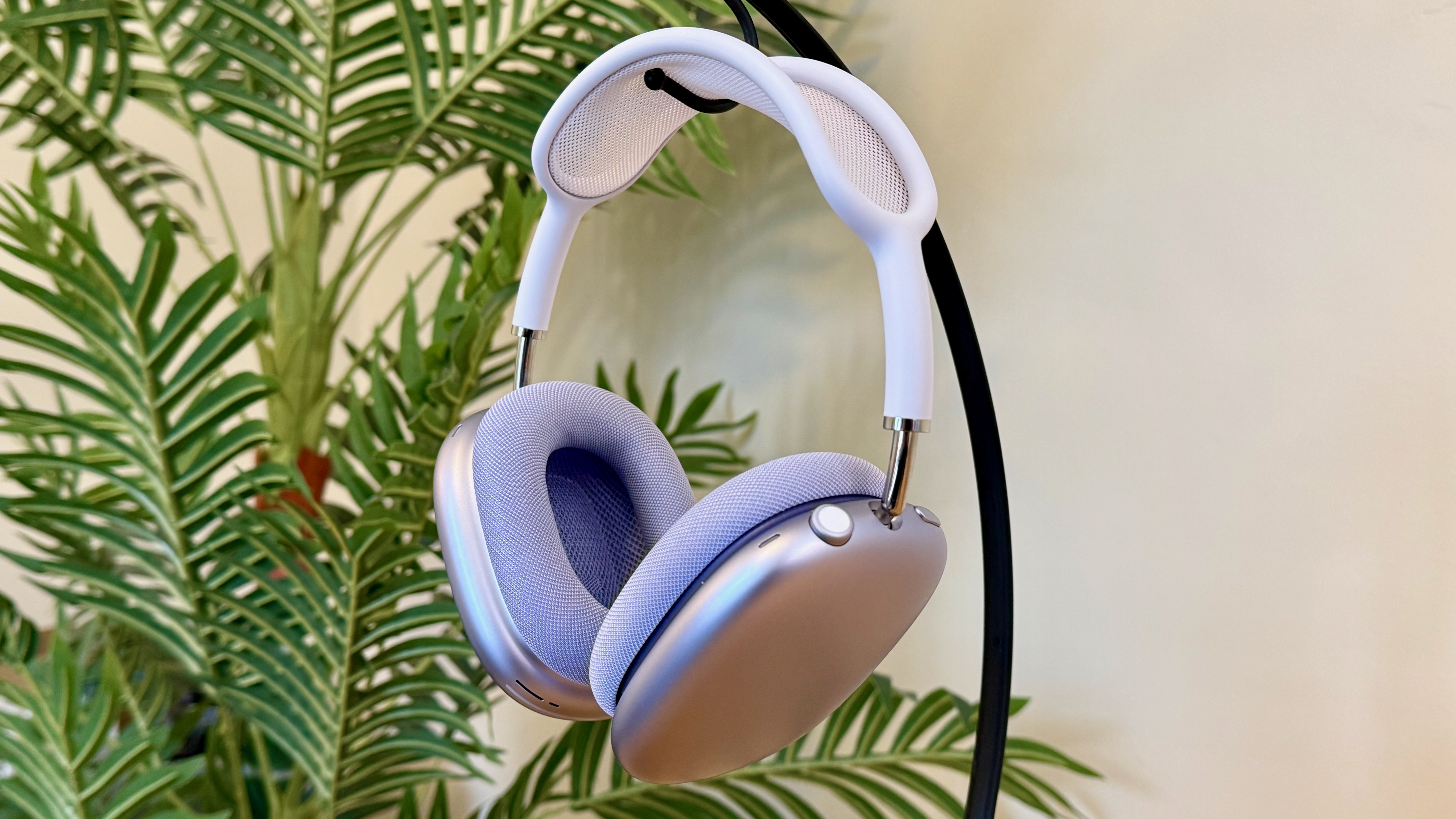
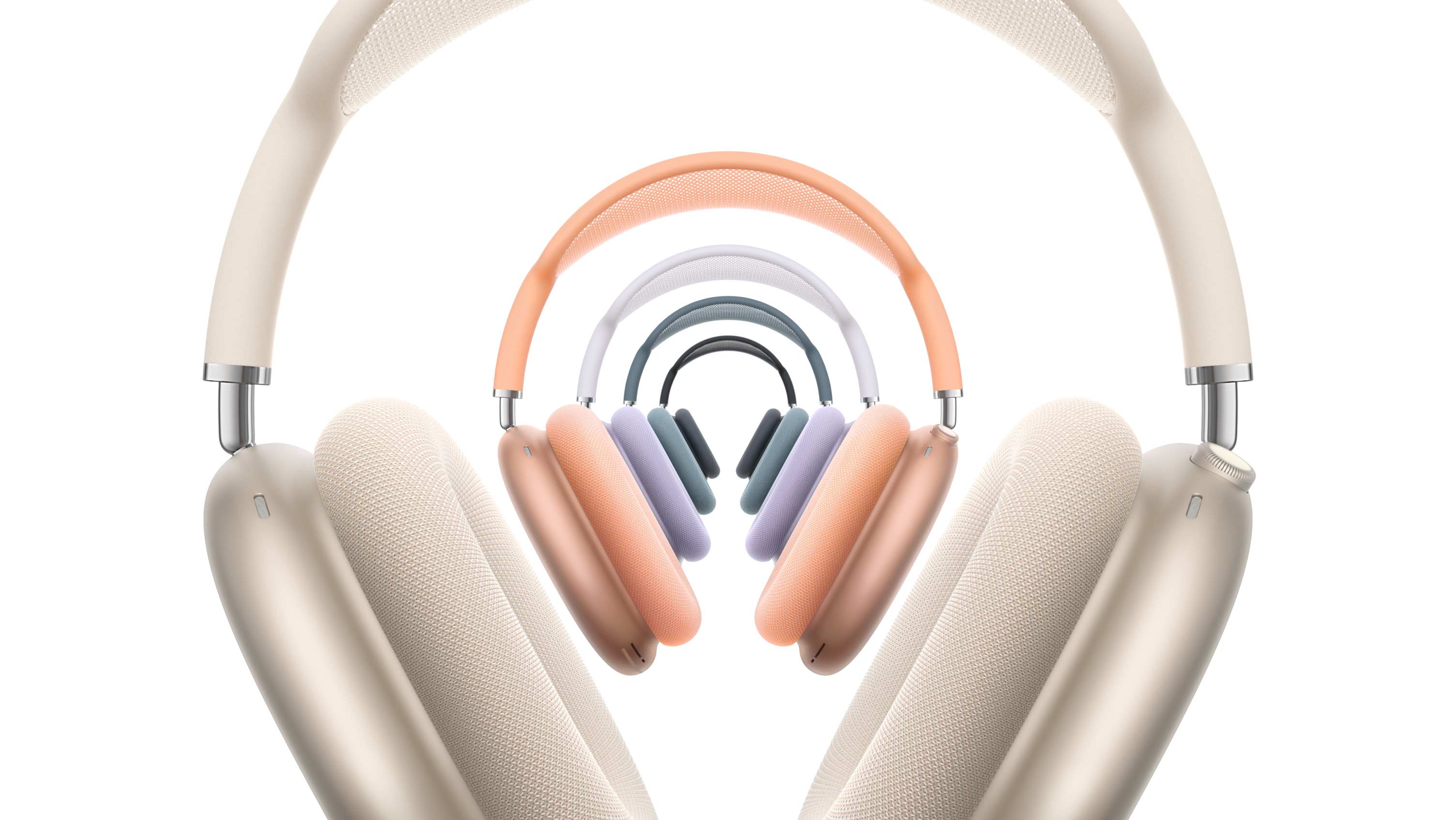
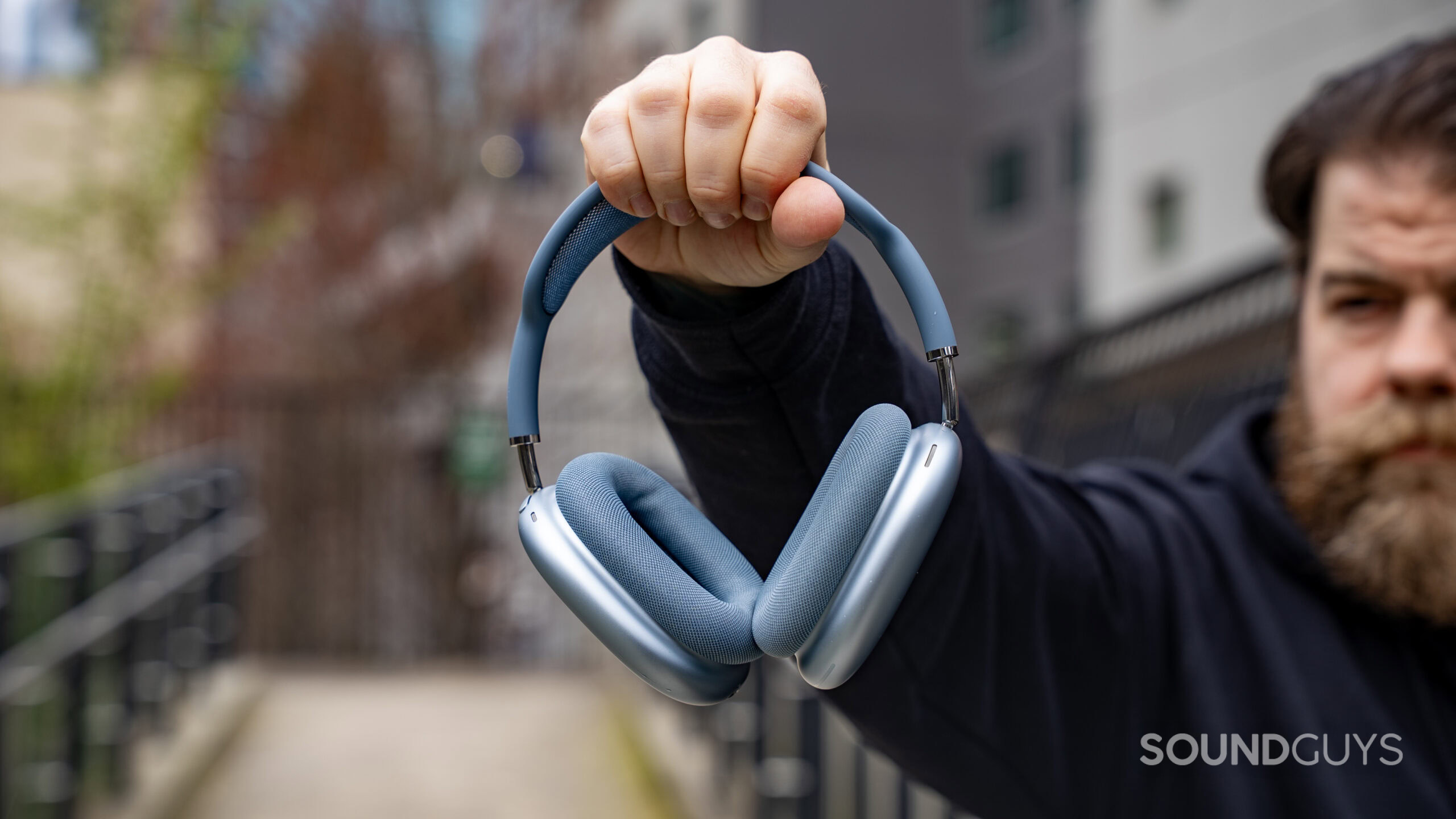
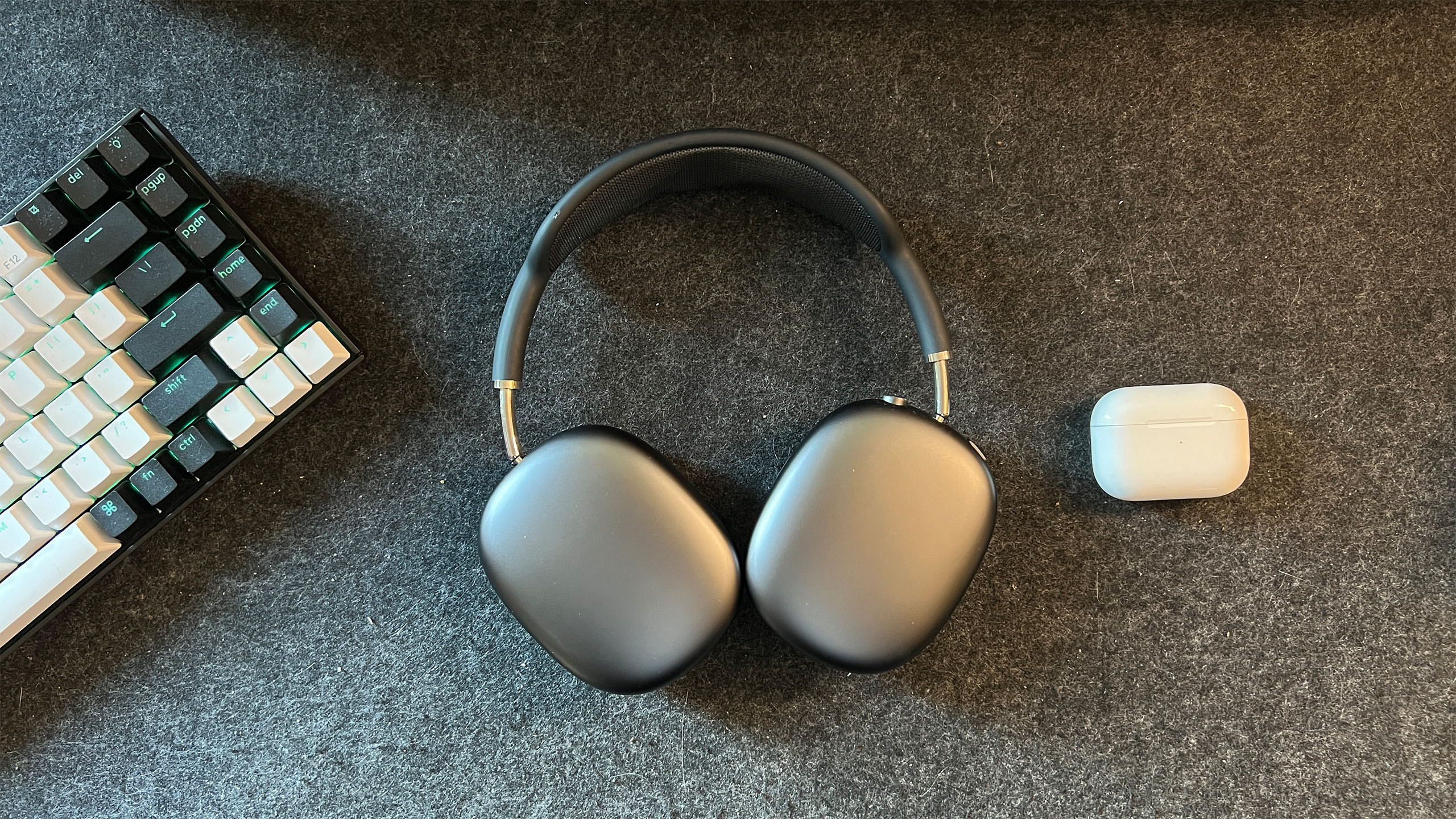
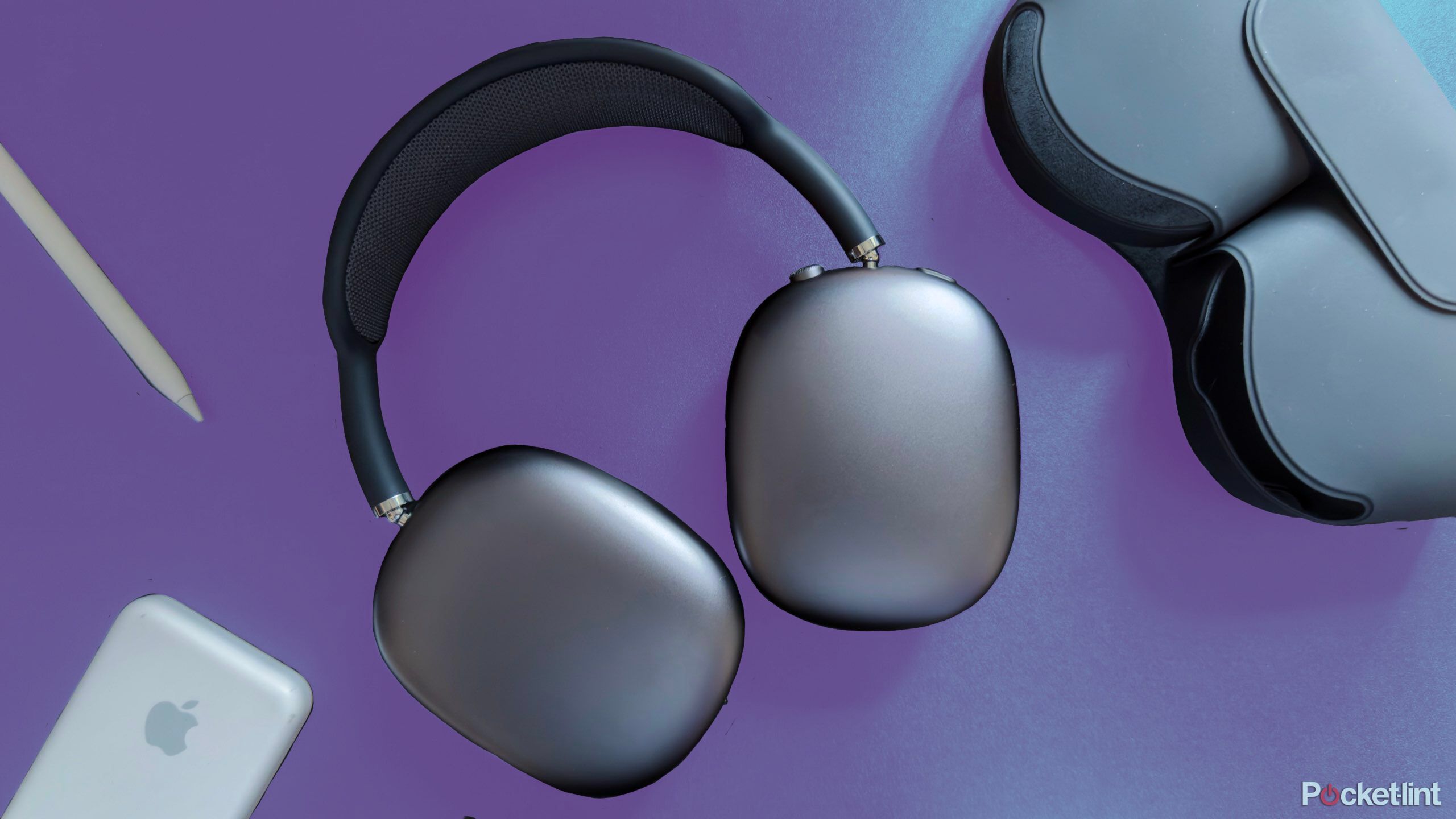
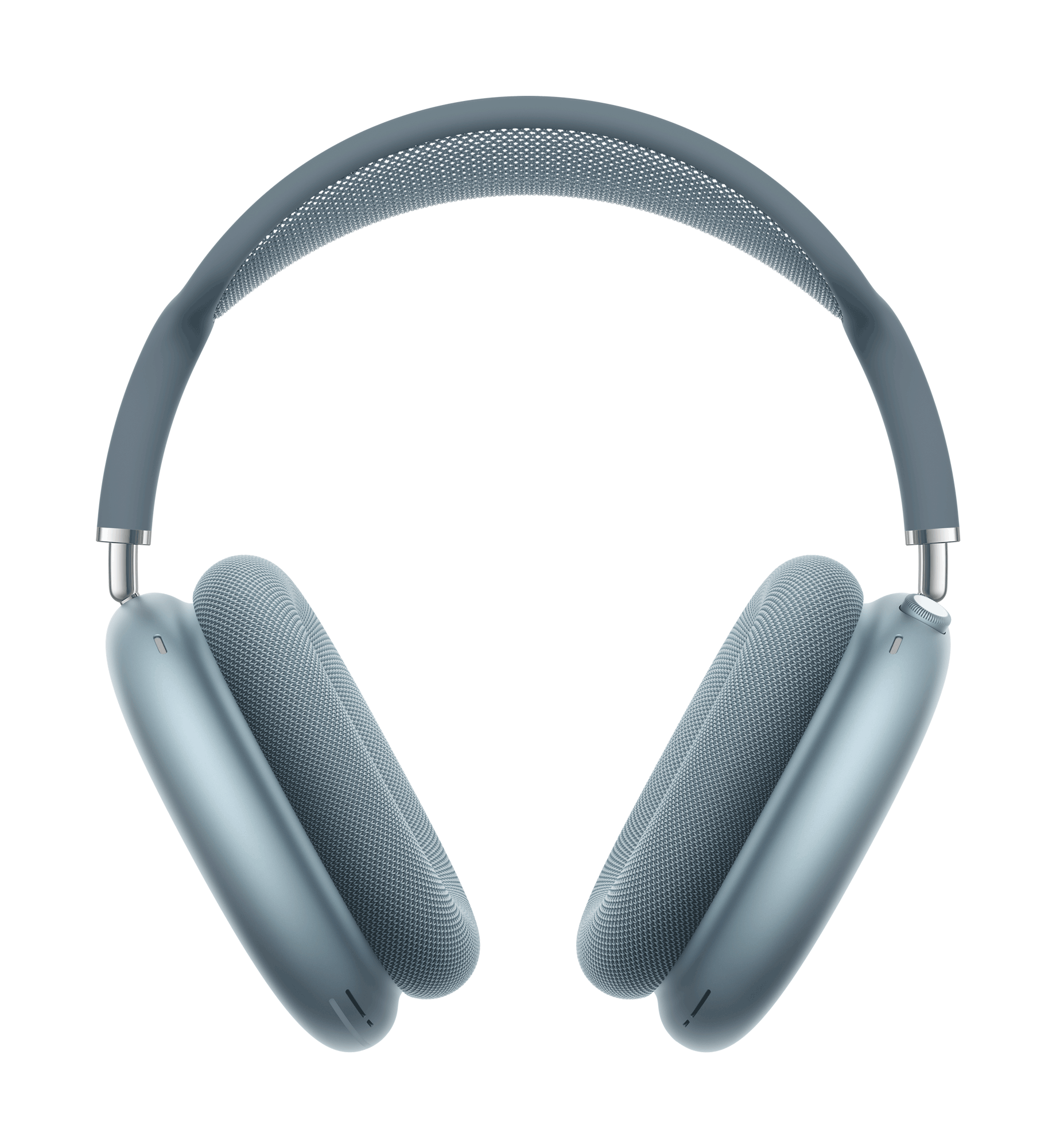
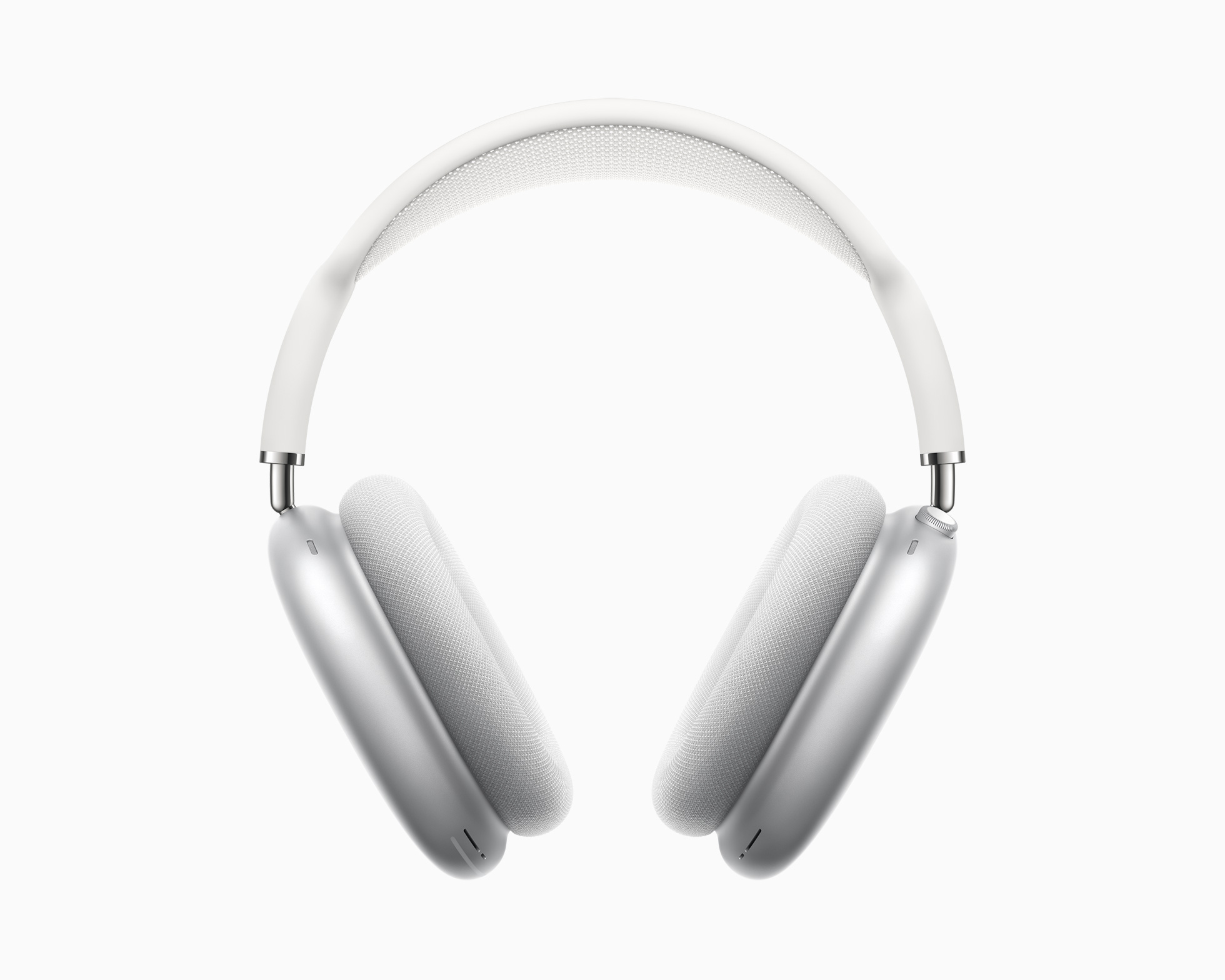
The Apple AirPods Max weigh 384.8 grams (13.6 ounces), making them noticeably heavier than premium competitors like the Sony WH-1000XM5 (250 grams) and Bose QuietComfort Ultra (254 grams). However, common misconceptions exaggerate their daily discomfort; custom mesh headbands and engineered clamping pressure effectively distribute mass to minimize localized top-of-head pressure.
Official Specifications: How Heavy Are the AirPods Max?
When examining high-end active noise-canceling (ANC) headphones, mass is one of the most immediate physical characteristics users notice. Apple lists the official weight of the AirPods Max at 384.8 grams (13.6 ounces). The included Smart Case adds an additional 134.5 grams (4.74 ounces), bringing the combined travel weight to 519.3 grams (18.34 ounces).
To understand why the AirPods Max weigh significantly more than plastic-bodied alternatives, it helps to examine their material construction. Rather than using injection-molded plastic shells, Apple engineered the headphones around a rigid framework of premium metals:
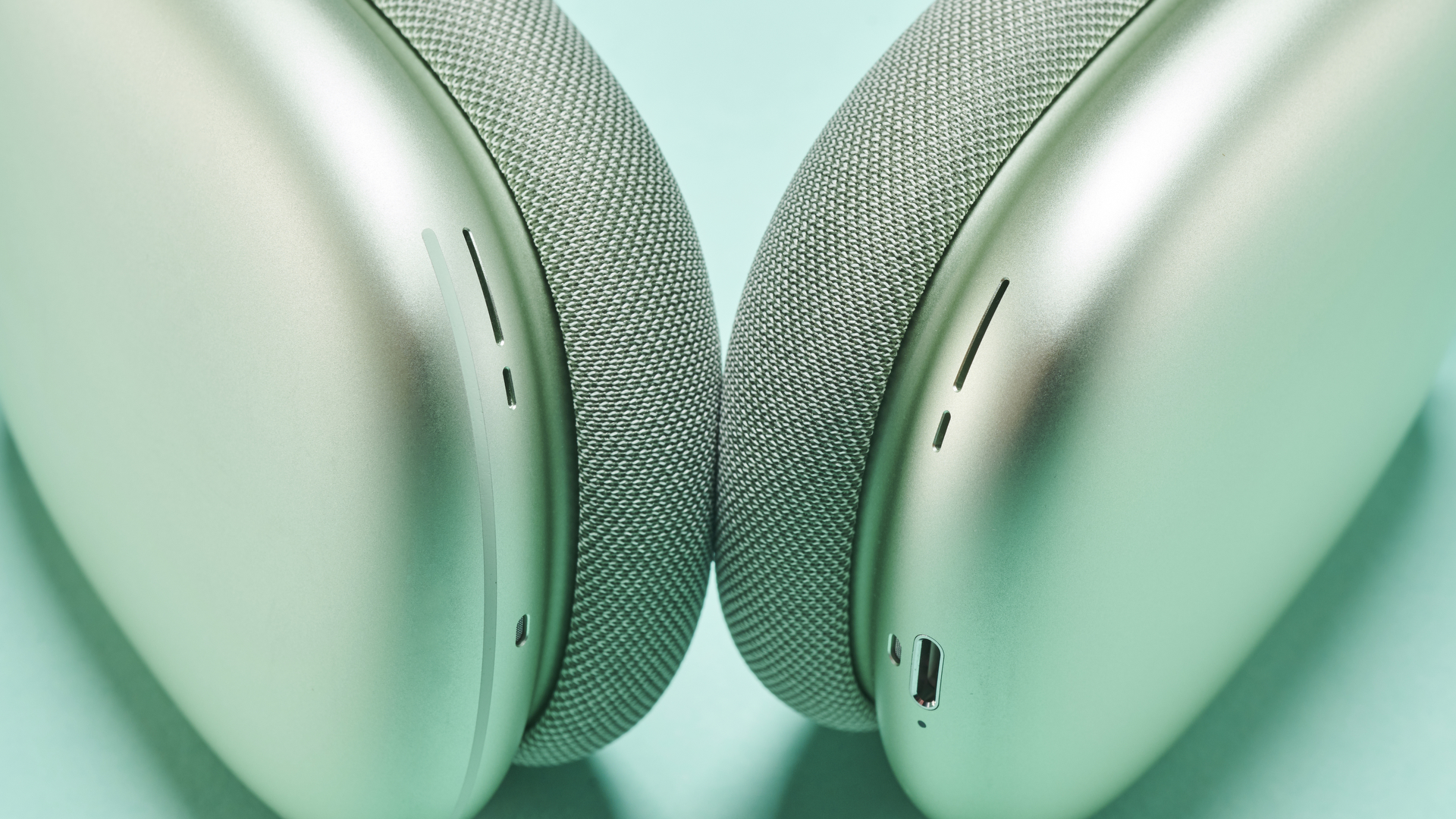
- Earcups: Dual anodized aluminum cups that house the acoustic chambers, internal digital signal processors (DSP), custom dynamic drivers, and nine total microphones.
- Headband Frame: A continuous stainless steel frame that provides structural rigidity and consistent tension across varying head sizes.
- Telescoping Arms: Stainless steel extension rods with smooth mechanical damping that maintain set lengths without notched detents.
- Canopy: A synthetic knit mesh fabric stretched across the frame to suspend the headband over the wearer's head.
- Ear Cushions: High-density acoustic memory foam encased in a custom textile fabric, attached via magnetic alignment rings.
- Internal Hardware: Custom 40mm dynamic drivers built with dual neodymium ring magnet motors designed to minimize harmonic distortion across the audible frequency spectrum.
This combination of dense structural metal, heavy driver magnet assemblies, and robust mechanical hinges explains the headphone's baseline physical weight.
Misconception 1: Physical Mass Equals Immediate Discomfort
The most widespread assumption surrounding the AirPods Max is that a 384.8-gram headphone inevitably causes top-of-head pain within minutes of use. This claim confuses physical mass with perceived surface pressure.
The physics of ergonomic comfort relies on the fundamental pressure formula:
$$\text{Pressure} = \frac{\text{Force}}{\text{Area}}$$
In headphone design, force represents gravity acting on the total mass of the device. If a headphone weighs 250 grams but concentrates that weight along a narrow 1-inch strip of foam at the center of the headband, all downward force focuses on a tiny contact area on the parietal bone of the skull. This results in localized high pressure, creating "hot spots" and deep discomfort over extended sessions.
Apple addressed its higher overall mass by expanding the surface contact area. The knit mesh canopy spans the entire width of the stainless steel frame, distributing the downward force across a broad portion of the skull. By increasing the area variable ($A$), the resulting downward pressure ($P$) per square centimeter is lower than that generated by some lighter headphones featuring narrow, minimally padded headbands.
While the absolute mass remains higher, wearers with average to larger head sizes often report that the AirPods Max feel surprisingly light when sitting stationary, precisely because the weight is distributed broadly across the cranium rather than digging into a single focal point.
Misconception 2: AirPods Max Cause Inevitable Neck Strain
Another common claim is that wearing the AirPods Max will lead to cervical spine fatigue or neck pain regardless of how you use them. While biomechanical fatigue can occur, attributing neck strain solely to the headphone's mass oversimplifies human anatomy and posture dynamics.
In a neutral upright position, the human head weighs approximately 10 to 12 pounds (4.5 to 5.4 kg). The cervical spine and surrounding postural muscles—such as the trapezius and sternocleidomastoid—are naturally aligned to support this load. Adding 384.8 grams (less than 1 pound) to the top of the skull increases total vertical load by roughly 8%, which a healthy neck handles easily during stationary activities like desk work or relaxed listening.
Neck strain associated with the AirPods Max usually stems from two distinct factors:
- Forward Head Posture ("Tech Neck"): When tilting the head forward at a 30-degree or 45-degree angle to look at a phone or laptop, the effective gravitational torque on the neck muscles jumps from 12 pounds to between 40 and 49 pounds. Adding nearly 400 grams of mass to the end of that lever arm noticeably increases muscular exertion.
- Dynamic Head Movement: Mass resists acceleration due to inertia. When walking briskly, turning your head rapidly, or leaning over, the mass of aluminum earcups creates a noticeable rotational moment. The neck muscles must work harder to stabilize the head during quick movements compared to when wearing a lightweight 250-gram plastic headphone.
For stationary desk use with proper ergonomic posture, the weight of the AirPods Max rarely causes true muscular neck strain. Discomfort during movement, however, is a valid trade-off of their heavy material build.
Misconception 3: Metal Construction Is Just a Cosmetic Choice
A third misconception is that Apple chose anodized aluminum earcups and a stainless steel headband purely for luxury aesthetic appeal, unnecessarily adding mass without functional benefit.
In acoustic engineering, housing density and structural rigidity directly influence sound reproduction. Polycarbonate and ABS plastic earcups, while lightweight, are prone to subtle mechanical flex and internal acoustic resonance when exposed to high sound pressure levels or deep bass frequencies. This flexing can introduce subtle distortion or unwanted acoustic coloration into the signal.
Anodized aluminum offers superior structural stiffness and mass loading:
- Acoustic Damping: Rigid aluminum walls minimize shell resonance, allowing the dynamic driver's back-wave pressure to be controlled strictly through designed internal ports rather than uncontrolled housing vibrations.
- Low Distortion: By securing the 40mm driver chassis to a dense frame, driver excursion stays precise, contributing to the device's low Total Harmonic Distortion (THD), even at high output levels.
- Thermal and Electrical Shielding: Aluminum housings effectively shield internal wireless antennas and signal processors from external electromagnetic interference while aiding heat dissipation from internal amplifiers.
- Long-Term Durability: Steel telescoping arms and aluminum cups withstand fatigue, drop impacts, and twisting forces far better than plastic headband joints, which frequently crack or snap at tension stress points over time.
While plastic headphones prioritize low mass, the structural mass of the AirPods Max serves a direct role in their acoustic clarity, passive isolation capability, and physical durability.
Misconception 4: High Clamping Force Makes the Weight Feel Worse
When users experience discomfort from heavy headphones, they often blame excessive clamping force—the horizontal inward pressure exerted by the earcups against the sides of the head. In reality, clamping force and vertical mass distribution work together, and reducing clamping force entirely can actually make heavy headphones feel heavier.
Headphone ergonomics depend on a balance between vertical downward force (gravity) and horizontal lateral force (clamping):
- Knit Mesh Canopy: Spreads Vertical Force Downward
- AirPods Max Earcups: Subject to Lateral Clamping Force on both sides
- Acoustic Foam Pads: Transfers Weight to Sides of Head
If a heavy headphone lacks sufficient lateral clamping force, 100% of its gravitational mass pulls straight down onto the top of the head, causing rapid top-of-head pain and allowing the earcups to slide downward with slight head movements.
Optimal clamping force transfers a portion of the vertical mass off the top of the skull and onto the temporal and mastoid bones around the ears via high-friction memory foam cushions. The broad, thick acoustic foam pads of the AirPods Max are specifically sized to absorb this lateral pressure without pinching jaw joints or temporal blood vessels.
However, users with wider-than-average head profiles may experience initial over-clamping. Over time, the internal spring steel frame gently adjusts to continuous use, balancing lateral load-sharing with vertical suspension.
Misconception 5: Model Revisions Reduced the Physical Weight
With the update of the AirPods Max line to feature USB-C charging ports and new color options, some buyers assumed Apple reduced the device's physical mass to address user feedback.
This is incorrect. Official technical specifications confirm that the physical weight of the AirPods Max remains identical across hardware iterations:
- AirPods Max (Lightning, 2020): 384.8 grams (13.6 oz)
- AirPods Max (USB-C, 2024–2026): 384.8 grams (13.6 oz)
The update changed the physical data and charging port from Lightning to USB-C and adjusted available color finishes, but left the internal acoustic architecture, driver design, stainless steel frame, aluminum earcups, and overall mass untouched.
Comprehensive Weight Comparison: AirPods Max vs. Competitors
To evaluate how the AirPods Max compare across the premium wireless headphone market, the table below lists key mass metrics, construction materials, and headband suspension designs across current flagship models.
| Headphone Model | Weight (Grams / Ounces) | Earcup Material | Frame / Headband Material | Suspension Mechanism |
|---|---|---|---|---|
| Apple AirPods Max | 384.8 g / 13.6 oz | Anodized Aluminum | Stainless Steel | Breathable Knit Mesh Canopy |
| Sony WH-1000XM5 | 250.0 g / 8.8 oz | Acrylonitrile Butadiene Styrene (ABS) Plastic | Lightweight Synthetic Resin | Narrow Synthetic Leather Cushion |
| Bose QuietComfort Ultra | 254.0 g / 8.98 oz | Polycarbonate Plastic | Cast Aluminum Hinge / Plastic Frame | Padded Leatherette Headband |
| Sennheiser Momentum 4 | 293.0 g / 10.3 oz | Polycarbonate Plastic | Reinforced Plastic / Fabric Wrap | Wide Silicone Padded Band |
| Focal Bathys | 350.0 g / 12.3 oz | Aluminum & Magnesium | Real Leather / Aluminum Yokes | Microfiber Padded Leather Band |
| Master & Dynamic MW75 | 438.0 g / 15.4 oz | Anodized Aluminum & Tempered Glass | Stainless Steel & Beryllium Drivers | Memory Foam & Lambskin Leather Band |
As shown in the table, while the AirPods Max are noticeably heavier than plastic-focused offerings from Sony and Bose, they fit logically alongside high-end metal audiophile designs like the Focal Bathys and Master & Dynamic MW75.
Practical Ergonomic Adjustments for AirPods Max Owners
If you find the physical mass of the AirPods Max challenging during long listening sessions, small adjustments to fit and wearing habits can significantly reduce fatigue.
- Incorrect Setup:
- High Headband Tension
- High Top-of-Head Load
- Forward Head Posture
- Correct Setup:
- Extended Arms (Custom)
- Mesh Suspension Active
- Neutral Spine Alignment
1. Optimize Arm Extension to Engage the Canopy
The most common adjustment error is keeping the telescoping arms set too short. When the arms are retracted too tight, the frame pulls downward hard onto the top of the skull, flattening the mesh canopy entirely against the stainless steel arms.
- Adjustment Steps: Extend the arms slightly longer than you think necessary. Position the earcups fully over your ears, then let the headband rest naturally. Ensure the knit mesh is suspended above your head, keeping the hard metal frame from touching your skull.
2. Maintain Neutral Posture During Desk Work
Because inertia scales with mass, leaning forward over a computer monitor doubles the strain on your neck while wearing a 384.8-gram headset. Align your chair height, monitor level, and backrest so your head sits squarely over your shoulders. A neutral spine minimizes the felt weight of any over-ear headphone.
3. Consider Aftermarket Headband Accessories Carefully
Many users attempt to cushion the AirPods Max by adding silicone headband covers or zipper-wrapped foam pads.
- Silicon Covers: Useful for protecting the original mesh from sweat or hair oil, but they add 15 to 30 grams of mass and do not improve weight distribution.
- Third-Party Foam Pads: Adding thick foam pads directly underneath the knit mesh reduces the effective surface area of the broad canopy, turning a wide distribution area into a narrow pressure point. In most cases, these accessories worsen top-of-head comfort rather than improving it.
Frequently Asked Questions
Why are the AirPods Max so much heavier than Sony or Bose headphones?
Apple chose premium metals like anodized aluminum for the earcups and stainless steel for the headband frame, whereas competitors rely heavily on lightweight ABS plastics and polycarbonates. Apple's custom dynamic drivers also feature larger neodymium magnet assemblies, which add physical weight but enhance transient response and reduce harmonic distortion.
Do the AirPods Max cause head hot spots during long listening sessions?
Hot spots occur when downward pressure is concentrated on a small area of the skull. Thanks to the wide knit mesh canopy, the AirPods Max distribute mass across a broad area, preventing hot spots for most wearers. However, users with smaller head shapes may experience localized pressure if the canopy collapses completely against the outer metal frame.
Can you exercise or run in the AirPods Max despite their weight?
The AirPods Max are not designed for high-impact workouts or running. Their 384.8-gram mass creates high inertia, causing the earcups to shift during rapid movements. Additionally, they lack an official IP rating for water or sweat resistance, and sweat can degrade the fabric ear cushions and mesh canopy over time.
Did Apple lower the weight in the USB-C version of the AirPods Max?
No. The updated AirPods Max featuring USB-C retain the exact same weight of 384.8 grams (13.6 ounces) as the original Lightning model. The changes were limited to the charging interface, updated color options, and compliance with modern hardware standards.
How does clamping force affect how heavy the headphones feel?
Clamping force pushes the earcups horizontally against the sides of your head. When properly adjusted, this lateral pressure transfers a portion of the downward mass off the top of your head and onto the area surrounding your ears. If clamping force is too loose, the entire weight pulls straight down on your skull, making the headphones feel heavier.
Final Recommendation: Balancing Weight Against Performance
The physical mass of the Apple AirPods Max is a deliberate design trade-off rather than an oversight. By prioritizing structural aluminum, stainless steel mechanics, and high-density magnetic drivers over lightweight plastics, Apple delivered exceptional passive noise isolation, low spatial distortion, and a durable luxury build.
- Who they are ideal for: Desk workers, home listeners, office professionals, and frequent flyers who stay stationary, maintain good sitting posture, and value premium acoustic reproduction and build quality over minimal mass.
- Who should choose an alternative: Wearers with sensitive cervical spines, users with smaller head profiles where mesh canopies cannot fully suspend, or anyone seeking a portable headphone for active commuting and physical exercise. For these use cases, lighter plastic alternatives like the Sony WH-1000XM5 or Bose QuietComfort Ultra remain more practical choices.