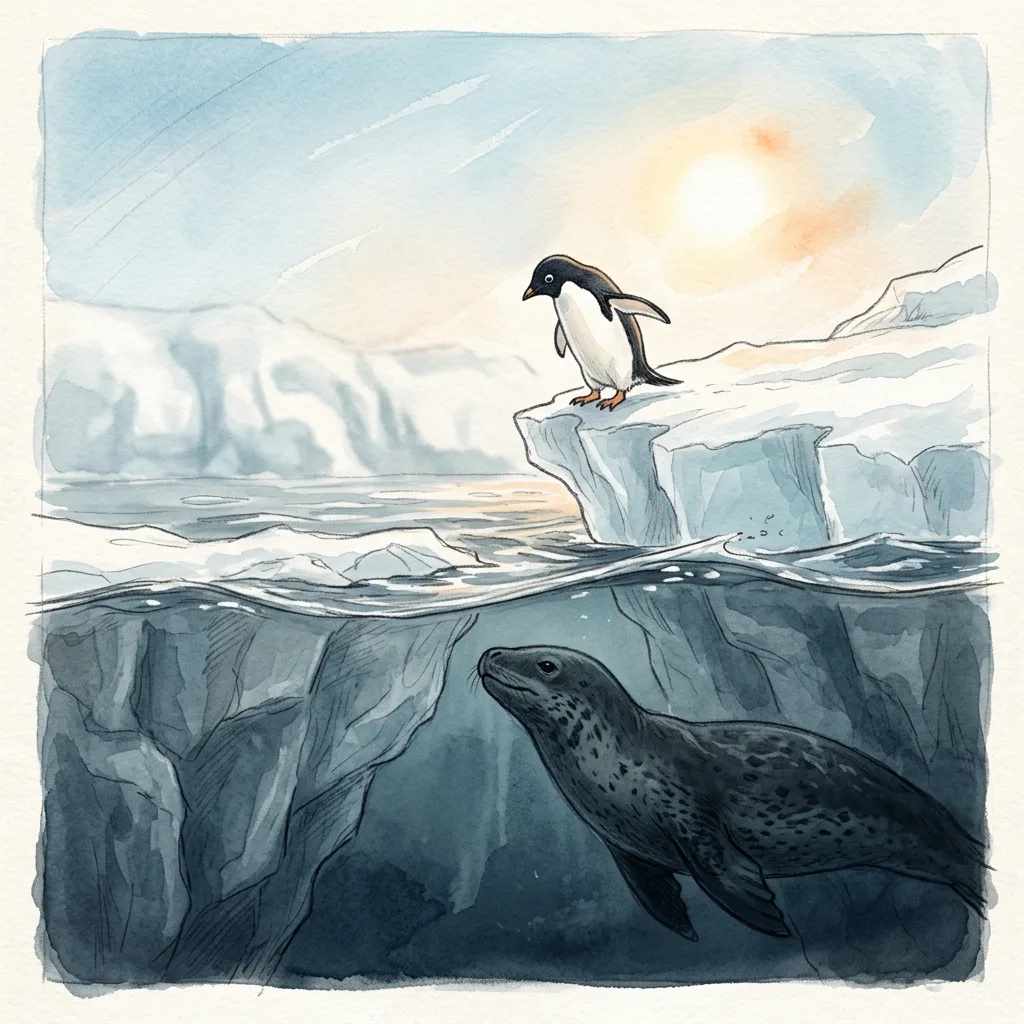
Yes, penguins are obligate carnivores and active predators. They play a critical role in marine food webs by consuming a variety of fish, crustaceans, and cephalopods. While they are famously prey for larger marine animals like leopard seals and orcas, penguins occupy a high trophic level in their ecosystems, relying entirely on hunting live prey to meet their metabolic requirements.
Defining the Predatory Nature of Penguins
To understand why penguins are classified as predators, one must look at their evolutionary adaptation to the marine environment. Every species of penguin—from the diminutive Little Blue Penguin to the towering Emperor Penguin—is a specialized hunter. Unlike scavengers or herbivores, penguins spend a significant portion of their lives pursuing, capturing, and consuming living organisms.
Predation is a biological interaction where an organism (the predator) feeds on another (the prey). Because penguins lack the ability to forage for plant matter and possess physiological traits designed for pursuit—such as streamlined bodies, powerful flippers for underwater propulsion, and specialized beaks for gripping—they fit the strict biological definition of predators. Their predatory behavior is not merely incidental; it is the primary driver of their life cycle, breeding success, and migration patterns.
Hunting Strategies and Foraging Mechanics
Penguins utilize a range of hunting strategies dictated by the species, the depth of the water, and the availability of prey. Their success as predators is largely attributed to their buoyancy control and their ability to operate in low-light, high-pressure environments.
Pursuit Diving
Most penguins are pursuit divers. They use their wings, which have evolved into rigid, paddle-like flippers, to "fly" through the water at high speeds. During a chase, a penguin maneuvers to stay within striking distance of a prey item. Once in range, the bird uses its serrated tongue and powerful, hooked bill to secure the target. This mechanism is highly effective for catching slippery, fast-moving fish.
Depth-Limited Foraging
Different species specialize in different zones of the water column. Gentoo penguins, for instance, are known to perform thousands of shallow dives per day to forage for krill and small fish near the surface or at mid-depths. Conversely, Emperor Penguins are champion deep-divers, regularly reaching depths exceeding 500 meters. This depth allows them to access food sources that are inaccessible to many other surface-feeding seabirds, effectively reducing competition for resources.
Sensory Adaptations
As predators, penguins rely heavily on visual cues, though they also utilize sensitive hearing to detect the movement of school fish. Their eyes are specially adapted to accommodate both the refractive index of water and the air, allowing them to track prey with precision while moving at high velocities. This dual-vision capability is an essential requirement for a predator that must transition instantly between the terrestrial and marine environments.
The Nutritional Profile of Penguin Prey
The diet of a penguin is varied, though it is fundamentally restricted to marine life. Their role in the ecosystem is that of a secondary or tertiary consumer, meaning they exert top-down pressure on the populations of the organisms they hunt.
- Krill: Small, shrimp-like crustaceans that form the foundation of the Antarctic food web. Species like the Adélie and Chinstrap penguins are heavily dependent on krill, often consuming massive quantities during the breeding season.
- Fish: Various species of silverfish, lanternfish, and pilchards are primary targets. Penguins often consume fish whole, utilizing the sharp barbs on their tongues to prevent escape once the prey is captured.
- Cephalopods: Squid are a major component of the diet for species such as the King Penguin. Capturing cephalopods requires a different set of predatory skills compared to schooling fish, as the penguin must grapple with a more active and agile opponent.
The following table summarizes the primary dietary focus of several key penguin species:
| Penguin Species | Primary Prey Category | Foraging Depth Preference |
|---|---|---|
| Emperor Penguin | Fish and Squid | Deep (Up to 500m+) |
| Adélie Penguin | Krill | Shallow to Mid-depth |
| Little Blue Penguin | Small Schooling Fish | Very Shallow / Coastal |
| Gentoo Penguin | Krill and Fish | Mid-depth |
| King Penguin | Mesopelagic Fish and Squid | Mid-to-Deep |
Ecological Significance: Predators and Prey
The predatory status of the penguin is complicated by its own vulnerability. In the complex food web of the Southern Ocean, penguins occupy a "middle-man" position. They are high-level predators when interacting with fish and krill, but they are essential prey for apex predators such as leopard seals, killer whales (orcas), and, occasionally, large sharks in more temperate waters.
This dual status as both predator and prey makes penguins an "indicator species." Because their population numbers are directly tied to the abundance of their prey, scientists monitor penguin health to gauge the overall productivity of the ocean. When prey populations shift due to climate variations or overfishing, the predatory success of the penguin declines, often leading to lower breeding rates and lower chick survival.
Technical Challenges in Observing Penguin Predation
Researching the predatory habits of penguins in 2026 involves advanced telemetry and bio-logging. Because much of their hunting occurs beneath the surface and often in harsh, inaccessible environments like the Antarctic pack ice, direct observation is rarely possible.
Scientists utilize satellite-linked time-depth recorders (TDRs) attached to the feathers of the penguins. These devices record the frequency, duration, and depth of dives. Combined with miniaturized cameras, these instruments have provided unprecedented insights into how penguins locate prey. What was once inferred through stomach content analysis—which often provided a skewed view of their diet due to rapid digestion—can now be verified through real-time imaging of foraging strikes.
Common Misconceptions Regarding Penguin Feeding
A frequent point of confusion is the distinction between "predation" and "feeding behavior." Some observers note that penguins do not "kill" their prey in a way that is immediately recognizable to humans, as they swallow their catch whole. However, in biology, swallowing a live animal whole is a definitive predatory act.
Another misconception is that penguins are passive foragers. While they do capitalize on schools of fish, their behavior is highly active. They do not merely swim with their mouths open; they track, intercept, and secure specific targets. This level of intentionality confirms their status as active hunters.
FAQ: Addressing Common Inquiries
Are penguins considered apex predators? No, they are generally not considered apex predators. While they are successful predators in their own right, they are subject to predation by larger marine mammals. An apex predator is defined as an animal at the top of the food chain with no natural predators.
Do penguins hunt in groups? While some penguins exhibit social behavior, they typically hunt as individuals. However, they may be found in large feeding aggregations, which is a result of many individuals targeting the same dense school of fish or cluster of krill, rather than coordinated pack hunting like that seen in wolves or orcas.
How much do penguins need to eat to survive? Penguin metabolic requirements are extremely high due to the energy expended in swimming and maintaining body temperature in freezing water. An Emperor Penguin, for example, must consume several kilograms of fish and squid daily during the active hunting season to maintain its energy balance and provide food for its chick.
Do penguins hunt on land? No, penguins do not hunt on land. Their predatory adaptations are exclusively geared toward the aquatic environment. On land, penguins are vulnerable and do not consume food, often relying on energy reserves stored as blubber during the fasting periods associated with molting or incubation.
Can penguins starve if they don't hunt successfully? Yes. Predatory success is essential for survival. If the availability of prey decreases due to environmental changes, penguins face a high risk of starvation, especially during the strenuous periods of chick-rearing or the annual molt.
Conclusion and Practical Outlook
Penguins are highly specialized, active predators that are essential to the balance of marine ecosystems. Their predatory nature is a result of millions of years of evolution, enabling them to thrive in some of the world's most challenging environments. For those interested in wildlife biology or conservation, recognizing the penguin's role as a predator is vital for understanding their protection needs. Conservation efforts in 2026 continue to focus on managing prey stocks, such as krill, to ensure that these flightless hunters maintain the predatory success required to sustain their populations.