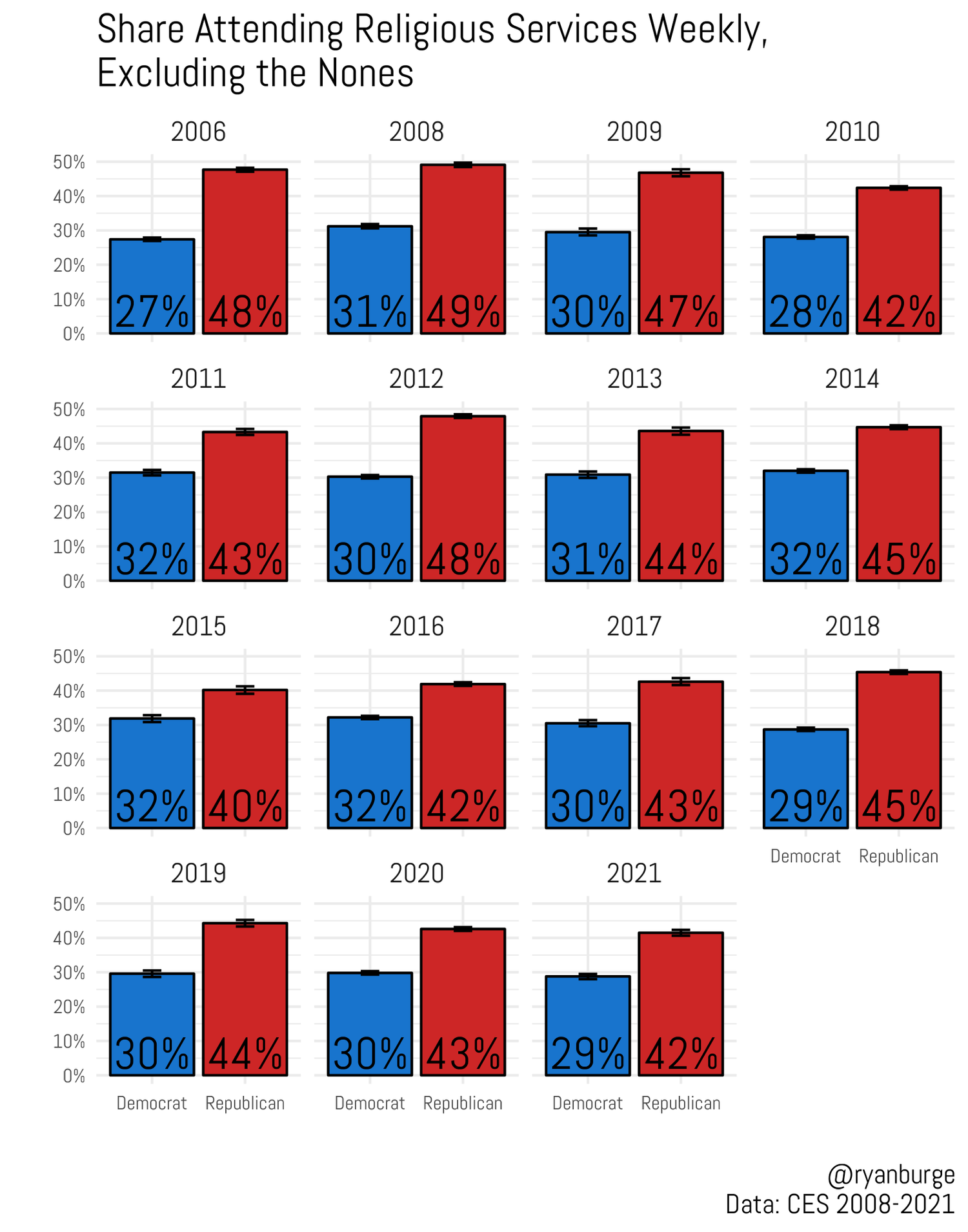
The global religious landscape is currently undergoing a significant transition, characterized by a measurable decline in participation and identification across many Western nations. While aggregate data confirms a rise in secularization and those identifying as "nones"—individuals with no formal religious affiliation—the trend is geographically uneven, with growth in religious adherence persisting in other parts of the world, particularly in parts of sub-Saharan Africa and Asia.
The Rise of the "Nones" and Secularization
In sociology, the term "nones" refers to individuals who, when asked about their religious identity, choose options like "none," "atheist," or "agnostic." Over the last two decades, this group has become the fastest-growing demographic in the United States, Europe, and several other post-industrial societies.
This decline is not merely about a shift in belief, but a transformation in how individuals structure their sense of community and moral framework. Historically, religion served as the primary institution for both social cohesion and ethical guidance. As secularization has increased, many individuals have shifted their reliance to private belief systems, humanist philosophies, or decentralized communities that do not require formal religious membership.
The shift is often attributed to the process of "disenchantment," a concept explored by early sociologists to describe the transition away from mystical or supernatural explanations for life events in favor of scientific, empirical, and rationalist explanations. In 2026, widespread access to digital information and scientific education remains a primary driver for this transition, as questions that were once solely answered by theological texts are now frequently addressed through social, psychological, and scientific lenses.
Geographic and Demographic Variations
It is a common misconception that religious decline is a universal human phenomenon. Data from the Pew Research Center and other demographic analysts indicate that while the "Global North" is trending toward secularism, the "Global South" is experiencing different dynamics.
Regional Trends
- The West (North America and Europe): These regions have seen consistent movement toward secularization. Institutional trust in religious organizations has waned, partly due to institutional scandals and a greater emphasis on individual autonomy.
- Sub-Saharan Africa: This region maintains some of the highest levels of religious observance globally. Population growth in this area is expected to significantly offset the numerical decline of religious adherents in Western nations.
- Asia-Pacific: This region presents a hybrid landscape. In countries like China, state-level influence on religion is a primary factor, while in countries like Indonesia and India, religious identity remains deeply intertwined with cultural and national identity.
The divergence in these trends suggests that religion is not necessarily "dying" in a global sense, but rather changing its geographic center of gravity.
Identifying the Drivers of Change
Understanding why people are becoming less religious requires looking at both societal structures and individual psychological needs.
Institutional Erosion
Religious institutions rely on trust and cultural hegemony. When these institutions become embroiled in public controversy, or when they fail to adapt their social teachings to evolving societal standards—such as views on gender equality, sexual orientation, or climate change—they often lose the younger generations. By 2026, the gap between traditional religious doctrine and contemporary social values is often cited as a primary reason for the disaffiliation of younger adults.
Economic and Social Security
The "Secularization Thesis," a foundational theory in the sociology of religion, suggests that as societies become more economically secure and provide robust state-sponsored social safety nets, the need for religion as a provider of social welfare and psychological comfort decreases. In nations with high levels of social security and low levels of physical or economic existential threat, the perceived utility of religion often declines.
The Digital Shift
The internet has fundamentally altered the transmission of religious ideas. In the past, individuals were largely restricted to the religious traditions of their local community. Today, the ability to access diverse viewpoints, critiques of religious texts, and secularist literature allows individuals to construct personal identities that are independent of their upbringing. This "pick-and-mix" approach to spirituality often leads away from traditional, high-demand religious organizations toward more informal, low-demand spiritual practices or pure secularism.
Comparison of Global Religious Dynamics
The following table outlines the factors that contribute to the variance in religious adherence across different societal types.
| Factor | High-Secularization Societies | High-Religiosity Societies |
|---|---|---|
| Social Safety Net | Robust/State-funded | Limited/Community-dependent |
| Primary Education | Secular/Scientific focus | Often religious/Traditional |
| Institutional Trust | Declining/Skeptical | Generally high |
| Cultural Norms | Emphasis on individualism | Emphasis on collective tradition |
| Primary Drivers | Rationalism and autonomy | Community and legacy |
The Impact on Social Cohesion
A frequent subject of debate is the effect of waning religiosity on social cohesion. When religious participation declines, society often faces the challenge of replacing the "social capital" that churches, temples, and mosques provided. This includes charity, volunteerism, and the provision of local community spaces.
Research shows that while religious participation is a major predictor of charitable giving, secular individuals are not necessarily less altruistic; they simply redirect their resources toward secular non-profits, activist organizations, or direct interpersonal aid. The challenge for 2026 and beyond is not necessarily a loss of human goodness, but the creation of new institutions that can effectively replicate the networking and community-building functions once provided by religion.
Common Misconceptions
- "Secularization means the death of spirituality." Many people who leave organized religion still identify as "spiritual but not religious." This group values personal transcendence and meaning-making, even if they reject institutional hierarchy and specific theological dogmas.
- "Religion is solely a negative force." Historically, religious organizations have been instrumental in civil rights movements, education, and disaster relief. Declines in religiosity also involve the loss of these historical support structures.
- "The trend is irreversible." Demographic history is filled with cyclical shifts. While current trends show a decline in religious participation, future demographic shifts, migration patterns, and potential social crises can shift these trends in unexpected ways.
FAQ: Understanding Secularization and Belief
Does becoming less religious mean people are becoming less moral? No. Research in sociology and moral psychology consistently finds that moral behavior is influenced by a combination of empathy, cultural norms, and legal systems. There is no empirical evidence to suggest that secular individuals are less ethical or compassionate than their religious counterparts.
Are "nones" the same as atheists? No. The "nones" are a diverse category. While some are atheists (who believe no god exists), others are agnostic (who believe it is unknown) or simply unaffiliated. Many "nones" still maintain belief in a higher power or spiritual energy but choose not to belong to a specific, organized religious institution.
What is the role of the state in religious decline? State policy can significantly impact religious observance. In countries where the state actively promotes secularism or limits religious freedom, the decline is often accelerated. Conversely, in nations where the state provides special status or funding to religious bodies, attendance and membership tend to remain more stable.
Will religion eventually disappear? Most sociologists of religion argue that religion will not disappear. Instead, it will continue to evolve. As traditional, high-demand religions potentially decline in influence, they are often replaced by new social movements, secular ideologies, or "civil religions" that function similarly to faith-based systems.
Future Outlook and Next Steps
For those interested in exploring this topic further, the most reliable approach is to examine current demographic data provided by national census bureaus and the Pew Research Center. Understanding whether society is becoming less religious involves looking beyond headlines and analyzing the specific intersection of age, education, and geographic stability.
If you are investigating this trend for academic or research purposes, focus on the "Secularization Thesis" and the concept of "Religious Marketplace," which treats religious organizations as entities competing for members in an open market. Observing how these institutions adapt their messaging in 2026 will provide the clearest indicator of whether they can reverse the current trends or if they will continue to see a decline in their traditional power bases.