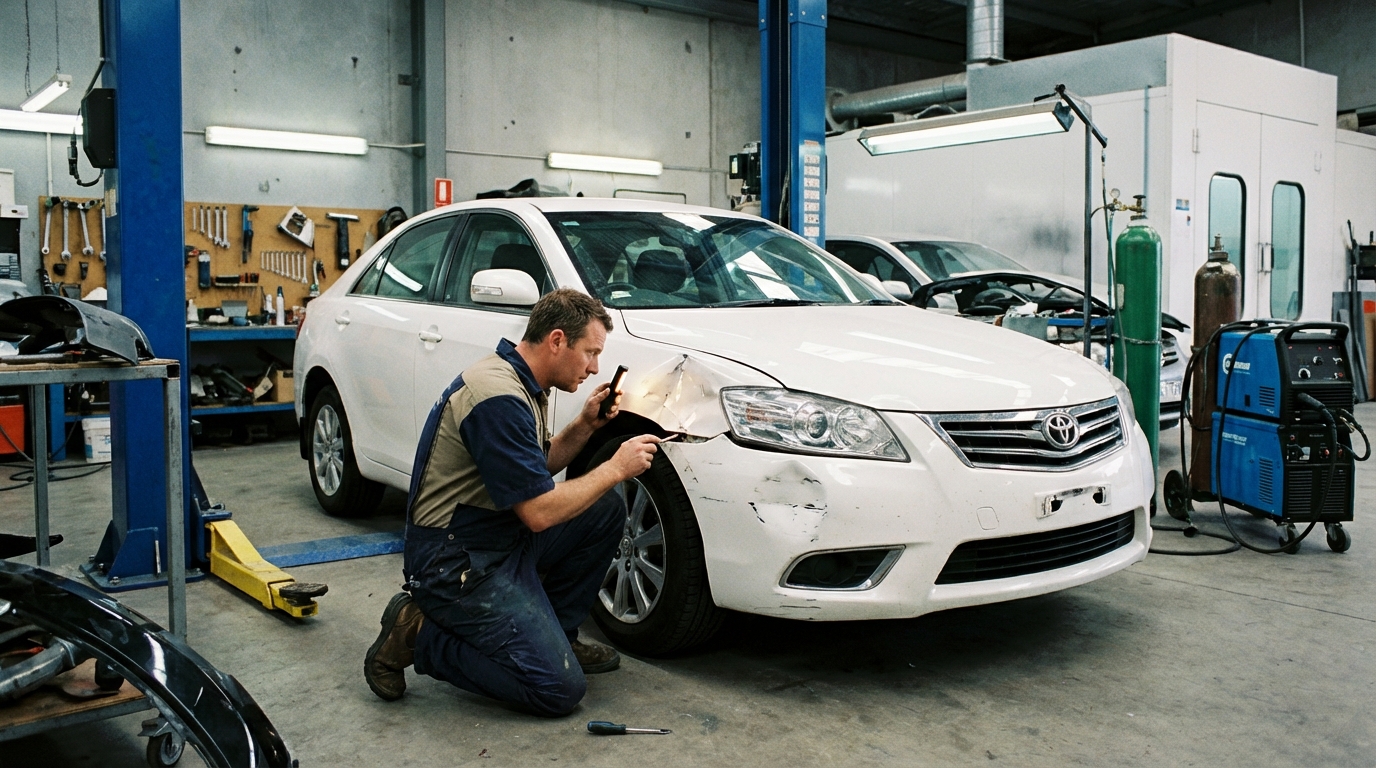
Vehicle collision repair costs typically range from $500 for minor cosmetic bumper refinishing to over $5,000 for complex structural frame realignment, panel replacement, and electronic sensor recalibration. Vehicle owners can select between insurer-preferred Direct Repair Program (DRP) shops, certified independent auto body centers such as Apple Collision networks, and dealership OEM repair facilities.
Disambiguating Collision Repair: Vehicle Body Restoration vs. Device Hardware Repair
When researching collision repair services, it is essential to distinguish between automotive body restoration and consumer electronics damage repair. Automotive collision repair refers strictly to restoring motor vehicles that have sustained structural, mechanical, or cosmetic damage from traffic accidents, collisions, or severe impact events. Facilities operating under regional auto body brands—such as Apple Collision & Auto Body centers or Apple Ford Collision facilities—specialize in auto body work, unibody straightening, paint refinishing, and driver-assistance calibration.
Conversely, damage sustained by consumer technology devices (such as Apple iPhones, MacBooks, or iPads dropped or crushed in an impact) falls under electronic hardware service programs like AppleCare+ or independent electronics repair. This guide focuses entirely on automotive collision repair services, addressing auto body repair options, itemized repair costs, insurance claims management, and structural safety standards.
Understanding Vehicle Collision Repair Categories
Automotive collisions generate varying degrees of damage depending on impact speed, angle, and vehicle design. Repair facilities categorize collision damage into three primary operational tiers to determine labor requirements, parts sourcing, and safety protocols.
- Automotive Collision Damage
- Cosmetic Damage: Scratches, Dents, Bumper Covers
- Structural Body: Frame Pulling, Unibody Realignment
- Mechanical & ADAS: Suspension, Radar/Camera
1. Cosmetic and Surface Damage
Cosmetic repair addresses non-structural exterior damage that does not compromise the vehicle's underlying architecture or crash-safety performance. Common examples include minor door dings, shallow paint scratches, scraped alloy wheels, and plastic bumper cover scuffs. Cosmetic work relies heavily on paintless dent repair (PDR), surface sanding, spot painting, and minor plastic repair techniques.
2. Structural and Body Panel Damage
Structural collision repair involves components that form the vehicle's protective safety cell and outer shell. Modern vehicles feature unibody construction, where the body panels, floor pan, and frame pillars function as a unified load-bearing structure. When a collision crushes quarter panels, crumple zones, rocker panels, or frame rails, specialized hydraulic pulling equipment and structural welding are required to restore original factory dimensions.
3. Mechanical, Electrical, and ADAS Damage
Impact forces often extend beyond sheet metal into underlying mechanical systems and high-tech electronic networks. Collisions frequently damage radiator core supports, suspension control arms, steering linkages, air conditioning condensers, and airbag deployment modules. Furthermore, modern vehicles equipped with Advanced Driver Assistance Systems (ADAS) rely on radar sensors, LiDAR, and windshield-mounted cameras that must be re-aimed and calibrated whenever body panels, bumpers, or glass are repaired or replaced.
Service Options for Auto Collision Repair
Choosing the right collision repair facility impacts repair quality, turn-around time, out-of-pocket expenses, and long-term vehicle resale value. Vehicle owners generally choose between three main categories of repair providers.
| Facility Type | Key Characteristics | Ideal For |
|---|---|---|
| OEM Certified Centers | Factory parts, specialized tooling, brand training | Leased vehicles, high-tech modern cars |
| Independent Shops (e.g., Apple) | Regional networks (e.g., Apple Collision), customized localized customer service | Out-of-pocket repairs, competitive pricing, older vehicles |
| Insurer DRP Network Shops | Streamlined claims, direct insurer billing, nationwide repair guarantees | Fastest claim payout, simplified processing |
OEM Certified Repair Centers
Original Equipment Manufacturer (OEM) certified collision centers are authorized directly by vehicle automakers (such as Ford, General Motors, Toyota, or BMW). These facilities must invest in specialized structural alignment jigs, aluminum welding gear, factory paint codes, and technician training prescribed by the vehicle manufacturer. OEM facilities prioritize new factory-original parts over aftermarket alternatives, making them ideal for leased vehicles, luxury models, and cars under factory warranty.
Independent Auto Body Facilities
Established regional collision chains and independent auto body centers—such as Apple Collision facilities—provide comprehensive repair options for drivers seeking personalized service or competitive out-of-pocket rates. Quality independent facilities maintain industry accreditation, such as I-CAR Gold Class recognition, indicating that technicians undergo ongoing training in modern repair technologies. Independent shops offer flexible repair pathways, allowing customers to choose between OEM components, high-grade aftermarket parts, or recycled original parts to manage overall expenses.
Insurance Direct Repair Programs (DRPs)
Direct Repair Programs represent formal contractual networks between auto insurance carriers and selected collision body shops. When an insured driver selects a DRP facility, the insurance provider approves estimates electronically, streamlining approval delays and providing direct billing. DRP shops typically back their repairs with a lifetime warranty backed jointly by the body shop and the insurer. However, drivers maintain the legal right under state anti-steering laws to choose any licensed collision repair shop, regardless of whether the shop belongs to an insurer's DRP network.
Comprehensive Breakdown of Collision Repair Costs
Collision repair pricing depends on labor rates, material consumption, structural complexity, and replacement component sourcing. Modern estimates separate charges into body labor, paint labor, structural rack time, mechanical diagnostics, paint materials, and electronic calibrations.
Hourly Labor Rates by Specialization
Labor costs represent the largest portion of a collision repair bill. Labor rates vary by region, shop certification level, and technical specialty:
- Standard Body Labor: $60 to $110 per hour for metal straightening, panel alignment, and body panel fitting.
- Paint Labor and Refinishing: $60 to $110 per hour, charged alongside paint material fees assessed on a per-labor-hour basis.
- Structural Frame Labor: $90 to $160 per hour, covering computerized measuring equipment set-up, hydraulic frame pulling, and sectioning.
- Mechanical and Diagnostic Labor: $120 to $220 per hour for suspension rebuilding, engine component replacement, diagnostic scan code clearings, and mechanical alignments.
Replacement Part Sourcing Categories
The selection of replacement components significantly influences final repair costs. Collision estimates typically categorize parts into three distinct grades:
- OEM Parts (Original Equipment Manufacturer): Brand-new components built directly by the vehicle manufacturer. OEM parts fit precisely and preserve factory warranties but carry the highest price tag.
- Aftermarket Parts: Components produced by third-party manufacturers. Quality aftermarket parts offer 20% to 45% cost savings compared to OEM components, though fitment quality can vary depending on manufacturer certification (such as CAPA certification).
- LKQ Parts (Like Kind and Quality / Recycled OEM): Original factory parts salvaged from low-mileage donor vehicles. LKQ components provide authentic factory construction at substantial discounts, making them a common choice for door assemblies, trunk lids, and exterior mirrors.
Advanced Electronics and ADAS Calibration Expenses
Modern vehicles rely on intricate sensor arrays embedded in bumpers, grilles, side mirrors, and windshields. Following even minor frontal or rear-end collisions, these sensors must undergo diagnostic scanning and physical calibration to ensure safety functions operate correctly.
- Pre- and Post-Diagnostic Scans: $100 to $250 combined to detect hidden electronic fault codes before tear-down and confirm system integrity after assembly.
- Static ADAS Calibration: $300 to $700, requiring target boards, laser alignment rigs, and specialized lighting environments to set radar and camera reference angles.
- Dynamic ADAS Calibration: $250 to $500, involving specialized handheld diagnostic tools connected while driving the vehicle under specific speed, weather, and road-marking parameters.
Collision Repair Cost Comparison Matrix
The following matrix outlines typical cost ranges, required repair timelines, and standard component requirements across common vehicle collision scenarios.
| Damage Category | Typical Impact Examples | Estimated Cost Range | Estimated Duration | Primary Repair Methods & Components |
|---|---|---|---|---|
| Minor Cosmetic | Scratched paint, parking dings, minor plastic bumper scuffs | $350 – $1,200 | 1 to 2 Days | Paintless dent repair (PDR), surface sanding, localized clear-coat blending, minor plastic weld repair. |
| Bumper & Grille Replacement | Low-speed rear-end or frontal parking collision | $1,100 – $2,800 | 2 to 4 Days | Bumper cover replacement, impact absorber pad renewal, painting, front radar dynamic sensor calibration. |
| Single Body Panel | Deep fender dent, crushed door panel, quarter-panel scrape | $1,500 – $3,800 | 3 to 5 Days | Fender/door skin replacement, paint color blending onto adjacent panels, window regulator transfer. |
| Multi-Panel & Mechanical | T-bone impact, high-speed corner collision | $4,000 – $9,500 | 5 to 10 Days | Multiple panel replacement, control arm/strut suspension repair, radiator core replacement, multi-stage painting. |
| Severe Structural Damage | High-speed highway crash, frame rail deformation | $7,500 – $18,000+ | 2 to 4 Weeks | Computerized frame rack alignment, unibody sectioning, engine pull, airbag assembly replacement, full ADAS static/dynamic setup. |
The Step-by-Step Collision Repair Process
Understanding the sequence of auto body restoration helps vehicle owners monitor progress and verify quality standards at each phase.
- Initial Estimate & Scan
- Teardown & Supplement
- Structural & Body Repair
- Refinishing & Paint Matching
- Reassembly & Calibration
- Delivery & Final Scan
Step 1: Initial Estimate and Visual Inspection
The facility conducts an initial visual examination to construct a preliminary estimate. Technicians attach diagnostic scanners to record stored fault codes within the vehicle's engine control module (ECM) and safety networks.
Step 2: Disassembly and Tear-Down Supplement
Once authorized, technicians disassemble damaged exterior panels, bumper covers, and trim to inspect internal support structures. Hidden damage—such as buckled bumper reinforcement bars or bent suspension mounts—is documented. The shop submits a supplemental estimate to the vehicle owner or insurance adjuster for formal approval.
Step 3: Structural Frame and Sheet Metal Alignment
If unibody frame specifications deviate from factory tolerances, technicians secure the vehicle to a computerized frame bench. Hydraulic towers apply measured pulling force to pull crushed frame rails back to millimeter-accurate factory dimensions. Technicians then replace or repair exterior sheet metal and weld new panels according to manufacturer guidelines.
Step 4: Refinishing and Computerized Paint Matching
To achieve a seamless finish, painters clean, prime, and seal repaired surfaces. Using computerized spectrophotometers, technicians scan the vehicle's existing paint to calculate a custom paint formula that accounts for sun exposure and paint fading. Paint is applied inside controlled downdraft spray booths, followed by clear-coat layers and high-temperature baking.
Step 5: Mechanical Reassembly and ADAS Recalibration
Technicians reinstall mechanical components, wire harnesses, lighting structures, and safety sensors. The vehicle moves to a calibration bay where targets and optical tools re-align lane-departure cameras, blind-spot monitoring modules, and forward-facing radar systems.
Step 6: Quality Assurance, Final Scan, and Delivery
A dedicated quality control manager inspects body line gaps, paint texture consistency, door latches, and mechanical operation. A final diagnostic scan ensures zero active fault codes remain before the vehicle undergoes detailing and is handed back to the driver.
Insurance Claims, Deductibles, and Consumer Legal Rights
Navigating insurance claims during collision restoration requires a clear understanding of coverage terms, out-of-pocket limits, and legal rights under insurance regulations.
- Vehicle Involved in Collision
- Filing Insurance Claim
- Pay policy deductible
- Insurer covers supplemental
- Rental reimbursement eligible
- Paying Out-of-Pocket
- Avoid claim on record
- Full control of parts (OEM)
- Best for minor costs
- Filing Insurance Claim
Assessing Deductibles vs. Out-of-Pocket Payment
If repair costs closely approximate your insurance deductible (for instance, a $1,200 repair estimate with a $1,000 policy deductible), paying out-of-pocket prevents a claim entry on your driving record that could trigger premium rate increases. However, if structural or hidden damage is suspected, filing an insurance claim protects you from unexpected costs discovered during shop teardowns.
Consumer Rights: Anti-Steering Protection
Under state insurance statutes across North America, insurance companies cannot mandate that policyholders utilize a specific collision repair center. Insurance representatives may recommend DRP shops for speed and convenience, but drivers retain the absolute legal right to choose any certified auto body shop, including localized specialists like Apple Collision facilities or local OEM dealerships.
Diminished Value Claims
Even after flawless professional repair, a vehicle that has been involved in a accident usually carries a lower resale market value than an uninjured equivalent. Car owners who are not at fault in an accident can file a Diminished Value Claim against the at-fault driver's insurance provider to recover the calculated loss in market resale value resulting from the accident history.
Frequently Asked Questions
What is the average out-of-pocket cost for collision repair?
Out-of-pocket costs depend heavily on insurance coverage and fault determination. If filing a claim, your primary out-of-pocket expense is your policy's comprehensive or collision deductible, typically set between $250 and $1,000. For drivers paying without insurance, minor cosmetic repairs average $500 to $1,500, while moderate collision repairs involving panel replacement and sensor calibration range between $2,500 and $5,500.
Am I required to use the collision repair shop recommended by my insurer?
No. Drivers have the legal right to select any licensed auto body repair shop. While insurance companies often suggest direct-repair program (DRP) facilities to streamline paperwork and control claims costs, you may take your vehicle to independent body shops, specialized chains such as Apple Collision, or OEM-certified dealership body shops.
How long does a standard auto body collision repair take?
Minor cosmetic work or paintless dent removal typically requires 1 to 3 business days. Moderate repairs involving replacement body panels, paint matching, and dynamic electronic calibrations usually take 5 to 9 business days. Severe structural frame damage or repairs delayed by backordered replacement parts can extend timelines to 3 to 4 weeks.
What is the difference between OEM, aftermarket, and LKQ parts?
OEM (Original Equipment Manufacturer) components are made directly by your vehicle's manufacturer to exact factory specifications. Aftermarket parts are third-party alternatives manufactured to fit your vehicle model, often at a reduced cost. LKQ (Like Kind and Quality) parts are original factory components salvaged from low-mileage donor vehicles, thoroughly cleaned and inspected prior to installation.
Why is ADAS sensor calibration necessary after minor bumper repairs?
Modern vehicle bumpers and windshields house delicate radar, ultrasonic, and camera units that power driver safety features such as automatic emergency braking, adaptive cruise control, and lane-keeping assistance. Removing or reinstalling a bumper cover alters sensor positioning by fractions of a millimeter, which can misalign safety radar trajectories over distance if not recalibrated using precision diagnostic tools.
What should I inspect when picking up my repaired vehicle?
Inspect the vehicle in bright daylight. Check that body panel seams and gaps are straight and uniform. Examine painted surfaces for color matching, clear-coat smoothness, overspray on rubber trim, or texture variations (orange peel). Confirm that all exterior lights, power windows, door latches, and electronic displays function normally without diagnostic warning lights on the dashboard.
Recommended Next Actions
To ensure a high-quality repair while managing costs effectively, follow these actionable steps:
- Obtain Itemized Estimates: Secure written, itemized estimates from at least two reputable repair facilities. Ensure the estimates clearly distinguish between labor hours, paint materials, diagnostic fees, and specific part types (OEM, aftermarket, or LKQ).
- Verify Technician Certifications: Confirm that the chosen facility holds industry certifications, such as I-CAR Gold Class status or manufacturer-specific OEM accreditations, ensuring technicians possess updated training on vehicle safety systems.
- Confirm Warranty Terms: Ask the body shop manager for written warranty documentation. Reputable collision centers provide lifetime warranties covering structural repairs, body assembly, and paint refinishing against peeling or fading for as long as you own the vehicle.
- Review Insurance Coverage: Consult your auto insurance policy details regarding rental car coverage limits, comprehensive/collision deductibles, and specific guidelines regarding original equipment manufacturer part allowances before authorizing work.