Generally Accepted Accounting Principles (GAAP) provide a standardized framework of accounting rules and procedures used by companies to prepare their financial statements. A primary GAAP example for financial reporting is the preparation of an accrual-based income statement, which recognizes revenue when earned and expenses when incurred, regardless of when cash actually changes hands.
The primary goal of GAAP is to ensure that financial reporting is transparent, consistent, and comparable across different organizations. In the United States, the Financial Accounting Standards Board (FASB) establishes these standards to protect investors and creditors by providing a clear picture of a company's financial health. As of 2026, adherence to these principles remains the gold standard for public companies and many private entities seeking financing or acquisition.
The Conceptual Framework of GAAP Reporting
Before examining a specific reporting example, it is essential to understand the underlying pillars that dictate how financial data is processed. GAAP is not a single rule but a collection of thousands of standards developed over decades. These are organized into the FASB Accounting Standards Codification, which serves as the ultimate authority for non-governmental accounting principles.
The Accrual Principle
The most significant distinction between GAAP and simpler methods, such as cash-basis accounting, is the accrual principle. Under GAAP, transactions are recorded in the period they occur. For example, if a software company delivers a service in December 2025 but receives payment in January 2026, the revenue must be reported on the 2025 financial statements. This ensures that the financial results reflect the actual economic activity of the period.
The Matching Principle
Closely related to accruals, the matching principle requires that expenses be reported in the same period as the revenues they helped generate. If a manufacturer sells 1,000 units of a product, the cost of the raw materials and labor used to make those specific units must be recognized as "Cost of Goods Sold" (COGS) at the time of the sale, even if the materials were purchased months earlier.
Full Disclosure and Materiality
GAAP requires that financial statements include all information necessary for a reader to understand the company's financial position. This is achieved through extensive "Notes to the Financial Statements." However, the principle of materiality allows accountants to ignore GAAP requirements if the amount in question is so small that it would not influence the judgment of a reasonable person.
A Practical GAAP Example: The Income Statement
To illustrate GAAP in action, consider a fictional mid-sized technology firm, Vertex Solutions Inc., preparing its annual reports for the fiscal year ending December 31, 2025 (to be published in early 2026).
Revenue Recognition (ASC 606)
Vertex Solutions signed a $1.2 million contract in July 2025 to provide cloud hosting services for 12 months. Although the client paid the full $1.2 million upfront, GAAP (specifically ASC 606) dictates that Vertex cannot recognize the entire amount as revenue in 2025.
Instead, Vertex recognizes $100,000 per month as the service is delivered. By December 31, 2025, they have "earned" $600,000. On the 2025 Income Statement, only $600,000 appears as revenue. The remaining $600,000 is recorded as "Deferred Revenue" (a liability) on the Balance Sheet, representing the obligation to provide future services.
Expense Management and Depreciation
In 2025, Vertex purchased $500,000 worth of new servers. Under cash-basis accounting, the full $500,000 would be an expense. However, GAAP views these servers as assets with a useful life of five years. Using the straight-line depreciation method, Vertex records a "Depreciation Expense" of $100,000 for the year. This systematically allocates the cost of the asset over the period it provides economic benefit, adhering to the matching principle.
The Balance Sheet: Reflecting Assets, Liabilities, and Equity
The Balance Sheet is a "snapshot" of a company's financial position at a specific moment in time. Following GAAP, Vertex Solutions must categorize items by liquidity—the ease with which they can be converted to cash.
Current vs. Long-Term Assets
GAAP requires a clear distinction between current assets (expected to be converted to cash within one year) and long-term assets. For Vertex, "Accounts Receivable" (money owed by customers) is a current asset. Even though the cash isn't in the bank yet, the GAAP principle of objectivity allows the company to list these receivables because there is a documented contractual right to receive payment.
Accounting for Leases (ASC 842)
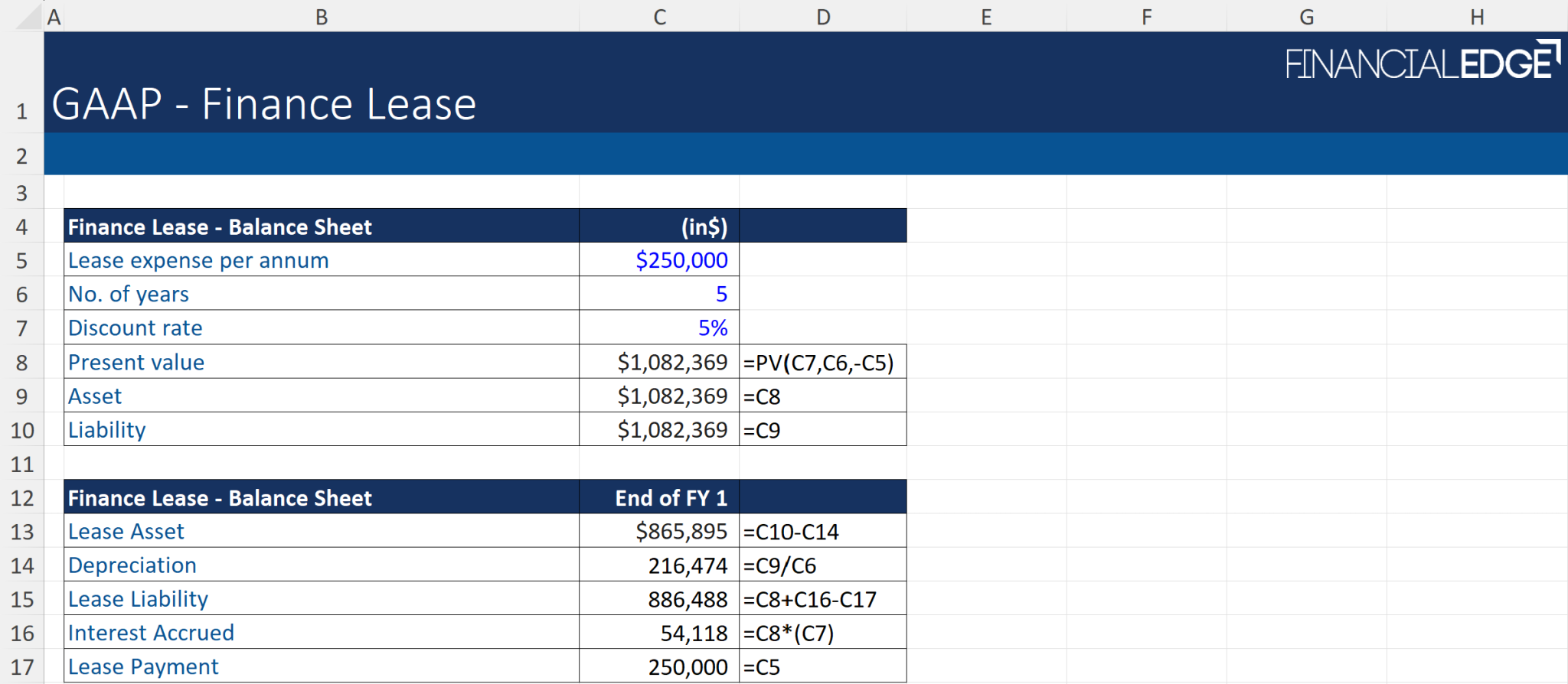
Historically, many companies kept "operating leases" off the balance sheet. However, current GAAP standards (ASC 842) require companies like Vertex to recognize a "Right-of-Use" (ROU) asset and a corresponding lease liability for their office spaces. This provides a more accurate picture of the company's long-term financial obligations.
The Impact of Estimates
GAAP reporting often involves professional judgment. For example, Vertex must estimate what percentage of its accounts receivable might never be paid. This is recorded as an "Allowance for Doubtful Accounts," which reduces the total value of assets on the balance sheet. This follows the principle of conservatism, which suggests that when two values are possible, the accountant should choose the one that results in less net income or lower asset value to avoid misleading investors.
Comparison Table: GAAP vs. Cash-Basis Accounting
The following table highlights the differences in how a single transaction is treated under GAAP versus a non-standardized cash-basis system.
| Transaction Description | GAAP Treatment (Accrual) | Cash-Basis Treatment | Impact on 2025 Financials |
|---|---|---|---|
| Product Sold on Credit | Revenue recognized at the time of sale. | Revenue recognized only when cash is received. | GAAP shows higher revenue if sales are growing. |
| Inventory Purchase | Recorded as an asset; expensed as COGS when sold. | Recorded as an immediate expense when paid. | GAAP smooths out expenses relative to sales. |
| Prepaid Insurance | Asset (Prepaid Expense) is amortized monthly. | Full premium expensed when paid. | GAAP prevents "spikes" in expenses. |
| Employee Bonuses | Expensed in the year earned by the employee. | Expensed in the year the check is cut. | GAAP matches labor cost to the period worked. |
| Capital Equipment | Capitalized as an asset and depreciated. | Fully expensed at the time of purchase. | GAAP avoids massive one-time losses for upgrades. |
The Statement of Cash Flows: Bridging the Gap
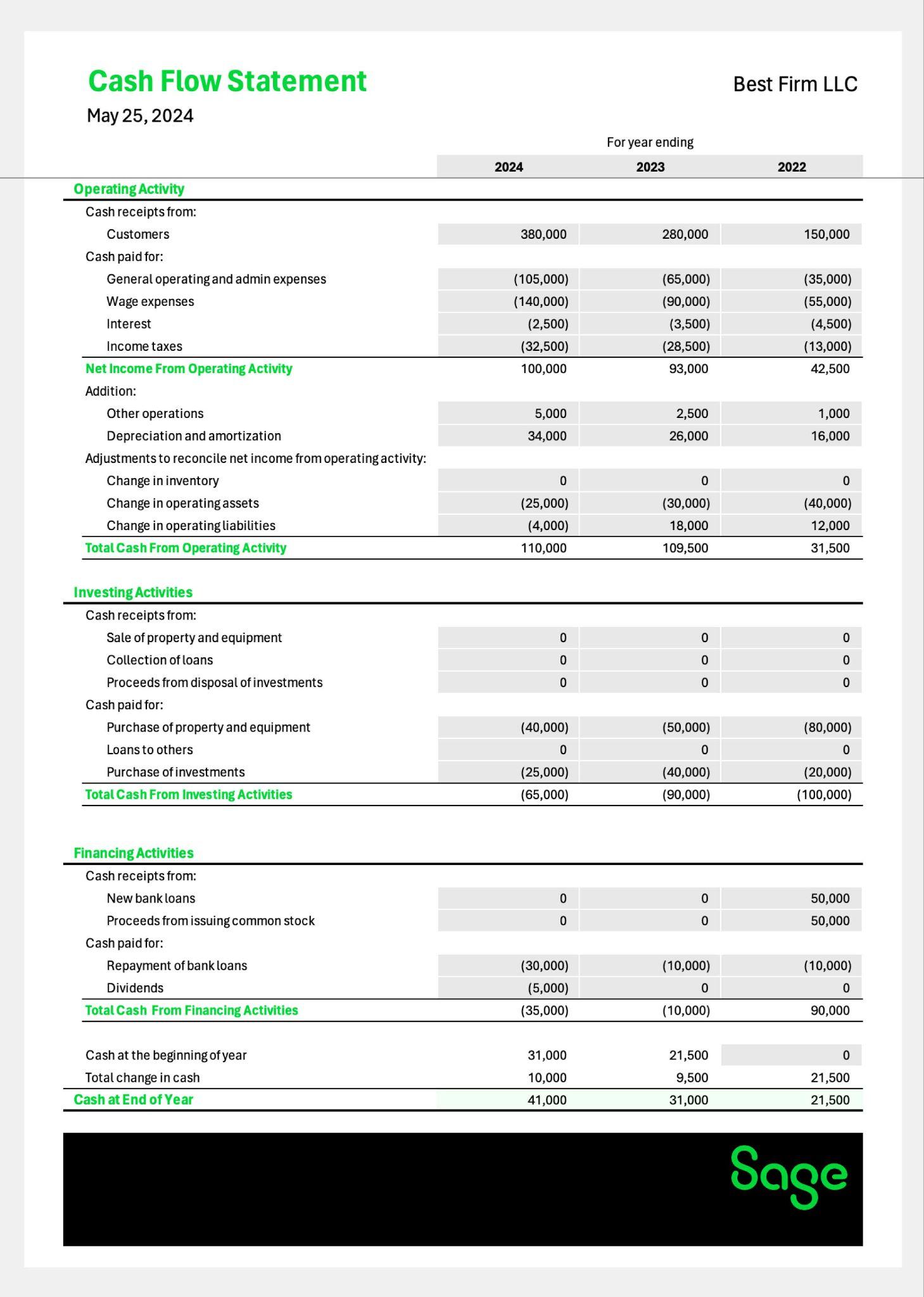
Because GAAP uses accrual accounting, "Net Income" rarely equals the actual cash in the bank. This is why the Statement of Cash Flows is an essential GAAP requirement. It translates the accrual-based income statement back into a cash-based reality.
- Operating Activities: This section starts with Net Income and adds back non-cash expenses like depreciation. It also adjusts for changes in working capital, such as increases in accounts receivable (which consume cash) or increases in accounts payable (which preserve cash).
- Investing Activities: This details the cash spent on or received from long-term assets, such as the purchase of the $500,000 servers mentioned earlier.
- Financing Activities: This includes cash flow from debt, repayments, or issuing stock. If Vertex took out a loan to buy its servers, the cash influx would be recorded here.
By requiring this statement, GAAP ensures that a company cannot hide a cash crisis behind high accrual-based profits. Investors can see if a company is generating enough actual cash to sustain its operations.
Common Mistakes in GAAP Financial Reporting
Even with a standardized framework, errors in GAAP application are common, often leading to restatements or audits.
- Improper Revenue Recognition: This remains one of the most frequent issues. Companies may "pre-bill" for services not yet rendered or fail to account for right-of-return clauses, artificially inflating their performance.
- Misclassification of Expenses: Distinguishing between a "repair" (expensed immediately) and an "improvement" (capitalized and depreciated) requires careful judgment. Misclassifying an expense as a capital asset inflates current net income.
- Inadequate Disclosures: GAAP is as much about the words as the numbers. Failing to disclose "Contingent Liabilities" (potential costs from lawsuits or environmental issues) violates the full disclosure principle.
- Inventory Valuation Issues: GAAP requires inventory to be reported at the "lower of cost or net realizable value." If products become obsolete, a company must write down the value, which many firms are hesitant to do.
The Role of the SEC and Auditing
For public companies in the United States, the Securities and Exchange Commission (SEC) mandates that financial statements be prepared in accordance with GAAP. Furthermore, these statements must be audited by an independent Certified Public Accountant (CPA) firm.
The auditor’s job is to provide "reasonable assurance" that the financial statements are free from material misstatement. In 2026, the auditing process has become highly automated, using AI to scan thousands of transactions for anomalies that deviate from GAAP patterns, such as unusual revenue spikes at the end of a fiscal quarter.
Frequently Asked Questions
What is the difference between GAAP and IFRS?
While GAAP is used primarily in the U.S., International Financial Reporting Standards (IFRS) are used in over 140 other countries. The main difference is that GAAP is "rules-based," providing specific instructions for various scenarios, while IFRS is "principles-based," allowing for more interpretation. However, the two frameworks have been converging for years to make global financial comparisons easier.
Does a small business have to use GAAP?
Legally, private small businesses are not required by federal law to use GAAP. However, most banks and lenders require GAAP-compliant financial statements before issuing a business loan. Additionally, if a small business ever intends to go public or be acquired by a larger firm, having several years of GAAP-compliant records is usually a prerequisite for the deal.
Is GAAP the same as tax accounting?
No. GAAP is designed to provide information to investors and creditors, while tax accounting (governed by the IRS) is designed to determine tax liability. This often leads to "deferred tax assets" or "deferred tax liabilities" on the balance sheet because the timing of when an item is recognized for taxes may differ from when it is recognized under GAAP.
Why does GAAP change so often?
The business world evolves, and accounting must evolve with it. The rise of digital assets, cryptocurrency, and complex subscription models has forced the FASB to issue New Accounting Standards Updates (ASUs). These updates ensure that financial reporting remains relevant as the nature of commerce changes.
How does GAAP handle inflation?
Generally, GAAP uses the "Historical Cost" principle, meaning assets are recorded at the price paid for them at the time of purchase. While this provides objectivity, it does not account for the loss of purchasing power over time. In 2026, while some supplementary disclosures regarding inflation may be used, the core financial statements remain based on historical costs.
Strategic Recommendation for Implementation
For organizations transitioning to GAAP-compliant reporting, the most critical step is the establishment of robust internal controls. Accurate financial reporting is impossible without a systematic way to capture data at the source.
- Invest in Enterprise Resource Planning (ERP) Software: Modern accounting software is pre-configured with GAAP rules, making it easier to handle complex tasks like depreciation schedules and revenue recognition.
- Conduct a Gap Analysis: Compare your current reporting methods (especially if you are using cash-basis) to GAAP requirements. Identify the "gaps" in your data collection, such as unrecorded liabilities or unearned revenue.
- Engage a GAAP Consultant: Especially for first-time compliance, an external expert can ensure that your opening balance sheet is accurate. This prevents "cascading errors" where an initial mistake in asset valuation impacts financial statements for years to come.
- Prioritize the Footnotes: Do not view the notes to the financial statements as an afterthought. They are a legal requirement under GAAP and provide the context necessary to prevent accusations of misleading reporting.
By adhering to these principles, a company not only fulfills its legal and contractual obligations but also builds a foundation of trust with stakeholders, which is essential for long-term growth and capital access.