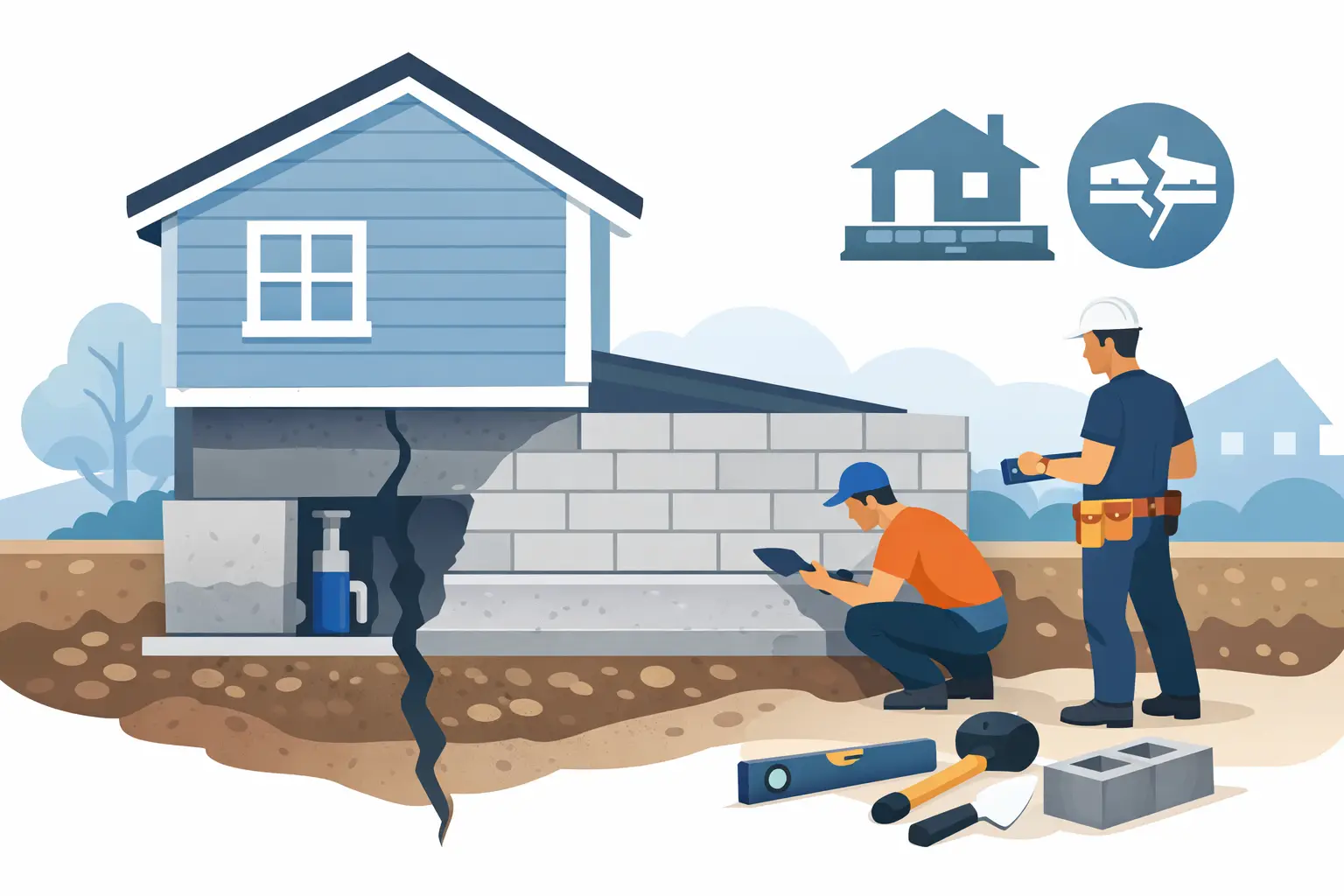
Maintaining a stable foundation is essential for the longevity and safety of homes in Alpharetta, Georgia. American Foundation Repair provides specialized structural stabilization, basement waterproofing, and crawl space encapsulation services designed to combat the unique challenges of North Georgia’s expansive clay soils. Their technical approach ensures long-term structural integrity for residential and commercial properties.
As of 2026, the Alpharetta real estate market remains one of the most robust in the Atlanta metropolitan area. However, the geological reality of the Piedmont region—characterized by heavy red clay and significant moisture fluctuations—continues to pose a threat to home foundations. Whether dealing with a settling slab in a newer development near Avalon or a bowing basement wall in a historic home near downtown, understanding the mechanics of foundation failure and the specific solutions offered by American Foundation Repair is critical for local property owners.
The Geological Context of Alpharetta: Why Foundations Fail
To understand why a company like American Foundation Repair is so vital in Alpharetta, one must first look at the soil beneath the surface. Alpharetta sits within the Piedmont plateau, a region known for its deep chemical weathering of crystalline rock, which results in thick layers of saprolite and expansive red clay.
The Impact of Red Clay and Moisture
The "shrink-swell" cycle of Georgia clay is the primary driver of foundation distress. During the humid, rainy seasons common in the Southeast, the clay absorbs significant amounts of water, causing it to expand and exert "hydrostatic pressure" against foundation walls. Conversely, during the hot, dry summers of 2026, the clay loses moisture and shrinks, leaving voids beneath the foundation.
When the soil shrinks, the weight of the house causes the foundation to settle into those voids. If this settlement is uneven—known as differential settlement—it places immense stress on the concrete or masonry, leading to cracks, shifted door frames, and potential structural collapse. According to the Georgia Geologic Survey, these soil variations are a constant factor in North Georgia construction and maintenance.
Drainage and Topography
Alpharetta’s rolling hills and varied topography further complicate matters. Homes built on slopes are particularly susceptible to lateral soil movement and erosion. If gutter systems or landscape grading are not managed properly, water pools against the foundation, accelerating the degradation of the soil’s load-bearing capacity.
Identifying Warning Signs in Your Alpharetta Home
Recognizing the early symptoms of foundation failure can save homeowners tens of thousands of dollars in secondary repairs. American Foundation Repair emphasizes that structural issues rarely resolve themselves; they only escalate over time.
Interior Indicators
- Drywall Cracks: Look for diagonal cracks branching out from the corners of door frames and windows. These often indicate that one side of the house is sinking faster than the other.
- Sticking Doors and Windows: When a foundation shifts, the rectangular frames of doors and windows become parallelograms. This causes doors to rub against the jamb or locks to misalign.
- Uneven Floors: If you notice a slope in your hardwood or tile floors, or if a ball rolls across the room on its own, the floor joists or the slab itself may have shifted.
Exterior and Basement Indicators
- Stair-Step Cracking: In brick-and-mortar homes common in Alpharetta, cracks that follow the mortar joints in a "stair-step" pattern are a classic sign of settlement.
- Horizontal Cracks: These are particularly dangerous in basements. A horizontal crack usually indicates that hydrostatic pressure from the outside soil is pushing the wall inward, causing it to "bow" or "shear."
- Efflorescence: A white, powdery substance on basement walls. While not structural itself, it indicates that water is seeping through the concrete, which can eventually weaken the rebar and the concrete matrix.
Core Services of American Foundation Repair
American Foundation Repair utilizes a suite of engineered solutions to address both the symptoms and the root causes of foundation failure. These methods are tailored to the specific architectural styles found throughout Fulton County.
Structural Piering Systems
For homes suffering from settlement, piering is the gold standard for restoration. This process involves driving high-strength steel columns deep into the earth until they reach stable, load-bearing strata or bedrock.
- Push Piers: Also known as resistance piers, these use the weight of the structure itself to drive the pier into the ground. They are ideal for heavy masonry homes.
- Helical Piers: These piers feature screw-like plates that allow them to be "threaded" into the ground. They are excellent for lighter structures, decks, or areas where the soil is particularly unstable.
Once the piers are installed and locked onto the foundation’s footing using heavy-duty brackets, the house can often be lifted back toward its original level position.
Wall Stabilization and Reinforcement
When basement walls begin to bow inward due to lateral pressure, American Foundation Repair employs several stabilization techniques:
- Carbon Fiber Straps: High-tensile strength carbon fiber is bonded to the interior of the wall. It is incredibly thin—meaning it can be painted over—but it prevents the wall from bowing further.
- Wall Anchors: These consist of an interior wall plate connected by a steel rod to an anchor buried in the yard. By tightening the assembly, the wall is pulled back toward its original vertical alignment.
- I-Beam Reinforcement: In cases of severe bowing, steel I-beams are bolted to the floor and the ceiling joists to provide rigid support against the wall.
Crawl Space Encapsulation
Many Alpharetta homes are built on crawl spaces. In Georgia’s climate, these spaces often become breeding grounds for mold and wood rot. American Foundation Repair’s encapsulation process involves sealing the floor and walls with a heavy-duty, 20-mil vapor barrier, sealing vents, and installing a dedicated dehumidifier. This regulates moisture levels, protects the subfloor, and improves the indoor air quality of the entire home.
Technical Deep Dive: The Repair Process
Understanding the workflow of a professional foundation project helps homeowners prepare for the timeline and scope of work.
Step 1: Structural Evaluation
A technician or structural engineer performs a laser-level survey of the home. This provides a digital map of the floor's elevation, identifying exactly which areas have dropped and by how much. They also inspect for "piers" or "shims" installed by previous owners that may be failing.
Step 2: Site Preparation and Excavation
If piering is required, small sections of the foundation are excavated manually or with mini-excavators. Great care is taken to avoid utility lines, which is particularly complex in densely populated areas of Alpharetta.
Step 3: Installation and Load Transfer
Piers are driven to the required depth, often 20 to 50 feet in North Georgia, until the pressure gauge indicates they have reached competent soil. The brackets are then attached to the foundation. Using a synchronized hydraulic jack system, the structure is stabilized or lifted.
Step 4: Backfill and Restoration
Once the stabilization is complete, the soil is replaced and compacted. Any concrete that was cut for interior piers is repoured. American Foundation Repair typically provides a transferable warranty, which is a major asset during home inspections.
Cost Estimates and Variables in 2026
Foundation repair costs in Alpharetta vary significantly based on the severity of the damage and the method required. In 2026, material costs for steel and specialized resins remain a primary factor in pricing.
| Repair Method | Estimated Cost Range (2026) | Primary Use Case |
|---|---|---|
| Push/Helical Piers | $1,500 – $3,200 per pier | Correcting foundation settlement/sinking |
| Carbon Fiber Straps | $700 – $1,200 per strap | Stabilizing bowing basement walls |
| Crawl Space Encapsulation | $6,000 – $18,000 (total) | Moisture control and rot prevention |
| Wall Anchors | $1,000 – $1,800 per anchor | Pulling bowed walls back to level |
| Crack Injection | $800 – $1,600 per crack | Sealing non-structural basement leaks |
Note: These figures are estimates for the Alpharetta/North Fulton market. A typical settlement repair involving 8-10 piers often ranges from $15,000 to $30,000.
Permitting and Building Codes in Alpharetta
In Alpharetta, foundation repairs are strictly regulated to ensure resident safety. The City of Alpharetta Community Development Department requires building permits for any structural alteration, including piering and wall stabilization.
Homeowners should verify that American Foundation Repair or any contractor they hire:
- Obtains the necessary permits from the city.
- Provides a "Letter of Structural Repair" signed by a licensed Professional Engineer (P.E.) in the State of Georgia.
- Adheres to the International Residential Code (IRC) as adopted and amended by the Georgia Department of Community Affairs.
Failing to secure a permit can lead to significant issues when trying to sell the home, as title companies and home inspectors in 2026 are increasingly diligent about checking for unpermitted structural work.
Maintenance and Prevention Strategies
While companies like American Foundation Repair excel at fixing damage, preventing it is far more cost-effective.
- Gutter and Downspout Management: Ensure downspouts discharge water at least 5 to 10 feet away from the foundation. Clogged gutters lead to "sheeting" water that saturates the soil directly against the footings.
- Proper Grading: The ground should slope away from the house at a rate of 6 inches for every 10 feet. This prevents water from pooling.
- Controlled Landscaping: Avoid planting large trees with aggressive root systems (such as Willows or Maples) close to the foundation, as they can suck moisture out of the soil unevenly or physically push against the walls.
- Maintaining Moisture Consistency: During extreme 2026 droughts, using a soaker hose around the foundation can prevent the clay from shrinking excessively, which helps maintain a steady "pad" for the foundation to sit on.
Frequently Asked Questions
Does homeowner’s insurance cover foundation repair?
Generally, standard homeowner's insurance policies do not cover foundation repair if the damage was caused by "earth movement" or "settlement," which includes the natural shrinking and swelling of Georgia clay. However, if the foundation damage was a direct result of a sudden event like a burst pipe or a specific covered peril, there may be a claim. Always consult with your insurance agent and a structural expert simultaneously.
How long does a typical repair take?
Most residential foundation repairs in the Alpharetta area are completed within 3 to 5 business days. Encapsulation projects might take 2 to 3 days, while a full perimeter piering job could take up to a week depending on the soil density and depth required to reach bedrock.
Will foundation repair fix the cracks in my walls?
Stabilizing the foundation stops the movement that caused the cracks, but the cracks themselves will not magically disappear. Once the house is stabilized or lifted, a contractor will need to patch the drywall or tuck-point the exterior brickwork. It is usually recommended to wait 4 to 8 weeks after the repair before fixing cosmetic cracks to allow the house to "settle" into its new position.
Can I sell my house if it has had foundation repairs?
Yes, and in many cases, it is easier to sell a home with a documented, warrantied repair than one with visible, unaddressed foundation issues. In the 2026 Alpharetta market, buyers are highly educated; providing a transferable warranty from American Foundation Repair and an engineer’s report can provide the peace of mind needed to close the deal.
Is carbon fiber really strong enough to hold a basement wall?
Yes. Carbon fiber has a tensile strength significantly higher than steel. When bonded to a concrete wall with specialized epoxy, it creates a "reinforcement" that prevents the wall from stretching or bowing further. It is a preferred method for many American Foundation Repair projects because it is non-invasive and does not require exterior excavation.
Final Recommendations for Alpharetta Homeowners
If you suspect foundation issues, your first step should be a professional inspection. Do not rely on DIY methods or general "handyman" fixes for structural problems. In Alpharetta’s specific soil conditions, the expertise of a specialized firm like American Foundation Repair is necessary to ensure that the solution is engineered for the long term.
Before signing a contract, ensure you receive a detailed written estimate that specifies the number of piers or anchors, the depth of the warranty, and a timeline for the work. For major structural lifting, always insist on a third-party engineer's review to verify that the plan is sound. Protecting your home’s foundation is the most critical investment you can make in the longevity of your property in 2026.