In the United States, private auto insurance companies are generally not required to insure high-risk drivers and maintain the legal right to deny coverage based on their own risk assessment criteria. However, because most states mandate liability insurance to drive legally, every state provides a "residual market" or assigned risk plan to ensure that even the highest-risk individuals can obtain the necessary coverage.
The Intersection of Private Enterprise and State Mandates
To understand whether an insurance company must provide you with a policy, one must first distinguish between the private "voluntary" market and the state-regulated "residual" market. As of 2026, the auto insurance landscape remains a complex tug-of-war between a private company’s right to manage its financial exposure and a state’s interest in ensuring that all motorists carry liability protection for the safety of the public.
In the voluntary market, insurance companies act as private businesses. They use sophisticated actuarial data and AI-driven underwriting models to determine which drivers are likely to cost them more in claims than they collect in premiums. If a driver’s profile—marked by multiple DUIs, a history of frequent at-fault accidents, or a pattern of reckless driving—exceeds the company's "risk appetite," the insurer can simply refuse to issue a policy. There is no federal law, and very few state laws, that force a specific private carrier to accept an applicant they deem too risky.
However, the legal requirement for drivers to maintain insurance creates a paradox: if every private company refuses a driver, that driver technically loses their ability to operate a vehicle legally. To resolve this, state governments have established safety nets. While a specific company might not be required to insure you, the insurance industry as a whole is required by state law to provide a mechanism through which you can get covered.
Defining the High-Risk Driver in 2026
Before exploring the legal obligations of insurers, it is essential to define what constitutes a "high-risk" driver in the current 2026 insurance environment. Underwriting has become significantly more granular over the last decade, but the core categories of high risk remain consistent.
Driving History and Violations
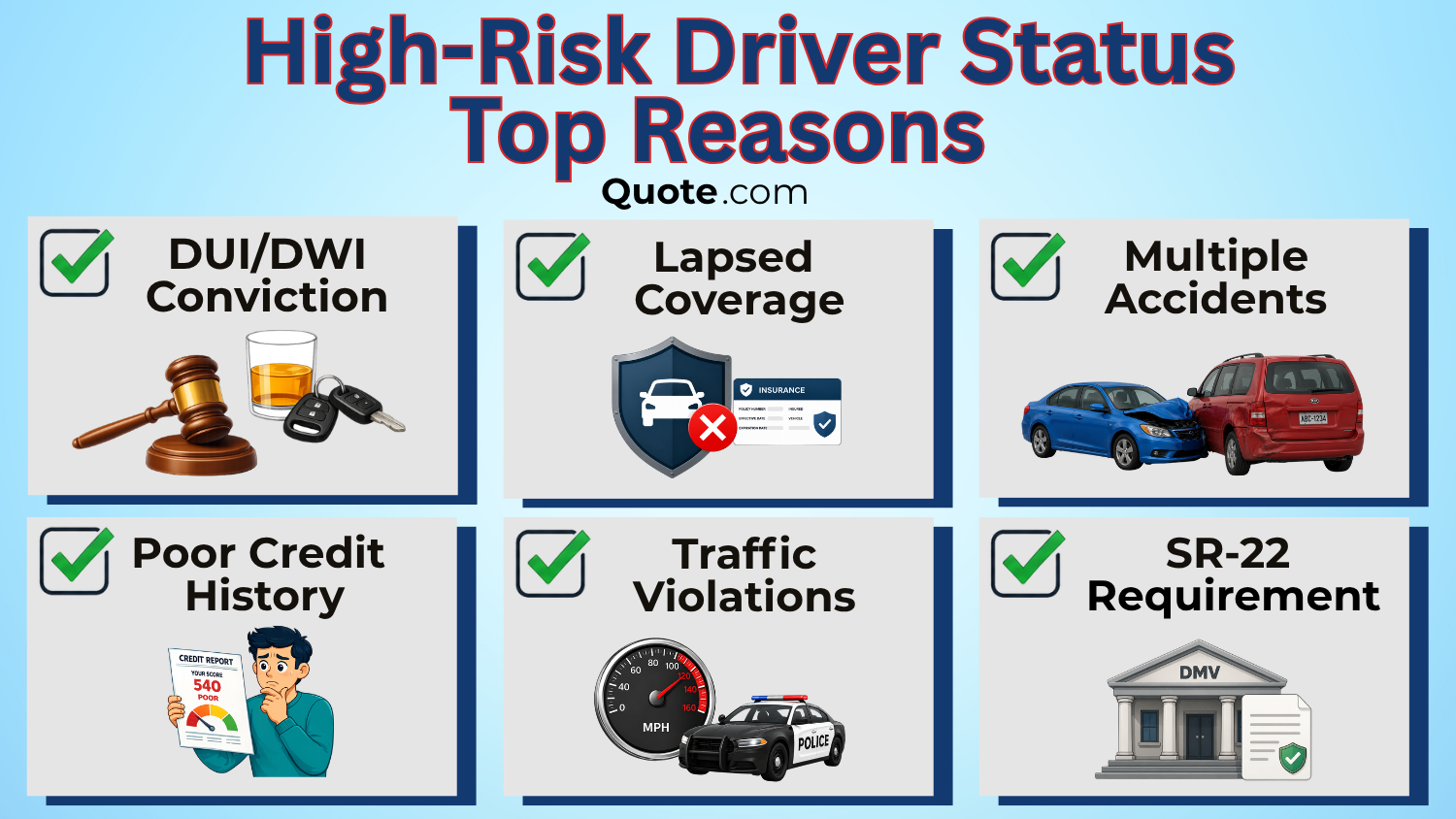
The most common reason for a high-risk designation is a history of major traffic violations. This includes Driving Under the Influence (DUI) or Driving While Intoxicated (DWI), reckless driving, or excessive speeding. In 2026, insurers also place heavy emphasis on "distracted driving" citations, which have seen a surge in weighting due to the high costs of technology-heavy vehicle repairs following accidents.
Frequent At-Fault Accidents
Insurers look at the frequency and severity of past claims. A driver who has had three at-fault accidents in a three-year window is almost universally categorized as high-risk. Companies view past behavior as the strongest predictor of future losses.
Coverage Lapses
In many states, allowing your auto insurance to lapse for even a few days can trigger a high-risk classification. Insurers correlate a lack of continuous coverage with financial instability or irresponsible behavior, often leading to significantly higher premiums or outright denial when the driver attempts to re-enter the market.
Credit-Based Insurance Scores
While controversial and banned in several states (such as California, Hawaii, and Massachusetts), many jurisdictions still allow insurers to use credit history to help determine risk. In 2026, a poor credit-based insurance score can lead to a high-risk label, even if the driver has a clean motor vehicle record.
The Role of Telematics and Real-Time Data
By 2026, telematics—the use of mobile apps or plug-in devices to monitor driving behavior—has become a standard tool for risk assessment. Drivers who consistently exhibit hard braking, high-speed cornering, or late-night driving may find themselves "priced out" of standard policies, effectively forcing them into the high-risk category.
The Residual Market: The "Assigned Risk" Safety Net
When a driver is rejected by multiple insurers in the voluntary market, they must turn to the residual market. This is the "forced" element of the insurance industry. Every state has a version of an Assigned Risk Plan or a Joint Underwriting Association (JUA).
How Assigned Risk Plans Work
In an Assigned Risk Plan, the state department of insurance requires all auto insurance companies licensed to do business in that state to participate in a "pool." Drivers who cannot find coverage elsewhere apply to this state plan. The state then assigns these drivers to the participating insurance companies in proportion to the company's market share in that state.
For example, if "Company A" writes 20% of the private auto insurance policies in a state, they are required to accept 20% of the high-risk drivers who enter the assigned risk pool. In this specific context, the insurer is required to insure the driver, but only because the state has mandated this collective responsibility as a condition of the company's license to operate.
Limitations of Residual Market Policies
While the residual market guarantees access to insurance, it does not guarantee affordability or comprehensive coverage.
- Cost: Premiums in the residual market are typically significantly higher—often double or triple the cost of a standard policy.
- Coverage Levels: These plans are often designed to provide only the state-mandated minimum liability limits. Getting "full coverage" (collision and comprehensive) can be more difficult or prohibitively expensive within the assigned risk pool.
- Last Resort Status: Most states require proof that you have been denied coverage by at least two or three private insurers before you are eligible to apply for the assigned risk plan.
State-Specific Exceptions: "Take-All-Comers" Laws
While the general rule is that private insurers can deny high-risk drivers, a few states have historically implemented "take-all-comers" rules. These laws represent the strongest form of requirement for insurers.
In states like North Carolina, the system is unique. The North Carolina Reinsurance Facility (NCRF) allows insurers to "cede" high-risk drivers to a central pool. Because the company can offload the financial risk to this facility, state law generally requires that if an applicant has a valid driver’s license and pays the premium, the insurer must provide the basic liability coverage.
In such states, the driver might never even know they are considered "high-risk" by the company’s internal standards; they simply see a higher bill, while the insurer remains the administrator of the policy. However, even in these states, the requirement usually only applies to the mandatory liability portions of the policy, not optional coverages like towing, rental reimbursement, or high-limit umbrellas.
The Legal Distinction: Denial vs. Non-Renewal
It is important for consumers to distinguish between an insurer's right to deny a new application and their right to cancel or non-renew an existing policy.
Cancellation
Most state laws are very strict about when an insurer can cancel a policy in the middle of a term. Generally, an insurer can only cancel a policy for:
- Non-payment of premium.
- Discovery of material misrepresentation or fraud on the application.
- Suspension or revocation of the driver’s license.
An insurer usually cannot cancel your policy mid-term just because you got into one accident or received a speeding ticket.
Non-Renewal
Non-renewal occurs at the end of the policy term (usually every six or twelve months). Insurers have much more leeway here. If your risk profile has changed significantly during the term, the insurer can choose not to renew the contract. They must provide a written notice (usually 30 to 60 days in advance, depending on state law) explaining the reason for the non-renewal, giving the driver time to find new coverage.
Comparing Voluntary Market vs. Residual Market (2026)
| Feature | Voluntary (Standard) Market | Residual (Assigned Risk) Market |
|---|---|---|
| Eligibility | Determined by the insurer's private criteria. | Usually requires multiple denials from private companies. |
| Pricing | Competitive; based on individual risk and discounts. | Highly regulated, but significantly more expensive. |
| Coverage Options | Full range (Collision, Comp, High Limits, Riders). | Often limited to state minimum liability requirements. |
| Insurers | Brands you recognize (State Farm, Geico, Progressive). | Assigned to a carrier by the state; you don't choose. |
| Requirement to Insure | Generally No (unless in "take-all-comers" states). | Yes, the pool must accept all eligible applicants. |
| Duration | As long as the company agrees to renew. | Designed as a temporary bridge to help drivers return to the private market. |
Practical Steps for High-Risk Drivers Seeking Insurance
If you have been labeled a high-risk driver in 2026, being "required" to be insured doesn't mean the process will be easy. Following these steps can help you navigate the situation:
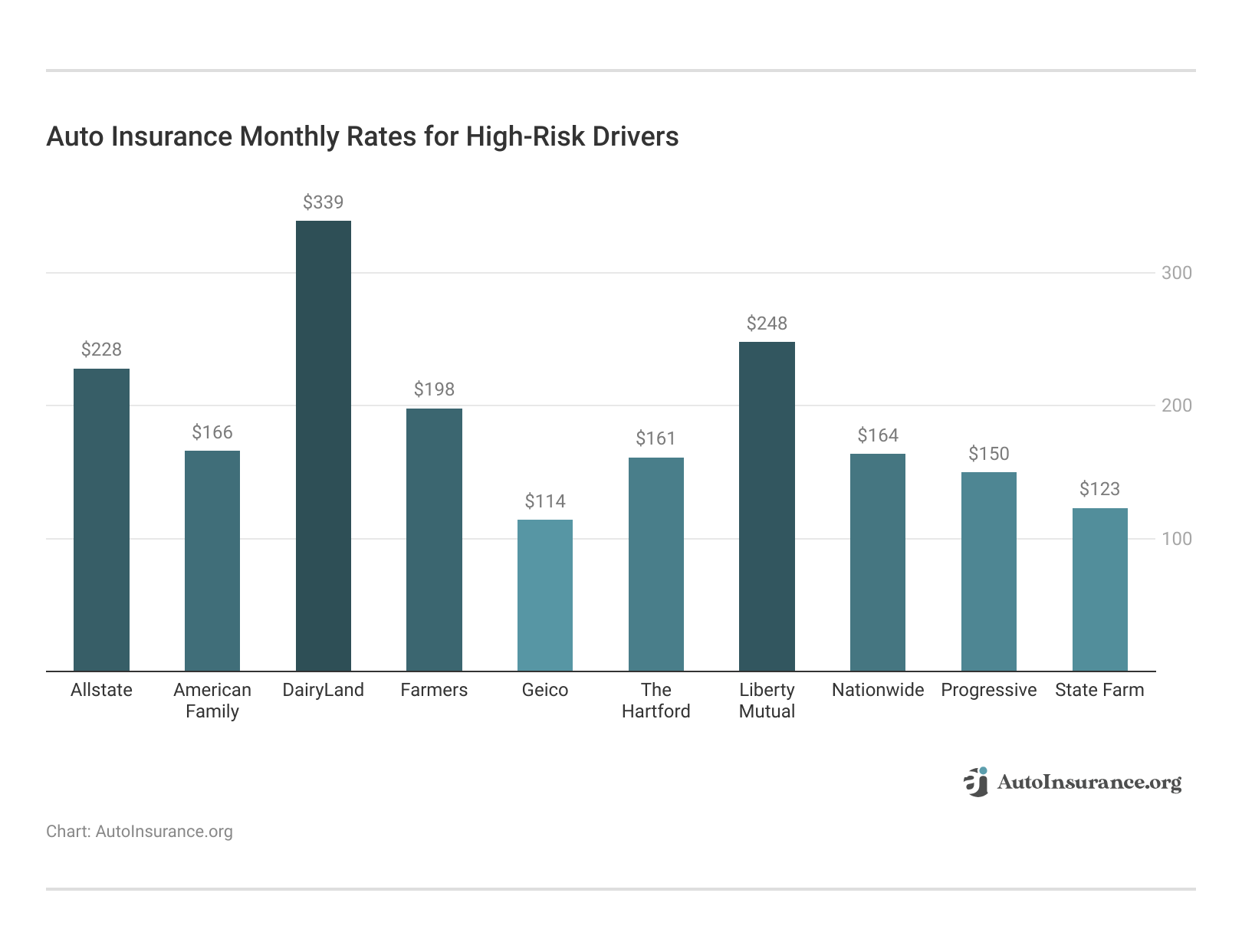
- Seek Non-Standard Carriers First: Before going to the state assigned risk plan, look for "non-standard" insurance companies. These are private companies that specifically cater to high-risk drivers (e.g., The General, Bristol West). Their rates will be high, but they often offer better service and more coverage options than the state pool.
- Verify Your SR-22 or FR-44 Status: If your state requires a certificate of financial responsibility (SR-22 or FR-44), ensure the insurer you are talking to can file this electronically with the DMV. Not all companies provide this service.
- Improve Your Risk Profile: Many high-risk designations are temporary. In 2026, completing a state-approved defensive driving course or enrolling in a telematics program that proves your safety can lead to a re-evaluation of your risk level after 12 to 24 months.
- Contact Your State’s Department of Insurance: If you are truly unable to find a company willing to write a policy, contact your state regulator. They can provide the specific contact information for the state’s Assigned Risk Plan or JUA.
- Audit Your Credit Report: In states where credit is a factor, an error on your credit report could be unfairly pushing you into a high-risk category.
Financial and Legal Implications of High-Risk Status
The primary consequence of the insurance industry's limited requirement to insure you is financial. While the state ensures you won't be legally barred from the road due to an inability to find insurance, the market ensures you will pay a premium for that access.
High-risk drivers in 2026 may face "collateral" costs, such as:
- Higher Deductibles: To make premiums somewhat manageable, high-risk drivers often must accept very high deductibles ($1,500 or $2,000), increasing their out-of-pocket costs in an accident.
- Installation of Monitoring Technology: Some high-risk policies may be contingent on the driver allowing 24/7 telematics monitoring or even the installation of an ignition interlock device (in DUI cases).
- Limited Vehicle Choice: Financing a vehicle requires full coverage insurance. If you can only afford or qualify for liability-only through an assigned risk plan, you may be unable to secure a car loan.
Frequently Asked Questions
Can an insurance company refuse to insure me if I have an SR-22?
Yes. An SR-22 is not an insurance policy; it is a document filed by an insurance company with the state to prove you have a policy. Many standard insurers refuse to provide coverage to anyone who requires an SR-22 filing. You will likely need to find a non-standard insurer or enter the state’s assigned risk pool.
How long do I have to stay in the high-risk category?
Generally, incidents stay on your motor vehicle record (MVR) for three to five years. For serious offenses like DUIs, the impact can last ten years or more in some states. Most insurers will reconsider your status after three years of "clean" driving (no tickets or accidents).
Is it true that some states have "take-all-comers" laws?
Yes, but they are rare. North Carolina is the most notable example. Even in these states, the "requirement" usually only applies to basic liability coverage. Companies can still refuse to provide collision, comprehensive, or higher liability limits to high-risk individuals.
What happens if I drive without insurance because no one will insure me?
Driving without insurance is illegal in almost every state. If you are caught, you face fines, license suspension, and vehicle impoundment. Furthermore, being caught driving uninsured will make you an even higher risk in the eyes of insurers, making it even harder and more expensive to get a policy in the future. You should always use the state’s residual market plan as a last resort rather than driving uninsured.
Do insurance companies have to tell me why they denied me?
Yes. Under the Fair Credit Reporting Act and various state insurance regulations, if an insurer denies your application or charges you a higher rate based on information in a consumer report (like your MVR or credit history), they must provide an "adverse action notice" explaining the reason and telling you which reporting agency provided the data.
Final Recommendation
If you are struggling to find auto insurance due to a high-risk profile, do not assume you are completely barred from the road. While individual private insurers are not legally required to accept your application, the law in 2026 ensures that a state-managed safety net exists. Your first step should be to consult with an independent insurance agent who has access to multiple "non-standard" carriers. If that fails, your state’s Department of Insurance can facilitate an application through the Assigned Risk Plan. Be prepared for high premiums and use the next three years as a "probationary period" to demonstrate safe driving habits, which will eventually allow you to return to the more affordable voluntary market.
Disclaimer: This information is for educational purposes and does not constitute legal or financial advice. Insurance regulations vary significantly by state jurisdiction; consult with a licensed insurance professional or state regulatory body for specific requirements in your area.