An associate degree nursing program (ADN) is a two-year academic credential designed to prepare students for the registered nurse (RN) licensure examination. By combining classroom instruction with intensive clinical rotations, these programs provide the essential technical skills, pharmacological knowledge, and patient care standards required to enter the healthcare workforce as a professional nurse.
Understanding the Associate Degree Nursing Program
The associate degree nursing program stands as the most common pathway for individuals transitioning into professional nursing. Unlike bachelor’s degree programs, which often include broader liberal arts requirements, the ADN focuses heavily on the clinical application of nursing theory. This makes it an attractive, efficient option for students looking to enter the workforce quickly while maintaining a high standard of clinical competence.
These programs are typically housed within community colleges or technical schools. They are fully accredited by national nursing education boards, ensuring that graduates meet the criteria to sit for the National Council Licensure Examination for Registered Nurses (NCLEX-RN). While the curriculum is intensive, the structure is designed to move students from foundational science—such as anatomy, physiology, and microbiology—into specialized areas like medical-surgical nursing, maternal-child health, and mental health nursing.
Prerequisites and Admission Requirements
Gaining admission into an ADN program is a competitive process. Because the number of students allowed into clinical rotations is often limited by state nursing board regulations, schools must filter applicants through rigorous standards.
Before you can apply, you must generally complete a set of "pre-nursing" or "prerequisite" courses. While specific requirements vary by institution, most programs require:
- Human Anatomy and Physiology (I and II): Usually including a laboratory component.
- Microbiology: Focused on infectious diseases and the immune system.
- College-Level Mathematics: Often specifically requiring statistics or college algebra.
- English Composition: To ensure the clear, professional communication required for clinical charting.
- General Psychology: Covering human development across the lifespan.
Beyond academic courses, most programs require standardized entrance testing. The most common exams used by nursing schools include the TEAS (Test of Essential Academic Skills) or the HESI A2 (Health Education Systems, Inc. Admission Assessment). These exams measure your proficiency in reading, math, science, and English usage.
The Clinical Component: The Heart of the ADN
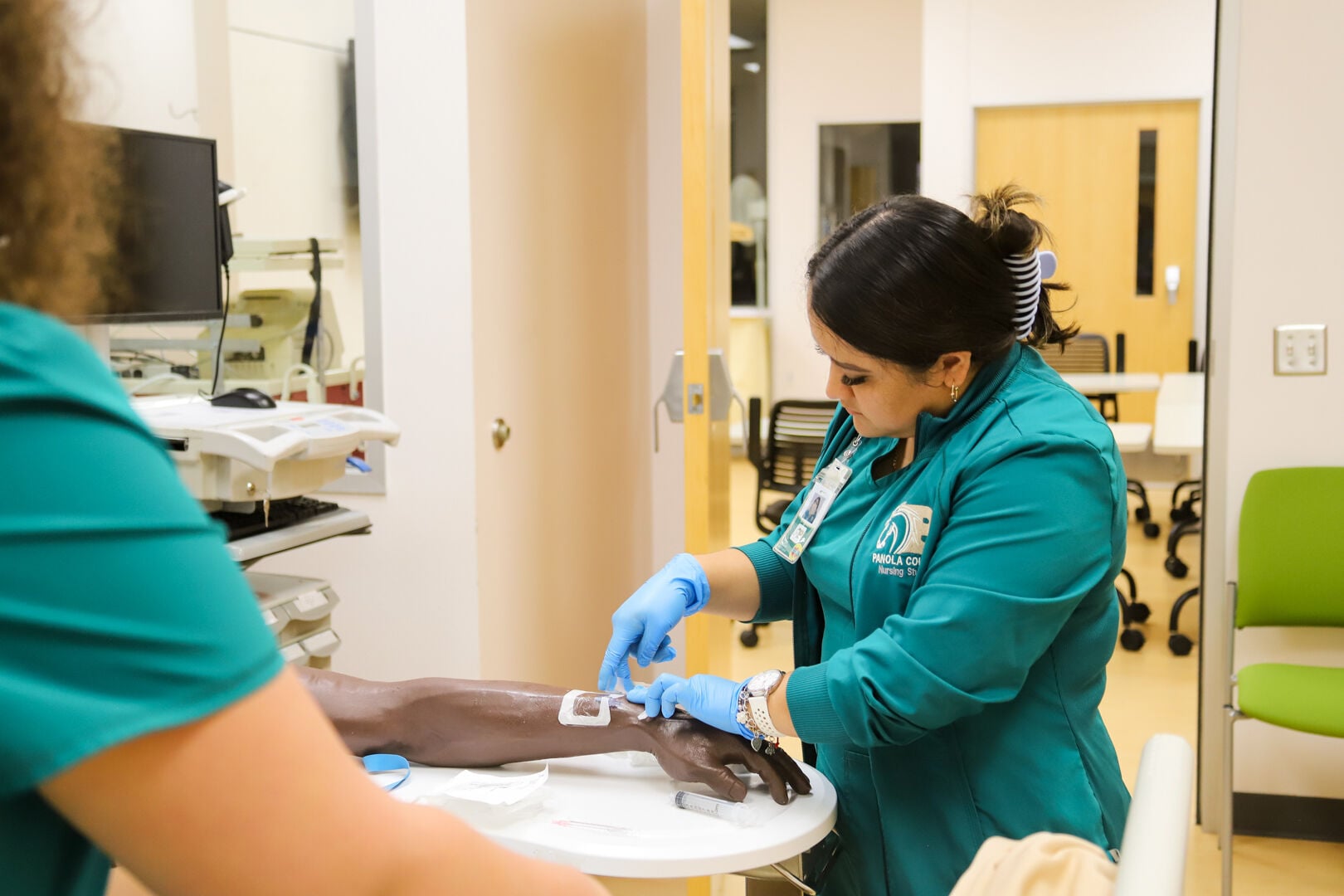
The defining characteristic of an associate degree nursing program is the clinical rotation. Classroom learning provides the scientific framework, but the clinical setting is where you develop the "nursing process"—the systematic approach used to identify, diagnose, and treat patient responses to health conditions.
Clinical rotations are scheduled in hospitals, clinics, and long-term care facilities. Under the direct supervision of a clinical instructor, students practice essential nursing tasks:
- Patient Assessment: Monitoring vital signs and performing physical exams.
- Medication Administration: Calculating dosages and learning the physiological effects of drugs.
- Collaborative Care: Participating in rounds with multidisciplinary teams, including physicians, physical therapists, and social workers.
- Electronic Health Record (EHR) Documentation: Learning how to maintain accurate, legally sound medical charts.
Safety and patient confidentiality are paramount during these rotations. Students are held to the same ethical standards as licensed professionals, and any breach of protocol, such as a HIPAA violation, can lead to immediate dismissal from the program.
Cost, Time, and Financial Considerations
An ADN is frequently cited for its cost-effectiveness compared to the four-year Bachelor of Science in Nursing (BSN) pathway. Because ADN programs are predominantly hosted by public community colleges, tuition rates are often significantly lower than those at private universities.
However, the cost of the program involves more than just tuition. Prospective students must account for:
- Textbooks and Digital Resources: Specialized nursing texts and software platforms for testing and remediation.
- Clinical Requirements: Background checks, drug screens, mandatory vaccinations, and liability insurance.
- Equipment: Specialized medical uniforms (scrubs), stethoscopes, and other clinical tools.
- Testing Fees: The cost of the NCLEX-RN exam and the state board application fees.
Many students utilize federal financial aid, including Pell Grants and Stafford Loans, to bridge the gap. Because nursing is a high-demand field, institutional scholarships and local healthcare provider tuition-reimbursement programs are also common.
Comparison of Nursing Pathways
Choosing between an ADN and a BSN is a common point of deliberation for new nursing students. The table below outlines the primary differences to help clarify your educational roadmap.
| Feature | Associate Degree (ADN) | Bachelor’s Degree (BSN) |
|---|---|---|
| Duration | 2 Years | 4 Years |
| Primary Focus | Technical Clinical Skills | Theory, Leadership, Research |
| Cost | Generally Lower | Generally Higher |
| Workforce Entry | Faster (2 Years) | Slower (4 Years) |
| Career Advancement | May require "bridge" later | Often preferred for Management |
| Licensure (RN) | Same (NCLEX-RN) | Same (NCLEX-RN) |
It is important to note that both degrees lead to the same license: Registered Nurse. Once you have passed the NCLEX-RN, your employer is often more focused on your current license and clinical skills than the specific degree title. However, if your career goals include nursing administration, specialized nursing research, or certain leadership roles, a BSN is often required eventually. Many hospitals offer "RN-to-BSN" programs that allow you to work as a nurse while completing your bachelor's degree online, often with partial tuition reimbursement.
Addressing Common Challenges and Troubleshooting
Nursing school is famously demanding, often requiring a total shift in lifestyle and study habits. If you find yourself struggling, consider these common obstacles and strategies:
1. Time Management: The volume of reading and the rigor of clinical scheduling often overwhelm students. Successful students treat nursing school like a full-time job, dedicating specific hours to "pre-reading" before lectures to ensure they grasp the material during class.
2. Standardized Testing: Nursing exams are designed to test application and critical thinking rather than simple memorization. If you struggle with exams, focus on "NCLEX-style" question banks early in the program to adjust to the style of asking, "What is the priority intervention?" rather than "What is the definition?"
3. Clinical Anxiety: Entering a hospital environment can be intimidating. Remember that your clinical instructor is there to protect both you and the patient. Never perform a procedure you are not comfortable with or have not been checked off on by your instructor.
4. Balancing Work and School: While many students work, attempting to work full-time while enrolled in an ADN program is strongly discouraged. The mental load of clinical hours often makes full-time employment unsustainable.
Preparing for the NCLEX-RN
The final hurdle of your ADN program is the National Council Licensure Examination (NCLEX-RN). This computerized adaptive test (CAT) is designed to determine if you are safe to practice as an entry-level nurse. The exam changes based on your performance—if you answer a question correctly, the next question will be harder.
Preparation for this exam should begin long before your final semester. Use your class time to master the core concepts of "Pharmacology," "Fundamentals," and "Adult Health." Most reputable programs incorporate NCLEX-style testing throughout your semesters to ensure you are consistently practicing your test-taking strategies. In 2026, many students utilize specialized adaptive learning platforms provided by their schools to identify and remediate weaknesses before the final exam date.
Frequently Asked Questions
Does an ADN limit my employment opportunities? In most clinical hospital settings, an ADN and a BSN are hired for the same entry-level bedside positions. However, some healthcare facilities have a "magnet" status or specific policies that prefer or require a BSN for long-term employment. It is wise to research the hiring trends in your specific city or hospital system.
How long does it take to get my ADN? While the core nursing coursework usually spans two academic years, the prerequisite requirements can add one to two years depending on your previous education. Total time from starting prerequisites to graduation is typically 3 to 4 years.
Can I work as a nurse while I am still in school? Most programs do not allow you to practice nursing tasks, but you may be eligible to work as a "Nursing Assistant" or "Patient Care Technician" in a hospital. This is a highly recommended strategy as it builds confidence and provides networking opportunities within the hospital system.
What is the "Bridge" program? A bridge program, specifically an RN-to-BSN bridge, is designed for those who have completed their ADN and want to earn their bachelor's degree. These programs acknowledge your current RN license and provide credit for your clinical experience, significantly shortening the time required to complete the BSN.
Is it possible to complete an ADN entirely online? No. While some classroom lectures can be delivered via remote learning, the clinical components—where you gain your hands-on experience—must be performed in person at an approved healthcare facility under the guidance of a preceptor or instructor.
Recommendation
If your goal is to become an RN, begin by checking the specific admission criteria for community colleges in your area. Request a transcript evaluation to see which of your prior courses satisfy the prerequisite requirements. Once you know what is missing, enroll in those specific courses to build your GPA. Your nursing career starts with these foundational steps, and a disciplined approach to these prerequisites will serve as the best indicator of your future success in an associate degree nursing program.