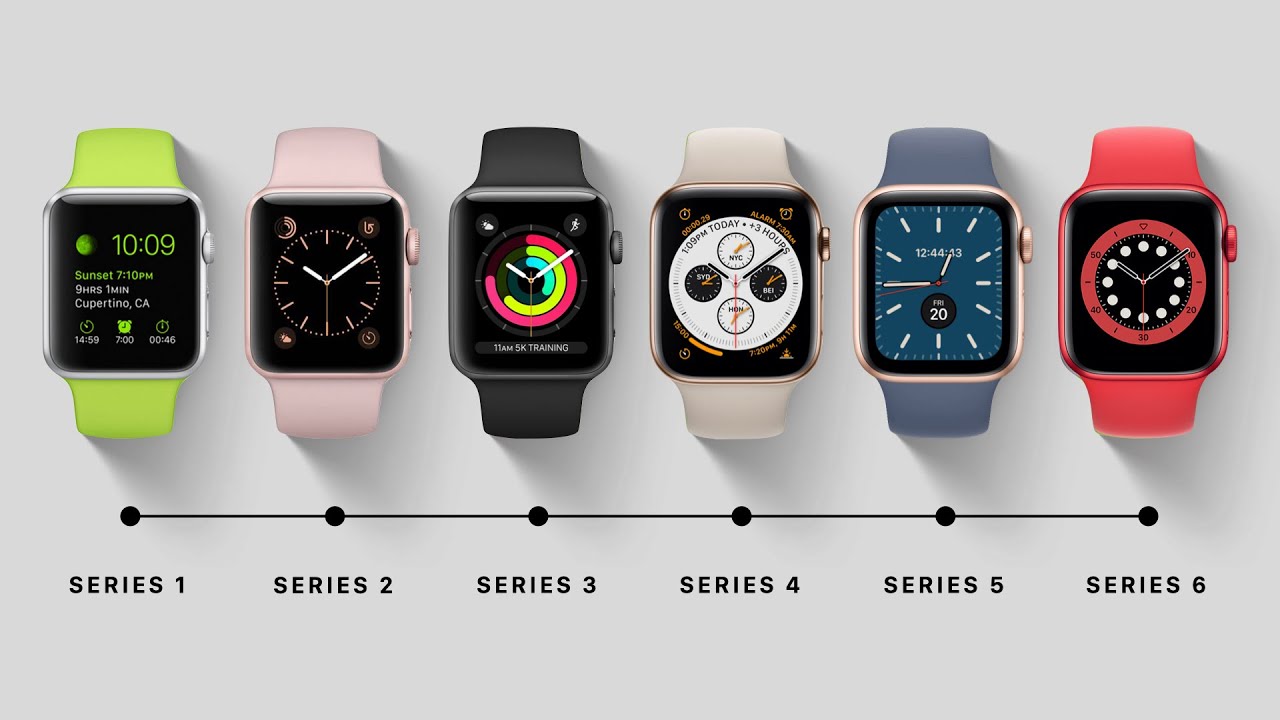
The Apple Watch Series 5 followed a precise release schedule typical of Apple’s flagship wearables. It was officially announced on September 10, 2019, at the Steve Jobs Theater in Cupertino. Pre-orders commenced the same day, with the global retail launch and shipping following on September 20, 2019.
The Evolution of the Apple Watch Series 5 Timeline
The release of the Apple Watch Series 5 marked a significant turning point in the history of Apple’s wearable technology. Coming just a year after the massive redesign seen in the Series 4, the Series 5 focused on refining the user experience through hardware efficiency and always-available information. Understanding the timeline of this device requires looking at the pre-launch environment, the announcement itself, and the subsequent phases of its market lifecycle.
By the summer of 2019, rumors were swirling regarding whether Apple would stick to its annual update cycle. Because the Series 4 had introduced a larger screen and ECG capabilities, some analysts predicted a minor "S" year for the Series 5. However, the announcement on September 10, 2019, during the "By Innovation Only" event, proved that Apple had managed to integrate one of the most requested features in the history of the product: the Always-On Retina display.
The timeline from announcement to arrival was remarkably tight. Between September 10 and September 20, Apple synchronized its global supply chain to ensure that customers in over 30 countries could receive their devices on day one. This period was also defined by the release of watchOS 6, which arrived alongside the hardware to provide the necessary software infrastructure for the new display technology.
Key Dates in the Apple Watch Series 5 Lifecycle
To grasp the full scope of the Series 5's presence in the market, one must look at the specific milestones that defined its availability. From the initial keynote to its eventual discontinuation, each date represents a shift in Apple's wearable strategy.
| Milestone Event | Date | Significance |
|---|---|---|
| Official Announcement | September 10, 2019 | Unveiled at the Steve Jobs Theater alongside iPhone 11. |
| Pre-Order Availability | September 10, 2019 | Orders opened on the Apple Store app and website. |
| Retail Launch Date | September 20, 2019 | In-store availability and first wave of shipping. |
| watchOS 6 Release | September 19, 2019 | Software update required for Series 5 features. |
| Discontinuation | September 15, 2020 | Removed from the Apple Store to make room for Series 6. |
| Vintage Status (Approx) | September 2025 | Five years after the last sale, entering "vintage" support. |
The discontinuation of the Series 5 on September 15, 2020, was notably abrupt. Unlike the Series 3, which Apple kept in the lineup as a budget option for several years, the Series 5 was immediately replaced by the Series 6. This was largely due to the introduction of the first-generation Apple Watch SE, which utilized much of the Series 4 and 5 architecture but lacked the Always-On display, creating a clearer tier system in the product lineup.
Technical Milestones: The Always-On Retina Display
The most critical technical achievement within the Series 5 timeline was the implementation of the Always-On Retina display. Before 2019, the Apple Watch screen remained black until a user raised their wrist or tapped the glass. The Series 5 solved this by utilizing a Low-Temperature Polycrystalline Oxide (LTPO) display.
This technology allowed the screen to dynamically scale its refresh rate. While a standard Apple Watch display refreshed at 60Hz (sixty times per second), the Series 5 could drop its refresh rate to as low as 1Hz when the wrist was down. This engineering feat was essential for maintaining the "all-day" 18-hour battery life while keeping the time and complications visible at all times.
The timeline for the development of LTPO was years in the making, but its commercial debut in the Series 5 set the standard for every flagship Apple Watch that followed. To support the Always-On feature, Apple also had to re-engineer the ambient light sensor and the power management integrated circuit (PMIC). This necessitated a more sophisticated S5 System-in-Package (SiP), which, while sharing the same CPU performance as the S4, included a new display controller and a built-in compass.
Material and Model Expansion
The September 2019 launch was also notable for the "Return of the Edition." Apple expanded the material options during the Series 5 release window, catering to a wider range of aesthetic preferences and price points. This expansion was a key part of the product's timeline, as it reintroduced premium materials that had been absent or altered in previous years.
- Aluminum: Available in Silver, Gold, and Space Gray. This remained the high-volume seller, utilizing 100% recycled 7000-series aluminum.
- Stainless Steel: Offered in Gold, Silver, and Space Black. These models featured sapphire crystal displays and were popular for their jewelry-like finish.
- Titanium: A brand-new addition for the Series 5. It was offered in two finishes: natural titanium and Space Black DLC (Diamond-Like Carbon). Titanium provided a higher strength-to-weight ratio than stainless steel.
- Ceramic: Returning after a one-year hiatus (following the Series 3), the Series 5 Edition was available in a stunning White Ceramic. This model was highly scratch-resistant and remains a collector's item in 2026.
This diversity in materials meant that the shipping timeline for specific models varied. While aluminum models were generally available for launch day, the higher-end Edition models often saw shipping dates slip into October 2019 due to the complexity of manufacturing ceramic and titanium casings.
Software Support and watchOS Lifecycle
The Apple Watch Series 5 launched with watchOS 6, which introduced the dedicated on-watch App Store. This was a pivotal moment in the timeline because it began the process of decoupling the Apple Watch from the iPhone, allowing users to browse, purchase, and download apps directly on their wrist.
Throughout its functional life, the Series 5 received several major software updates. As we look back from 2026, the S5 chip's longevity is impressive. Because the S5 chip utilized the same 64-bit dual-core architecture as the S4, its software support timeline was closely linked to its predecessor. The Series 5 comfortably ran watchOS 7, 8, 9, and 10.
Each software iteration added value to the Series 5 hardware. For instance, watchOS 7 introduced native sleep tracking and new workout types, while watchOS 9 brought an entirely redesigned Compass app that utilized the Series 5’s built-in magnetometer more effectively. In the context of 2026, the Series 5 has likely reached the end of its official software update eligibility, as Apple typically supports devices for 5 to 6 years of major OS releases. However, the device remains functional for basic fitness tracking and timekeeping.
International Emergency Calling and Safety Features
Another significant addition during the Series 5 release window was International Emergency Calling. While the Series 4 had introduced Fall Detection and Emergency SOS, those features were initially limited by the user’s cellular roaming capabilities.
With the Series 5, Apple enabled the device to complete emergency calls in almost any country, regardless of where the device was originally purchased or whether a cellular plan was active. This was a hardware-level change that allowed the watch to communicate with international emergency bands. For travelers, the Series 5 became a vital safety tool, further establishing the Apple Watch as a health and safety device rather than just a notification hub.
Historical Comparison of Release Phases
When comparing the Series 5 timeline to its predecessors and successors, its launch was remarkably stable. Apple had moved away from the April release window of the original 2015 "Series 0" and had firmly established September as the month for wearable updates.
- Announcement Phase: Always the second Tuesday or Wednesday of September.
- Pre-Order Phase: Typically starts the Friday following the announcement (though for the S5, it started the same day).
- Launch Phase: The following Friday, aligning with the new iPhone availability.
- Holiday Surge: The period from November to December where Series 5 sales peaked globally.
This rhythm helped Apple dominate the smartwatch market, as the Series 5 captured both the tech-enthusiast market (due to the Always-On display) and the luxury market (due to the Ceramic and Titanium Edition models).
Pricing and Value Over Time
At launch, the Apple Watch Series 5 maintained the pricing structure established by the Series 4. The aluminum 40mm GPS model started at $399, while the 44mm version was $429. Adding cellular connectivity increased the price by $100.
The premium materials saw a significant price jump. Stainless steel models started at $699, titanium models at $799, and the white ceramic Edition started at $1,299. In 2026, the secondary market value of these devices has declined significantly, as is common with lithium-ion battery-powered electronics. However, the ceramic and titanium models have retained a "collector's premium" due to their unique finishes and the fact that Apple has not offered a ceramic model since the Series 5.
FAQs About the Apple Watch Series 5 Release
Was the Apple Watch Series 5 released alongside the iPhone 11?
Yes, the Apple Watch Series 5 was announced on the same day as the iPhone 11, iPhone 11 Pro, and iPhone 11 Pro Max. All these devices were unveiled during the "By Innovation Only" keynote at the Steve Jobs Theater. This coordinated launch is a standard Apple strategy to encourage ecosystem synergy, as the new Apple Watch features often require the latest iOS version to function optimally.
How long did Apple sell the Series 5?
Apple sold the Series 5 for exactly 371 days. It was available from its retail launch on September 20, 2019, until it was discontinued on September 15, 2020. Upon the announcement of the Series 6 and the first Apple Watch SE, the Series 5 was removed from the official Apple storefront, though third-party retailers continued to sell remaining stock for several months afterward.
What made the Series 5 timeline unique compared to the Series 4?
The Series 5 timeline was unique because it reintroduced the "Edition" tier with two different materials: Titanium and Ceramic. While the Series 4 had simplified the lineup to just Aluminum and Stainless Steel, the Series 5 returned to offering ultra-premium options. Additionally, the Series 5 was the first to feature an Always-On display, which required a significant software and hardware integration timeline that started years before its 2019 reveal.
Can the Apple Watch Series 5 still be used in 2026?
Technically, yes. The Apple Watch Series 5 remains functional in 2026 for core tasks such as activity tracking, heart rate monitoring, and receiving notifications. However, users should be aware that battery health will likely be significantly degraded after seven years of use. Furthermore, it has likely transitioned into Apple's "vintage" or "obsolete" hardware list, meaning official repairs may be difficult to source and it may no longer receive the latest watchOS security updates.
Does the Series 5 support the same bands as modern Apple Watches?
Yes, the Apple Watch Series 5 used the same band attachment mechanism that Apple has maintained since the original model. The 40mm Series 5 is compatible with bands designed for the 38mm, 40mm, and 41mm cases, while the 44mm Series 5 is compatible with bands for the 42mm, 44mm, 45mm, and 49mm (Ultra) cases. This continuity has been a hallmark of the Apple Watch timeline.
Recommendation for Current Owners and Collectors
As of 2026, the Apple Watch Series 5 is a legacy device. If you are a current owner, the most important action you can take is to monitor your battery health in the Settings app. If the maximum capacity has fallen below 80%, the Always-On display may cause the watch to shut down unexpectedly before the end of the day.
For collectors, the White Ceramic Edition remains the "holy grail" of the Series 5 era. If you are looking to acquire one for a collection, ensure the sapphire crystal is free of micro-abrasions and that the ceramic casing hasn't suffered any impact fractures. While it may no longer be your primary daily driver for modern apps, the Series 5 stands as a monumental piece of wearable history—the device that finally made the Apple Watch look and act like a traditional timepiece.