Anti-steering auto insurance laws are a legal reality, not a myth, though their effectiveness is frequently debated. These regulations, active across most U.S. states in 2026, prohibit insurance companies from forcing policyholders to use specific repair shops. While laws protect your right to choose, insurers often use subtle persuasion or "word tracks" to influence your decision.
The concept of "steering" in the auto insurance industry refers to the practice of an insurance carrier directing, or "steering," a claimant toward a specific auto body repair shop. Often, these shops are part of the insurer’s Direct Repair Program (DRP). The debate over whether anti-steering protection is a "myth" usually arises from the discrepancy between the strict letter of the law and the persuasive tactics adjusters use during the claims process. To navigate a claim successfully in 2026, it is essential to understand where legal protection ends and corporate influence begins.
The Origins of Anti-Steering Regulations
The fight against steering is not a new development. It traces back significantly to the 1963 Consent Decree, a landmark legal agreement between the U.S. Department of Justice and several insurance trade associations. This decree prohibited insurers from interfering with the price of repairs or the selection of repair shops. Although the decree was terminated in recent years by the DOJ under the "sunset" of old antitrust judgments, the principles it established were codified into state-level statutes.
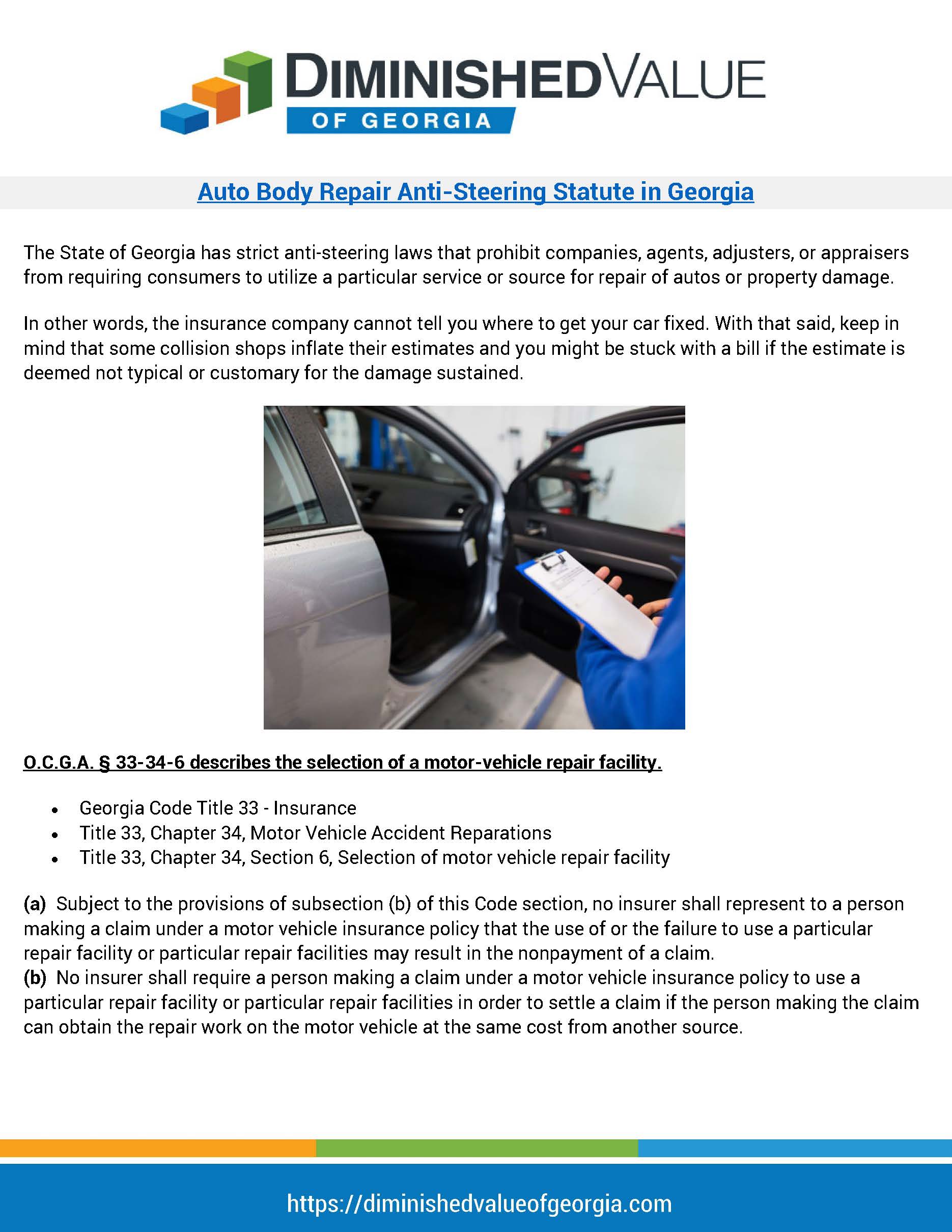
In 2026, most states have individual insurance codes that explicitly state a consumer has the right to select the repair facility of their choice. For instance, California Insurance Code § 758.5 and similar laws in New York and Texas serve as the primary defense for consumers. These laws exist to prevent monopolies and ensure that repair shops compete on quality rather than just their willingness to provide discounts to insurance giants.
Why the "Myth" Persists: The Gap Between Law and Practice
The reason many consumers and shop owners label anti-steering as a "myth" is the prevalence of indirect steering. While an insurance agent cannot legally say, "You are forbidden from using Shop A," they can—and often do—use language designed to make "Shop A" seem like a risky or inconvenient choice.
Common tactics that feel like steering include:
- The Guarantee Myth: Insurers often state they cannot "guarantee" the work performed by an independent shop. While technically true, most reputable independent shops provide their own lifetime warranties that are often superior to the insurer's secondary guarantee.
- The Delay Tactic: A claims adjuster might warn that choosing an out-of-network shop will lead to "delays in inspection" or that they "don't have an adjuster in that area," even when they utilize digital photo estimating tools.
- The Out-of-Pocket Threat: Insurers may claim that an independent shop’s labor rates are "above market" and that the consumer will be responsible for the difference, without providing evidence of what the local market rate actually is.
Because these tactics do not involve an explicit "denial" of the right to choose, they often bypass the technical triggers of anti-steering laws, leading many to feel that the protections are non-existent in practice.
Direct Repair Programs (DRP) vs. Independent Shops
Understanding the difference between a DRP shop and an independent shop is crucial for any policyholder. A DRP shop has a contractual relationship with the insurance company. In exchange for a steady stream of referrals, the shop agrees to certain labor rates, administrative procedures, and often the use of specific types of parts (such as aftermarket or recycled parts).
Comparison of Repair Shop Models
| Feature | Direct Repair Program (DRP) | Independent/Certified Shop |
|---|---|---|
| Referral Source | Insurance Company | Word of mouth, OEM certification |
| Labor Rates | Pre-negotiated (often lower) | Market-based or Manufacturer-set |
| Parts Priority | Often prefers Aftermarket/Recycled | Often prefers OEM (Original Equipment) |
| Billing | Direct to Insurance | Direct to Insurance (with potential supplements) |
| Loyalty | Split between Insurer and Customer | Primary loyalty to the Customer |
| Warranty | Insurer-backed secondary guarantee | Shop-backed primary warranty |
How to Identify Steering Tactics (Red Flags)
In 2026, insurance communication is more streamlined, often occurring via mobile apps or automated scripts. This makes it easier for steering language to be embedded in standard procedures. If you hear the following phrases, you are likely being steered:
- "We can't guarantee the repairs if you go there." This is the most common tactic. Reputable shops provide their own written warranties. The insurance company's guarantee is generally redundant.
- "That shop is not on our 'approved' list." There is no legal requirement for a shop to be on an "approved" list for an insurer to pay for the repairs.
- "It will take much longer to get your car back if you use them." Insurers are required to process claims in a timely manner regardless of the shop chosen. Any intentional delay caused by the insurer to "punish" a shop choice may be a violation of "Fair Claims Settlement Practices."
- "You will have to pay the difference in labor costs." This is often a bluff. If the shop's labor rate is consistent with other professional shops in the area, the insurer is generally obligated to pay the "reasonable and customary" cost of repair.
The Role of OEM Certifications
One way the "myth" of anti-steering is being challenged in 2026 is through OEM (Original Equipment Manufacturer) Certification. As vehicles become more complex—featuring advanced driver-assistance systems (ADAS), LiDAR, and specialized aluminum frames—the "choice" of a repair shop becomes a safety issue rather than just a financial one.
Manufacturers like Tesla, BMW, and Ford have established certification programs. These shops have invested hundreds of thousands of dollars in specific tooling and training. When an insurer attempts to steer a consumer away from an OEM-certified shop to a non-certified DRP shop, they are potentially steering the consumer into an unsafe repair. This has given consumers and independent shops more leverage to demand that the insurer pays the necessary rates for a proper, safe repair.
Consumer Rights and State Protections
If you are dealing with a claim in 2026, you should be aware of the specific protections afforded to you. While laws vary by state, the following principles generally apply:
- The Right to Choose: You have the absolute right to select the repair facility. The insurer must inform you of this right in many jurisdictions.
- Transparent Estimating: The insurer must provide a copy of the estimate and disclose if they are basing the estimate on "non-OEM" or "recycled" parts.
- Freedom from Coercion: Insurers cannot threaten to cancel your policy or increase your premiums simply because you chose an independent shop.
- Reasonable Payment: The insurer is required to pay the amount necessary to restore the vehicle to its "pre-loss condition."
For specific guidance, the National Association of Insurance Commissioners (NAIC) provides resources and links to state-specific departments of insurance (DOI). If you feel you are being steered, filing a formal complaint with your state's DOI is the most effective way to trigger an investigation into the insurer's practices.
Step-by-Step Guide: Navigating a Claim Without Being Steered
If you have been in an accident and want to ensure your vehicle is repaired at the shop of your choice, follow these steps:
- Select Your Shop First: Do your research before calling the insurance company. Look for OEM certifications and high ratings for collision repair.
- File the Claim: Report the accident to your insurer. When they ask where the car is, give them the name and address of your chosen shop.
- Stand Your Ground: If the adjuster suggests a different shop, simply state, "I have exercised my right to choose my repair facility, and I would like the claim processed for [Shop Name]."
- Request a Detailed Estimate: Once the insurer provides an estimate, give it to your chosen shop. They will likely find "supplements"—items that the insurer missed or underpriced.
- Documentation is Key: Keep a log of all phone calls, names of adjusters, and specific statements made regarding your shop choice. If they mention delays or labor rate issues, ask for those statements in writing.
- Involve the Shop: Professional independent shops are experienced in dealing with steering. They can often provide the data needed (such as local labor rate surveys) to counter insurance company claims.
Frequently Asked Questions
Can an insurance company refuse to pay if I don't go to their shop?
No. In 2026, no standard personal auto policy in the United States allows an insurer to refuse payment based solely on your choice of repair shop. They are legally obligated to pay for the "reasonable and customary" cost of repairs at the facility of your choice.
Is the insurance company's guarantee better than the shop's warranty?
Not necessarily. Most insurance guarantees are "secondary," meaning they only kick in if the shop goes out of business or refuses to fix a mistake. A reputable independent shop provides a primary lifetime warranty on their workmanship and paint, which is your first and most important line of defense.
Why do insurers want me to use their DRP shops?
The primary reason is cost control. DRP shops agree to lower labor rates, discounts on parts, and administrative efficiencies that save the insurance company money. While this can sometimes speed up the process, it can also lead to pressure on the shop to cut corners or use cheaper parts.
What happens if the shop's estimate is higher than the insurance estimate?
This is common. This difference is usually resolved through a "supplemental" estimate. Your shop will document the additional damage or necessary procedures and submit them to the insurer for approval. If the insurer refuses to pay for a necessary manufacturer-required procedure, they may be in violation of their contract to return the vehicle to pre-loss condition.
Do anti-steering laws apply to both the "at-fault" and "not-at-fault" parties?
Yes. Whether you are filing a first-party claim (with your own insurance) or a third-party claim (against someone else's insurance), you retain the right to choose your repair facility. However, third-party adjusters are often more aggressive in their steering tactics because they have no direct contractual relationship with you.
Practical Recommendation
When navigating an auto insurance claim in 2026, treat the insurance company's "recommendations" as just that—suggestions, not requirements. The most important action you can take is to select a shop that prioritizes your safety and the vehicle's integrity over the insurance company's bottom line. If you encounter resistance, remind the adjuster that state law protects your right to choose. For any significant pushback, do not hesitate to contact your state's Department of Insurance or an attorney specializing in insurance bad faith. The law is on your side, but you must be the one to enforce it.