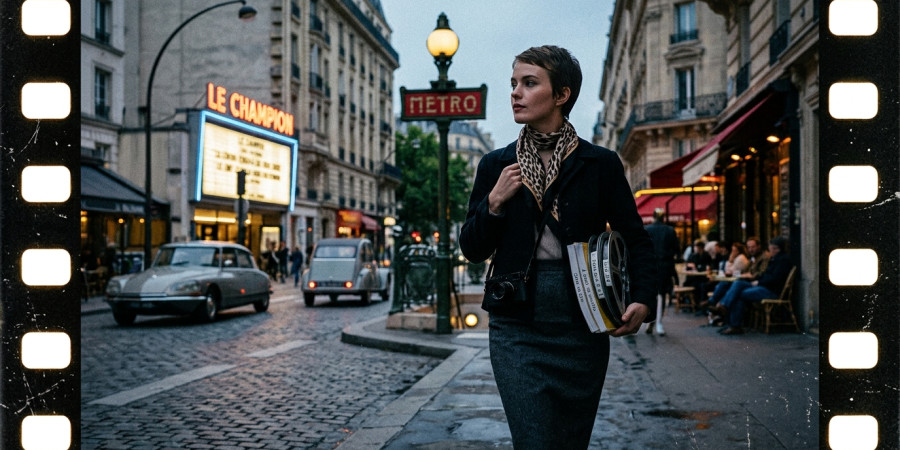
Paris has long served as one of the most evocative cinematic backdrops in the history of motion pictures, perfectly adapting to the shifting emotional states, desires, and melancholy of viewers worldwide. Choosing the right film set in the French capital depends entirely on your current psychological landscape, whether you are seeking sweeping romance, dark existential philosophy, vibrant animation, or sharp social critique.
1. For a Whimsical and Optimistic Mood: Amélie (Le Fabuleux Destin d'Amélie Poulain, 2001)
When you find yourself seeking joy, color, and a restoration of faith in human connection, Jean-Pierre Jeunet's modern classic stands unrivaled. The film follows Amélie Poulain, a shy yet imaginative waitress working in the bohemian Montmartre district, who decides to orchestrate subtle acts of kindness to improve the lives of those around her.
Cinematic Atmosphere and Aesthetic Design
The visual language of Amélie relies heavily on a saturated, hyper-vibrant color palette dominated by rich reds, deep greens, and golden yellows. Cinematographer Bruno Delbonnel utilizes wide-angle lenses and digital post-production manipulation to give the streets of Paris—specifically the iconic landmarks like the Sacré-Cœur and the historic Lamarck-Caulaincourt metro station—a fairytale quality. This stylistic choice deliberately separates the narrative from gritty realism, positioning Paris as a dreamscape where magic hides in everyday transactions, such as cracking the crust of a crème brûlée or skimming stones along the Canal Saint-Martin.
Emotional Resonance
The primary search intent for viewers seeking this film is often comfort and escapism. Amélie tackles isolation in a massive urban center and reframes it as an opportunity for proactive empathy. By focusing on small, sensory pleasures—dipping a hand into a sack of grain, smelling fruit at a local market—the film serves as an effective antidote to cynicism, making it an essential entry on any list of Paris-focused cinema.
2. For a Nostalgic and Intellectual Mood: Midnight in Paris (2011)
For moments when you crave witty dialogue, historical reflection, and a gentle longing for a bygone era, Woody Allen’s romantic fantasy provides an ideal escape. The story centers on Gil Pender, a disillusioned Hollywood screenwriter visiting Paris with his fiancée, who mysteriously finds himself transported back to the roaring 1920s every night at midnight, mingling with literary and artistic icons like Ernest Hemingway, F. Scott Fitzgerald, Gertrude Stein, and Salvador Dalí.
Historical Integration and Literary Landscapes
The film acts as a love letter to the Lost Generation and the expatriate artistic community that defined early 20th-century Paris. Locations such as Shakespeare and Company, the historic English-language bookstore, and Maxim's restaurant are integrated seamlessly into the plot. Rather than presenting a straightforward tourist guide, the film explores the psychological trap of "golden age thinking"—the human tendency to believe that any era other than the present is inherently superior.
Practical Viewing Insights
Best Watched: During autumn twilight, accompanied by a glass of Bordeaux.
Key Themes: Artistic validation, romantic disillusionment, and embracing the present.
Notable Locations Featured: The steps of the Saint-Étienne-du-Mont church, the Musée Rodin, and the banks of the Seine.
3. For a Restless and Philosophical Mood: Before Sunset (2004)
When you are in the mood for intimate, unbroken conversation and deep emotional introspection, Richard Linklater’s real-time masterpiece delivers. Picking up nine years after the chance encounter on a train in Before Sunrise, Jesse and Céline reunite in Paris during the final hours before Jesse’s flight back to the United States.
Structure and Real-Time Walking Tour
The film unfolds almost entirely in real-time, matching the runtime of the movie to the duration of the characters' afternoon walk through Paris. This structural choice forces the viewer to track every minute alongside the protagonists. The setting shifts from the historic bookshop Shakespeare and Company down the Île Saint-Louis, through quiet Parisian cafés, along the Left Bank, and finally into an apartment in the 11th arrondissement.
"Paris isn't about looking at monuments; it's about walking down a random street and realizing that history, romance, and philosophy are woven into the very pavement beneath your feet."
Dialogue-Driven Tension
Unlike action-heavy blockbusters, Before Sunset relies entirely on verbal sparring, unspoken regrets, and lingering chemistry between Ethan Hawke and Julie Delpy. It captures a specific Parisian mood: the bittersweet realization of unfulfilled potential and the complex weight of choices made years prior. It is an intellectual exercise in romantic realism, stripping away the cinematic gloss to focus on human vulnerability against the backdrop of an aging, timeless city.
4. For a Dark, Existential, and Thrilling Mood: Le Samouraï (1967)
If your emotional state leans toward brooding intensity, sleek minimalism, and neo-noir suspense, Jean-Pierre Melville’s masterpiece is the definitive choice. Alain Delon stars as Jef Costello, a meticulous, silent hitman operating under a strict personal code of honor who finds himself caught between the police and his employers after a botched contract.
Visual Style and the Parisian Underworld
Melville strips Paris of its romantic clichés, rendering the city in cold blues, grays, and metallic tones. The Paris of Le Samouraï is a labyrinth of rainy metro stations, desolate industrial outskirts, and sterile hotel rooms. Delon's iconic trench coat and fedora, combined with his stoic silence, established the archetype of the cinematic antihero.
Technical Brilliance
Sound Design: Minimalist dialogue, dominated by the ambient ticking of clocks and the subterranean roar of the Paris Métro.
Directing Influence: Heavily inspired American gangster tropes while infusing them with French existentialist philosophy, making the film a foundational text for modern crime thrillers.
5. For a Vibrant, Family-Friendly, and Culinary Mood: Ratatouille (2007)
When you need a comforting, beautifully animated feature that celebrates passion, creativity, and the senses, Pixar's Ratatouille offers unmatched warmth. The plot centers on Remy, a rat with a highly sophisticated sense of taste and smell who dreams of becoming a great French chef in Paris, forming an unlikely alliance with a clumsy garbage boy at a prestigious restaurant.
Culinary Accuracy and Architectural Precision
Despite being an animated film, Pixar’s production team conducted extensive research in Paris to capture the authentic textures of the city. From the bustling, high-pressure environment of a classic French kitchen to the sweeping nighttime views of the illuminated Eiffel Tower visible from Parisian rooftops, the film treats food and geography with equal reverence.
Why It Resonates
The film's climax features a harsh food critic, Anton Ego, tasting a simple peasant dish of ratatouille, which instantly transports him back to his childhood. This scene serves as a masterclass in how environment, flavor, and memory intersect—a core theme for anyone who has ever visited Paris and longed to capture its essence long after returning home.
6. For a Melancholic, Poetic, and Atmospheric Mood: The 400 Blows (Les Quatre-Cents Coups, 1959)
For viewers drawn to raw realism, historical cinema, and deep emotional resonance, François Truffaut’s debut feature is essential viewing. As a cornerstone of the French New Wave, the film follows Antoine Doinel, a misunderstood 12-year-old boy navigating a neglectful home life and rigid school system in late-1950s Paris, frequently escaping into the streets and cinemas of the city.
The French New Wave Aesthetic
Shot on location by cinematographer Henri Decaë, The 400 Blows rejected glossy studio sets in favor of authentic Parisian neighborhoods, crowded classrooms, narrow apartment stairwells, and bustling boulevards. Truffaut utilized handheld cameras and natural lighting to give the film a documentary-like immediacy. The famous final freeze-frame of Antoine looking directly into the camera lens remains one of the most powerful endings in film history, cementing Paris not as a romantic playground, but as a complex urban survivor's ground.
7. For a Magical, Whimsical, and Late-Night Mood: Paris, Je T'Aime (2006)
When you cannot decide on a single narrative thread and want a mosaic of varying emotional tones, this anthology film compiles eighteen short segments directed by renowned international filmmakers—including Gus Van Sant, Alfonso Cuarón, and Wes Craven—each set in a different arrondissement of Paris.
Diversity of Perspectives
The anthology format allows viewers to sample multiple moods within a single viewing session:
Romance: Strangers meeting over coffee in Montmartre.
Melodrama: Aging actors crossing paths in the theatre district.
Supernatural/Mystery: Ghostly encounters in Père Lachaise Cemetery.
Comparative Film Selection Guide
| Film Title | Director | Primary Genre | Best Suited For | Key Parisian Setting |
|---|---|---|---|---|
| Amélie (2001) | Jean-Pierre Jeunet | Romantic Comedy / Fantasy | Joy, optimism, whimsy | Montmartre |
| Midnight in Paris (2011) | Woody Allen | Fantasy / Comedy-Drama | Nostalgia, intellectual escape | Latin Quarter |
| Before Sunset (2004) | Richard Linklater | Romance / Drama | Conversation, introspection | Left Bank |
| Le Samouraï (1967) | Jean-Pierre Melville | Neo-Noir / Crime | Tension, style, isolation | Metro & Industrial Outskirts |
| Ratatouille (2007) | Brad Bird | Animation / Family | Comfort, culinary appreciation | Parisian Kitchens & Rooftops |
| The 400 Blows (1959) | François Truffaut | Drama / New Wave | Realism, youthful rebellion | 9th & 17th Arrondissements |
| Paris, Je T'Aime (2006) | Various | Anthology / Drama | Variety, short-form storytelling | Multiple Arrondissements |
Frequently Asked Questions
What is the best Paris-set film for a romantic evening?
While Before Sunset offers deep conversational romance, Amélie provides a more visually enchanting and lighthearted fairy-tale atmosphere. Choosing between them depends on whether you prefer grounded realism or magical realism.
Are these films suitable for learning about Parisian geography?
Yes, films like Before Sunset and Midnight in Paris utilize authentic on-location shooting across well-known districts. However, classic films like The 400 Blows offer a window into working-class Parisian neighborhoods that tourists rarely encounter.
Where can I watch classic French New Wave films like The 400 Blows?
Many of these titles are available on specialized streaming platforms dedicated to independent and international cinema, such as The Criterion Channel, or through digital rental storefronts.
Do I need to speak French to enjoy these films?
No. All the featured live-action films offer high-quality subtitles or dubbed versions, though watching them in their original French audio track with English subtitles preserves the authentic cadence and atmosphere of the performances.
How do these films capture the true spirit of Paris?
Rather than relying solely on postcard imagery of the Eiffel Tower, these directors focus on the sensory details—the sound of footsteps on cobblestones, the lighting in neighborhood bistros, and the varied emotional lives of the city's inhabitants.
Final Recommendation
To properly experience the cinematic breadth of the French capital, match your viewing selection to your immediate emotional environment. Start your weekend with the joyous optimism of Amélie if you need an energy lift, transition to Before Sunset for a quiet evening of reflection, and close your cinematic journey with the timeless streets of Midnight in Paris.