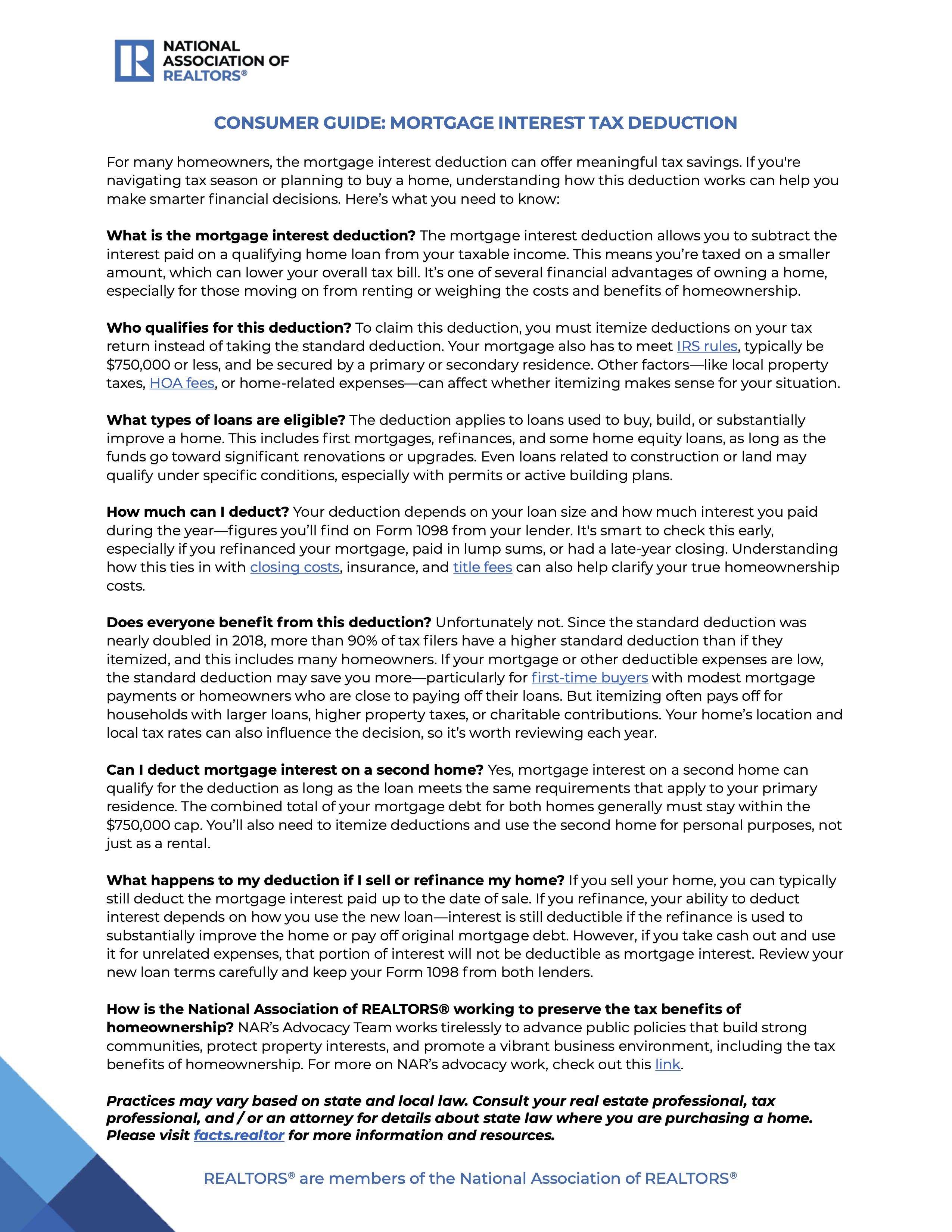
Yes, mortgage interest remains tax-deductible for many homeowners in the United States, provided you itemize your deductions on your federal income tax return rather than taking the standard deduction. Under current IRS guidelines, you can deduct the interest paid on up to $750,000 of mortgage debt for a primary or secondary home, a limit established by the Tax Cuts and Jobs Act of 2017.
Understanding the Mechanism of Mortgage Interest Deduction
The mortgage interest deduction is a tax incentive designed to encourage homeownership by allowing taxpayers to reduce their taxable income by the amount of interest paid on their home loans throughout the tax year. For most homeowners, this is a significant potential saving, though its effectiveness depends entirely on your broader financial profile and tax filing strategy.
To claim this deduction, you must "itemize" your deductions on IRS Form 1040, Schedule A. Itemizing means listing out specific deductible expenses—such as mortgage interest, state and local taxes (SALT), and charitable contributions—rather than simply claiming the standard deduction offered by the IRS. In the 2026 tax year, the standard deduction is substantial; therefore, you should only itemize if the total sum of your itemized deductions exceeds the standard deduction amount for your filing status. If the standard deduction is higher, you receive a larger tax benefit by taking that instead of itemizing, which renders the mortgage interest deduction unused in that specific tax year.
Qualifying Debt and Property Requirements
Not all interest paid on real estate qualifies for this deduction. The IRS maintains strict definitions regarding what constitutes "qualified" mortgage debt.
- Qualified Home: The interest must be paid on a loan secured by your main home or a second home. This includes houses, condominiums, cooperatives, mobile homes, houseboats, or house trailers that have sleeping, cooking, and toilet facilities.
- Secured Debt: The mortgage must be a legal debt secured by your home. This means if you stop paying, the lender has the right to foreclose on the property. If you have an unsecured personal loan that you happen to use for home improvements, the interest on that loan is generally not tax-deductible.
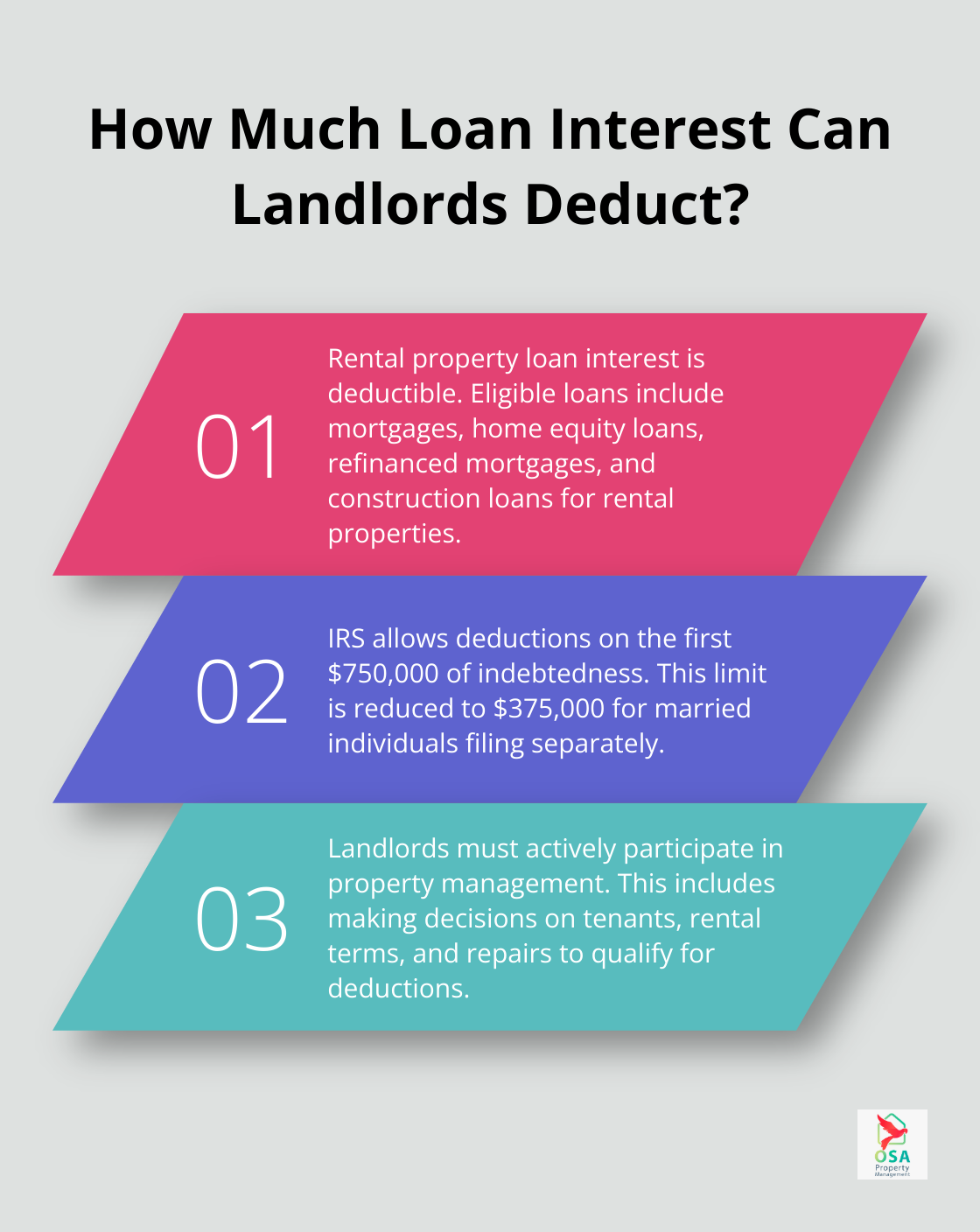
- Acquisition Debt: For mortgages taken out after December 15, 2017, the interest is deductible only on the first $750,000 of indebtedness. If you are married filing separately, this limit is $375,000 per spouse. For mortgages originated before this date, the old limit of $1 million ($500,000 for married filing separately) remains in effect.
- Usage of Funds: The debt must be used to buy, build, or substantially improve the home that secures the loan.
The Evolution of Home Equity Debt
A common point of confusion involves Home Equity Loans and Home Equity Lines of Credit (HELOCs). Prior to 2018, homeowners could deduct interest on home equity debt regardless of how the funds were used—even for non-housing expenses like college tuition or vacations.
As of 2026, the rules are more restrictive. You can only deduct interest on a home equity loan or HELOC if the funds were used specifically to "buy, build, or substantially improve" the home that secures the loan. For example, if you take out a HELOC to renovate your kitchen, the interest paid on that portion of the debt is deductible, provided it stays within the $750,000 total combined debt limit. If you take out a HELOC to pay off credit card debt or fund a vehicle purchase, that interest is considered personal interest and is not tax-deductible.
Comparing Standard Deduction vs. Itemization
The decision to itemize is a simple mathematical comparison. Each year, the IRS adjusts the standard deduction for inflation. You must compare the sum of your itemized deductions against the standard deduction for your filing status.
| Filing Status | Strategy Requirement |
|---|---|
| Single | Itemize only if total deductions > 2026 Standard Deduction |
| Married Filing Jointly | Itemize only if total deductions > 2026 Standard Deduction |
| Head of Household | Itemize only if total deductions > 2026 Standard Deduction |
| Married Filing Separately | Itemize only if total deductions > 2026 Standard Deduction |
If your mortgage interest, combined with other allowable itemized deductions (like property taxes and charitable donations), falls short of the standard deduction, the mortgage interest deduction provides zero additional tax benefit.
Documentation and Reporting
Verification is a critical component of tax compliance. At the end of each calendar year, your mortgage lender is required to provide you with IRS Form 1098, the Mortgage Interest Statement. This form reports the amount of interest you paid during the year.
It is vital to check this form for accuracy. If you paid points (prepaid interest) to lower your mortgage rate at the time of closing, these points are often deductible. You may be able to deduct these points in the year you paid them, or you may be required to amortize them over the life of the loan. Keep your closing disclosure and any statements regarding points paid, as this information may not always be reflected accurately on the annual 1098 form.
Common Pitfalls and Mistakes
Taxpayers frequently encounter issues with the mortgage interest deduction due to common oversights:
- Exceeding Debt Limits: Attempting to deduct interest on debt that exceeds the $750,000 threshold. If your mortgage is $900,000, you must calculate the interest deduction proportionally based on the $750,000 cap.
- Non-Qualified Debt: Assuming any loan taken against the house is deductible. As noted, if the proceeds were used for personal consumption rather than home improvement, the interest is not deductible.
- Property Taxes: Confusing the mortgage interest deduction with the SALT deduction. While both are itemized deductions, the SALT deduction (which includes property taxes) is capped at $10,000 total per year.
- Failure to Itemize: Forgetting to run the numbers. Many homeowners assume they should claim mortgage interest without checking if the standard deduction would actually yield a larger refund.
Frequently Asked Questions
Does the mortgage interest deduction apply to second homes? Yes, you can deduct mortgage interest on a second home, provided the total mortgage debt across both your primary and secondary residences does not exceed the $750,000 cap for acquisition debt.
Can I deduct mortgage interest if I rent out my home? The rules change significantly if you use your home for business or rental purposes. If you rent out the property, you generally treat the interest as a rental expense on Schedule E, rather than as an itemized deduction on Schedule A. Consult a tax professional regarding partial-year rentals.
What happens if I refinance my mortgage? Refinancing generally does not disqualify you from the deduction. The new loan is considered acquisition debt as long as it is used to pay off the previous mortgage and is secured by the same property. However, if you cash out equity during the refinance, that portion is only deductible if used for home improvements.
Are late fees or penalties on my mortgage deductible? No. Penalties for late payments or early payoff fees (prepayment penalties) are not considered interest and cannot be deducted as mortgage interest.
Do I need to file a special form to claim the deduction? You must file Schedule A (Form 1040) to itemize your deductions. You do not need to submit Form 1098 to the IRS yourself, but you must keep it in your personal tax records to substantiate your claim in the event of an audit.
Final Next Actions
To determine if you should pursue the mortgage interest deduction for the 2026 tax year, gather your annual mortgage statement (Form 1098), your property tax bills, and records of any charitable donations. Calculate your potential total itemized deductions. Compare this total to the standard deduction for your filing status. If your itemized total is higher, ensure you maintain organized records for all these expenses throughout the year. If you are uncertain about the application of these rules to your specific debt structure, particularly regarding home equity usage or high-value mortgages, consult a certified public accountant (CPA) or tax advisor before filing.