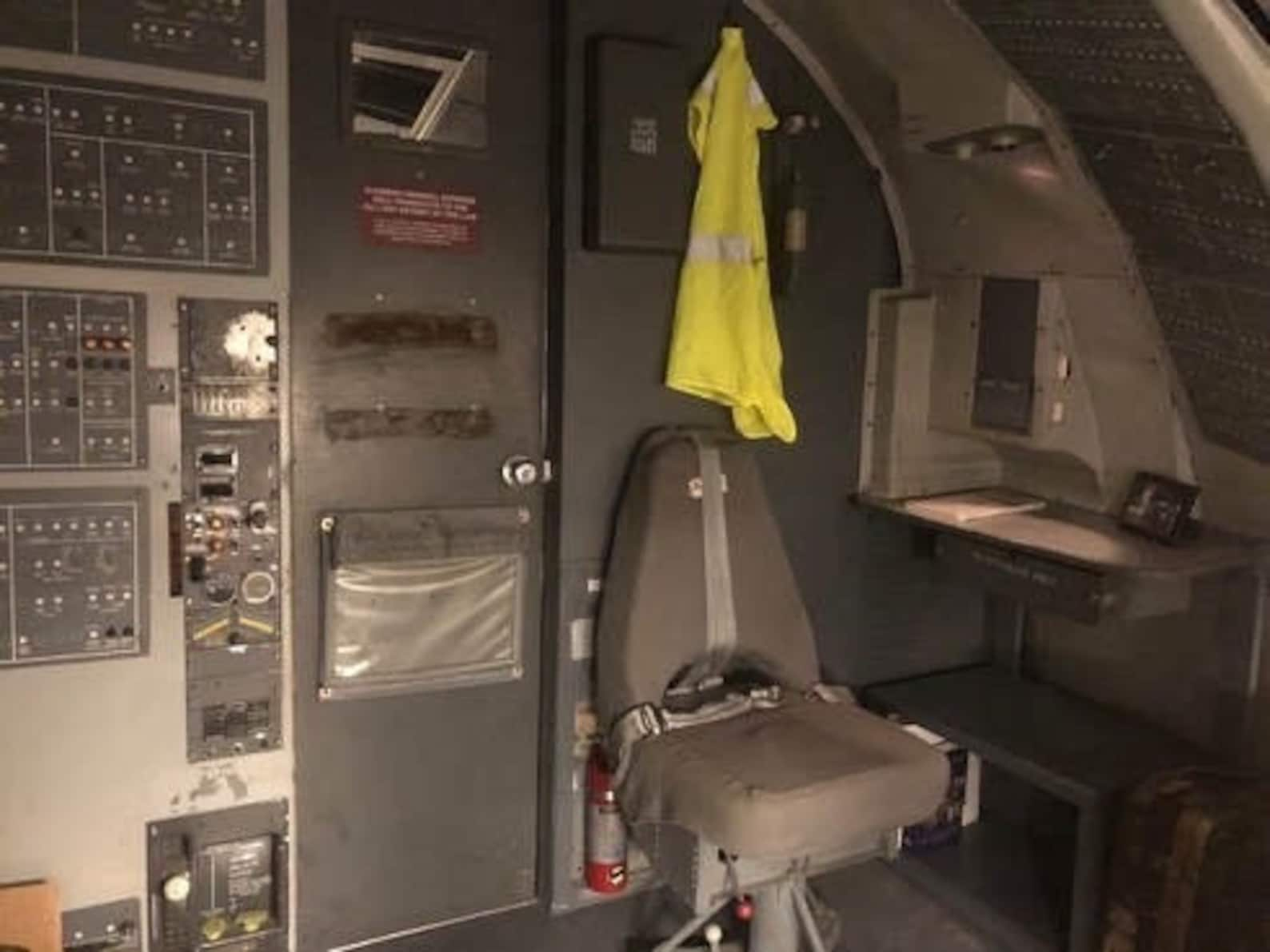
The Boeing 727 cockpit serves as a hallmark of mid-20th-century aviation design, characterized by its complex array of analog gauges, toggle switches, and the mandatory presence of a flight engineer. Originally developed in the early 1960s, this flight deck configuration represents a transition era in aeronautics, moving from the labor-intensive systems of early airliners to the more integrated, yet still mechanical, layouts that defined the Jet Age.
The Evolution of the 727 Flight Deck Architecture
The Boeing 727 was designed to meet the specific requirements of the era’s regional air travel market, prioritizing versatility and performance on shorter runways. Unlike the Boeing 707, which preceded it, the 727 featured a "T-tail" configuration and three rear-mounted engines. This unique airframe design necessitated specific considerations for the cockpit, which had to manage not only navigation and flight control but also the intensive monitoring of three separate power plants and complex hydraulic systems.
The flight deck layout is defined by its "three-man" requirement. In the 1960s and 1970s, avionics were not sufficiently automated to allow for two-pilot operations. Consequently, the cockpit was organized into three distinct stations: the Captain’s seat on the left, the First Officer’s seat on the right, and the Flight Engineer’s station located behind the pilots, usually facing the starboard side of the aircraft. This triangular layout was optimized for communication and physical reach, ensuring that each crew member could monitor their respective systems while maintaining a unified situational awareness.
Anatomy of the Flight Engineer’s Station
For aviation enthusiasts and historians, the Flight Engineer’s (FE) station is the most fascinating aspect of the Boeing 727 cockpit. This station contains the majority of the aircraft's systems management, including electrical power distribution, fuel management, air conditioning, pressurization, and hydraulic pump controls.
The FE station is a dense wall of instrumentation. At any given moment during a flight, the engineer was responsible for balancing the fuel tanks to maintain the aircraft's center of gravity, monitoring engine oil temperatures and pressures, and adjusting the cabin pressure profile as the aircraft climbed or descended. Because the 727 utilized a complex fuel system—often involving a center tank and wing tanks that required precise sequences for pump activation—the engineer’s role was critical to the safety and structural integrity of the airframe. The tactile nature of these controls—heavy-duty switches, analog dials, and guarded toggles—provided a level of direct, mechanical feedback that is absent in modern "glass cockpit" environments.
Navigation and Flight Controls: The Pilot’s Environment
In front of the two pilots, the 727 flight deck features a classic "steam gauge" arrangement. The primary flight instruments—the attitude indicator (artificial horizon), airspeed indicator, altimeter, and vertical speed indicator—are clustered in the standard "T" configuration that remains a hallmark of cockpit design even today.
However, the 727 differs significantly from modern jets like the 737 MAX or the A320 in its reliance on analog navigation. Pilots in the 727 utilized VOR (VHF Omnidirectional Range) and NDB (Non-Directional Beacon) navigation systems, often requiring them to tune radio frequencies manually and track needles on a Course Deviation Indicator (CDI). There were no multi-function displays (MFDs) or sophisticated Flight Management Systems (FMS) in the early iterations. Navigational accuracy relied heavily on the pilots’ ability to interpret radial intersections and time-distance calculations, a skill set that defined the professional pilot of that era.
Comparison of Cockpit Design Eras
| Feature | Boeing 727 (1960s) | Modern Airliner (2026) |
|---|---|---|
| Crew Complement | 3 (Pilot, Co-Pilot, FE) | 2 (Pilot, Co-Pilot) |
| Instrumentation | Analog "Steam" Gauges | Digital Glass Cockpit / MFDs |
| Navigation | VOR/NDB/Radio Navigation | GPS/FMS/Performance-Based |
| System Monitoring | Manual (Flight Engineer) | Automated (EICAS) |
| Interaction | Physical Switches/Dials | Menu-Driven/Touchscreen |
The Ergonomics of the 727 Cockpit
Walking into a 727 cockpit, one is immediately struck by the relative smallness of the space compared to modern wide-body aircraft. The overhead panel is exceptionally low, requiring pilots to be mindful of their clearance. Every switch, circuit breaker, and light is physically positioned to be within an arm’s reach of the seated crew.
The overhead panel in a 727 is notably complex, housing engine start controls, exterior lighting, fuel pump switches, and anti-icing systems. The sheer density of controls on this panel requires a rigorous checklist discipline. Pilots and engineers had to memorize the location and "feel" of these switches, as many operational actions were performed by touch or memory during high-workload phases such as take-off or approach. The ergonomics were designed for efficiency in a pre-automation world, where muscle memory was as important as technical knowledge.
Maintenance and Operational Realities
Maintaining a 727 cockpit in 2026 is a specialized task. While the aircraft is largely retired from passenger service, various examples remain in use for cargo operations or as static displays in museums. The components of the 727 flight deck—such as the potentiometers, relays, and vacuum-tube-based radio equipment—require distinct maintenance protocols. Finding spare parts for 1960s-era electronics is a primary challenge for operators who maintain these aircraft for heritage flights.
Moreover, the physical environment of the cockpit lacks the sophisticated climate control and noise insulation found in 2026-era jets. The 727 is notoriously loud, with significant airframe vibration and wind noise permeating the flight deck. Pilots flying these aircraft today must manage these environmental stressors, which contribute to the overall fatigue levels, a stark contrast to the quiet, climate-controlled cockpits of modern regional or long-haul jets.
Frequently Asked Questions
Why did the Boeing 727 require a flight engineer?
The 727 required a flight engineer because the systems—specifically the three-engine management, fuel balancing, and hydraulic monitoring—were too complex for two pilots to manage while also flying the aircraft and communicating with Air Traffic Control. The engineer acted as the system specialist, allowing the pilots to focus entirely on navigation and flight path management.
Can a modern pilot easily fly a 727?
While a modern pilot understands the principles of flight, transitioning to a 727 is significant. The lack of automation, the necessity for manual engine management, and the reliance on traditional radio navigation require a specific type of training that is rarely performed today, save for vintage aircraft certification.
What is the purpose of the "overhead panel"?
The overhead panel in the 727 contains the master switches for the aircraft's critical systems, including electrical power, ignition, engine starts, and de-icing. It is positioned above the pilots to consolidate systems that do not need to be adjusted constantly but must be immediately accessible during emergency procedures.
How does the 727 cockpit differ from the 707?
The 727 cockpit was a refinement of the 707 design. While they share similar analog instrumentation, the 727 cockpit was updated to handle the increased complexity of the three-engine 727 layout and improved hydraulic redundancy, reflecting lessons learned from the 707’s early years of commercial service.
Where can one see a 727 cockpit in 2026?
Many aviation museums worldwide house preserved 727s, often with their cockpits restored for public viewing. Major aerospace museums typically maintain at least one cockpit section for educational purposes, allowing visitors to view the layout and appreciate the engineering complexity of the era.
Next Steps for Enthusiasts and Researchers
If you are interested in further exploring the 727, the best approach is to consult the original Boeing Flight Manuals (FCOMs) for the specific variant in question. These documents provide the most granular detail regarding system operation and cockpit logic. For those looking to experience the interface firsthand, flight simulation software—when coupled with high-fidelity "study-level" addons—offers the most accurate digital reproduction of the 727’s manual systems and procedures. For those seeking physical exposure, contacting local aviation museums regarding cockpit restoration projects can provide opportunities to see these historical machines in a state of preservation.