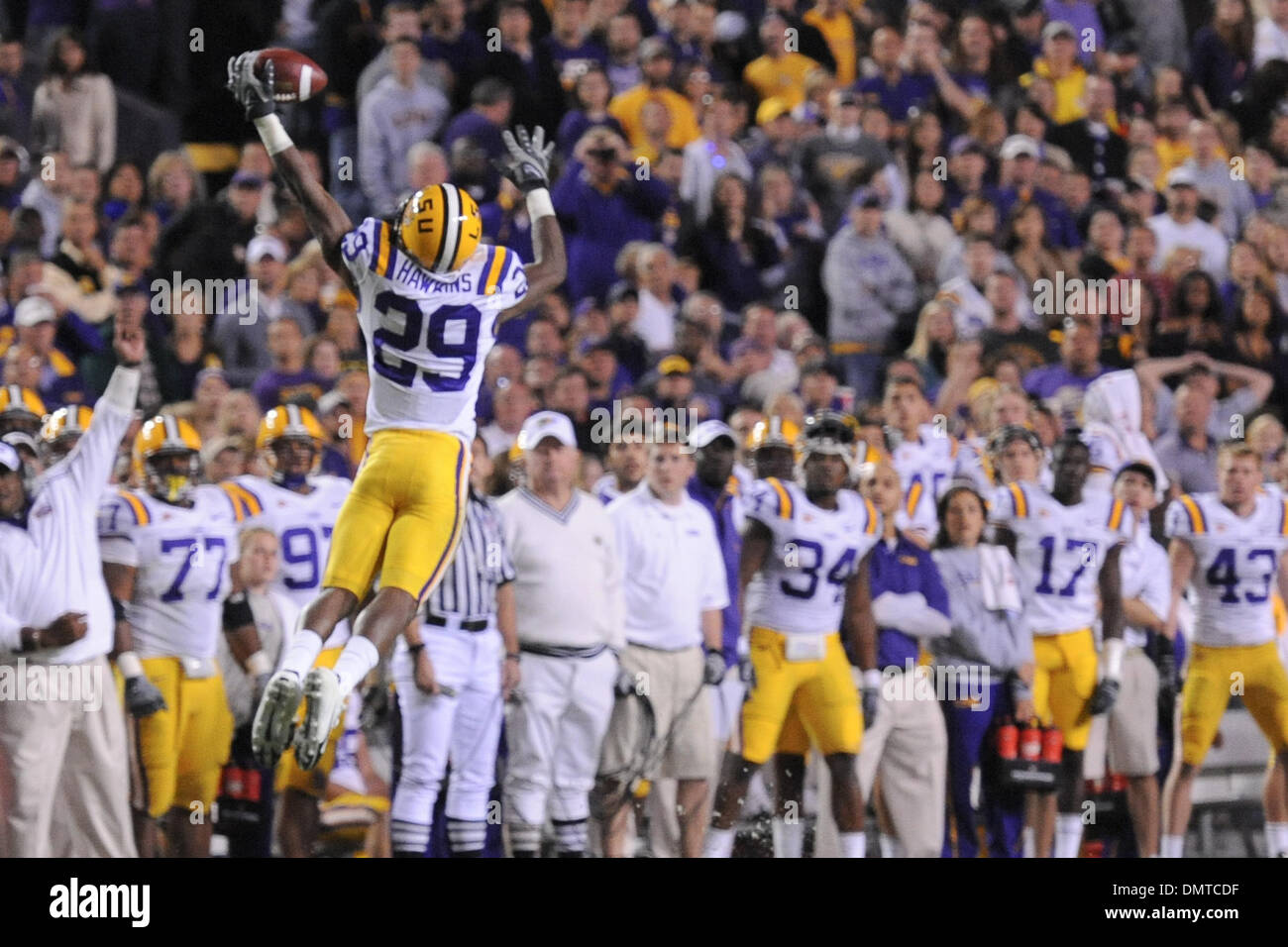
An interception is a defensive turnover that occurs when a defensive player catches a forward pass thrown by the offense before it touches the ground. This action immediately terminates the offensive possession, grants the ball to the defensive team, and allows that defender to attempt to advance the ball toward the opponent’s end zone.
The Mechanics of an Interception: Rules and Requirements
To understand why an interception is classified as a turnover, one must first understand the strict technical requirements for a catch to be ruled legal. In American football, an interception only applies to a forward pass. If a player catches a lateral or a backward pass from an opponent, it is technically recorded as a recovered fumble, even if the ball never touches the ground. The distinction lies in the direction of the initial throw.
For a defender to be credited with an interception, they must maintain "firm control" of the football. As of 2026, the NFL and collegiate officiating standards remain rigorous regarding the "process of the catch." The defender must secure the ball with their hands or arms and maintain that control until they have touched the ground in-bounds. In the NFL, this requires getting two feet down (or any body part other than the hands, such as a knee or elbow) within the field of play. In collegiate football, only one foot is required to be in-bounds for the interception to be ruled valid.
The moment the defender secures the ball and satisfies the in-bounds requirements, the offense’s "drive" officially ends. The turnover is recorded at the point of the catch, though the resulting play continues until the defender is tackled, goes out of bounds, or scores a touchdown. If the defender catches the ball and is immediately hit, causing the ball to pop loose, officials must determine if "control" was established long enough to constitute a catch. If not, the play is ruled an incomplete pass, and the offense retains possession.
Why "Turnover" is the Critical Statistical Classification
The term "turnover" is an umbrella category that encompasses any play where the team in possession of the ball loses it to the opposing team without a punt or a successful kick. While fumbles are the other primary type of turnover, interceptions are often viewed as more impactful because they usually occur further downfield and involve a higher degree of defensive anticipation.
Statistically, the "Turnover Margin" is one of the most significant predictors of success in football. This metric calculates the difference between turnovers gained and turnovers lost. A team that records an interception effectively "steals" a possession from the opponent. Because each team has a limited number of drives per game—typically ranging from 10 to 12 in a standard 60-minute match—losing even one possession to an interception drastically reduces a team's mathematical probability of winning.
Furthermore, interceptions are unique because they are "forced" turnovers that rely on the secondary's ability to out-position the receivers. Unlike a fumble, which can sometimes be the result of a mechanical error (like a botched handoff), an interception usually signifies a failure in the quarterback's decision-making or an exceptional athletic feat by a defensive back. This makes the interception a powerful tool for shifting the "Expected Points Added" (EPA) of a game, often swinging the projected score by several points in a single play.
The Strategic Impact: How Interceptions Alter Game Momentum
The impact of an interception extends far beyond the simple change of possession. It serves as a massive psychological and tactical pivot point. When a defensive turnover occurs, the momentum of the game often shifts instantly. The "defense" becomes the "offense," and the original offensive players—many of whom are not trained in tackling—must suddenly transition into a defensive role to stop the return.
Field position is the most immediate tactical benefit. While a punt returns the ball to the opponent, it usually pushes them deep into their own territory. An interception, however, often happens in the middle of the field or even in the "Red Zone" (the area inside the 20-yard line). This gives the team that forced the turnover a short field, significantly increasing their chances of scoring. According to historical data maintained by the NFL Operations, teams that win the turnover battle win the game approximately 78% of the time.
Additionally, interceptions have a "deflating" effect on the opposing quarterback. Modern defensive coordinators use complex "disguised coverages" to bait quarterbacks into throwing interceptions. By showing one defensive alignment before the snap and shifting into another after the ball is hiked, the defense can trick the quarterback into throwing the ball directly to a lurking safety or linebacker. This psychological pressure can lead to "happy feet" in the pocket, where the quarterback becomes overly hesitant or rushed on subsequent plays, fearing another turnover.
Types of Interceptions and How They Occur
Not all interceptions are created equal. They are often categorized by how they are achieved, which helps coaches and scouts analyze both defensive skill and offensive failure.
- The "Pick-Six": This is the most damaging form of an interception, where the defender catches the ball and returns it all the way for a touchdown. This provides a 7-point swing (plus the extra point) and keeps the defender's offense fresh on the sideline.
- The Tipped Pass: Many interceptions are not the result of a bad throw but rather a "Pass Break-Up" (PBU) that stays in the air. A defensive lineman might swat the ball at the line of scrimmage, or a receiver might have the ball bounce off their hands, allowing a nearby defender to dive for the catch.
- The "Under-cut": This occurs when a defender (usually a cornerback) anticipates a specific route, such as a "slant" or "out" route. The defender sprints to the spot where the ball is going before the receiver arrives, "cutting" in front of the path of the ball.
- The "Arm Punt": This is a colloquial term for a deep interception on a third-down play. If a quarterback throws a very long pass that is intercepted near the opponent's end zone, it is essentially as effective as a punt, though it still counts as a turnover in the stat sheet.
Defensive Strategies Designed to Force Interceptions
In 2026, defensive schemes have become highly specialized to maximize the likelihood of a turnover. The "Ball Hawk" mentality is coached at every level, from high school to the professional ranks.
Zone Coverage and "Vision"
In zone coverage, defenders are responsible for specific areas of the field rather than specific players. This allows them to keep their eyes on the quarterback (the "vision" principle). By watching the quarterback’s eyes and shoulder alignment, a defender can break toward the ball the moment it is released. Cover 3 and Cover 2 shells are designed to keep multiple defenders deep, making it difficult for the offense to throw "over the top" without a high risk of an interception.
The Role of the Pass Rush
While the secondary gets the credit for the catch, the "front seven" (defensive linemen and linebackers) often deserve the credit for the turnover. A relentless pass rush forces the quarterback to release the ball earlier than intended. Under pressure, a quarterback's mechanics often break down, leading to "sailing" passes that fly too high or "duck" passes that lack velocity. Most interceptions are the result of a quarterback being "hurried" or "hit" as they throw.
Nickel and Dime Packages
As offenses have become more pass-heavy, defenses have responded by utilizing "sub-packages." A Nickel defense adds a fifth defensive back, while a Dime defense adds a sixth. By having more agile, fast players on the field who specialize in pass coverage, the defense increases its "coverage radius," making every window for a completion much smaller and increasing the probability of a defensive turnover.
Comparing Defensive Turnovers: Interceptions vs. Fumbles
While both result in a change of possession, the mechanics and impacts differ. The following table outlines the key differences between these two types of turnovers.
| Feature | Interception | Fumbled Ball Recovery |
|---|---|---|
| Origin of Play | A legal forward pass. | A dropped ball or a ball stripped from a runner. |
| Player Credited | The defender who catches the ball. | The defender who recovers the ball. |
| Offensive "Fault" | Usually the Quarterback or Receiver. | Any ball carrier (RB, WR, QB, or TE). |
| Statistical Impact | Affects Passer Rating and INT totals. | Affects Fumble and Fumbles Lost totals. |
| Scoring Potential | High (often caught in stride). | Moderate (often requires picking up a dead ball). |
| Frequency | More common in pass-heavy offenses. | More common in run-heavy or rainy conditions. |
Scoring and Returns: Transitioning from Defense to Offense
The moment an interception occurs, the "Interception Return" begins. This is one of the most chaotic phases of a football game. The defender who caught the ball becomes the "ball carrier," and his teammates must immediately switch to "blocking mode."
However, blockers must be cautious. League rules—including those refined through 2026—place strict limits on "blindside blocks" during turnover returns. Because players are often running in opposite directions at high speeds, a defender-turned-blocker cannot hit an opponent with excessive force if they are moving toward or parallel to their own end line. Violations result in a 15-yard penalty from the spot of the foul, which can negate much of the yardage gained during the return.
The returner seeks to follow their "escorts" (teammates) down the sideline. Coaches often teach defenders to "get to the numbers" (the yard markers on the field) to use the sideline as protection. The goal is to either score a touchdown or set the offense up in "plus territory" (the opponent's half of the field).
Historical Context and Statistical Leaders
The importance of the interception has remained constant throughout the history of the sport, though the frequency has fluctuated with rule changes. In the early eras of football, interceptions were much more common because the "forward pass" was a relatively new and risky tactic.
As of the current 2026 landscape, the all-time leader for career interceptions in the NFL remains Paul Krause, who recorded 81 interceptions between 1964 and 1979. In the modern era, achieving such numbers is significantly harder due to the increased accuracy of quarterbacks and rules that limit defensive contact with receivers. However, "Takeaway" specialists remain the highest-paid players in the secondary. Players who can consistently deliver a defensive turnover are considered "game-changers" because they can negate the advantages of even the most elite offensive systems.
FAQ
Does an interception on a two-point conversion count?
No, an interception during a two-point conversion attempt does not count toward a player's official statistical interception total for the game. However, in most professional and collegiate rules, the defense can return that interception to the opposing end zone for two points. While it is a turnover of possession for that specific play, it is recorded differently in the box score.
What happens if a defender catches a ball but falls out of bounds?
For an interception to be valid, the defender must have "possession" while in-bounds. If a defender catches the ball in the air but their first point of contact with the ground is out of bounds, it is ruled an incomplete pass. The offense retains the ball, and no turnover is recorded.
Can a tipped ball be intercepted by a second defender?
Yes. As long as the ball has not touched the ground, it is "live." If a quarterback throws a pass that is tipped by a linebacker and then caught by a safety, the safety is credited with the interception. It does not matter how many players touch the ball, provided it stays in the air.
Is an interception the same as a "Turnover on Downs"?
No. A "Turnover on Downs" occurs when the offense fails to gain the required yardage on a fourth-down play. While it results in a change of possession, it is not technically a "defensive turnover" in the same category as an interception or a fumble, because the defense did not actively take the ball away during the play—they simply prevented the offense from advancing.
Why do some interceptions get overturned by a penalty?
If a defensive player commits a foul during the play—such as "Roughing the Passer" or "Defensive Holding"—the interception is nullified. The penalty is enforced, and the offense usually retains the ball with a new set of downs. This is why disciplined play is essential; a brilliant defensive turnover can be completely erased by a teammate's procedural error or a late hit on the quarterback.
Practical Recommendation for Players and Coaches
To maximize the effectiveness of forcing an interception, players should focus on "high-pointing" the football. This means jumping to catch the ball at its highest reachable point, preventing the receiver from having a chance to break up the play. For coaches, emphasizing "film study" is the most effective way to increase interceptions. By identifying a quarterback's "tells"—such as a specific look they give before throwing a "screen" or "curl" route—defenders can anticipate the throw and execute the turnover before the ball even leaves the quarterback’s hand.