If Travelers Insurance denies your workers' compensation claim, you can appeal the decision through a structured legal and administrative process. The appeal involves identifying the reason for denial, gathering supporting medical and workplace evidence, submitting a formal petition to your state's workers' compensation board, and presenting your case before an administrative law judge.
Understanding Why Travelers Denies Workers' Compensation Claims
Travelers is one of the largest commercial workers' compensation underwriters in the United States. Like all insurance carriers, Travelers evaluates claims based on strict legal guidelines, medical necessity standards, and state-specific statutory requirements. When Travelers denies a claim—either in whole or in part—it must issue a formal written notification explaining its justification.
Navigating a claim denial requires understanding the specific grounds cited by the adjuster. Insurance carriers rely on standard legal defenses and evidentiary gaps to controvert (dispute) benefits.
| Denial Category | Common Justifications Cited by Adjusters |
|---|---|
| Notification & Filing | Failure to report injury within state statutory window |
| Causal Relationship | Pre-existing condition, non-work-related causation |
| Employment Status | Classification as independent contractor, off-the-clock |
| Medical Evidence | Insufficient objective findings, MMI reached early |
Common Reasons for Claim Denials
Travelers claims adjusters and legal teams generally deny claims under specific statutory and administrative categories:
- Late Injury Reporting: Most state laws require injured employees to give formal written notice of an injury to their employer within a specific timeframe (often ranging from 4 to 30 days). If notice is delayed, Travelers may deny the claim due to lack of timely notification.
- Lack of Causal Connection: Travelers frequently argues that an injury did not arise out of and in the course of employment (AOE/COE). The insurer may claim the condition resulted from a pre-existing illness, an off-the-clock accident, or general wear-and-tear unrelated to work duties.
- Disagreements Over Independent Medical Examinations (IMEs): Travelers often requests that an injured worker undergo an evaluation by a physician selected and paid for by the insurer. If the IME doctor concludes that the injury is not work-related or that the worker can return to full duty without restrictions, Travelers will use that opinion to terminate or deny benefits.
- Employment Status Disputes: Benefits may be denied if Travelers claims the worker is an independent contractor rather than an employee, or if the injury occurred while the worker was engaged in an unauthorized activity or commuting (under the "going and coming" rule).
- Insufficient Objective Medical Evidence: If treating medical records rely heavily on subjective reports of pain without diagnostic proof (such as MRIs, X-rays, or electromyograms), adjusters may dispute the severity or existence of the injury.
Decoding the Formal Denial Letter
When Travelers denies benefits, it issues an official administrative document—often titled a Notice of Insurer's Primary Liability Determination, Notice of Controversion, or Notice of Claim Denial, depending on the jurisdiction.
This document contains critical information required for an appeal:
- The Specific Grounds for Denial: The exact legal and factual justifications Travelers is using to withhold payment for medical bills or indemnity (wage-loss) benefits.
- Statutory Deadlines: The explicit timeframe within which you must file an administrative appeal or request for hearing before forfeiting your right to benefits.
- Claim Identification Numbers: Your Travelers claim number, state workers' compensation board case number, and employer policy details.
Disclaimer: Workers' compensation laws and administrative procedure timelines vary substantially by state. This guide provides general informational coverage of insurance appeal frameworks and does not constitute formal legal counsel. Injured workers should consult an attorney licensed in their jurisdiction for specific legal advice.
Initial Steps Before Initiating a Formal Appeal
Before jumping into formal litigation or administrative hearings, strategic preparation is essential to building a credible case against a Travelers denial.
Reviewing Timelines and State Statutes of Limitations
Workers' compensation is strictly regulated at the state level. While Travelers handles claim administration, the rules governing appeals are set by state agencies such as the California Department of Industrial Relations, the New York State Workers' Compensation Board, or the Texas Department of Insurance Division of Workers' Compensation.
Failure to file an appeal within the state-mandated statute of limitations permanently bars an injured worker from recovering benefits. Deadlines to file a formal appeal after receiving a Travelers denial letter typically range from 30 days to one year, depending on the state and the nature of the benefits being disputed.
Requesting and Analyzing Your Complete Travelers Claim File
Under most state workers' compensation statutes, claimants have a legal right to review their complete file. You or your representative should request a copy of the entire claim file directly from the Travelers adjuster.
Reviewing this file reveals the internal notes of the adjuster, reports from Travelers' nurse case managers, correspondence between the insurer and your employer, and any surveillance or investigative summaries compiled by the insurance company.
Gathering Supplemental Medical and Workplace Evidence
A denial by Travelers is rarely overturned simply by restating your original account of the incident. Reversing a denial requires concrete evidentiary additions:
- Detailed Medical Reports: Obtain a comprehensive narrative report from your primary treating physician that explicitly addresses the point of contention (e.g., confirming direct causation between your job duties and the diagnosed condition).
- Diagnostic Imaging and Lab Results: Compile objective test results (MRIs, CT scans, nerve conduction studies) that validate your physical limitations.
- Witness Statements: Secure signed affidavits or written statements from co-workers who witnessed the workplace accident or can testify to the physical demands of your role.
- Workplace Records: Collect shift logs, safety incident reports, electronic badge records, and job descriptions detailing the exact physical tasks required of your position.
The Travelers Workers' Compensation Appeal Process Step-by-Step
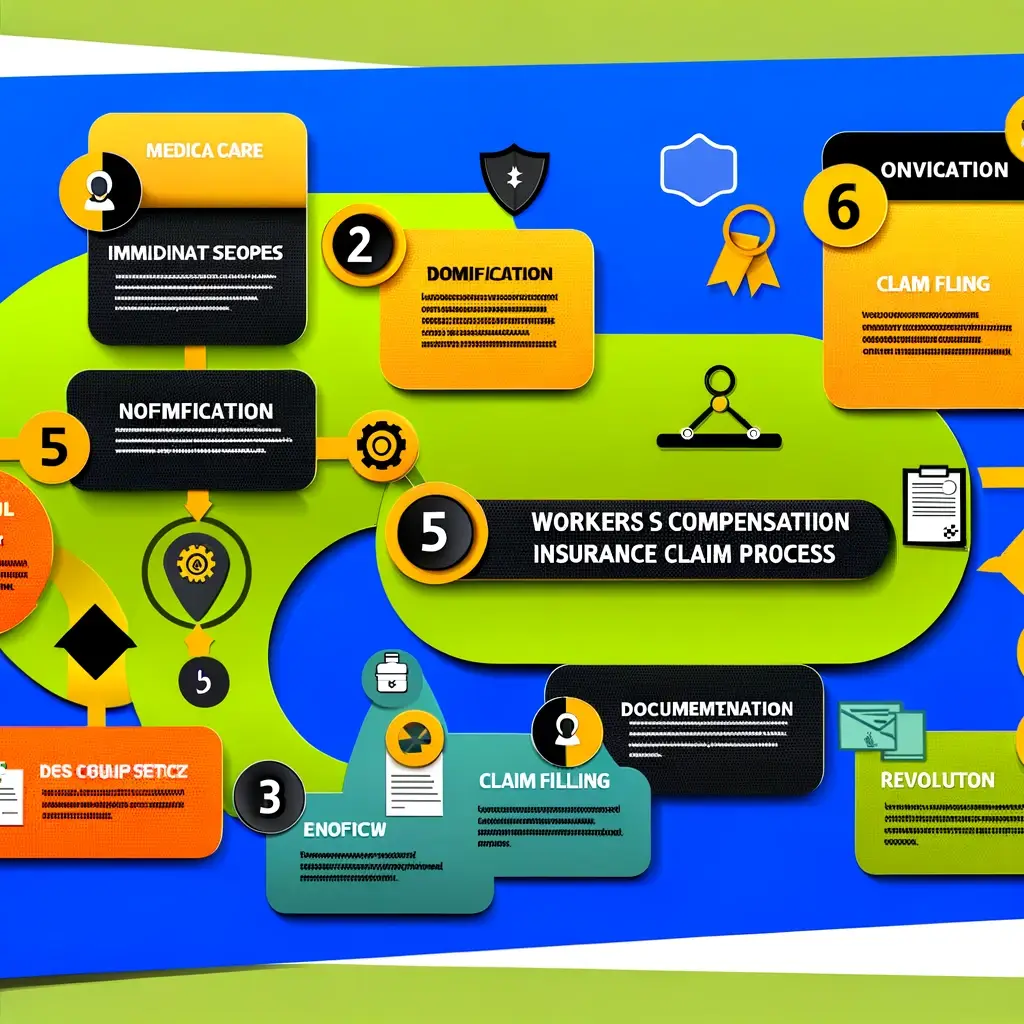
While exact terminology differs by state, appealing a Travelers workers' compensation claim generally follows a multi-tiered administrative progression.
- Travelers Denial Letter Issued
- Step 1: Informal Reconsideration / Discussion
- Step 2: Formal Application for Adjudication / Claim Petition (If Unresolved)
- Step 3: Mandatory Mediation / Pre-Hearing Conference
- Step 4: Formal Evidentiary Hearing before an ALJ (If Unresolved)
- Step 5: State Appellate Commission / Judicial Review (If Adverse Ruling)
Step 1: Requesting Reconsideration with Travelers (Internal Review)
In certain circumstances, a denial stems from a missing document, a clerical error in reporting, or an incomplete billing code. Before entering formal state litigation, your attorney or you can submit missing documentation directly to the Travelers claims adjuster and request an internal review or informal reconsideration.
While Travelers is not legally obligated to reverse its position during informal discussions, presenting clear medical proof (such as a corrected physician report clarifying causation) can sometimes lead the carrier to accept the claim without lengthy administrative proceedings. However, pursuing informal negotiations does not pause or extend your legal deadline to file an appeal with the state board.
Step 2: Filing a Formal Claim Petition with the State Board
If informal discussion fails or is inappropriate, you must initiate the state administrative appeal process. This requires filing a formal legal petition—commonly called an Application for Adjudication of Claim, Employee's Claim Petition, or Notice of Disagreement—with your state's workers' compensation agency.
This document identifies:
- The employee, employer, and Travelers as the named insurer.
- The date, location, and detailed description of the injury.
- The specific benefits sought (medical treatment, temporary total disability, permanent partial disability, or vocational rehabilitation).
- A formal rejection of Travelers' denial reasons.
Once filed, the state agency assigns an administrative case number, officially opening a contested judicial record.
Step 3: Mandatory Mediation and Pre-Hearing Conferences
Most state workers' compensation systems require parties to participate in alternative dispute resolution (ADR) before scheduling a formal trial. This stage typically involves a Pre-Hearing Conference, Status Conference, or Mediation Session.
During mediation:
- An Administrative Law Judge (ALJ) or state-appointed mediator reviews the contested issues with both sides.
- Representatives from Travelers (typically defense attorneys retained by Travelers) and the injured worker discuss settlement possibilities or limited agreements (such as approving specific medical testing).
- If a full agreement is reached, the parties draft a Stipulation or Compromise and Release agreement for judicial approval. If no agreement is reached, the case moves forward toward a formal hearing.
Step 4: Preparing for the Independent Medical Examination (IME)
During the appeal stage, Travelers will almost certainly exercise its legal right to require you to attend an IME performed by a physician of their choosing. The IME doctor conducts an evaluation and issues a report on whether your condition is work-related, whether current medical treatment is necessary, and whether you have reached Maximum Medical Improvement (MMI).
To prepare for an IME:
- Review your complete medical history so your description of symptoms and injury history is consistent.
- Be clear, precise, and accurate when describing your pain levels and functional limitations; avoid both exaggeration and minimization.
- Note that IME doctors are retained by the insurer to provide an independent opinion, and their observations begin from the moment you enter the clinic building.
Step 5: Presenting Your Case at the Formal Administrative Hearing
If mediation does not resolve the dispute, the case proceeds to an evidentiary hearing before an Administrative Law Judge. This proceeding functions like a bench trial:
- Opening and Closing Statements: Both legal teams frame their positions under state statutory law.
- Witness Testimony: The injured worker offers live testimony under oath regarding the injury, job duties, and ongoing physical limitations. Cross-examination is conducted by Travelers' defense counsel.
- Expert Medical Testimony: Physicians and vocational experts testify either live or via pre-recorded legal depositions.
- Documentary Evidence: The judge reviews medical records, diagnostic scans, wage statements, and workplace safety logs submitted into evidence.
Following the hearing, the judge issues a written decision and order approving or denying the requested benefits.
Step 6: Appeals to the State Board Commission or Judicial Courts
If the Administrative Law Judge issues an adverse ruling, the appeal process does not necessarily end. Either party can file an appeal to an administrative review panel, such as a State Workers' Compensation Appeals Board or Industrial Commission.
Appeals at this stage are restricted to legal errors, misinterpretation of statutory rules, or rulings unsupported by the evidentiary record created at the hearing. If the administrative appeals board sustains the denial, the final resort is filing a writ or appeal with the state's judicial appellate courts (Court of Appeals or State Supreme Court).
Stages of the Travelers Workers' Compensation Appeal Process
The table below outlines the core stages, typical timelines, primary objectives, and key documentation required throughout the appeal process against a Travelers denial.
| Stage | Typical Timeline | Main Objective | Key Required Documentation |
|---|---|---|---|
| Denial Analysis | 1 to 14 days post-denial | Identify Travelers' legal basis for denial and state appeal deadlines | Travelers Denial Notice (Notice of Controversion), complete medical records |
| Claim Petition Filing | 30 to 365 days (per state limit) | Formally initiate state administrative appeal process | State Claim Petition form, proof of service, initial medical reports |
| Discovery & IME | 60 to 180 days post-filing | Build medical and factual evidence; undergo insurer evaluation | IME report, diagnostic test results, medical narrative reports, depositions |
| Pre-Hearing / Mediation | 3 to 6 months post-filing | Attempt negotiated settlement or resolve preliminary disputes | Settlement proposals, summary of disputed benefits, wage records |
| Formal ALJ Hearing | 6 to 12 months post-filing | Obtain binding judicial ruling from Administrative Law Judge | Trial briefs, expert witness depositions, live testimony, complete evidence exhibit binder |
| Appellate Review | 3 to 12 months post-hearing | Overturn or uphold ALJ decision based on legal or procedural errors | Appellant brief, hearing transcripts, administrative record on appeal |
Strategic Considerations: Self-Representation vs. Legal Representation
Deciding how to navigate an appeal against Travelers involves assessing the complexity of your claim and the resources opposing you.
Handling an Appeal Independently
Injured workers may handle straightforward disputes without an attorney under certain circumstances:
- The dispute involves a small, single unpaid medical bill where Travelers accepted liability for the overall injury.
- The denial was caused by a clear administrative error, such as a mistyped Social Security number or missing billing code, which can be quickly resolved directly with the adjuster.
Working with an Experienced Workers' Compensation Attorney
For substantial claim denials—especially those involving wage-loss benefits, permanent disability ratings, or contested injuries—retaining a dedicated workers' compensation lawyer is strongly recommended.
Travelers employs staff attorneys and specialized law firms dedicated to defending contested claims. An experienced attorney assists by:
- Navigating state-specific procedural rules and ensuring all filing deadlines are met.
- Cross-examining Travelers' IME doctors during legal depositions to highlight bias or flawed medical reasoning.
- Retaining independent medical experts and vocational rehabilitation specialists to substantiate your claim.
- Structuring lump-sum settlement agreements to minimize negative impacts on Social Security Disability Insurance (SSDI) or Medicare benefits.
Most workers' compensation attorneys work on a contingency fee basis, which is regulated by state law. The attorney's fee is typically a state-capped percentage of the back-pay or lump-sum settlement recovered, subject to approval by the workers' compensation judge.
Frequently Asked Questions
What should I do immediately after receiving a Travelers workers' comp denial letter?
Carefully read the denial notice to identify the legal reason for the denial and the statutory appeal deadline. Request your complete claim file from Travelers, notify your medical providers that the claim is contested, and contact a qualified workers' compensation attorney to review your options before the filing deadline passes.
Can I treat with my own doctor while appealing a Travelers denial?
Yes, but how medical expenses are covered depends on state law. In many states, if Travelers denies liability for the claim, you can seek treatment through your personal health insurance or state programs while the appeal is pending. If you prevail in your appeal, Travelers can be ordered to reimburse those medical expenses or pay the healthcare providers directly.
How long does a Travelers workers' compensation appeal take to resolve?
The duration varies depending on your state's administrative court backlogs and the complexity of the case. An informal reconsideration may take a few weeks, while a contested appeal that proceeds through formal discovery, depositions, and an administrative trial typically takes anywhere from 6 to 18 months.
What is the difference between an IME doctor and my treating physician during an appeal?
Your treating physician provides ongoing medical care and documents your recovery over time. An Independent Medical Examination (IME) doctor is selected and paid by Travelers to perform a single evaluation and issue an opinion regarding causation, work capacity, or maximum medical improvement. Judges evaluate both opinions when resolving claim disputes.
Will Travelers offer a settlement during the appeal process?
Travelers often engages in settlement negotiations during the appeal process, particularly prior to or during mandatory mediation. Settlements in workers' compensation are typically structured as a lump-sum Compromise and Release or a Stipulated Award, resolving future medical or indemnity liabilities in exchange for an agreed-upon financial payout.
Next Steps for Injured Workers
If you are facing a claim denial from Travelers Insurance, take these immediate actionable steps to protect your legal rights:
- Preserve All Documentation: Maintain a organized file containing all written communications from Travelers, medical records, prescription receipts, and wage statements.
- Track Your Appeal Deadline: Locate the appeal deadline on your state board notice or Travelers denial letter and mark it immediately.
- Obtain a Detailed Medical Opinion: Schedule an appointment with your primary treating physician to request a written narrative report addressing Travelers' specific denial grounds.
- Consult a Board-Certified Workers' Compensation Specialist: Schedule a free initial consultation with a specialized claimant's attorney in your jurisdiction to evaluate the strength of your case and file a timely administrative appeal.
For further regulatory details and administrative forms specific to your region, visit your state government's official Workers' Compensation Commission or Department of Labor website.