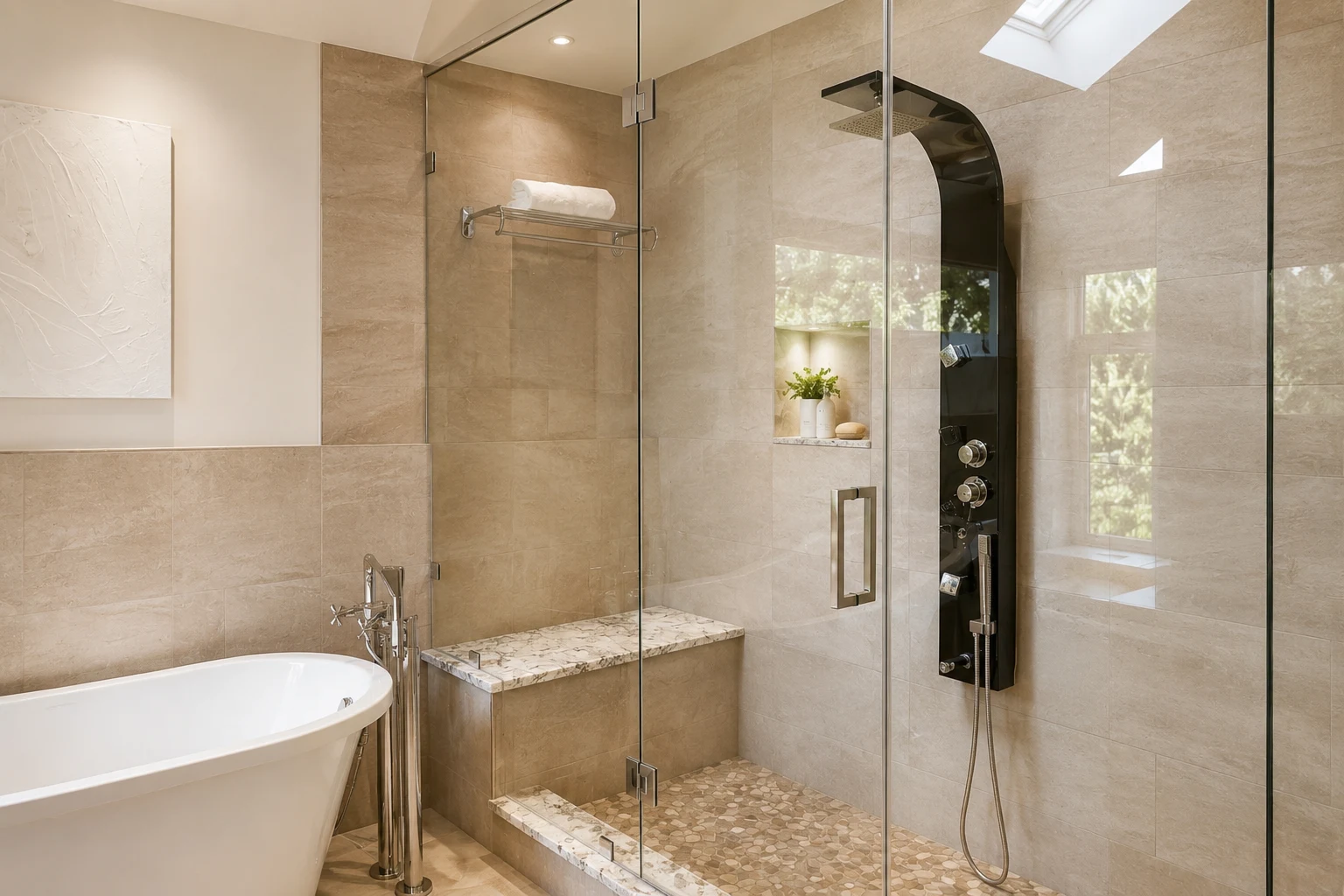
Custom steam showers are generally worth the investment for homeowners prioritizing long-term wellness and luxury resale value. While high upfront costs—typically ranging from $6,000 to $15,000—and complex installation requirements exist, they offer significant lifestyle benefits and can distinguish a property in a competitive 2026 high-end real estate market.
The Financial Anatomy of a Custom Steam Shower Investment
To determine if a custom steam shower is worth the capital, one must first deconstruct the actual costs involved. Unlike a standard shower renovation, a steam shower is a specialized pressurized vessel that requires high-grade materials and multi-disciplinary labor. In 2026, the average cost for a professional-grade custom installation has stabilized, but it remains a significant line item in any bathroom remodel.
The primary driver of cost is the steam generator. These units are sized based on the cubic footage of the shower stall and the materials used. For example, natural stone like marble or granite acts as a "heat sink," absorbing heat and requiring a more powerful (and expensive) generator compared to ceramic tile. A high-quality generator in 2026 typically costs between $1,500 and $3,500, excluding the control interface and aromatherapy modules.
Labor is the second major financial component. A custom steam shower requires a licensed plumber to run dedicated water lines and drainage, an electrician to install a 240V dedicated circuit, and a tile specialist capable of creating a vapor-tight enclosure. Because the environment involves high heat and 100% humidity, any shortcut in labor can lead to catastrophic mold issues or structural rot, making the selection of an experienced contractor a vital part of the investment.
Finally, the glass enclosure represents a significant portion of the budget. Standard shower glass is not sufficient; a steam shower requires floor-to-ceiling tempered glass with airtight seals and a transom (a small swinging panel at the top) to regulate steam release. This custom glass work often starts at $2,000 and can scale upward based on the hardware finish and glass thickness.
Real Estate ROI: Analyzing the 2026 Resale Market
From a real estate perspective, the "worth" of an investment is often measured by its Return on Investment (ROI). According to the National Kitchen & Bath Association (NKBA) and various 2026 real estate trends, luxury bathroom features continue to provide some of the highest returns in the home improvement sector. While you may not see a 1:1 dollar-for-dollar return on a steam shower, its value often manifests in "marketability" and "reduced days on market."
In the 2026 housing market, buyers in the mid-to-high-end segments are increasingly focused on "wellness-at-home." A home featuring a custom steam shower is often perceived as a "spa-grade" residence, allowing sellers to justify a higher asking price. Real estate professionals frequently note that while a standard master bath is expected, a steam-enabled bath is a "closing feature"—the specific amenity that tips a buyer's decision in favor of one property over another.
However, the ROI is highly dependent on the neighborhood. If you install a $12,000 custom steam shower in a home where the median property value does not support luxury upgrades, you are unlikely to recoup the cost. Conversely, in metropolitan hubs or affluent suburbs, a steam shower is often a prerequisite for a "luxury" designation. It is a strategic move to consult with a local appraiser or real estate agent to see if "wellness rooms" are a trending demand in your specific zip code before committing to the project.
Health and Holistic Value: The Personal ROI
For many homeowners, the investment is not about the eventual sale of the house but about the immediate improvement in quality of life. The health benefits of steam therapy are well-documented and remain a primary motivator for custom installations. In 2026, with the continued emphasis on preventative health and stress management, the personal value of a steam shower can be immense.
Respiratory Health and Recovery Steam is a natural expectorant. It helps clear nasal passages and lung congestion, making it a valuable tool for individuals suffering from chronic allergies or respiratory issues. Furthermore, the heat from a steam shower promotes vasodilation—the widening of blood vessels—which improves circulation and aids in muscle recovery after exercise. For athletes or those with physically demanding lifestyles, the convenience of having a recovery tool in the master suite often justifies the cost.
Skin Care and Detoxification The deep-cleansing properties of steam are another major draw. The heat opens pores, allowing for the removal of toxins and impurities while hydrating the skin more deeply than a standard shower. Over time, consistent use can lead to improved skin elasticity and a more radiant complexion. When compared to the cost and time of visiting a commercial spa or gym to access a steam room, the "break-even" point for a frequent user can be reached within three to five years.
Technical Feasibility: The Hidden Prerequisites
Before deciding if a steam shower is worth it, you must evaluate if your home can physically support it. The technical requirements are stringent, and retrofitting an older home can significantly inflate the price.
- Vapor Proofing: This is the most critical technical step. A standard "waterproof" shower is not "vapor-proof." Steam molecules are smaller than water droplets and can penetrate standard grout and cement board. Installers must use a dedicated vapor membrane (such as Kerdi-Board or similar high-performance membranes) with a perm rating of 0.5 or lower.
- Ceiling Slope: To prevent cold water from dripping on the user, the ceiling of a custom steam shower must be sloped. A common standard is two inches of slope per foot of ceiling width. Without this, the steam condenses and rains down, ruining the experience.
- Generator Placement: The generator needs to be located within 25 to 50 feet of the shower, usually in a heated space like a closet, vanity cabinet, or heated attic. It requires access for future maintenance and a drain line for the "auto-flush" feature, which removes sediment from the tank.
- Slip Resistance: Steam creates a very slippery environment. The investment must include high-quality, slip-resistant flooring (typically smaller tiles with more grout lines or textured porcelain) to ensure safety.
Comparing Custom Steam Showers vs. Modular Units
Homeowners often choose between a "custom" build—where the shower is integrated into the home's architecture—and a "modular" or "prefab" steam unit.
| Feature | Custom Steam Shower | Modular/Prefab Unit |
|---|---|---|
| Aesthetics | Seamless, high-end integration with home decor. | Often looks like a self-contained plastic/acrylic pod. |
| Customization | Unlimited: Choose tile, seating, and lighting. | Limited to manufacturer designs and sizes. |
| Installation Complexity | High: Requires multiple trades and 2-4 weeks. | Low: "Plug-and-play" but still requires plumbing/electric. |
| Durability | 20+ years if properly vapor-proofed. | 10-15 years; components can be harder to repair. |
| Cost (2026 Avg) | $6,000 - $15,000+ | $2,500 - $5,500 |
| Resale Impact | Significant: Adds tangible value to the home. | Minimal: Often viewed as a removable appliance. |
Maintenance and Long-Term Operational Costs
A custom steam shower is not a "set it and forget it" appliance. To protect your investment, you must account for ongoing maintenance. The most common issue is calcium and mineral buildup within the generator. Most modern 2026 generators include an "auto-flush" system that drains the tank after each use to prevent scaling. If your area has hard water, a water softener is almost mandatory to prevent the internal heating elements from burning out prematurely.
Electricity and water usage are surprisingly efficient. A 20-minute steam session typically uses less than two gallons of water, whereas a standard high-flow showerhead can use 40 to 50 gallons in the same timeframe. The electrical cost depends on local utility rates, but because the generator only runs for a short duration, the monthly impact on an energy bill is usually less than $10 for a frequent user.
Common Pitfalls to Avoid
If you decide to proceed, avoiding these mistakes will ensure the investment holds its value:
- Undersizing the Generator: Buying a cheaper, less powerful generator will result in a "tepid" steam experience that takes too long to heat up. Always use the manufacturer’s sizing calculator, accounting for wall materials and window areas.
- Neglecting the Bench: A steam shower is for relaxation. A custom-built, heated tile bench is a major value-add. If the bench is not sloped correctly, water will pool, leading to grout discoloration.
- Poor Ventilation: While the shower must be sealed during use, it needs a high-powered exhaust fan outside the shower door to clear the humidity from the bathroom once the session is over. Failure to provide this can lead to peeling paint and mold on the bathroom ceiling.
Frequently Asked Questions
Does a steam shower cause mold in the bathroom?
When properly installed with a vapor barrier and a sloped ceiling, a steam shower does not cause mold. The steam is contained within the sealed enclosure. The only risk occurs if the enclosure is not vapor-tight or if the bathroom lacks an adequate exhaust fan to handle the humidity released when the shower door is opened after a session.
Can I turn my existing shower into a steam shower?
It is rarely possible to simply "add" a steam generator to an existing shower. Most standard showers are not built with vapor-proof membranes or floor-to-ceiling glass. To be effective and safe, the shower usually needs to be stripped to the studs and rebuilt using steam-specific materials and techniques to prevent moisture damage to the home's structure.
How much does it cost to run a steam shower per month?
In 2026, the operational costs are quite low. Because the generator uses very little water (approximately 1.5 to 2 gallons per 20-minute session) and only draws significant power during the heat-up phase, most users see an increase of less than $15 on their monthly utility bills, even with daily use.
What is the best material for a custom steam shower?
Non-porous materials are best. Ceramic and porcelain tile are excellent because they do not absorb moisture or heat as quickly as natural stone. If you choose natural stone like marble, you will need a more powerful generator to overcome the stone's "heat sink" effect, and the stone will require more frequent sealing to prevent steam-induced staining.
Do steam showers increase a home's appraisal value?
While appraisal values vary by market, a custom steam shower is considered a "high-end luxury upgrade." Appraisers often categorize it alongside features like heated floors or professional-grade kitchens. In 2026, it is particularly valuable in markets where "health and wellness" features are listed as top buyer priorities.
Final Recommendation
A custom steam shower is a worthwhile investment if you plan to stay in your home for at least three to five years and value the daily health and relaxation benefits it provides. From a financial standpoint, ensure your home is in a price bracket that supports luxury upgrades to maximize your resale ROI. To ensure the longevity of the project, never compromise on the vapor-proofing membrane or the licensing of your contractors. A well-executed steam shower is a sanctuary of wellness; a poorly executed one is a structural liability. For the best results, start by consulting with a specialized bathroom designer to calculate the precise generator requirements for your space.