When a life insurance company denies a claim, beneficiaries often face financial distress and profound grief simultaneously. Hiring an attorney specializing in life insurance denials provides essential leverage to challenge wrongful claim rejections, interpret complex policy language, and navigate state insurance regulations to secure the benefits owed.
Understanding Life Insurance Denials: Common Reasons and Initial Challenges
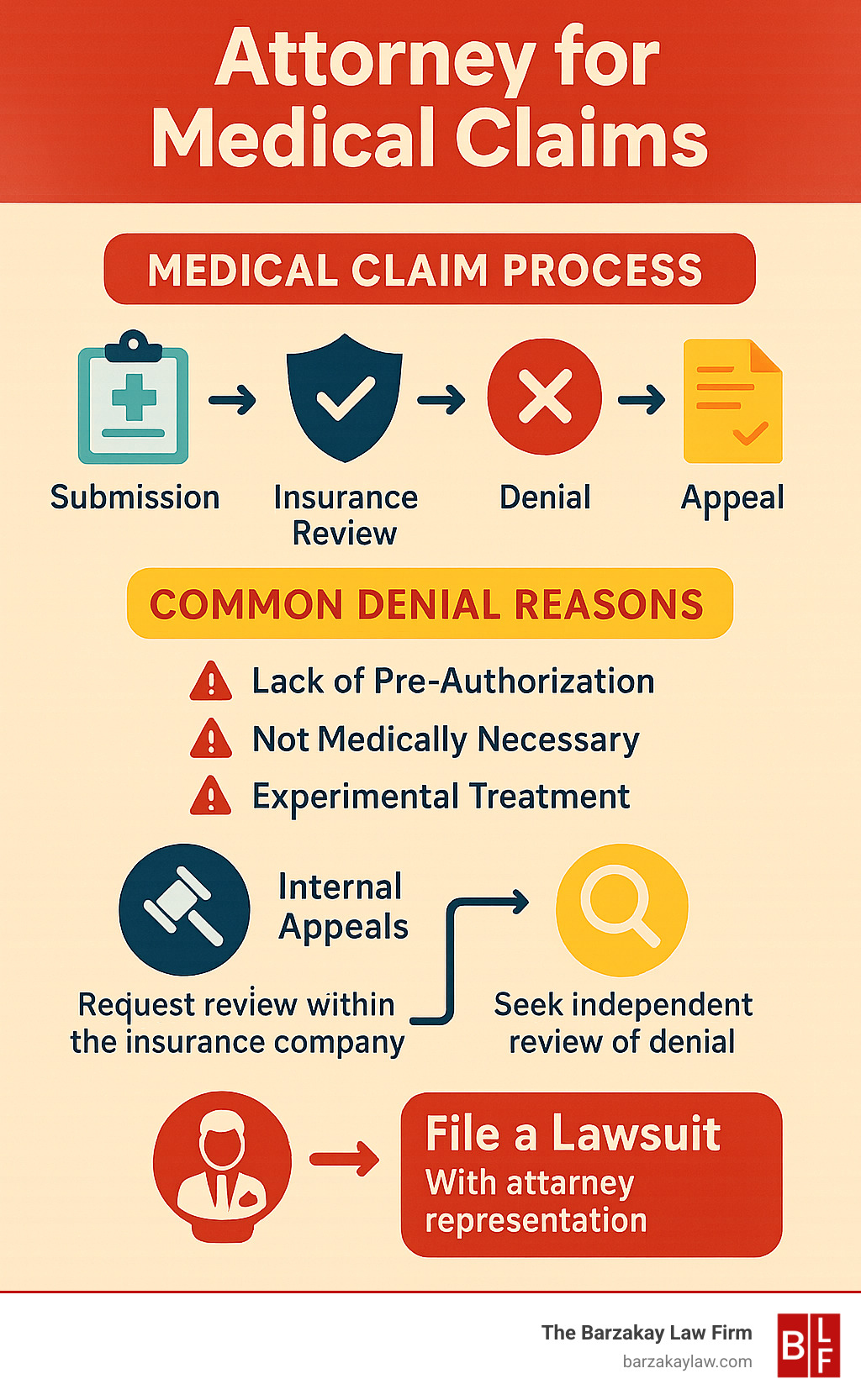
Receiving a notice of claim denial from an insurance carrier can feel devastating, especially when dealing with the recent loss of a loved one. Life insurance companies are commercial enterprises that sometimes utilize strict contractual interpretations or aggressive investigation tactics to deny payouts. Understanding why policies are contested helps beneficiaries recognize when a denial crosses the line into bad faith and when legal intervention becomes necessary.
Insurance carriers rarely issue denials without citing a specific contractual clause or policy provision. However, these interpretations are not always legally sound. Navigating the appeals process requires a thorough examination of the policy documents, the original application, and the grounds provided by the insurer. Recognizing the systemic challenges built into claim disputes underscores why policyholders and beneficiaries frequently require professional legal counsel.
Policy Rescission and Material Misrepresentation
One of the most frequent grounds for life insurance denial is alleged material misrepresentation on the application. Insurance companies scrutinize applications during the contestability period—typically the first two years of the policy. If the insurer discovers that the insured omitted or inaccurately stated a medical condition, tobacco use, or hazardous hobby, they may attempt to rescind the policy entirely, refunding the premiums rather than paying the death benefit.
However, an innocent mistake or a minor omission does not automatically give the insurer the right to deny the claim. Under insurance law, the misrepresentation must be "material" to the risk assumed by the company, meaning the insurer would have charged a higher rate or declined coverage had they known the truth. Furthermore, the carrier must prove that the insured intentionally misrepresented a fact with the intent to deceive. An experienced attorney knows how to challenge these assertions by gathering medical records, establishing a lack of intent, and proving that the insurer would have approved the policy regardless.
Exclusions and Suicide Clauses
Policy exclusions represent another common battleground. Most life insurance contracts contain standard exclusions, such as death resulting from acts of war, illegal activities, or participation in dangerous sports. Additionally, almost all policies feature a suicide clause, which voids the death benefit if the insured dies by suicide within the first two years of the policy issuance.
When a death occurs under ambiguous circumstances—such as a single-vehicle accident, an accidental overdose, or an unverified self-inflicted injury—insurers may hastily classify the death as suicide or attribute it to an excluded activity to avoid payment. Determining the actual cause of death often requires independent forensic analysis, toxicology reports, and expert testimony. Legal representation ensures that all evidence is rigorously evaluated rather than accepting the insurer’s initial determination.
Lapsed Policies and Premium Payment Disputes
Insurers frequently deny claims by asserting that the policy had lapsed due to non-payment of premiums before the insured's death. While policyholders are obligated to pay premiums on time, state laws and policy contracts often mandate specific grace periods and formal notification requirements before a policy can be legally terminated.
If an insurer fails to provide proper notice of impending cancellation or mishandles an automatic payment withdrawal, the lapse may be deemed invalid. Attorneys specializing in insurance law scrutinize premium payment histories, bank records, and statutory notice requirements to prove that the policy remained in active status at the time of death.
The Role of an Attorney for Life Insurance Denial
Engaging legal counsel fundamentally shifts the dynamic between a beneficiary and a multi-billion-dollar insurance corporation. Insurance adjusters and corporate defense lawyers operate with the primary goal of minimizing payouts. An attorney levels the playing field by enforcing regulatory standards, conducting independent investigations, and formulating a compelling legal strategy.
Legal professionals who focus on life insurance litigation understand the nuances of the Employee Retirement Income Security Act (ERISA) for employer-sponsored group policies, as well as state-specific insurance codes for individually purchased policies. This distinction is critical because ERISA policies involve federal law, strict administrative deadlines, and limited appeal rights, whereas individual policies allow for lawsuits in state courts and potential claims of bad faith.
Conducting Independent Investigations
When an insurance company denies a claim, they rely on their own investigation, which may be biased or incomplete. An attorney initiates an independent review of the circumstances surrounding the claim. This process may involve:
- Subpoenaing medical records and hospital charts.
- Consulting independent medical examiners and forensic experts.
- Interviewing witnesses, family members, and attending physicians.
- Analyzing police reports and coroner findings for inconsistencies.
By building a robust evidentiary record, the attorney can dismantle the insurer's rationale for denial and present undeniable proof of entitlement to the death benefit.
Negotiating Settlements and Litigating Bad Faith
Many life insurance disputes are resolved through strategic negotiation before a lawsuit is ever filed. Armed with a solid legal brief and evidence of the insurer's liability, an attorney can compel the insurance company to reverse its decision and pay the claim in full.
If the insurer refuses to cooperate, the attorney can file a formal lawsuit. In cases involving individual policies, if it can be demonstrated that the insurance company denied the claim without a reasonable basis and acted with reckless disregard for the beneficiary's rights, the plaintiff may pursue punitive damages under state bad-faith laws. This threat often incentivizes insurers to settle claims promptly.
Comparing Policy Types and Dispute Mechanisms
The procedural pathway for challenging a life insurance denial depends heavily on how the policy was acquired. Understanding the distinction between individual and group policies dictates the strategy an attorney will employ.
| Policy Feature | Individual Life Insurance Policies | Group (Employer-Sponsored) Policies |
|---|---|---|
| Governing Law | State insurance laws and contract law. | Federal law (ERISA). |
| Appeal Venue | State or federal court litigation. | Administrative appeals through the employer's plan administrator. |
| Right to Jury Trial | Generally available in state courts. | Not available; decided by a federal judge on the administrative record. |
| New Evidence Admission | High flexibility to introduce new medical records and expert testimony. | Severely restricted; courts typically review only the evidence submitted during the administrative appeal. |
| Damages Available | Policy benefits, interest, and potential bad-faith punitive damages. | Strictly limited to the policy benefit amount and occasionally attorney fees. |
Step-by-Step Guide: What to Do After a Claim Denial
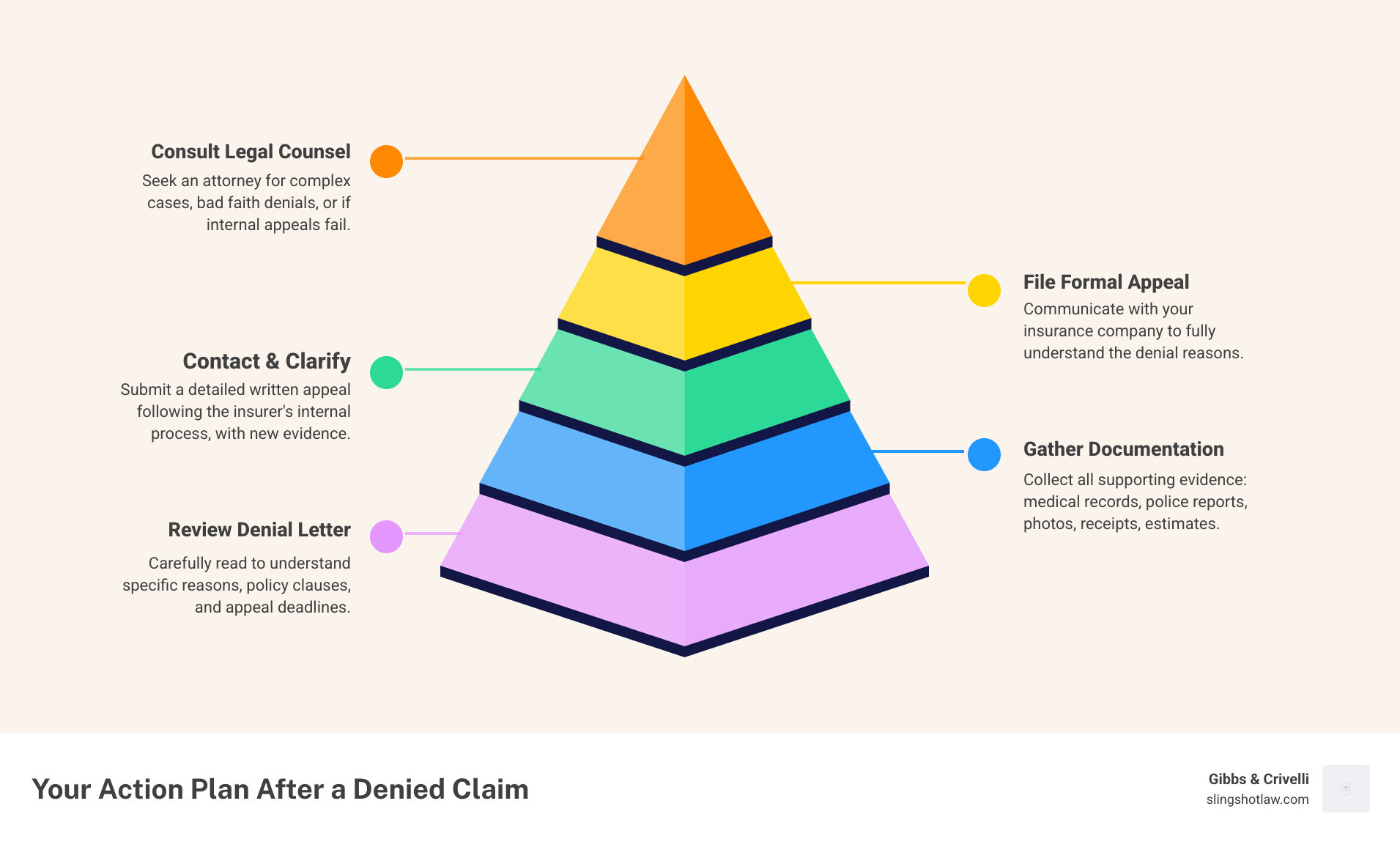
Navigating the aftermath of a life insurance denial requires a disciplined, methodical approach. Emotional reactions can lead to missed deadlines or inadvertent statements that compromise the case. Beneficiaries should follow a structured sequence of actions to protect their legal rights.
- Request the Official Denial Letter: Insurers are legally required to provide a written explanation detailing the exact reasons for the claim denial, including the specific policy clauses or statutes relied upon. Never rely on verbal explanations.
- Gather Policy Documents: Locate the original life insurance policy contract, application documents, rider agreements, premium payment receipts, and any correspondence with the insurance carrier.
- Refrain from Communicating Without Counsel: Avoid speaking with insurance adjusters, investigators, or company representatives about the denial until legal advice has been secured. Anything said can be used to reinforce the denial.
- Consult a Specialized Attorney: Schedule a consultation with a qualified life insurance denial attorney. Bring the denial letter, policy documents, and all relevant background information to the meeting.
- Adhere to Deadlines: Be acutely aware of contractual appeal deadlines and statutory limitations. For ERISA plans, the appeal window is typically 60 days from the date of the denial letter, whereas individual policies follow state-specific statutes of limitations.
- Participate in the Appeals or Litigation Process: Allow the attorney to manage the administrative appeal or file the appropriate lawsuit, providing any requested personal documentation promptly.
Frequently Asked Questions
What should I do immediately after receiving a life insurance denial letter?
Do not panic or accept the decision as final. Request a complete copy of the claim file from the insurance company, preserve all policy paperwork, and consult with an experienced life insurance attorney before taking any independent action that could jeopardize your claim.
How much does a life insurance attorney cost?
Most life insurance attorneys operate on a contingency fee basis. This means they do not charge upfront hourly fees; instead, they take an agreed-upon percentage of the recovered death benefit only if they successfully overturn the denial and secure payment.
Can I appeal a denied claim on my own without an attorney?
While beneficiaries have the right to file an initial appeal independently, insurance companies maintain legal departments designed to uphold denials. Professional legal representation significantly increases the statistical likelihood of a successful outcome, particularly for complex claims or ERISA-governed policies.
What is the difference between an individual policy and an employer-sponsored group policy?
Individual policies are purchased directly from an insurance agent and are governed by state laws, allowing for jury trials and bad-faith lawsuits. Group policies are provided through an employer, regulated by federal ERISA guidelines, and restrict appeals to strict administrative frameworks.
What is the contestability period in life insurance?
The contestability period is a timeframe—usually the first two years after a policy goes into effect—during which the insurance company has the legal right to investigate the original application for omissions or misrepresentations and rescind the policy if errors are found.
Can an insurance company deny a claim if the death was caused by an accidental overdose?
Insurers frequently attempt to deny claims involving accidental drug overdoses by classifying them as intentional self-harm or citing substance abuse exclusions. However, if the overdose was accidental, beneficiaries are legally entitled to the death benefit, and an attorney can help prove the accidental nature of the death using medical and toxicology reports.
Next Steps and Professional Action
If you or your family are facing a life insurance denial, time is of the essence. Delays can result in missed appeal windows and the permanent forfeiture of substantial financial benefits. Collect your documentation, review the formal denial notice, and seek an immediate consultation with a qualified legal professional who specializes in life insurance disputes. Securing experienced counsel ensures your rights are fiercely defended while you focus on honoring your loved one.