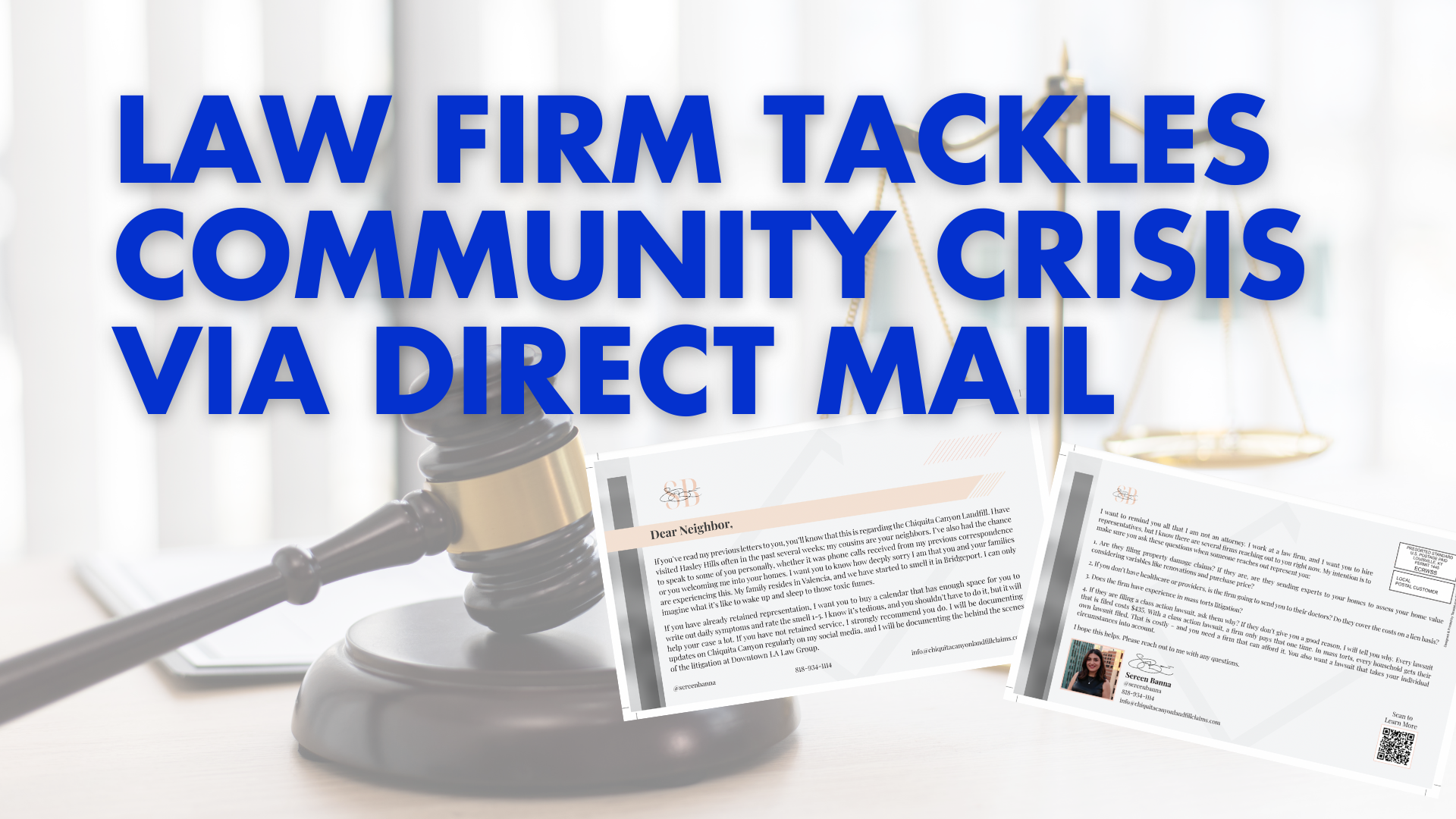
Attorney direct mail marketing for law firms remains a potent, highly targeted offline strategy that complements digital campaigns by delivering tangible physical collateral directly to prospective clients. When executed with strict adherence to legal advertising regulations and data privacy rules, direct mail allows law firms to bypass crowded digital ad auctions, target specific demographics or geographic regions, and connect with high-intent individuals at the exact moment they require legal representation.
Understanding Direct Mail Marketing in the Modern Legal Landscape
While digital marketing channels like pay-per-click (PPC) advertising and search engine optimization (SEO) dominate modern legal marketing budgets, direct mail continues to carve out a vital niche. In a digital world oversaturated with banner ads, spam emails, and algorithmic feeds, a physical piece of mail commands physical attention. It sits on a kitchen table or an office desk, offering a tactile medium that can build immediate trust and recognition.
For law firms practicing in competitive sectors like personal injury, estate planning, bankruptcy, family law, and criminal defense, direct mail offers unique advantages. Unlike digital ads that disappear the moment a budget is exhausted or an ad blocker is enabled, direct mail provides a permanent or semi-permanent artifact. A prospective client facing a foreclosure notice or an auto accident settlement can physically hold a firm’s brochure, retain the contact information easily, and review the credentials at their own pace.
However, legal marketing is heavily scrutinized. Bar associations and state supreme courts impose stringent ethical guidelines on attorney advertising. Direct mail marketing for law firms is not merely about creative copywriting and striking design; it requires a meticulous understanding of state bar regulations, mandatory disclaimers, data compliance frameworks, and postal delivery standards.
Regulatory Frameworks and Compliance Requirements
Before designing a single postcard or drafting a sales letter, law firms must thoroughly examine the advertising rules established by their state bar association or governing legal body. Violating these rules can lead to disciplinary actions, fines, or mandatory retractions.
State Bar Ethics and Disclaimers
Most state bars classify direct mail as a form of commercial speech subject to regulation under First Amendment commercial speech doctrines. Common requirements across jurisdictions include:
- The "Advertising Material" Label: Many states require the words "Advertising Material" or "Legal Advertisement" to be printed clearly on the outside envelope and at the beginning and end of any enclosed written communication.
- Filing and Retention: Several jurisdictions mandate that law firms file a copy of the direct mail piece with the state bar disciplinary committee either concurrently with or prior to mailing, along with a list of recipients. Firms are typically required to retain copies of the mailing and a distribution list for a specified period (e.g., two to three years).
- Prohibitions on Misleading Claims: Direct mail must not contain false, deceptive, or misleading statements. Claims of specialization require board certification where applicable, and past case results must be accompanied by disclaimers stating that prior results do not guarantee a similar outcome.
Privacy Regulations and Data Ethics
Targeting potential clients often involves acquiring data lists or utilizing public records. Law firms must ensure compliance with federal and state data privacy laws, such as the California Consumer Privacy Act (CCPA) or sector-specific regulations. When purchasing mailing lists from third-party vendors, firms must verify that the data was collected legally and ethically, respecting opt-out registries and consumer privacy preferences.
Identifying Target Practices and Campaign Types
Direct mail is not a one-size-fits-all strategy. The effectiveness of a direct mail campaign depends heavily on the specific legal practice area and the timeliness of the message.
| Practice Area | Primary Direct Mail Approach | Timing and Urgency | Key Focus for the Consumer |
|---|---|---|---|
| Personal Injury | Targeted mailers based on public accident or police reports (where permitted) | Immediate (days following an incident) | Empathy, contingency fee structure, immediate consultation |
| Estate Planning | Demographic and geographic saturation (e.g., homeowners aged 55+) | Evergreen / Ongoing | Asset protection, avoiding probate, family peace of mind |
| Bankruptcy | Public foreclosure, lien, or judgment filings | Time-sensitive (upon public notice) | Stopping creditor harassment, debt relief options |
| Family Law | Geographic saturation in specific residential zip codes | Evergreen / Ongoing | Confidentiality, child custody expertise, compassionate counsel |
| Criminal Defense | Arrest records or court docket mailers (where compliant) | Immediate (post-arraignment) | Discretion, aggressive defense, immediate availability |
Time-Sensitive Versus Evergreen Campaigns
- Time-Sensitive Campaigns: Often referred to as "trigger lead" or public record marketing, these campaigns respond to recent life events or legal filings, such as traffic accidents, bankruptcies, or foreclosures. The window of opportunity is narrow, requiring rapid data processing and swift mail delivery.
- Evergreen Campaigns: These focus on building long-term brand awareness within a defined geographic market. Examples include direct mail pieces sent to newly relocated residents, homeowners in specific zip codes, or small business owners. The goal is to establish top-of-mind awareness so that when a legal need eventually arises, the firm is the first one called.
Key Components of a High-Converting Legal Direct Mail Piece
Creating a successful direct mail piece requires a blend of persuasive copywriting, professional graphic design, and a clear call to action (CTA). Because recipients often spend only a few seconds deciding whether to read or discard a mailer, every element must work harmoniously to capture interest.
1. The Envelope or Self-Mailer Format
The physical format sets the tone. Options range from standard #10 envelopes and oversized postcards to multi-page self-mailers and confidential-looking packages.
- Envelopes carry a higher perceived level of confidentiality and importance, making them effective for sensitive matters like estate planning or criminal defense.
- Postcards (e.g., 6x9 or 6x11 inches) offer immediate visibility since they require no opening. They are ideal for geographic saturation and visual-heavy branding.
2. Compelling Copywriting and Empathy
Legal issues are inherently stressful. Effective copy does not rely on aggressive scare tactics; instead, it demonstrates empathy, establishes authority, and presents a clear solution.
- Headline: Address the reader's primary pain point or question directly. Avoid vague firm-centric statements like "We have 30 years of experience." Instead, use client-centric phrasing such as "Facing foreclosure? Know your rights under state law."
- Body Copy: Keep paragraphs concise. Use bullet points to break down complex procedures or list the immediate steps a client should take. Explain how the firm will alleviate their burden.
- Trust Signals: Include credentials, awards, memberships in reputable legal organizations, and brief, ethical testimonials or case outcome disclaimers.
3. Clear Call to Action (CTA) and Tracking Mechanisms
A mailer without a clear next step will fail. Every piece should direct the recipient precisely on what to do next: call a dedicated phone number, visit a specific landing page URL, or scan a Quick Response (QR) code.
- Dedicated Phone Numbers: Use call-tracking numbers specific to the direct mail campaign to accurately measure response rates and return on investment (ROI).
- Custom Landing Pages: Direct traffic to a tailored webpage that matches the design and messaging of the mailer, reinforcing trust and streamlining the conversion process.
- QR Codes: Modern campaigns frequently incorporate QR codes to bridge the gap between offline print and online scheduling portals, allowing mobile users to book a consultation instantly.
Step-by-Step Implementation Strategy
Launching a successful direct mail campaign requires a disciplined, structured workflow from conception to performance analysis.
Step 1: Define Objectives and Target Audience
Determine the specific business goal—whether it is generating a set number of personal injury consultations, building estate planning volume, or increasing local brand awareness. Define the target audience precisely using geographic boundaries, demographic filters, or specific public record criteria.
Step 2: Ensure Compliance Review
Submit draft concepts and copy to internal compliance officers or external legal counsel familiar with state bar advertising regulations. Ensure all required disclaimers, bar-mandated disclosures, and identification marks are integrated into the design layout.
Step 3: Source and Clean Data Lists
Obtain mailing lists from reputable data brokers or compile them from verified public sources. Clean the data rigorously to remove duplicate entries, update forwarding addresses via National Change of Address (NCOA) databases, and ensure compliance with do-not-mail registries where applicable.
Step 4: Design, Print, and Personalize
Work with professional printers experienced in variable data printing (VDP). Personalize mailers with the recipient's name and customized text fields where legally permitted, as personalization significantly boosts response rates.
Step 5: Execute Postal Delivery and Tracking
Partner with direct mail service providers that utilize United States Postal Service (USPS) automation services, such as Every Door Direct Mail (EDDM) or First-Class Presort, to optimize postage costs and delivery speeds. Monitor delivery windows to ensure time-sensitive campaigns arrive promptly.
Step 6: Measure ROI and Refine
Track inbound calls, form submissions, and consultation bookings attributed to the campaign's specific tracking numbers and landing pages. Calculate the customer acquisition cost (CAC) and overall return on investment to refine targeting and messaging for subsequent mail drops.
Common Mistakes to Avoid in Legal Direct Mail
Even experienced marketing professionals can falter when executing direct mail campaigns for law firms due to the unique regulatory and emotional sensitivities of the legal sector. Avoiding these pitfalls protects the firm's reputation and marketing budget.
- Neglecting State Bar Rules: Assuming that digital marketing rules apply equally to print, or failing to include mandatory state-specific disclaimers, can trigger severe ethics investigations.
- Using Generic or Impersonal Messaging: Sending bland, corporate-sounding brochures fails to resonate with individuals experiencing acute personal crises. Copy must acknowledge the human element of legal struggles.
- Failing to Track Results: Treating direct mail as a purely "branding" exercise without tracking phone numbers, landing pages, or promo codes makes it impossible to calculate true campaign ROI.
- Poor Data Hygiene: Mailing to outdated addresses wastes printing and postage budgets while damaging brand perception. Regular list cleaning and NCOA updates are mandatory.
- Inconsistent Follow-Up: Direct mail generates inquiries that require prompt, professional responses. If intake staff are unprepared to handle inbound calls from mailers immediately, conversion rates will plummet.
Frequently Asked Questions
Are law firms allowed to use direct mail for marketing?
Yes, direct mail is a constitutionally protected form of commercial speech and is permitted for law firms across the United States. However, it is heavily regulated by state bar associations and supreme courts, which dictate specific rules regarding disclaimers, filing requirements, and prohibitions against misleading or coercive statements.
How do I track the ROI of a direct mail campaign for my law firm?
You can track ROI by utilizing dedicated tracking phone numbers assigned exclusively to the mailer, creating custom landing page URLs for print traffic, and utilizing unique QR codes. By logging every inbound lead generated through these distinct channels, your intake team can attribute new clients directly to the specific direct mail batch.
What is the difference between EDDM and targeted mailing lists?
Every Door Direct Mail (EDDM) is a USPS service that allows you to saturate entire postal carrier routes without purchasing specific names and addresses, making it cost-effective for broad geographic branding. Targeted mailing lists, conversely, allow you to filter recipients based on specific criteria such as home ownership, age, income, or specific public record filings, offering higher precision for niche practice areas.
How soon after an incident should a personal injury direct mail piece be sent?
In jurisdictions where personal injury direct mail is permitted, timing is critical. Most firms aim to have mailers delivered within 7 to 14 days following an accident or public record filing. However, firms must strictly verify that their state bar does not impose a mandatory waiting or "cooling-off" period before accident victims may be contacted.
How can I ensure my direct mail pieces comply with state bar ethics?
To ensure compliance, review your state bar's specific advertising rules or consult with a legal ethics attorney before finalizing your design. Many state bars require draft submissions and filings of all direct mail materials prior to or concurrently with public distribution, along with a complete distribution list of recipients.
Final Recommendation
Direct mail marketing remains a powerful, tangible avenue for law firms seeking to connect with high-intent prospective clients outside the crowded digital ecosystem. To maximize success, prioritize absolute compliance with your state bar's ethics guidelines, invest in clean and targeted data lists, craft empathetic and solution-oriented messaging, and implement rigorous tracking systems to measure every dollar spent. Begin with a well-defined pilot campaign in a single practice area, analyze the performance metrics carefully, and scale your direct mail efforts systematically as you identify what resonates best with your local market.