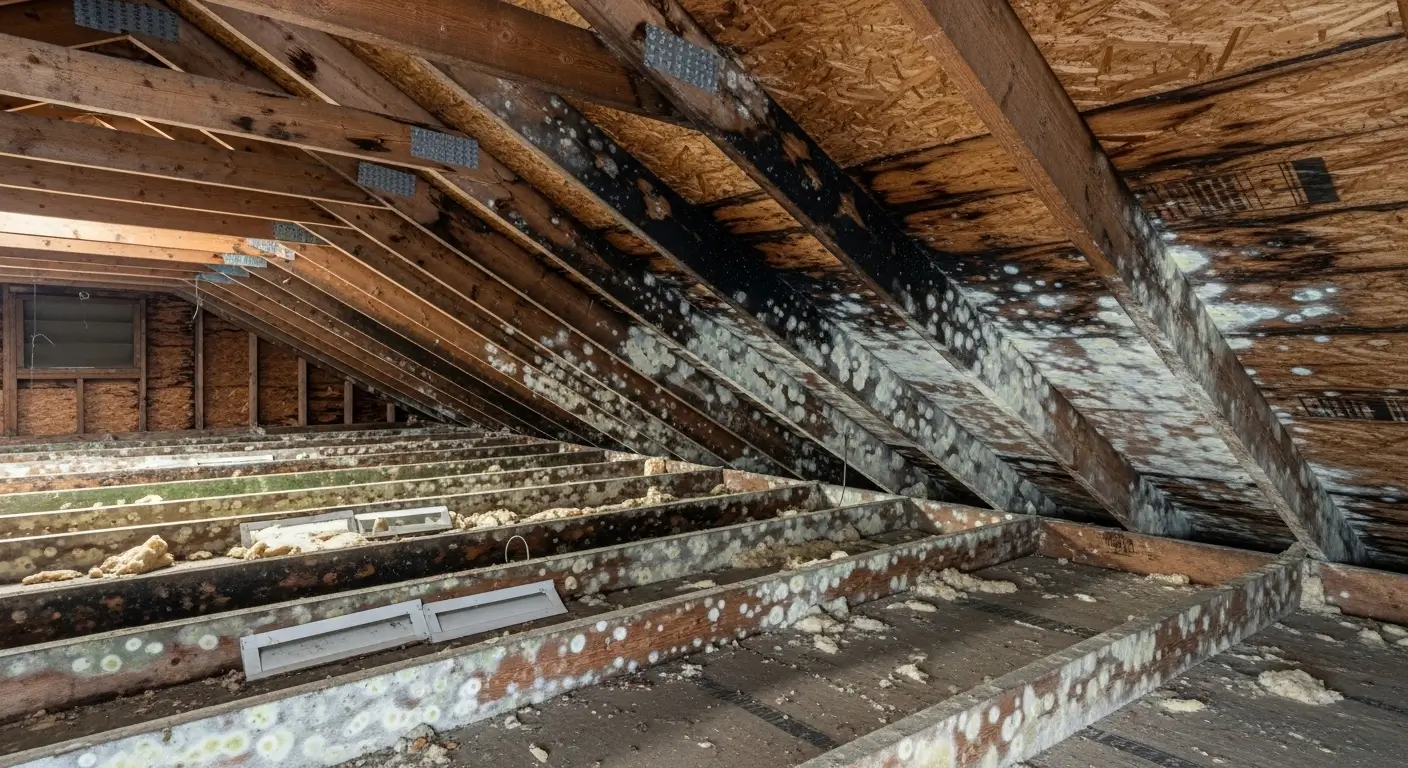
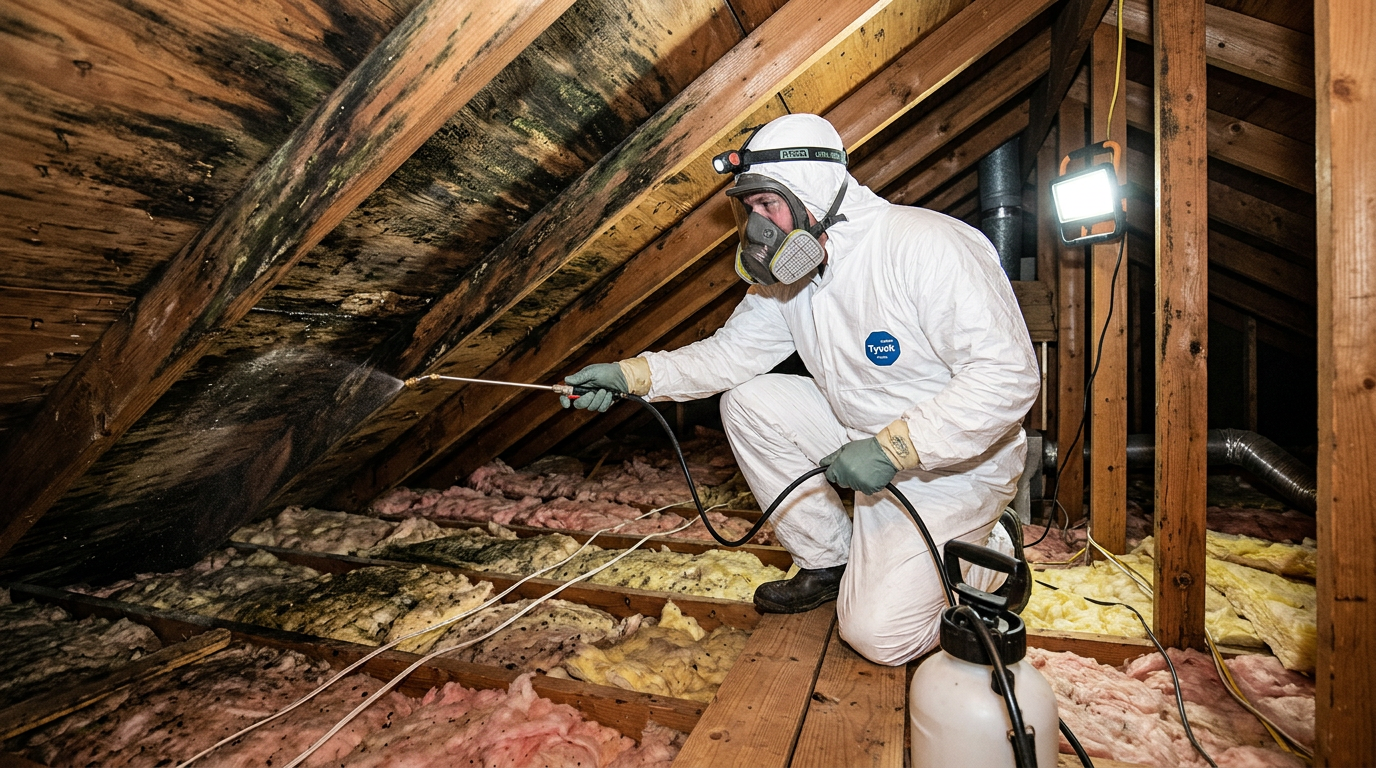
Attic mold remediation in Bolingbrook, IL, is a specialized process involving the identification of fungal growth, containment of contaminated areas, mechanical removal of spores, and the correction of underlying moisture issues. For homeowners in this region, successful remediation requires addressing Illinois’ specific climate-driven condensation risks—where humid summers and cold winters often create the perfect conditions for mold proliferation within unconditioned attic spaces.
Understanding the Mechanics of Attic Mold
Attic mold typically manifests due to inadequate ventilation, roof leaks, or bathroom exhaust fans venting directly into the attic space rather than through the roof deck. In Bolingbrook, the cycle of freezing temperatures during winter and high humidity in the summer exerts significant pressure on residential building envelopes.
When warm, moist air from the living space leaks into the attic, it meets the cold underside of the roof deck, leading to condensation. This moisture settles on plywood or oriented strand board (OSB) sheathing and wooden trusses, providing the organic food source mold requires to flourish. Remediation is not simply about killing existing mold; it is a structural intervention to stabilize the attic environment and prevent a recurrence.
The Remediation Process: A Step-by-Step Approach
Professional mold remediation follows a standard sequence defined by industry best practices, such as those established by the Institute of Inspection, Cleaning and Restoration Certification (IICRC) S520 guidelines.
1. Assessment and Inspection
Before any cleaning begins, a professional must identify the moisture source. If you ignore the source, the mold will return regardless of how thoroughly you clean the wood. A technician will typically use moisture meters to map the extent of the growth and may conduct an air quality test to determine if mold spores are migrating into the main living areas of the home.
2. Containment and Safety
Mold spores are highly mobile. During the cleaning process, technicians install HEPA (High-Efficiency Particulate Air) filtered air scrubbers to create negative pressure in the attic. This ensures that when the attic hatch is opened, air flows into the attic rather than out, preventing spores from circulating into your bedrooms or HVAC system.
3. Removal and Treatment
Mechanical removal is the industry standard. This involves:
- HEPA Vacuuming: Capturing loose spores on surfaces.
- Media Blasting: Using dry ice, soda, or specialized sandblasting equipment to physically abrade the mold off the wood studs and sheathing.
- Fungicidal Application: Applying an EPA-registered antimicrobial solution to sanitize the remaining wood fibers.
- Encapsulation: Applying a specialized, vapor-permeable sealant that locks down any remaining microscopic roots (hyphae) and protects the wood from future moisture absorption.
Bolingbrook Climate Considerations
Bolingbrook, located in Will and DuPage counties, experiences significant seasonal fluctuations. During the 2026 climate cycle, homeowners should be acutely aware that attic ventilation is often compromised by improper insulation installation. Insulation blown too close to the soffit vents effectively chokes off the airflow necessary to move moist air out of the attic. A key part of your remediation plan must include the installation of "soffit baffles" (also known as insulation dams) to ensure the air intake remains clear.
Comparison of Remediation Methods
| Method | Primary Action | Suitability | Cost Impact |
|---|---|---|---|
| HEPA Vacuuming | Surface removal | Minor surface spotting | Low |
| Media Blasting | Physical stripping | Heavy, deep-rooted growth | High |
| Chemical Cleaning | Fungal destruction | Light to moderate growth | Moderate |
| Encapsulation | Protective coating | Final step for all projects | Moderate |
Addressing the Root Cause: Ventilation
If your remediation specialist does not discuss ventilation, you are likely to experience a re-infestation. In the Bolingbrook area, many homes built during the late 20th century were designed with minimal intake and exhaust ratios. As you upgrade your home, consider checking the following:
- Soffit Vents: Ensure these are not blocked by insulation or debris.
- Ridge Vents: Verify these are clear and functioning.
- Exhaust Ducts: Ensure all bathroom fans and kitchen vents are ducted through the roof, not venting blindly into the attic.
Legal and Safety Requirements
There is no federal standard for mold licensing, but Illinois state law and municipal codes in Bolingbrook require that contractors adhere to safety protocols regarding hazardous materials. Always verify that your chosen company carries specific pollution liability insurance. Standard general liability often excludes "mold-related claims," meaning you could be left with no recourse if the contractor damages your home or fails to contain the spores properly.
Frequently Asked Questions
Is bleach an effective solution for attic mold? No. Professional organizations, including the EPA, advise against using bleach on porous surfaces like wood. Bleach only kills the surface growth and leaves the water content behind, which actually encourages the mold roots to grow deeper into the wood.
Do I need an air quality test before starting? An air quality test is helpful if you suspect the mold has migrated into your living space or if you are dealing with health-related concerns. However, if the mold is visible and contained to the attic, the physical remediation steps are generally the same regardless of the specific spore count.
How do I know if the remediation was successful? A successful project concludes with a "clearance test." This involves a third-party environmental professional inspecting the work and taking air or surface samples to ensure that spore levels have returned to a normal, baseline range compared to the outdoor environment.
Does homeowners insurance cover attic mold? Coverage depends entirely on your specific policy. Generally, if the mold resulted from a sudden "covered peril" (like a burst pipe or a specific windstorm event that damaged the roof), it may be covered. If it resulted from long-term humidity or poor ventilation (maintenance issues), it is rarely covered. Check your 2026 policy declarations page carefully.
Can I perform attic mold remediation myself? For small areas (less than 10 square feet), DIY kits exist, but working in an attic involves significant safety risks, including falling through ceilings, inhaling toxic spores without a proper respirator, and the difficulty of navigating cramped trusses. Professionals use specialized personal protective equipment (PPE) and industrial-grade containment systems that the average homeowner cannot replicate.
Recommended Next Steps
If you suspect mold in your Bolingbrook attic, start by inspecting the underside of your roof sheathing with a bright flashlight. Look for dark, circular staining or "fuzzy" textures on the wooden trusses. If found, contact two or three reputable, licensed environmental remediation companies for an estimate. Prioritize firms that provide a clear, written scope of work detailing how they plan to remediate the wood and how they plan to correct the moisture source. Do not authorize work until you have a clear plan for both the removal of the mold and the improvement of your attic's ventilation.