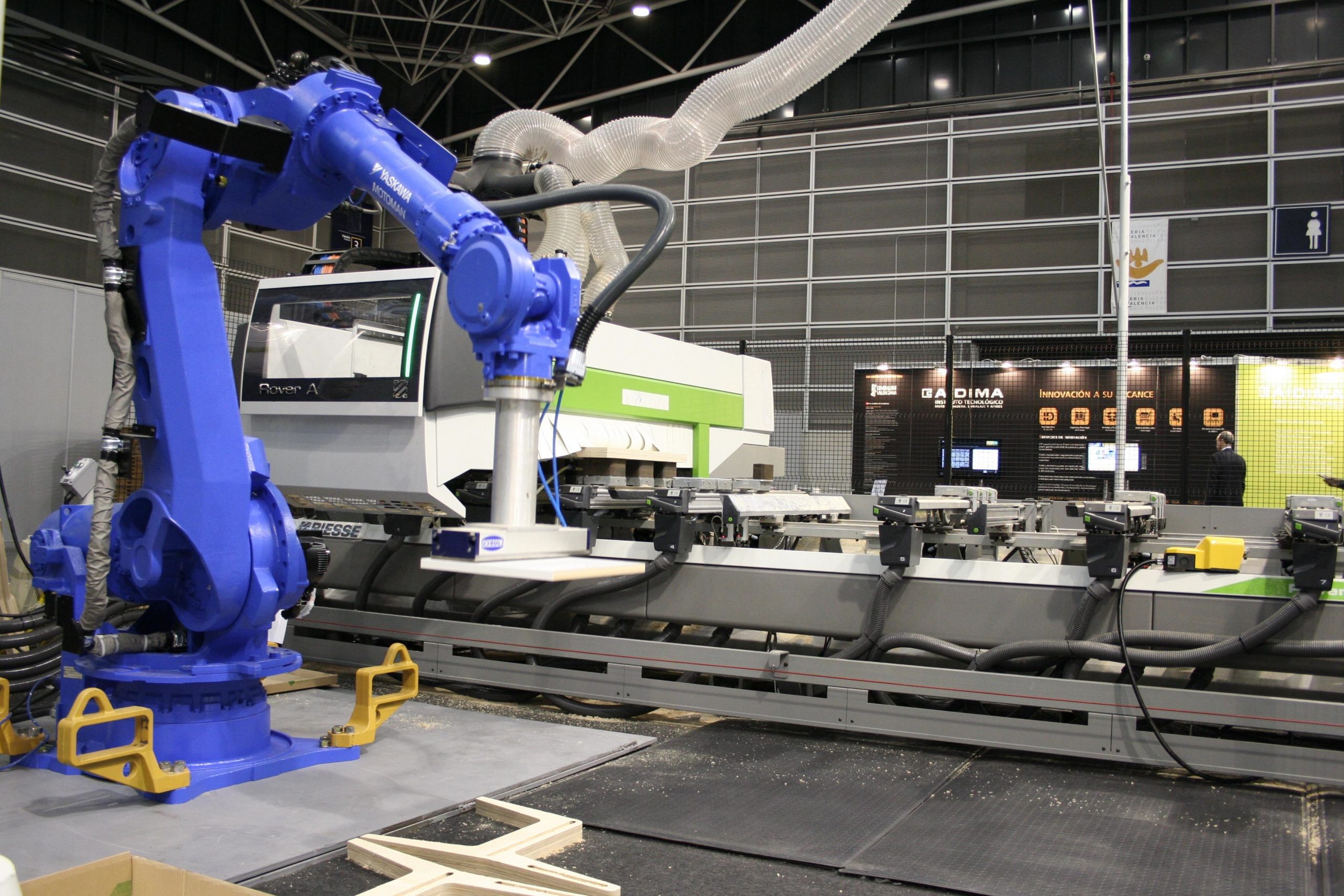
Advanced processing technology encompasses the high-performance computing architectures, sophisticated algorithms, and specialized hardware innovations designed to execute complex workloads at scale. By leveraging multi-core architectures, specialized accelerators, and advanced semiconductor fabrication nodes, these systems resolve heavy computational bottlenecks, support massive data throughput, and enable real-time analytical capabilities across scientific, industrial, and commercial domains.
Introduction to Advanced Processing Technology
The continuous evolution of digital infrastructure relies heavily on the capabilities of advanced processing technology. At its core, this field bridges the gap between raw computational hardware and demanding application logic, providing the throughput and low latency required by modern data-intensive environments.
Rather than referring to a single device, advanced processing technology is an umbrella term for a suite of integrated innovations. These include heterogeneous computing models, advanced memory hierarchies, and specialized silicon designs that move beyond traditional central processing unit (CPU) paradigms. Understanding these technologies requires examining their underlying architectures, the specific operational needs they address, and the trade-offs associated with their deployment.
Core Architectural Foundations
To appreciate how advanced processing technology achieves high throughput, one must examine the hardware and software layers that dictate modern computing performance. Traditional serial processing has given way to highly parallelized, domain-specific architectures optimized for distinct categories of computational workloads.
Heterogeneous Computing and Specialized Accelerators
Modern computational demands often outstrip the capabilities of general-purpose CPUs. Advanced processing environments frequently utilize heterogeneous computing models, which combine different types of processing cores within a single system architecture.
- Graphics Processing Units (GPUs): Originally engineered for rendering visual imagery, GPUs feature thousands of smaller arithmetic logic units designed for highly parallel execution, making them foundational for matrix multiplication, deep learning training, and scientific simulations.
- Field Programmable Gate Arrays (FPGAs): FPGAs offer hardware-level reprogrammability, allowing organizations to tailor the silicon logic gates directly to specific algorithms. This provides ultra-low latency for financial high-frequency trading and telecommunications routing.
- Application-Specific Integrated Circuits (ASICs): Custom-built silicon chips designed for a single specific purpose, such as cryptographic mining or specialized neural network inference, delivering maximum efficiency and minimal power consumption.
Memory Hierarchies and Data Locality
Processing speed is frequently constrained not by raw compute power, but by the speed at which data can be fetched from storage and memory. Advanced processing technology utilizes sophisticated memory hierarchies to mitigate the von Neumann bottleneck.
High-bandwidth memory (HBM) stacks dynamic random-access memory (DRAM) dies vertically, connecting them to the processor via an interposer. This configuration vastly increases data transfer rates while reducing physical footprint and power consumption compared to traditional planar memory modules. Furthermore, cache coherence protocols and advanced memory controllers ensure that distributed processing nodes can access shared data with minimal synchronization overhead.
Key Operational Metrics and Comparisons
Evaluating advanced processing technology requires looking beyond marketing claims to concrete operational benchmarks. Different workloads demand distinct performance characteristics, meaning a processor optimized for artificial intelligence (AI) training may underperform in transactional database operations.
| Technology Type | Primary Architectural Strength | Optimal Use Case | Key Operational Limitation |
|---|---|---|---|
| Multi-Core CPUs | Serial execution, branch prediction, general-purpose multitasking | Operating systems, enterprise databases, legacy software | Diminishing returns on highly parallelized matrix tasks |
| Massively Parallel GPUs | Massive throughput via thousands of concurrent threads | Deep learning, graphics rendering, molecular modeling | Higher idle power consumption, complex programming models |
| Reconfigurable FPGAs | Hardware-level customization, deterministic low latency | Telecommunications, packet filtering, real-time edge processing | Long development and compilation cycles |
| Dedicated ASICs | Maximum energy efficiency per operation | Cryptographic hashing, fixed-algorithm inference workloads | Zero post-manufacturing flexibility if standards change |
Integration and Implementation Prerequisites
Deploying advanced processing technology within an existing enterprise or research infrastructure is a complex undertaking. Organizations cannot simply swap out hardware components without assessing systemic prerequisites.
Power, Thermal, and Infrastructure Requirements
High-performance processing units generate substantial thermal loads and require significant electrical power. Modern enterprise accelerators often demand hundreds of watts per socket, necessitating specialized data center redesigns.
- Liquid Cooling Solutions: Traditional air cooling frequently falls short for dense rack configurations utilizing advanced processors. Direct-to-chip liquid cooling and immersion cooling systems are increasingly required to maintain optimal operating temperatures.
- Electrical Grid Capacity: Facilities must ensure uninterruptible power supplies and robust distribution units can handle sudden load spikes without tripping circuit breakers or inducing thermal throttling.
Software Toolchains and Compilation
Hardware is only as effective as the software layer that instructs it. Advanced processors require specialized compilers, runtime libraries, and development frameworks to translate high-level code into optimized machine instructions. Proprietary software ecosystems can create vendor lock-in, requiring organizations to carefully evaluate developer toolchain maturity before committing to a specific silicon architecture.
Common Operational Challenges and Pitfalls
While advanced processing technology offers unprecedented computational power, improper implementation can lead to severe operational bottlenecks and financial inefficiencies.
Amdahl's Law and Parallelization Limits
Amdahl's law dictates that the speedup of a program using multiple cores is limited by the time needed for its sequential fraction. Organizations often err by assuming that scaling up processor cores yields linear performance gains. Workloads that cannot be easily decomposed into independent parallel tasks will see minimal benefit from advanced multi-core or accelerator-heavy architectures, resulting in low return on investment.
Capital Expenditure and Total Cost of Ownership
The financial investment required for advanced processing technology extends far beyond initial hardware acquisition costs. Organizations must factor in:
- Specialized software licensing fees for performance optimization tools.
- Facility retrofitting for power and cooling infrastructure.
- Continuous talent acquisition and upskilling for specialized systems engineering staff.
Failing to calculate the total cost of ownership over a three-to-five-year lifecycle can quickly erode projected financial gains.
Frequently Asked Questions
What differentiates advanced processing technology from standard consumer computing hardware?
Advanced processing technology is engineered for enterprise-grade workloads, high-throughput parallel execution, and specialized computational domains such as AI training or high-frequency simulation. Unlike consumer hardware, these systems prioritize sustained performance under heavy load, ECC (Error-Correcting Code) memory support, and robust interconnect scalability.
Why is thermal management critical when deploying advanced processors?
High power density in modern silicon causes rapid heat accumulation. If temperatures exceed specified operational thresholds, processors engage in thermal throttling—intentionally reducing clock speeds to prevent hardware damage—which directly degrades computational performance and throughput.
How does heterogeneous computing improve workflow efficiency?
By assigning specific tasks to the most appropriate hardware architecture—such as routing heavy matrix math to a GPU while handling system interrupts on a CPU—heterogeneous computing maximizes resource utilization, lowers latency, and reduces overall energy consumption.
What role do memory bandwidth limitations play in processing performance?
Memory bandwidth dictates how quickly data can move between storage, memory, and the processing core. If a processor must wait idly for data retrieval, even the fastest arithmetic logic units remain underutilized, creating a severe performance bottleneck known as being "memory-bound."
How do organizations determine the right advanced processing technology for their workload?
Organizations must conduct rigorous profiling of their specific computational pipelines to identify whether their bottlenecks stem from memory latency, serial processing limits, or parallel throughput constraints. Matching the workload profile to the appropriate hardware architecture ensures optimal efficiency and cost-effectiveness.
Practical Next Actions and Strategic Recommendations
Organizations seeking to integrate advanced processing technology should begin with a comprehensive workload audit rather than an immediate hardware purchase. Identify existing computational bottlenecks—whether they reside in database query execution, simulation rendering, or machine learning inference. Once bottlenecks are mapped, consult with enterprise hardware architects to model total cost of ownership, accounting for power, cooling, and software toolchain compatibility, before committing capital to a specific deployment strategy.