Homeowners in Marietta facing foundation distress must choose between various stabilization methods like piering, slabjacking, and crawl space reinforcement. American Foundation Repair specializes in navigating these structural choices by assessing Marietta’s unique red clay soil conditions and applying engineered solutions to ensure long-term residential stability.
The structural integrity of a home is often taken for granted until a door fails to latch or a hairline fracture appears in the drywall. In Marietta, Georgia, these issues are frequently more than cosmetic. The region’s specific geological makeup, characterized by high-plasticity clay, creates a volatile environment for residential footings. Navigating the choices for repair requires an understanding of how these soils interact with different foundation types—whether you own a historic home near Marietta Square or a modern slab-on-grade build in East Cobb.
American Foundation Repair has established itself as a primary consultant for these issues, helping residents distinguish between temporary fixes and permanent structural remediation. As we move through 2026, the technology behind these repairs has evolved, offering more precise methods for leveling and stabilization than were available a decade ago. This guide explores the technical landscape of foundation repair in the Marietta area, providing the data necessary to make an informed decision for your property.
The Geotechnical Context of Marietta and Cobb County
To navigate structural choices effectively, one must first understand the "enemy" of the foundation: the soil. Marietta sits within the Piedmont region of Georgia, which is notorious for its thick layers of saprolite and expansive red clay. This soil is highly reactive to moisture. During the humid Georgia summers and rainy winters, the clay undergoes significant volume changes.
The Shrink-Swell Cycle
Expansive clay acts like a sponge. When it absorbs water, it swells, exerting "heave" pressure against foundation walls and slabs. Conversely, during periods of drought—which have become increasingly common in the mid-2020s—the soil loses moisture and shrinks. This creates a void beneath the foundation. When the soil can no longer support the weight of the structure, the foundation drops to fill the void, a process known as settlement.
Drainage and Hydrostatic Pressure
Marietta’s hilly terrain adds another layer of complexity. Poorly managed runoff can lead to water pooling against foundation walls. This creates hydrostatic pressure, which is the force exerted by stagnant water. Over time, this pressure can cause masonry walls to bow inward or develop horizontal cracks, signaling a potential structural failure. Understanding these environmental stressors is the first step American Foundation Repair takes in determining which structural choice is appropriate for a specific site.
Navigating Piering Systems: Deep Foundation Solutions
When a foundation has settled significantly, the most common choice is to "pier" the structure. This involves transferring the weight of the home from the unstable surface soil to more competent load-bearing strata or bedrock located deeper underground.
Resistance (Push) Piers
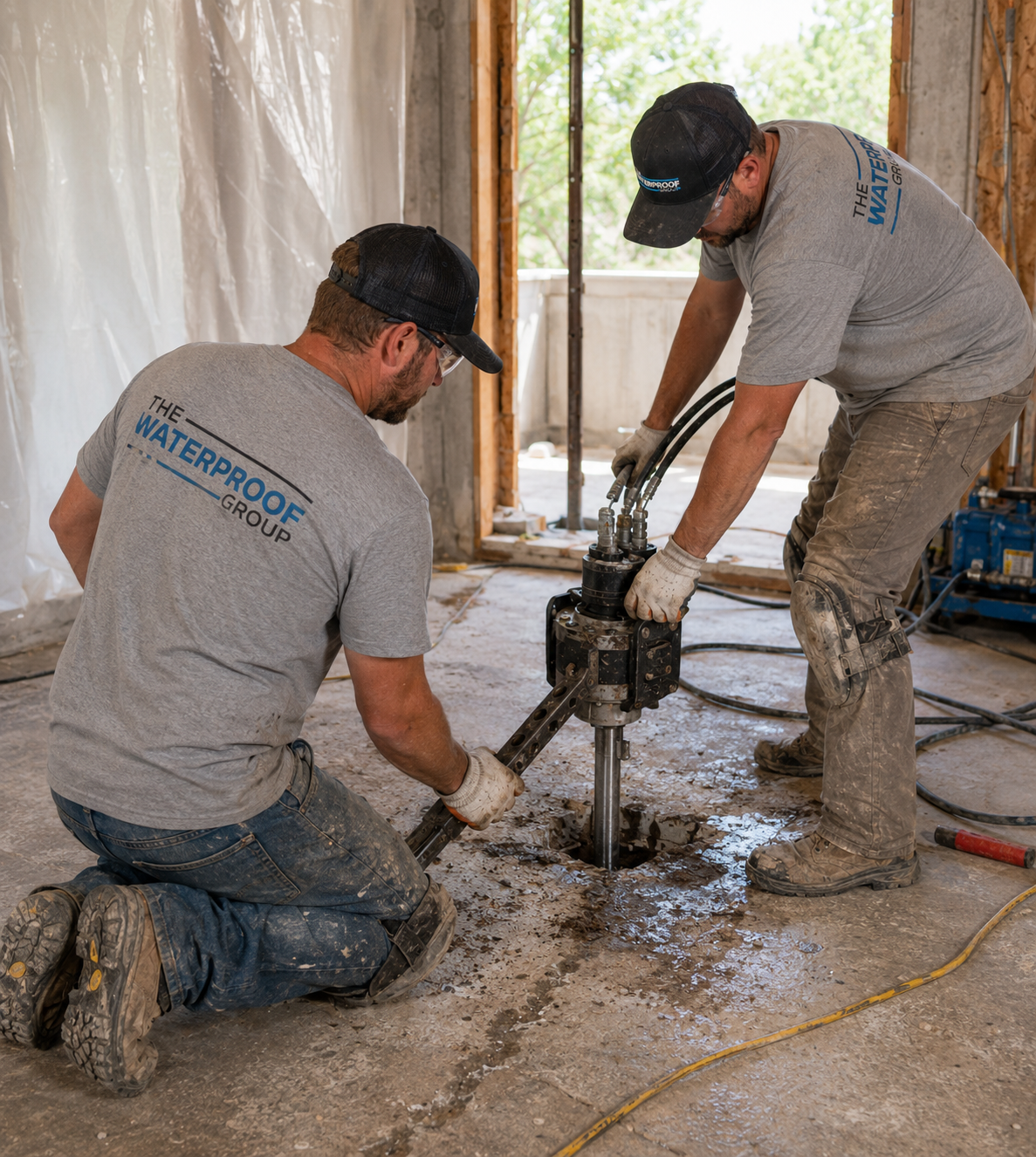
Resistance piers are a staple in the Marietta market. These are driven into the ground using the weight of the structure itself as a counter-force. Hydraulic rams push high-strength steel pipe sections into the soil until they hit a "refusal" point—usually a rock layer or extremely dense soil.
- When to Choose: Push piers are ideal for heavy structures, such as multi-story brick homes common in Marietta. They provide a high degree of lift and are generally the most permanent solution for vertical settlement.
- The Technical Edge: By 2026, many of these systems utilize synchronized hydraulic lifting, allowing a contractor to raise an entire side of a house simultaneously to prevent localized stress fractures during the leveling process.
Helical Piers
Helical piers resemble large screws. They are "threaded" into the ground using a hydraulic torque motor. Unlike push piers, they do not rely on the weight of the house for installation, making them suitable for lighter structures like porches, decks, or single-story additions.
- When to Choose: If the soil is particularly sandy or if the structure is not heavy enough to provide the resistance needed for push piers, helical piers are the superior choice. They are also frequently used in new construction to prevent settlement before it begins.
Slab Repair: Polyjacking vs. Traditional Mudjacking
For homes built on concrete slabs, settlement can lead to uneven floors and cracked tiles. Navigating the choice between repair methods often comes down to a comparison between old-school "mudjacking" and modern "polyjacking."
The Decline of Mudjacking
Mudjacking involves pumping a slurry of cement, soil, and sand under the slab. While cost-effective, the material is extremely heavy. In the 2026 landscape of Marietta repair, mudjacking is less favored because the weight of the slurry can actually cause the underlying soil to compress further, leading to secondary settlement.
The Rise of Polyurethane Injection (Polyjacking)
American Foundation Repair and other modern specialists frequently recommend polyurethane foam injection. A high-density, structural-grade polymer is injected through small holes (about the size of a penny) in the slab. As the liquid expands into a foam, it fills voids and lifts the concrete with immense force.
- Advantages: The foam is lightweight, waterproof, and cures in minutes. It does not wash away during Georgia’s heavy rainstorms, and it provides a permanent seal against moisture coming up through the ground.
- Cost vs. Longevity: While the material costs for polyurethane are higher than cement slurry, the reduced labor time and the permanent nature of the fix often make it the more economical long-term choice for Marietta homeowners.
Crawl Space Encapsulation and Structural Reinforcement
Many older homes in the Marietta area are built over crawl spaces. These areas are prone to two major issues: wood rot due to high humidity and pier settlement due to shallow footings.
Smart Jacks and Support Columns
If the interior floors of a home are sagging or bouncy, it usually indicates that the internal support piers in the crawl space have settled. Navigating this structural choice involves looking at adjustable steel support columns. These "Smart Jacks" are installed on a compacted base of crushed stone, allowing for precise adjustment to level the floor joists above.
The Role of Encapsulation
In 2026, foundation repair is no longer just about the "bones" of the house; it’s about the environment. Encapsulation involves lining the crawl space with a heavy-duty vapor barrier, sealing vents, and installing a dehumidifier.
- Structural Impact: By controlling the moisture level, you prevent the wooden floor joists from absorbing humidity, which leads to "cupping" and rot. An encapsulated crawl space keeps the wood at a consistent moisture content, preserving the structural integrity of the entire flooring system.
Comparative Overview of Structural Repair Methods
The following table compares the most common structural choices encountered by homeowners in the Marietta region.
| Method | Primary Use Case | Expected Longevity | Impact on Property | Relative Cost (2026) |
|---|---|---|---|---|
| Push Piers | Heavy foundation settlement | Lifetime / Permanent | Moderate excavation | High |
| Helical Piers | Light structures / New builds | Lifetime / Permanent | Minimal excavation | High |
| Polyjacking | Sunken slabs / Driveways | 20+ Years | Minimal (small holes) | Moderate |
| Wall Anchors | Bowing basement walls | Permanent | External excavation req. | Moderate-High |
| Encapsulation | Humidity / Mold / Wood rot | 15–20 Years (barrier) | Interior workspace | Moderate |
| I-Beam Braces | Severe wall bowing | Permanent | Interior only | Moderate |
Navigating the Decision: Professional Engineering vs. Contractor Bids
One of the most critical choices a Marietta homeowner must make is whether to hire a structural engineer before engaging a repair company. American Foundation Repair often works alongside independent engineers to ensure the proposed solution meets local building codes.
Why Hire a Structural Engineer?
While many foundation repair companies offer free inspections, these are often sales-oriented. A licensed structural engineer provides a third-party, unbiased assessment. In Cobb County, a permit is often required for significant structural work, and having an engineer’s seal on the repair plan can streamline the approval process with the Marietta Development Services Division.
Evaluating Contractor Warranties
In 2026, the standard for a "lifetime" warranty in foundation repair usually refers to the life of the structure and is transferable to new owners. When navigating choices, homeowners should look for "National Warranty Trust" backing, which ensures the warranty remains valid even if the local repair company goes out of business. This is a crucial distinction that American Foundation Repair emphasizes to provide long-term peace of mind.
Signs You Need to Consult a Foundation Specialist
It is often difficult for a layperson to distinguish between "settling" (which happens to most homes) and "structural failure." Here are the indicators that require professional intervention:
- Stair-Step Cracking: Cracks in brickwork that follow the mortar lines in a zig-zag pattern are a classic sign of foundation settlement.
- Horizontal Basement Cracks: Unlike vertical cracks (often caused by shrinkage), horizontal cracks usually indicate that the wall is failing under hydrostatic pressure.
- Leaning Chimneys: Because chimneys are heavy and often built on a separate footing, they are frequently the first part of a Marietta home to show signs of settlement.
- Nail Pops and Drywall Tears: Large-scale diagonal cracks above window frames or doors indicate the frame is no longer square.
Costs and Financial Considerations in 2026
Foundation repair is a significant investment. In the Marietta market, costs are influenced by the depth of the bedrock and the accessibility of the repair site.
- Piering Costs: As of 2026, homeowners can expect to pay between $1,500 and $3,000 per pier. A typical corner stabilization might require 5 to 8 piers.
- Slab Repair: Polyjacking for a standard two-car garage floor typically ranges from $2,500 to $5,000, depending on the volume of void space beneath the concrete.
- Financing Options: Most major repair firms, including American Foundation Repair, offer specialized financing plans, as foundation issues are often "emergency" repairs that homeowners haven't budgeted for.
Frequently Asked Questions
Does insurance cover foundation repair in Marietta?
Standard homeowners' insurance policies in Georgia typically do not cover foundation repair caused by earth movement, seepage, or wear and tear. Coverage is usually only available if the damage was caused by a "covered peril," such as a sudden pipe burst or a vehicle crashing into the home. It is advisable to review the Georgia Office of Commissioner of Insurance and Safety Fire guidelines for policyholder rights.
How long does a typical foundation repair project take?
Most residential projects in the Marietta area can be completed within 2 to 5 days. Piering usually takes longer due to the excavation required, while polyjacking or crawl space encapsulation can often be finished in a single day. Weather conditions, particularly heavy rain, can delay exterior excavation work.
Will foundation repair fix the cracks in my walls?
Foundation repair stabilizes the structure and often closes cracks significantly. However, it is not a "cosmetic" fix. Once the house is leveled, the cracks may still need to be patched and painted. Most experts recommend waiting 4 to 8 weeks after the stabilization to perform cosmetic repairs, allowing the house to "settle" into its new position.
Is Marietta red clay worse for foundations than other soils?
Yes, the Piedmont red clay is particularly challenging because of its high aluminum and iron oxide content, which contributes to its "greasy" texture when wet and its brick-like hardness when dry. Its high plasticity index means it moves more than the sandy soils found in South Georgia or the coastal plains.
Can I sell my house after it has had foundation repairs?
Yes, and in many cases, having a professional, warrantied repair can make a house more sellable. In the Marietta real estate market, buyers are often wary of "as-is" foundation issues. A transferrable warranty from a reputable firm like American Foundation Repair provides the necessary documentation to satisfy home inspectors and mortgage lenders.
Moving Forward with Your Structural Choice
Navigating structural choices requires a balance of engineering logic and budgetary reality. If you suspect your Marietta home is experiencing foundation distress, the first step is a thorough inspection that includes an elevation survey. By 2026, digital floor leveling tools can map out settlement down to the millimeter, removing the guesswork from the diagnosis.
Whether you opt for the deep stabilization of push piers or the moisture control of crawl space encapsulation, the goal remains the same: protecting the equity and safety of your home. Always prioritize solutions that address the root cause—usually soil moisture and drainage—rather than just treating the visible symptoms.