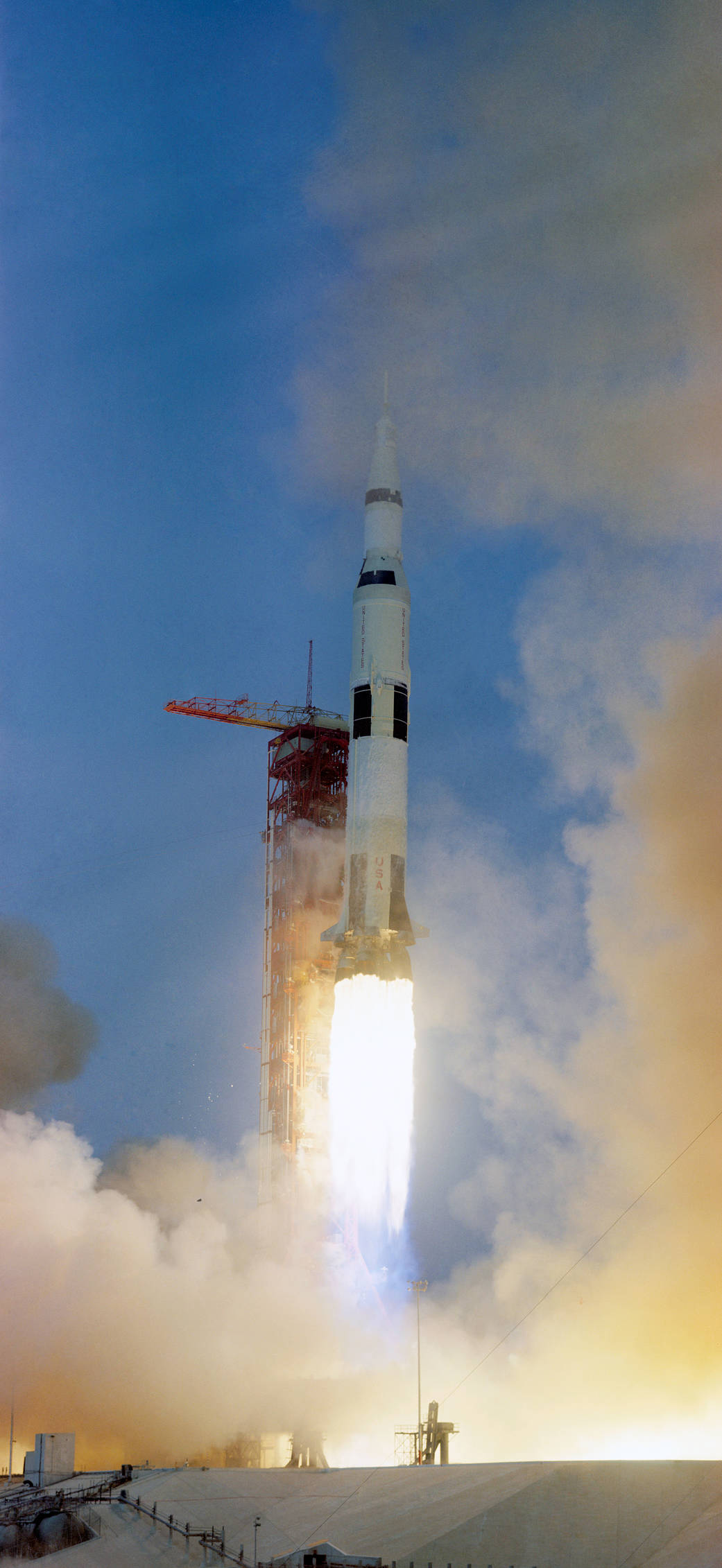
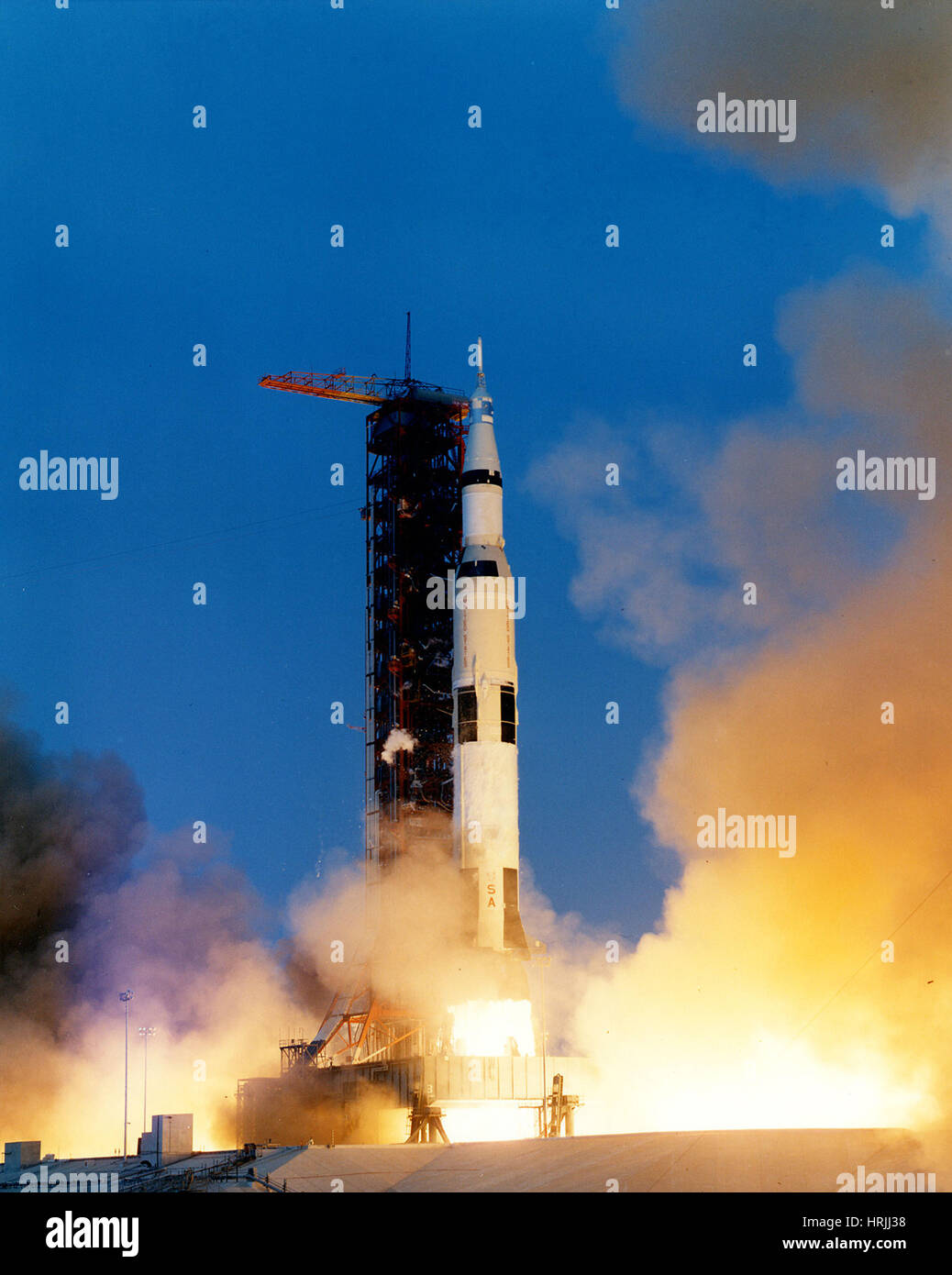
Apollo 13 launched on April 11, 1970, at 14:13:00 Eastern Standard Time (19:13:00 UTC) from Launch Complex 39A at NASA's Kennedy Space Center in Florida. Designated as America's third lunar landing attempt, the mission gained historical significance when an onboard oxygen tank ruptured two days into flight, transforming the voyage into a landmark survival operation.
The Official Apollo 13 Launch Date and Exact Timing
The third human landing mission of the NASA Apollo program officially departed Earth on Saturday, April 11, 1970. Liftoff occurred precisely at 14:13:00 EST (2:13 PM local time in Florida, or 19:13:00 Universal Time Coordinated).
A popular urban legend suggests NASA intentionally scheduled the launch for 13:13 Central Standard Time (CST) to align with the number 13. While 14:13 EST does equal 13:13 CST (the time zone of Mission Control at the Manned Spacecraft Center in Houston, Texas), NASA flight schedules were determined entirely by complex celestial mechanics, target landing site illumination, and orbital launch windows—not numerical coincidences.
- Launch Date: April 11, 1970
- Local Time (EST): 14:13:00 (2:13 PM EST)
- Houston Time (CST): 13:13:00 (1:13 PM CST)
- UTC Time: 19:13:00 UTC
- Launch Site: Kennedy Space Center, Launch Complex 39A
The primary launch window for April 11 opened at 14:13 EST and extended for several hours. Precise alignment with the Fra Mauro highlands—the intended lunar landing area—required a launch at this exact time to ensure proper sun angles for visual surface orientation during the lunar module's final descent phase.
The Saturn V Launch Vehicle and Countdown Operations
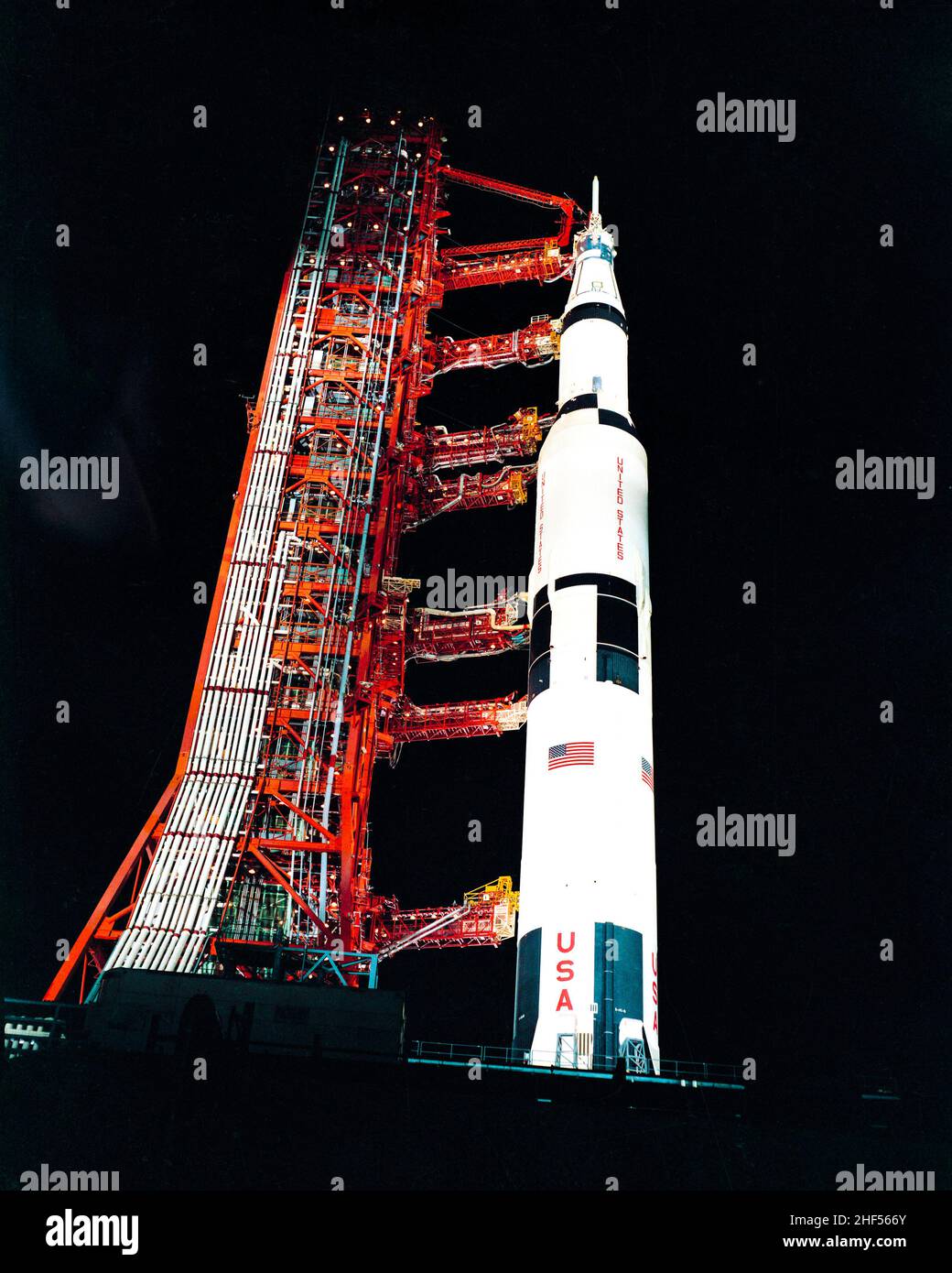
The vehicle carrying Apollo 13 into orbit was the Saturn V rocket, serial number SA-508. Standing 363 feet (110.6 meters) tall and weighing nearly 6.5 million pounds (2.95 million kilograms) when fully fueled, the Saturn V was the most powerful operational launch system of its era.
Pre-Launch Countdown Sequence
Countdown operations for Apollo 13 officially began several days prior to launch, proceeding through a rigid timeline designed to verify every electrical, mechanical, and cryogenic component:
- T-28 Hours (April 9, 1970): Installation of flight batteries, preliminary servicing of space vehicle systems, and final checks of spacecraft pyrotechnics.
- T-9 Hours (April 10–11, 1970): Built-in hold period. Final preparations were made to load ultra-cold liquid propellants.
- T-8 Hours 30 Minutes: Cryogenic fueling of the Saturn V rocket began. Over 500,000 gallons of liquid oxygen (LOX) and liquid hydrogen (LH2), alongside highly refined kerosene (RP-1), were transferred into the three rocket stages.
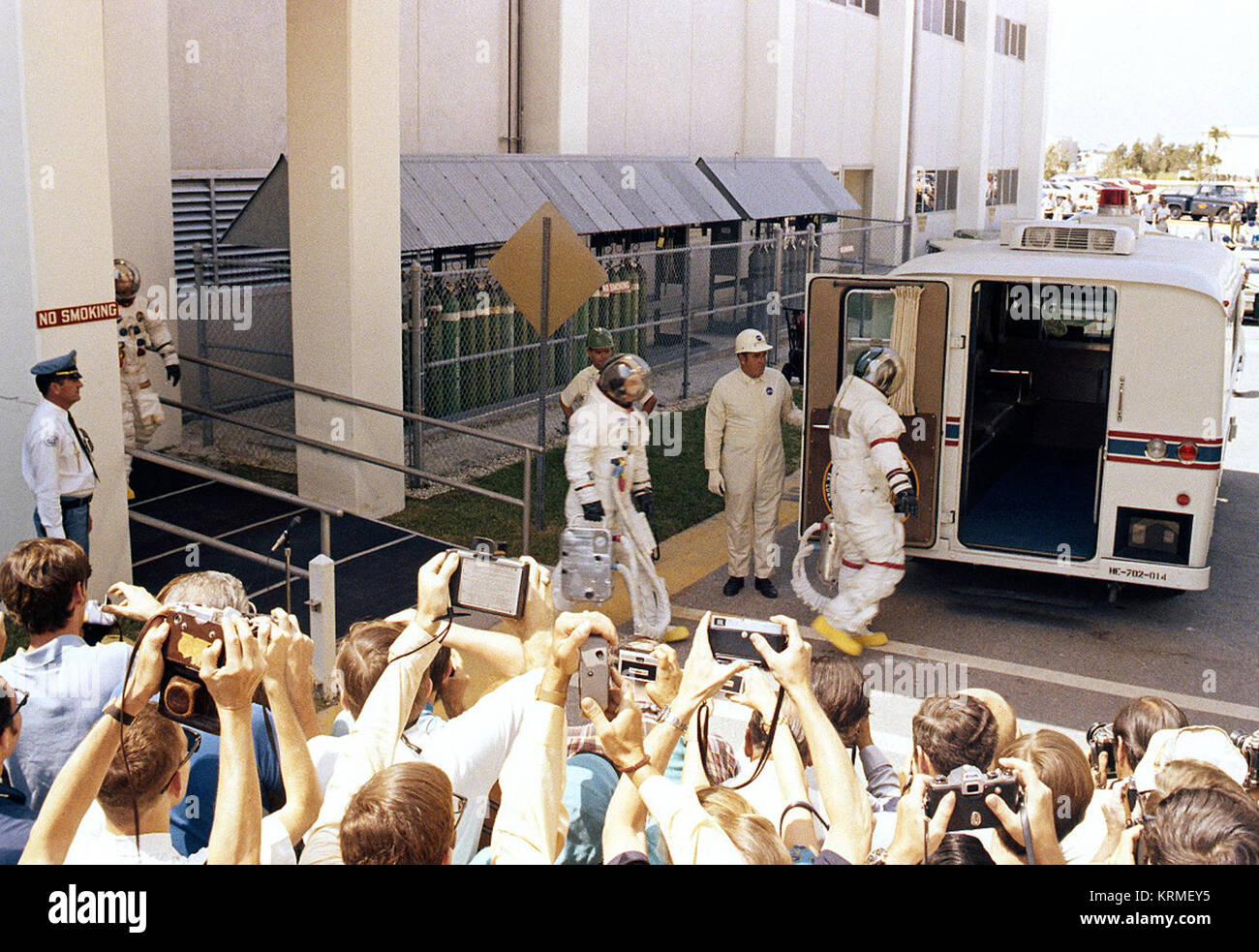
- T-3 Hours 30 Minutes: The flight crew—James A. Lovell Jr., John L. "Jack" Swigert Jr., and Fred W. Haise Jr.—underwent final medical checks, donned their suits, and departed the Manned Spacecraft Operations Building for Launch Complex 39A.
- T-2 Hours 40 Minutes: The crew completed ingress into the Command Module Odyssey (CSM-109) perched atop the Saturn V stack.
- T-3 Minute 7 Seconds: The automated terminal countdown sequencer assumed control of all launch pad systems, pressurizing fuel tanks and starting internal power.
Despite rain and overcast skies earlier in the week, atmospheric conditions cleared significantly by launch afternoon on April 11, allowing for optimal visual tracking and telemetry monitoring throughout the ascent window.
Ascent Phase and the Second-Stage Engine Anomaly
While the liftoff on April 11, 1970, appeared flawless to onlookers gathered across Florida's Space Coast, Apollo 13 experienced a major technical anomaly during its second-stage ascent—foreshadowing the deeper troubles that lay ahead in deep space.
Liftoff and First-Stage (S-IC) Burn
At T-0 (14:13:00 EST), the five F-1 engines of the S-IC first stage ignited, generating 7.5 million pounds of thrust. The massive Saturn V cleared the tower in roughly 12 seconds. The S-IC stage burned for approximately 2 minutes and 41 seconds, accelerating the vehicle to a velocity of 6,100 miles per hour (9,800 km/h) and an altitude of 42 nautical miles (67 km) before staging off.
Second-Stage (S-II) Pogo Oscillations
Following first-stage separation, the five J-2 engines of the S-II second stage ignited to push the spacecraft through the upper atmosphere. Five minutes and 30 seconds into the flight, the center J-2 engine began experiencing extreme low-frequency longitudinal oscillations—a phenomenon known in aerospace engineering as pogo oscillation.
- Root Cause: Resonance between the structural elasticity of the rocket framework and fluctuations in engine fuel feed pressures.
- Severity: The center engine vibrated at roughly 16 Hertz, generating peak accelerations of up to 68 g, which exceeded the structural design limits of the engine mount.
- Automated Safeguard Failure: The internal pressure sensors triggered an automatic chamber pressure drop indication, leading the engine controller (or manual intervention command) to shut down the center engine 132 seconds earlier than planned.
Orbital Insertion Trajectory Adjustments
To compensate for the premature loss of the center J-2 engine's thrust, NASA Flight Controllers in Houston and the automated Guidance System made real-time trajectory adjustments:
- The remaining four outer S-II J-2 engines were burned for an extra 34 seconds beyond their programmed duration.
- The S-IVB third-stage engine burned for an additional 9 seconds upon reaching the upper atmosphere.
Thanks to these automated and monitored burn extensions, Apollo 13 achieved a stable circular parking orbit of approximately 100 nautical miles (185 km) above Earth. The spacecraft completed 1.5 Earth orbits while crew members and ground teams evaluated system health before committing to the translunar injection (TLI) burn.
Apollo 13 Crew Roster and Pre-Flight Roster Substitution
The crew dynamic on launch day, April 11, 1970, reflected a last-minute change that occurred just 72 hours prior to liftoff.
| Position | Assigned Astronaut | Primary Role |
|---|---|---|
| Commander (CDR) | James A. Lovell Jr. | Flight Lead |
| Command Module Pilot | John L. "Jack" Swigert Jr.* | Orbital Systems |
| Lunar Module Pilot (LMP) | Fred W. Haise Jr. | Lunar Lander Specs |
* Replaced Thomas K. "Ken" Mattingly II on April 8, 1970.
The Mattingly-Swigert Swap
The original Prime Crew for Apollo 13 consisted of Jim Lovell (Commander), Ken Mattingly (Command Module Pilot), and Fred Haise (Lunar Module Pilot). However, seven days before launch, backup Lunar Module Pilot Charles Duke contracted rubella (German measles) from a family friend.
Medical evaluations revealed that while Lovell and Haise possessed immunity to the virus, Mattingly did not. Fearing that Mattingly might fall ill during critical lunar orbit maneuvers, NASA Flight Surgeon Dr. Charles Berry recommended grounding Mattingly.
On April 8, 1970—three days before launch—NASA official Thomas O. Paine confirmed that backup Command Module Pilot Jack Swigert would replace Mattingly on the prime crew. Swigert underwent intensive simulator retraining over the final 48 hours to ensure complete mastery of the Odyssey Command Module controls and specific emergency procedures.
Timeline: From April 11 Launch to the April 13 Explosion
Understanding the launch date of Apollo 13 requires viewing it as the entry point into a multi-day timeline that quickly pivoted from exploration to rescue.
- April 11, 1970 (14:13 EST): Saturn V Liftoff from Kennedy Space Center
- April 11, 1970 (16:48 EST): Translunar Injection (TLI) Burn executed
- April 11, 1970 (17:45 EST): CSM Odyssey separates and docks with LM Aquarius
- April 12, 1970: Mid-course maneuvers & routine communications
- April 13, 1970 (21:07 EST): Oxygen Tank 2 Explodes (55:54 MET)
- April 14–16, 1970: Lunar Flyby & Return Trajectory Execution
- April 17, 1970 (13:07 EST): Safe Splashdown in South Pacific Ocean
Day 1: April 11, 1970 (Launch and TLI)
- 14:13 EST: Liftoff from Launch Pad 39A.
- 16:48 EST (2 hours 35 minutes MET): The S-IVB third stage fired for the Translunar Injection (TLI) burn, accelerating Apollo 13 out of Earth orbit toward the Moon at over 24,000 mph (38,600 km/h).
- 17:45 EST (3 hours 32 minutes MET): Swigert performed the transposition, docking, and extraction maneuver, detaching Odyssey from the S-IVB stage, rotating the spacecraft 180 degrees, and docking with the Lunar Module Aquarius.
Day 2: April 12, 1970 (Translunar Coast)
- The crew conducted routine system checks, monitored trajectory calculations, and placed the combined spacecraft into a passive thermal control roll ("barbecue roll") to balance solar heating across the hull.
- Flight controllers executed a minor mid-course correction burn (MCC-2) to refine the trajectory toward the target landing area in the Fra Mauro region.
Day 3: April 13, 1970 (The In-Flight Accident)
At Mission Elapsed Time (MET) 55 hours and 54 minutes—roughly 21:07 EST on April 13, 1970—disaster struck. Flight Controller Sy Liebergot requested that the crew activate the internal fan stirrers inside Cryogenic Oxygen Tank 2 in the Service Module. Damaged electrical insulation on the fan wiring caused a short circuit, igniting the insulation in the pure oxygen environment.
The resulting pressure spike caused Oxygen Tank 2 to rupture violently, blowing off an external bay panel of the Service Module and damaging Oxygen Tank 1. Within hours, the Command Module lost oxygen supply, electrical power from its fuel cells, and main propulsion, forcing the crew to power down Odyssey and evacuate into Lunar Module Aquarius to survive as a makeshift "lifeboat."
Detailed Apollo 13 Launch & Mission Specifications
The following table summarizes key operational parameters, vehicle metrics, and temporal milestones related to the April 11, 1970 launch and subsequent mission profile:
| Metric / Parameter | Official Specification / Historic Value |
|---|---|
| Launch Date | April 11, 1970 |
| Exact Launch Time | 14:13:00 EST / 19:13:00 UTC |
| Launch Location | NASA Kennedy Space Center, Florida (LC-39A) |
| Launch Vehicle | Saturn V (SA-508) |
| Command & Service Module | CSM-109 (Call sign: Odyssey) |
| Lunar Module | LM-7 (Call sign: Aquarius) |
| Prime Crew | James A. Lovell Jr., John L. Swigert Jr., Fred W. Haise Jr. |
| Target Landing Site | Fra Mauro Highlands ($3.67^\circ\text{ S}, 17.47^\circ\text{ W}$) |
| Initial Parking Orbit | 100.2 x 103.1 nautical miles (185.6 x 191.0 km) |
| Anomalous Launch Event | Early shutdown of S-II Center J-2 Engine (T+5m 30s) |
| Oxygen Tank Explosion Date | April 13, 1970 (21:07 EST / 55:54 MET) |
| Splashdown Date & Site | April 17, 1970 (13:07 EST); South Pacific Ocean |
Technical Analysis of the Pre-Launch Oxygen Tank Defect
The failure that materialized on April 13, 1970, originated from hardware modifications and maintenance procedures executed long before the launch date.
- 1968: Oxygen Tank 2 installed in CSM-102
- Dropped 2 inches during modification; internal drain line displaced
- March 1970: Pre-flight de-servicing test at KSC
- Heaters run for 8 hours to boil off remaining liquid oxygen
- Thermostat switches melt shut (designed for 28V DC, fed 65V DC ground power)
- Wiring insulation baked away, creating bare metal exposure
- April 11, 1970: Launch with damaged internal wiring
The Tank Drop Incident (1968)
Cryogenic Oxygen Tank 2 was originally manufactured by Beech Aircraft Corporation and installed in the Service Module of CSM-102 (Apollo 10). During factory modifications, the tank shelf was unbolted without removing a securing screw, causing the assembly to drop roughly 2 inches (5 cm).
While the outer tank housing remained intact, the internal fill/drain line tube was loosened and displaced.
The Thermal De-servicing Failure (March 1970)
During countdown demonstration tests at Kennedy Space Center in late March 1970, technicians attempted to empty the oxygen tanks. Tank 1 emptied normally, but the displaced drain tube in Tank 2 prevented gaseous purge pressure from forcing out the liquid oxygen.
To drain the tank, engineers authorized using internal electric heater coils to boil off the remaining cryogenic fluid.
- The internal heaters were left powered on for approximately 8 hours.
- The heater assembly included protective thermostatic switches intended to open when temperatures reached $80^\circ\text{F}$ ($27^\circ\text{C}$).
- However, while the spacecraft flight systems operated on 28-volt DC power, the ground support equipment used to power the heaters delivered 65-volt DC power.
- The higher voltage welded the thermostat contact points shut, preventing them from opening.
As a result, internal heater elements reached temperatures exceeding $1,000^\circ\text{F}$ ($540^\circ\text{C}$), burning away the Teflon insulation on the internal fan wiring. When Jack Swigert flipped the switch to stir the oxygen tanks on April 13, bare wire sparked against exposed metal, initiating the combustion that blew out the side of the Service Module.
Orbital Dynamics: Free-Return Trajectory Adjustments
When Apollo 13 launched on April 11, 1970, NASA did not launch the Saturn V directly onto a mandatory "free-return" path—a trajectory that uses lunar gravity to swing a spacecraft naturally back to Earth without consuming main propulsion engine burns.
Instead, Apollo 13 utilized a hybrid trajectory:
- Initial Trans-Lunar Injection (April 11): Placed the spacecraft on a standard free-return path.
- Mid-Course Correction 2 (April 12): Shifted the spacecraft out of the free-return loop onto a non-free-return path. This targeted approach saved fuel, widened the lunar landing window, and allowed optimal arrival illumination over Fra Mauro.
Following the explosion on April 13, the primary objective of Mission Control was to return Apollo 13 to a safe Earth-return profile. At 61 hours 30 minutes MET (early morning on April 14), the crew fired the Descent Propulsion System (DPS) engine on Lunar Module Aquarius for 30.7 seconds. This burn successfully restored the free-return trajectory, ensuring that even without main Command Module propulsion, the vehicle would swing around the far side of the Moon and trajectory vectors would carry it back to Earth's atmosphere.
Frequently Asked Questions
What was the exact launch date and time of Apollo 13?
Apollo 13 launched on April 11, 1970, at 14:13:00 Eastern Standard Time (19:13:00 UTC) from Launch Complex 39A at Kennedy Space Center, Florida.
Did Apollo 13 intentionally launch at 13:13 (1:13 PM)?
No. While 14:13 EST equals 13:13 CST in Houston (where Mission Control is located), launch windows were strictly calculated based on orbital mechanics, fuel performance, launch pad location, and visual lighting requirements for landing on the Moon's surface.
Why did an engine fail during the Apollo 13 launch ascent?
During the second-stage burn on April 11, 1970, the center J-2 engine of the Saturn V's S-II stage experienced violent pogo oscillations (structural resonance). The automated systems shut the engine down early to prevent structural failure. The remaining four outer engines burned longer to compensate, successfully reaching orbit.
Who was substituted out of the Apollo 13 crew right before launch?
Command Module Pilot Ken Mattingly was grounded three days before launch after exposure to German measles (rubella). Because Mattingly lacked blood immunity, NASA replaced him on April 8, 1970, with backup pilot Jack Swigert.
When did the Apollo 13 emergency occur relative to launch?
The oxygen tank explosion occurred on April 13, 1970, at 21:07 EST (55 hours and 54 minutes after launch), roughly 200,000 miles (320,000 km) from Earth.
Historical Legacy of the April 1970 Launch
The April 11, 1970 launch of Apollo 13 stands as a pivotal moment in human space Exploration history. Though the mission failed to achieve its primary objective of landing in the Fra Mauro highlands, it demonstrated unprecedented engineering adaptability, real-time problem solving, and crew discipline under life-threatening conditions.
Following the safe splashdown of Apollo 13 in the South Pacific Ocean on April 17, 1970, NASA instituted exhaustive design modifications to all subsequent Command and Service Modules:
- Oxygen tank internal designs were altered to remove exposed internal wiring and fan motors.
- Thermostat switches were upgraded to match maximum ground voltage supply ratings.
- An auxiliary third oxygen tank was added to ensure emergency breathing supply and fuel cell capability remained isolated from primary system failures.
These design adjustments paved the way for successful subsequent lunar explorations, starting with Apollo 14 in January 1971, which eventually reached the Fra Mauro target site originally assigned to the April 1970 launch.