On April 13, 1970, two days after launch, an oxygen tank explosion severely damaged the Apollo 13 Service Module, crippling the spacecraft's primary power and life support systems 200,000 miles from Earth. Through unprecedented ingenuity, Mission Control and the crew converted the Lunar Module into a temporary lifeboat, calculated emergency trajectories around the Moon, and safely returned all three astronauts on April 17, 1970.
Mission Background: The Third Lunar Landing Attempt
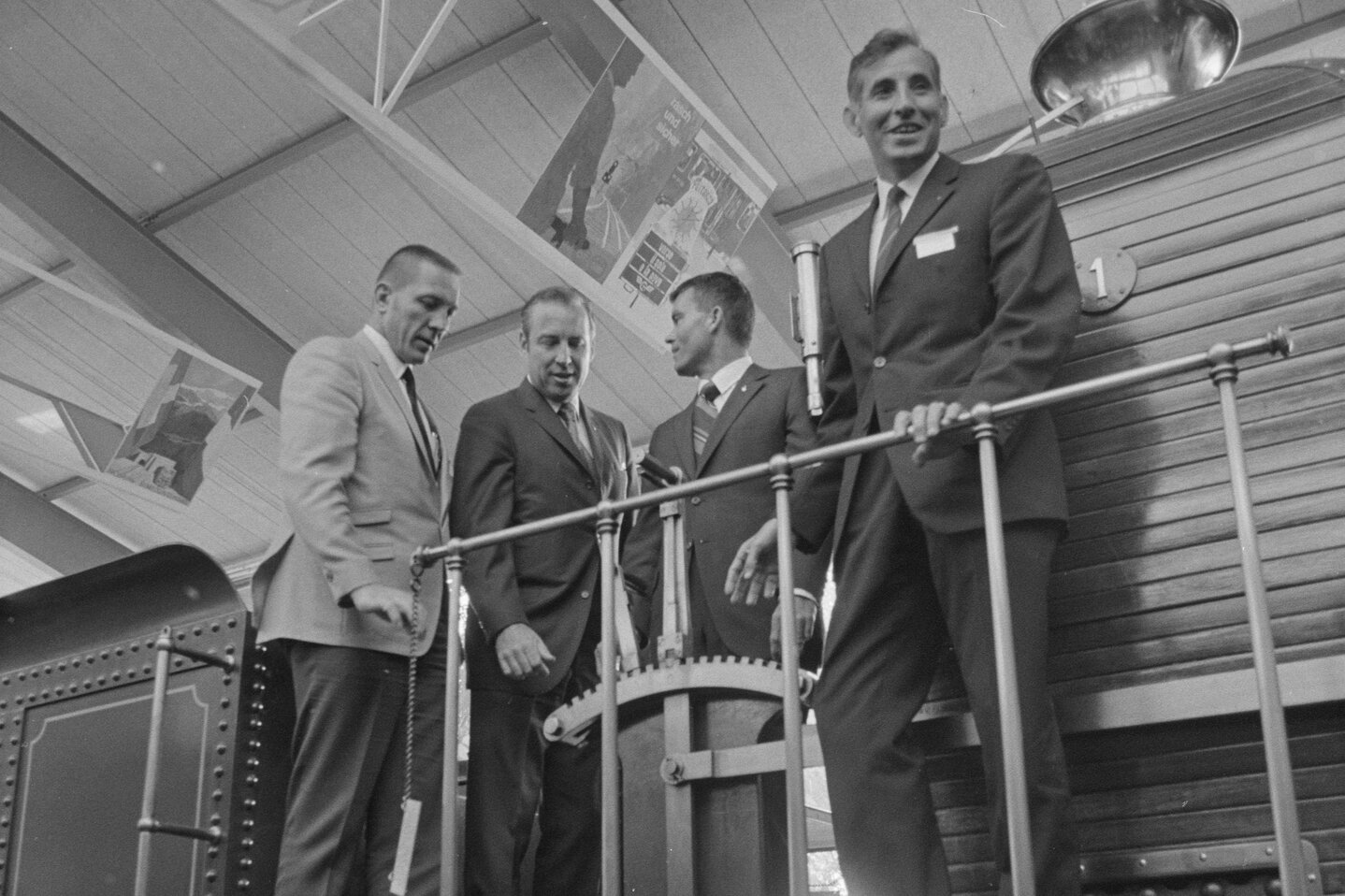
Apollo 13 was envisioned as NASA’s third crewed lunar landing mission, targeted for the Fra Mauro highlands—a geologically complex region selected to yield deep insight into the Moon’s impact history. Commanded by veteran astronaut James A. Lovell Jr., who had previously flown on Gemini 7, Gemini 12, and Apollo 8, the mission represented the pinnacle of lunar exploration capabilities developed during the Apollo program. Joining Lovell were Lunar Module Pilot Fred W. Haise Jr. and Command Module Pilot John L. "Jack" Swigert Jr.
Swigert was named to the prime crew just three days before launch, replacing Thomas K. "Ken" Mattingly after Mattingly was exposed to the rubella virus (German measles). Although Swigert had trained extensively as part of the backup crew, integrating a new astronaut into the Command Module (Odyssey) right before launch required rapid validation of operational sync and procedures.
APOLLO 13 SPACECRAFT:
- Command Module ("Odyssey") [Crew Cabin]
- Service Module (Fuel Cells, Cryo Tanks, Main Engine - Damaged)
- Lunar Module ("Aquarius") [Lifeboat Mode]
The Saturn V rocket (SA-508) lifted off from Kennedy Space Center Launch Complex 39A on April 11, 1970, at 13:13 EST (18:13 UTC). The early phase of the flight experienced a minor anomaly when the center (S-II) engine of the second stage shut down two minutes early due to severe pogo oscillations. However, the remaining four engines burned longer to compensate, successfully placing the spacecraft into orbit before the S-IVB third stage injected Apollo 13 onto its translunar trajectory.
The Anomaly: Ground Elapsed Time 55:54:53
For the first two days of transit to the Moon, Apollo 13 proceeded so smoothly that flight controllers joked the mission was becoming routine. That narrative evaporated at Ground Elapsed Time (GET) 55:54:53 (9:07 PM CST on April 13, 1970).
Following instructions from Capcom Jack Lousma, Swigert flipped switches to perform a routine stir of the cryogenic oxygen and hydrogen tanks in the Service Module (SM). The stir was designed to destratify the supercooled liquid fuels and ensure accurate quantity readings. Moments later, a loud bang echoed through the spacecraft, accompanied by electrical power fluctuations and the automatic firing of attitude control thrusters.
Swigert reported to Mission Control: "Okay, Houston, we've had a problem here." Lovell repeated the confirmation: "Houston, we've had a problem."
Timeline of the Catastrophe (GET 55:54 to 56:10):
- [55:54:53] Jack Swigert actuates cryo tank fan switches.
- [55:55:10] Electrical short ignites Teflon insulation in Oxygen Tank 2.
- [55:55:20] Pressure in Tank 2 spikes violently; outer SM Panel 4 is blown free.
- [55:56:00] Oxygen Tank 2 drops to zero pressure; Tank 1 plumbing ruptures.
- [56:09:00] Fuel Cells 1 and 3 die; Command Module operates on limited battery power.
The Root Cause: Thermostat Failure and Wire Insulation Ignition
Subsequent investigation by the Apollo 13 Review Board (headed by NASA Langley Director Edgar Cortright) revealed that the seeds of the failure were sown years before launch during ground operations:
- Pre-flight Damage: During manufacturing at Beech Aircraft and subsequent testing, Oxygen Tank 2 was dropped slightly, damaging an internal fill line tube.
- The Detanking Procedure: During the Countdown Demonstration Test in March 1970, Tank 2 failed to drain properly. Engineers used the tank's internal heater coils to boil off the remaining liquid oxygen.
- Fused Thermostats: The heaters were powered by 65-volt ground power supplies, but the tank's internal thermostat switches were rated only for the spacecraft’s 28-volt DC system. The higher voltage fused the thermostat contacts closed, allowing the heaters to reach temperatures exceeding 1,000°F (540°C).
- Stripped Insulation: The extreme heat severely baked and cracked the Teflon insulation covering the wiring inside the tank.
- The Spark: When Swigert activated the cryo stir fan on April 13, exposed copper wire short-circuited. In a 100% pure oxygen environment under high pressure, the ignited insulation caused a catastrophic pressure surge, bursting the tank and tearing away Panel 4 of the Service Module outer hull.
The explosion shattered adjacent plumbing for Oxygen Tank 1. As oxygen leaked into space, the Service Module’s three electricity-generating fuel cells—which combined oxygen and hydrogen to produce power and water—began shutting down one by one.
Crisis Management: Converting Aquarius into a Lifeboat
With Oxygen Tank 2 destroyed and Tank 1 bleeding out rapidly, Mission Control in Houston realized the Command Module (Odyssey) was dying. Odyssey relied on those fuel cells for main electrical power and on entry batteries for its return through Earth's atmosphere. If the crew depleted the entry batteries while still days from Earth, re-entry would be impossible.
Flight Director Gene Kranz and his "White Team" of controllers, working alongside backup flight directors Glynn Lunney, Milton Windler, and Gerald Griffin, made a historic operational call: shut down the Command Module immediately to preserve its batteries and reserve oxygen for re-entry, and move the crew into the Lunar Module (Aquarius).
- Command Module: "Odyssey"
- Main Power: Offline
- Life Support: Powered Down
- Computer: Preserved for Re-entry
- Role: Re-entry Capsule
- Lunar Module: "Aquarius"
- Main Power: Batteries ON
- Life Support: Activated
- Nav Guidance: AGS/PNGCS Active
- Role: Survival Lifeboat
Aquarius was designed to support two astronauts on the lunar surface for approximately 45 hours. Now, it had to keep three astronauts alive for nearly 90 hours during an orbital loop around the Moon and back to Earth.
Technical Challenges and Engineering Solutions
Rescuing Apollo 13 required solving a series of life-threatening technical paradoxes, executed in real time by ground teams and the crew.
| Challenge | Immediate Danger | Engineering Solution |
|---|---|---|
| Depleting Main Trajectory Power | Spacecraft on non-returning hybrid trajectory heading past Earth | Perform DPS engine burns to enter free return, then PC+2 burn for speed |
| Carbon Dioxide Toxicity (CO2) | Square CM LiOH canisters incompatible with round LM LiOH receptacles | Built "The Mailbox" adapter using tape, flight plan covers, bags, and hoses |
| Power & Water Exhaustion | LM batteries insufficient for 90 hours and thermal control depleted | Shut down all non-essential avionics; rationed water to 6 oz/man per day |
| Frozen Re-entry Checklist | Dead computer, internal condensation risking electrical shorts on startup | Custom power-up sequence created by Ken Mattingly and ground teams |
1. Trajectory Corrections: Free Return and the PC+2 Burn
Apollo 13 had departed its initial "free-return trajectory"—a path that uses lunar gravity to swing automatically back to Earth—to target the Fra Mauro landing site via a hybrid trajectory. Had the crew done nothing, the spacecraft would have missed Earth by over 2,500 miles and drifted permanently into space.
Because the Service Propulsion System (SPS) main engine on the damaged Service Module was deemed unsafe to fire, engineers turned to the Descent Propulsion System (DPS) engine on the Lunar Module.
- First DPS Burn: At GET 61:29, a 30.7-second burn restored the spacecraft to a free-return trajectory.
- The PC+2 Burn: To shorten the journey home and save dwindling life support supplies, Mission Control calculated a second major burn: the PC+2 burn (Pericynthion plus two hours). Executed two hours after the spacecraft made its closest approach to the back side of the Moon (at an altitude of 137 nautical miles), the DPS engine fired for nearly 5 minutes, targeting a splashdown in the South Pacific and trimming 9 hours off the return flight.
APOLLO 13 TRAJECTORY SCHEMA:
- Translunar Corridor
- Loop Around Moon (Free-Return Path)
- Passed 137 nm from back of Moon
- Executed PC+2 DPS Burn
- Transearth Corridor
- Earth Splashdown (South Pacific)
2. The Carbon Dioxide Emergency: Building "The Mailbox"
While Aquarius had sufficient oxygen in its descent and ascent tanks to sustain the crew, it suffered a critical bottleneck: lithium hydroxide (LiOH) canisters used to scrub carbon dioxide ($CO_2$) from the cabin air.
Aquarius possessed round LiOH canisters sized for two crew members. The Command Module had plenty of square LiOH canisters, but they were physically incompatible with the LM scrubber slots. By GET 85:00, $CO_2$ concentration in Aquarius approached dangerous toxic thresholds.
Engineers on the ground, led by Ed Smylie of the Crew Systems Division, devised an improvised adapter built entirely from materials available onboard:
- Two square CM LiOH canisters
- Plastic storage bags
- Cardboard covers torn from flight plan manuals
- Grey duct tape
- Flexible suit hoses to direct airflow
The crew assembled the device—nicknamed "The Mailbox"—following step-by-step oral instructions read up from Houston. Within minutes of installation, $CO_2$ levels dropped back to safe levels.
3. Power Rationing, Dehydration, and Thermal Distress
To ensure the LM's batteries lasted until re-entry, Mission Control reduced electrical current consumption to an absolute minimum—just 12 amps, less than a standard household hairdryer draws. The crew powered down the primary guidance computer (PNGCS), telemetry systems, and cabin heaters.
Without internal heating, cabin temperatures in Odyssey plummeted to near freezing (38°F / 3°C), and internal surfaces became coated with thick condensation. Water was severely rationed because water was required to cool the electronic systems via sublimators. The astronauts were limited to 6 ounces (177 mL) of liquid per person per day.
- Physical Strain: Dehydration, extreme cold, and lack of sleep degraded physical condition. Fred Haise developed a severe kidney infection caused by acute dehydration.
- Weight and Balance: The astronauts were instructed not to dump urine into space, as the propulsive effect of venting liquid would alter the spacecraft's delicate return trajectory. Instead, liquid waste was stored in bags inside the cabin, adding to the uncomfortable physical conditions.
The Critical Re-Entry Sequence
As Apollo 13 approached Earth on April 17, 1970, the crew faced a final hurdle: powering up the cold, damp Command Module and jettisoning both the damaged Service Module and the Lunar Module lifeboat.
Re-Entry Timeline Summary (April 17, 1970):
- [GET 138:02:00] Service Module jettisoned; crew photographs massive hull damage.
- [GET 141:30:00] Lunar Module "Aquarius" jettisoned after crew transfers to CM.
- [GET 142:40:00] Entry Interface (400,000 ft); Radio Blackout begins.
- [GET 142:44:00] Blackout ends (1 minute longer than normal due to flight angle).
- [GET 142:54:00] Main parachutes deploy; Odyssey splashes down in South Pacific.
1. Service Module Separation
At GET 138:02, the crew jettisoned the Service Module. As the SM drifted away, Lovell photographed the damaged section, exclaiming: "There's a whole side of the spacecraft missing! Right by the high-gain antenna, there's a whole panel blown out..." The photo confirmed that the explosion had completely ripped off Panel 4 of the SM structure.
PHOTOGRAPHIC EVIDENCE OF DAMAGE:
- Panel 4 Blown Away
- Service Module:
- Exposed Fuel Cells
- Ruptured Tanks
2. Cold-Braking Odyssey: The Custom Power-Up Procedure
Because Odyssey had been shut down for over three days, no standard operational checklist existed to bring it back to life from a frozen state. On the ground, Ken Mattingly worked tirelessly inside the Command Module simulator at MSC (Manned Spacecraft Center) alongside flight controllers to write, test, and verify an ultra-low-power startup sequence.
Transmitted to Jack Swigert via radio, the procedure carefully balanced electrical loads to prevent overloading the CM entry batteries while avoiding short circuits caused by melting moisture on internal wiring panels. The startup succeeded flawlessly.
3. Jettisoning Aquarius and Entry Interface
The crew transferred back into Odyssey and sealed the hatch behind them. At GET 141:30, Aquarius was jettisoned. Lovell remarked, "Farewell, Aquarius, and we thank you." The Lunar Module burned up harmlessly over the Pacific Ocean, carrying its radioactive Systems Nuclear Auxiliary Power (SNAP-27) plutonium fuel cask safely into the deep ocean waters of the Tonga Trench, where monitoring confirmed zero atmospheric leakage.
During re-entry, atmospheric friction creates a plasma sheath around the capsule, cutting off radio communications. The standard blackout duration for Apollo missions was roughly 3 minutes. Due to Apollo 13's unusual entry flight path angle, the blackout lasted 4 minutes and 27 seconds—causing agonizing suspense at Mission Control before Swigert’s voice broke through the static.
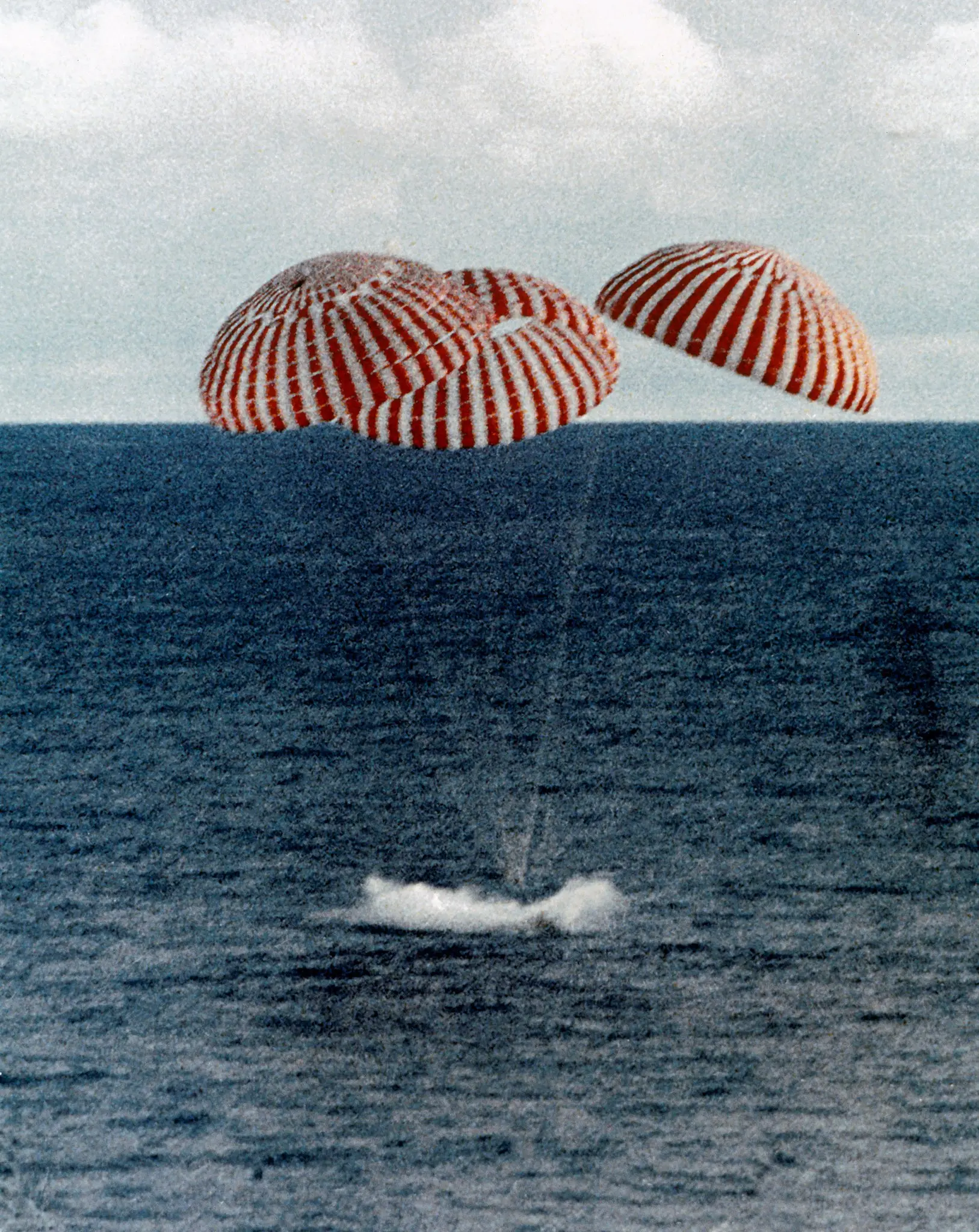
At 12:07 PM EST on April 17, 1970, Odyssey dropped through the clouds under three main parachutes and splashed down safely in the South Pacific Ocean near American Samoa, just 4 miles (6.5 km) from the recovery ship USS Iwo Jima (LPH-2).
Detailed Chronology of Key Events
| Ground Elapsed Time (GET) | UTC Date / Time (1970) | Operational Phase | Event & Historical Significance |
|---|---|---|---|
| 00:00:00 | April 11, 18:13 | Launch | Saturn V lifts off from KSC pad 39A. S-II center engine cuts off early due to pogo. |
| 55:54:53 | April 14, 03:07 | Anomaly | Cryo stir command issued. Oxygen Tank 2 ruptures; spacecraft loses 2 fuel cells. |
| 58:40:00 | April 14, 05:53 | Evacuation | Command Module Odyssey powered down; crew moves into LM Aquarius. |
| 61:29:43 | April 14, 08:42 | Navigation | DPS engine fires for 30.7 seconds to return spacecraft to a free-return trajectory. |
| 77:56:40 | April 15, 01:09 | Pericynthion | Closest approach to Moon (137.5 nm). Spacecraft swings behind the lunar far side. |
| 79:27:38 | April 15, 02:40 | PC+2 Burn | DPS engine fires for 4 minutes 24 seconds to accelerate return trip by 9 hours. |
| 85:00:00 | April 15, 08:13 | Environmental | "The Mailbox" built by astronauts to adapt CM LiOH filters to the LM system. |
| 138:02:00 | April 17, 13:15 | Separation | Service Module jettisoned. Crew captures photographs of extensive panel structural damage. |
| 141:30:00 | April 17, 16:43 | Lifeboat Drop | Lunar Module Aquarius jettisoned after transferring power and guidance data to CM. |
| 142:54:41 | April 17, 18:07 | Splashdown | Odyssey lands safely in the South Pacific; crew recovered by helicopter to USS Iwo Jima. |
Why Apollo 13 Is Defined as a "Successful Failure"
NASA Administrator Thomas O. Paine famously characterized Apollo 13 as a "successful failure." While the primary objective—landing on the Moon—failed, the mission remains one of the greatest accomplishments in space exploration history because of the unprecedented crisis response.
THE TRIUMPH OF CRISIS MANAGEMENT:
- TACTICAL FOCUS: "Work the problem, not the blame."
- DISTRIBUTED LEADERSHIP: Ground teams, flight crew, contractor network
- REAL-TIME INNOVATION: Repurposing systems under strict limits
Core Factors Driving the Rescue:
- Disciplined Problem-Solving Culture: Under Flight Director Gene Kranz, Mission Control operated under a rigid rule: Work the problem; don't make it worse by guessing. The team tackled issues sequentially based on critical timelines (oxygen $\rightarrow$ trajectory $\rightarrow$ carbon dioxide $\rightarrow$ power reserves $\rightarrow$ re-entry).
- System Redundancy and Flexibility: Spacecraft designers at Grumman (builders of the LM) and North American Rockwell (builders of the CSM) built structural margins into their vehicles that allowed systems to be repurposed far beyond their original design limits.
- Simulation and Preparation: Years of rigorous simulation allowed flight controllers and astronauts to adapt instantly when procedures failed. When non-standard procedures were required, simulators at Kennedy Space Center and Houston were used around the clock to test steps before sending them to space.
- Safety Overhauls: The Apollo 13 investigation brought critical safety reforms to subsequent missions. Oxygen tanks were redesigned with internal fans removed, thermostatic switches were upgraded to handle higher voltages, and a third independent emergency battery was added to the Service Module.
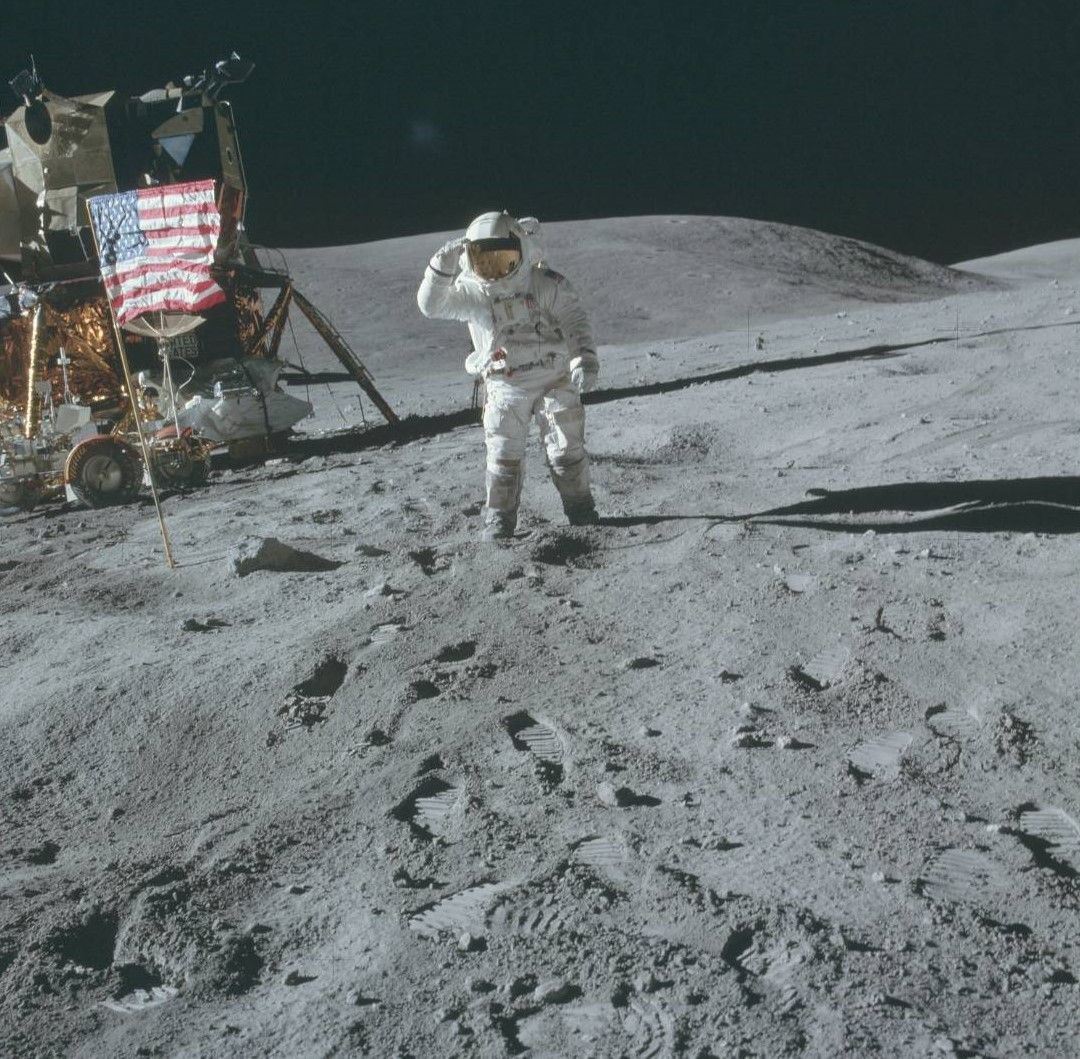
The lessons learned during Apollo 13 reshaped spaceflight operations, safety protocols, and contingency planning. The site originally designated for Apollo 13—Fra Mauro—was successfully explored less than a year later by Alan Shepard and Edgar Mitchell on Apollo 14.
Frequently Asked Questions
What caused the explosion on Apollo 13?
The explosion was caused by an electrical short circuit inside Cryogenic Oxygen Tank 2 in the Service Module. Exposed copper wiring—damaged during pre-flight detanking procedures when internal thermostatic switches fused open—ignited its Teflon insulation in a pure oxygen environment. The resulting rapid expansion of gas ruptured the tank and blew off an outer panel of the Service Module.
Who uttered the famous phrase "Houston, we've had a problem"?
Command Module Pilot Jack Swigert first reported the anomaly, stating: "Okay, Houston, we've had a problem here." Mission Commander Jim Lovell immediately followed up, confirming to Capcom Jack Lousma: "Houston, we've had a problem." The popular film adaptation modified the phrase to "Houston, we have a problem."
How did the astronauts survive without normal power and air?
The astronauts survived by moving from the damaged Command Module into the Lunar Module (Aquarius), using it as a temporary lifeboat. Aquarius supplied vital oxygen, water, and battery power. To prevent toxic carbon dioxide buildup, the crew used duct tape, plastic bags, and flight manual covers to connect square Command Module air filters into the Lunar Module’s round filter sockets.
How close did Apollo 13 come to being lost?
Apollo 13 came dangerously close to total failure. If the explosion had occurred while the spacecraft was in lunar orbit or if the Lunar Module had already landed on the Moon, the crew would have perished due to a lack of return propulsion and power. Additionally, carbon dioxide levels reached near-lethal limits before "The Mailbox" adapter was assembled, and power reserves for re-entry were within narrow margins.
Did Apollo 13 ever reach the Moon?
Apollo 13 reached the Moon, but it did not land. The spacecraft swung around the back side of the Moon at an altitude of 137 nautical miles (254 km) to execute a gravity-assist free-return trajectory back to Earth. During this loop, the crew set the record for the farthest distance humans have ever traveled from Earth (400,171 kilometers or 248,655 miles).
Lessons for Engineering and Crisis Management
The events of Apollo 13 offer timeless principles for high-stakes operational environments:
- Triage Issues Methodically: Prioritize immediate life-safety threats (oxygen, basic trajectory) over secondary operational objectives.
- Maintain Operational Redundancy: Rely on cross-system compatibility and preserve backup power reserves for non-standard failure modes.
- Test Solutions Before Deployment: Utilize ground-based simulations and digital models to validate emergency checklists before sending action steps to operational teams.
For detailed primary documentation, consult the official NASA Apollo 13 Mission Report and historical records maintained by the Smithsonian National Air and Space Museum.