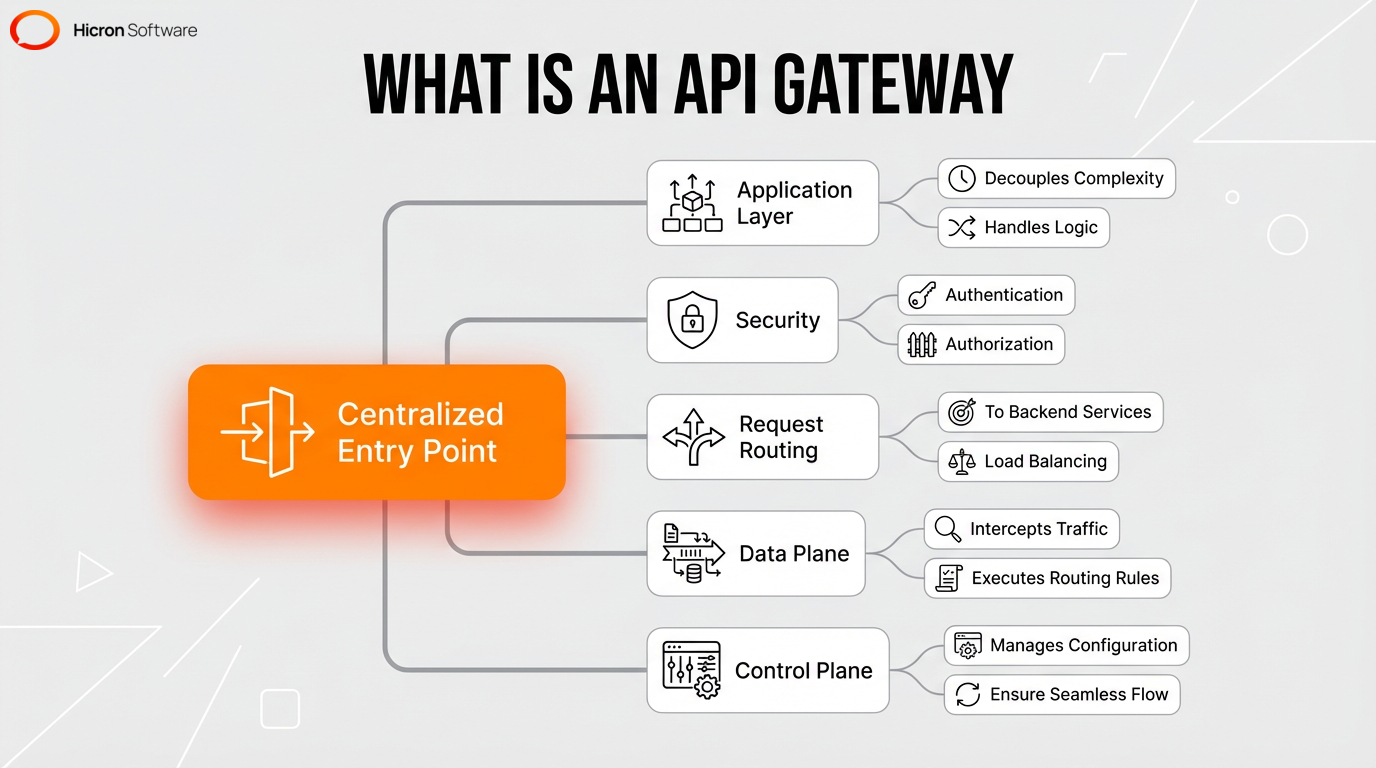
An API unit refers primarily to two distinct technical standards across different industries: in petrophysics and petroleum engineering, it is the official unit of measurement for gamma-ray well logging and crude oil density established by the American Petroleum Institute. In software engineering, an API unit represents a quantified metric of resource consumption used to manage Application Programming Interface rate limits, server allocations, and usage-based billing.
The Dual Contexts of API Units
The term API unit carries specialized meanings depending on whether it is applied in energy exploration or software architecture. In both domains, the unit acts as a standardized baseline for measurement, operational control, and quantitative comparison.
- API Units
- Petrophysics & Oil/Gas (American Petroleum Institute)
- Gamma Ray Log (GAPI Units)
- API Gravity (°API)
- Software & Cloud Computing (App Programming Interface)
- Rate Limits (Call Cost)
- Quotas/Billing (Token Units)
- Petrophysics & Oil/Gas (American Petroleum Institute)
In the energy sector, the American Petroleum Institute (API) established standardized measurement scales in the mid-20th century to ensure consistency across geophysical tools, well logs, and crude oil classifications. When a petrophysicist reviews a subterranean formation log, gamma-ray emissions are evaluated in API Gamma Ray units (commonly abbreviated as API units or GAPI). Similarly, liquid hydrocarbon density is expressed in degrees API gravity (°API).
In cloud computing and digital infrastructure, an API unit (often termed an API call unit, quota unit, or credit) serves as an abstract metric used by software providers to quantify server workload. Rather than charging a flat fee per request, systems assign different unit costs to API operations based on payload size, compute intensity, and database query complexity.
Understanding these two operational definitions prevents confusion when analyzing technical documentation, data sheets, software agreements, or geological reports.
American Petroleum Institute (API) Units in Petrophysics
1. API Gamma Ray Units (GAPI)
In subsurface geophysical logging, the gamma-ray log measures the naturally occurring radioelement content of geological formations. Because different logging service providers originally used proprietary measurement scales based on counts per second or microroentgens per hour, comparing data across wells drilled by different operators was difficult.
To resolve this issue, the American Petroleum Institute constructed a primary calibration standard at the University of Houston in 1959. The calibration pit consists of a concrete cylinder containing sections with controlled concentrations of naturally radioactive elements:
- Low-Radioactivity Section: Composed of high-purity concrete designed to emit minimal gamma radiation.
- High-Radioactivity Section: Infused with naturally occurring radioactive isotopes of thorium, uranium, and potassium (specifically approximately 13 ppm uranium, 24 ppm thorium, and 4% potassium).
By convention, 200 API Gamma Ray units is defined as the difference in instrument response between the low-radioactivity zone and the high-radioactivity zone in this master calibration pit.
- University of Houston Master Calibration Pit Baseline (Baseline Response Difference = 200 API Units):
- High-Radioactivity Zone (U, Th, K enriched concrete)
- Low-Radioactivity Zone (Purified concrete baseline)
Geological Significance of GAPI Values
Natural gamma-ray logs detect the decay of Potassium-40 ($^{40}\text{K}$), Thorium-232 ($^{232}\text{Th}$), and Uranium-238 ($^{238}\text{U}$). Fine-grained sedimentary rocks such as shales typically incorporate clay minerals rich in potassium and absorb heavy thorium and uranium isotopes during deposition. Consequently, shales display elevated radioactivity levels, typically ranging from 80 to 150+ API units.
Conversely, clean reservoir rocks like quartz sandstones, limestones, and dolomites contain negligible concentrations of radioactive minerals, yielding lower readings, often between 10 and 40 API units. Petrophysicists use these measurements to determine shale volume ($V_{\text{sh}}$), correlate stratigraphy across multiple wells, and identify potential hydrocarbon reservoir zones.
2. API Gravity (°API)
API Gravity is a standardized scale developed by the American Petroleum Institute to express how heavy or light a petroleum liquid is relative to water. If a crude oil's API gravity is greater than 10, it is lighter than water and floats; if it is less than 10, it is heavier than water and sinks.
The mathematical relationship between API Gravity and Specific Gravity (SG) measured at $60^\circ\text{F}$ ($15.6^\circ\text{C}$) is defined by the following formula:
$$\text{API Gravity} = \left( \frac{141.5}{\text{SG at } 60^\circ\text{F}} \right) - 131.5$$
- Inverse Relationship:
- Higher Specific Gravity (Denser) leads to Lower °API Value
- Lower Specific Gravity (Lighter) leads to Higher °API Value
Petroleum Classifications by °API
The global petroleum industry categorizes crude oil into four major grades based on its API gravity:
- Light Crude Oil: Greater than $31.1^\circ\text{API}$ (Specific gravity less than 0.870). Yields a higher percentage of gasoline and diesel during refining.
- Medium Crude Oil: Between $22.3^\circ\text{API}$ and $31.1^\circ\text{API}$ (Specific gravity 0.870 to 0.920).
- Heavy Crude Oil: Between $10.0^\circ\text{API}$ and $22.3^\circ\text{API}$ (Specific gravity 0.920 to 1.000). Requires specialized refining equipment to yield lighter fuels.
- Extra-Heavy Crude & Bitumen: Less than $10.0^\circ\text{API}$ (Specific gravity greater than 1.000). Dense, highly viscous hydrocarbons that often require thermal recovery techniques or diluents to flow through pipelines.
Application Programming Interface (API) Units in Software Architecture
In digital ecosystems, web APIs allow software platforms to communicate. To protect backend infrastructure from overload, enforce terms of service, and monetize access, API providers implement metric tracking using API units, request units, or rate-limit credits.
- Client API Request
- API Gateway Router
- Simple GET Cost = 1 API Unit
- Complex POST = 50 API Units
1. Structure of Software API Units
Unlike simple request counters that treat every HTTP call equally, a weighted API unit system accounts for the uneven consumption of system resources. For example, a simple read operation that retrieves a single user profile requires minimal database I/O, whereas an analytical query that processes millions of rows or generates an AI summary consumes significant memory and CPU power.
Engineers assign weighted unit values to different API endpoints based on:
- Database Read/Write Intensity: Read-heavy GET endpoints cost fewer units; write-heavy POST, PUT, or DELETE operations cost more.
- Payload Size: Larger JSON payloads or batch uploads consume higher bandwidth and serialization resources, consuming more units.
- Compute Complexity: Mathematical processing, image manipulation, or machine learning inferences carry elevated unit costs.
- Third-Party Dependency Calls: Endpoints that query upstream services may pass downstream costs along as higher API unit deductions.
2. Rate Limiting and Quota Allocations
Software providers manage usage by setting developer allocations in API units across specific time windows (e.g., units per second, per minute, or per month). Common algorithms implemented in API gateways like Kong, AWS API Gateway, or Apigee include:
- Leaky Bucket / Token Bucket: Developers are granted a bucket with a maximum capacity of API units. Each request removes a designated number of units from the bucket, which continuously refills at a fixed rate.
- Sliding Window Log: The gateway sums the total unit cost of all calls logged in the trailing time window to approve or block incoming traffic.
If an application exceeds its allotted API units within a given timeframe, the API gateway returns an HTTP status code 429 Too Many Requests, often accompanied by headers specifying when the rate limit resets (e.g., Retry-After or X-RateLimit-Reset).
Comparing Petrophysical and Software API Units
The table below contrasts how API units function across geological engineering and cloud software architectures.
| Dimension | Petrophysical Gamma Ray Units (GAPI) | Petrophysical API Gravity (°API) | Software API Consumption Units |
|---|---|---|---|
| Primary Domain | Subsurface Petrophysics & Well Logging | Reservoir Engineering & Petroleum Refining | Cloud Computing & Web Software Architecture |
| Governing Body / Standard | American Petroleum Institute (API RP 33) | American Petroleum Institute / ASTM D287 | Enterprise API Provider Specification |
| Base Definition | 1/200th of response difference between low & high zones in UH pit | $(141.5 / \text{SG}) - 131.5$ at $60^\circ\text{F}$ | Abstract metric quantifying CPU, memory, and database I/O load |
| Measurement Target | Natural radioactive emissions of rock formations | Relative density of liquid hydrocarbons | System resource consumption per HTTP operation |
| Typical Scale Values | Sandstones: 10–40 GAPIShales: 80–150+ GAPI | Heavy Oil: <22.3 °APILight Crude: >31.1 °API | Simple GET: 1 UnitBatch Write / Query: 50–500+ Units |
| Calibration Method | University of Houston master calibration pit | Hydrometer or digital density meter calibrated to distilled water | Internal benchmark profiling of endpoint processing time and memory |
| Primary Operational Goal | Identify lithology, estimate shale fraction ($V_{\text{sh}}$) | Determine commercial value and refining requirements | Prevent server denial of service, control infrastructure cost |
Practical Applications and Calculation Examples
Example 1: Estimating Shale Volume ($V_{\text{sh}}$) from Gamma Ray API Units
In geological formation evaluation, a petrophysicist identifies the minimum gamma-ray value (clean sand baseline, $GR_{\text{clean}}$) and the maximum gamma-ray value (shale baseline, $GR_{\text{shale}}$) within a log interval. The Gamma Ray Index ($I_{GR}$) is calculated as:
$$I_{GR} = \frac{GR_{\text{log}} - GR_{\text{clean}}}{GR_{\text{shale}} - GR_{\text{clean}}}$$
Step-by-Step Calculation:
- Measured Input Data:
- Logged Formation Reading ($GR_{\text{log}}$) = 75 API units
- Clean Sand Baseline ($GR_{\text{clean}}$) = 25 API units
- Pure Shale Baseline ($GR_{\text{shale}}$) = 125 API units
- Linear Shale Volume Calculation: $$I_{GR} = \frac{75 - 25}{125 - 25} = \frac{50}{100} = 0.50 \text{ (or 50% shale fraction)}$$
- Non-Linear Correction (Larionov for Older Tertiary Rocks): $$V_{\text{sh}} = 0.083 \times \left(2^{3.7 \times I_{GR}} - 1\right)$$ $$V_{\text{sh}} = 0.083 \times \left(2^{1.85} - 1\right) = 0.083 \times (3.605 - 1) \approx 0.216 \text{ (or 21.6% shale volume)}$$
This calculation illustrates how raw API units are converted into actionable geological parameters to evaluate reservoir porosity and net pay thickness.
Example 2: Managing Software API Unit Consumption
Consider a cloud-based mapping service that enforces an API usage limit of 10,000 API units per minute per enterprise client key. The service assigns different unit weights based on endpoint workload:
GET /v1/geocode/forward(Address lookup): 2 API unitsGET /v1/routes/matrix(Complex distance calculation): 25 API unitsPOST /v1/analytics/batch(Batch spatial processing): 100 API units
Workload Budgeting Scenario:
An enterprise client application executes the following calls within a single minute window:
- 3,000 Geocode lookups: $3,000 \times 2 = 6,000 \text{ units}$
- 100 Route Matrix queries: $100 \times 25 = 2,500 \text{ units}$
- 10 Batch Spatial postings: $10 \times 100 = 1,000 \text{ units}$
Total Consumption: $$\text{Total Units} = 6,000 + 2,500 + 1,000 = 9,500 \text{ units}$$
Because $9,500 \le 10,000$, all requests succeed. However, if the application attempts 25 additional route matrix queries ($25 \times 25 = 625 \text{ units}$), total usage would reach 10,125 units, triggering a 429 Rate Limit Exceeded HTTP error response for all subsequent calls until the minute counter resets.
Technical Pitfalls and Operational Best Practices
Petrophysical Logging Best Practices
Borehole Environment Corrections: Raw gamma-ray readings recorded downhole are affected by borehole fluid density, casing weight, cement thickness, and tool position (centered vs. eccentered). Petrophysicists must apply environmental correction charts to convert raw tool counts into calibrated API units before performing quantitative formation evaluation.
Spectral vs. Total Gamma Ray: Total gamma ray logging measures the combined radiation from potassium, thorium, and uranium. In formations containing non-shale radioactive minerals (such as potassium-rich feldspars in arkosic sandstones or uranium deposits in carbonate fractures), total gamma ray logs can mistakenly identify clean reservoir rock as shale. Utilizing Spectral Gamma Ray (SGR) logs separates radiation into individual potassium (%), thorium (ppm), and uranium (ppm) components, isolating true shale volume.
Master Pit vs. Secondary Calibration Standards: Field logging tools are not calibrated directly in the master pit at the University of Houston for every job. Instead, logging companies use portable secondary calibrator blocks containing known radioelement sources field-checked against the master standard to maintain instrument fidelity.
UH Master Pit (University of Houston) (Primary Reference Standard)
- Calibrates:
Portable Secondary Calibrator Blocks (Field Standardization)
- Verifies Before Logging:
Downhole Gamma Ray Logging Tools (Active Well Target)
Software Architecture Best Practices
Implement Exponential Backoff and Jitter: When an application hits an API unit rate limit, sending repeated immediate requests exacerbates server stress. Client code should implement exponential backoff algorithms modified with random jitter to space out retry attempts gracefully.
Optimize Endpoint Selection and Caching: Developers can reduce API unit depletion by caching static response payloads locally using Redis or in-memory stores. Additionally, requesting only required fields via GraphQL or sparse fieldsets minimizes payload sizes and allocated unit costs.
Monitor Header Metrics: Production systems should continuously parse rate-limiting headers returned by API providers (such as
X-RateLimit-Remaining-UnitsorX-RateLimit-Reset) to dynamically adjust call frequency before hitting hard cutoffs.
Frequently Asked Questions
What does GAPI stand for on a well log?
GAPI stands for Gamma API, which is the standardized unit of measure for natural gamma-ray logs established by the American Petroleum Institute. It quantifies the natural background radiation emitted by geological formations, helping petrophysicists differentiate between non-radioactive reservoir rocks (like sandstone) and highly radioactive non-reservoir rocks (like shale).
Why is API Gravity inversely proportional to Specific Gravity?
The API Gravity formula was derived to provide a wider, more granular linear scale for hydrometer readings of liquid hydrocarbons at standard conditions ($60^\circ\text{F}$). By subtracting the adjusted specific gravity ratio from 131.5, lighter liquids receive higher numerical °API values, simplifying trade, tariff calculations, and refinery operations.
How are API units calibrated in wireline logging tools?
Wireline gamma-ray tools are calibrated using portable secondary field calibrators that have been standardized against the primary American Petroleum Institute calibration pit located at the University of Houston. One API unit represents 1/200th of the measurement response difference between the low-radioactivity zone and the high-radioactivity zone inside this master concrete facility.
How do software developers track API unit allocation usage?
Software developers track API unit consumption by analyzing HTTP response headers returned by the API gateway after each request. Providers usually include response headers showing total allowed units, remaining units within the current time window, and the epoch timestamp when the quota resets.
What is the difference between an API request limit and an API unit limit?
An API request limit caps the total number of HTTP requests regardless of complexity (e.g., maximum 1,000 requests per hour). An API unit limit assigns variable weights to requests based on resource consumption (e.g., a simple GET consumes 1 unit, while a complex batch analytical post consumes 50 units out of a 1,000-unit hourly pool).
Practical Recommendations for Engineers and Developers
To ensure data integrity and system reliability, follow these industry-specific recommendations:
- For Petrophysicists & Geological Engineers: Always verify whether gamma-ray log curves reflect total gamma ray or spectral gamma ray output before calculating shale volume. Ensure borehole corrections for mud weight, hole diameter, and casing configuration are fully applied to raw log data to maintain calibrated GAPI accuracy.
- For Software Engineers & Cloud Architects: Audit your integration codebase to map endpoint invocations against your provider's API unit cost sheet. Implement local caching strategies for frequently accessed static datasets to conserve unit allocations and avoid unexpected runtime rate limits.
For technical standards regarding petroleum measurements, consult official manuals from the American Petroleum Institute or standards documentation maintained by the Society of Petroleum Engineers. For software integration guidelines, refer to your specific platform provider's API gateway specification and rate-limiting documentation.