Apicon Home Health Agency provides physician-ordered, skilled healthcare services directly to patients in their residential settings. Serving individuals recovering from illness, injury, or surgery, the agency delivers intermittent skilled nursing, physical and occupational therapy, speech-language pathology, medical social work, and home health aide assistance aligned with Medicare and federal care standards.
What Is Apicon Home Health Agency?
Apicon Home Health Agency operates as a licensed home healthcare provider designed to deliver clinical care and rehabilitation outside of institutional hospital or skilled nursing facility settings. The primary objective of a home health agency is to help patients regain independence, manage complex or chronic medical conditions, and safely transition from acute care environments back into their primary residence.
Unlike private-duty home care agencies—which focus on non-medical companion services, housekeeping, and custodial assistance—Apicon Home Health Agency delivers medically necessary care governed by strict clinical oversight. Every care plan implemented by the agency originates from a specific order issued by a licensed physician or qualified non-physician practitioner (such as a nurse practitioner or physician assistant).
Home health agencies operate under federal regulations enforced by the Centers for Medicare & Medicaid Services (CMS) under Title 42 of the Code of Federal Regulations. These federal Conditions of Participation mandate that certified home health agencies maintain rigorous quality assurance frameworks, conduct standardized patient assessments, and employ credentialed healthcare professionals.
Core Medical and Rehabilitative Services Offered
Apicon Home Health Agency provides a multidisciplinary approach to home care, deploying specialized healthcare professionals directly to the patient’s home based on the individualized Plan of Care (POC).
1. Skilled Nursing Care
Skilled nursing forms the backbone of home clinical care. Registered Nurses (RNs) and Licensed Vocational/Practical Nurses (LVNs/LPNs) perform advanced medical interventions, including:
- Complex Wound Management: Dressing changes, negative pressure wound therapy (wound vacuums), and surgical site monitoring.
- Medication Administration and Reconciliation: Managing intravenous (IV) therapy, injections, and evaluating high-risk pharmaceutical regimens to prevent adverse drug interactions.
- Chronic Disease Oversight: Ongoing monitoring and intervention for conditions such as congestive heart failure (CHF), chronic obstructive pulmonary disease (COPD), diabetes mellitus, and severe hypertension.
- Patient and Caregiver Education: Teaching self-management strategies, catheter care, ostomy maintenance, and warning signs requiring emergency medical attention.
2. Physical Therapy (PT)
Licensed Physical Therapists evaluate and treat physical impairments resulting from orthopedic surgeries, strokes, neurological disorders, or acute illness. Physical therapy services focus on:
- Gait and Mobility Training: Enhancing safe walking technique with or without assistive devices such as walkers or canes.
- Fall Prevention and Balance Work: Identifying environmental hazards and executing targeted balance exercises to reduce fall risks.
- Strength and Range-of-Motion Exercises: Rebuilding muscle strength following joint replacements, fractures, or prolonged bed rest.
3. Occupational Therapy (OT)
Occupational Therapists help patients regain functional independence in performing essential Activities of Daily Living (ADLs). Services include:
- ADL Retraining: Re-learning techniques for dressing, bathing, grooming, and preparing meals.
- Adaptive Equipment Recommendations: Recommending and fitting specialized equipment such as shower chairs, grab bars, button hooks, or long-handled sponges.
- Home Safety and Ergonomic Assessments: Evaluating the living space to remove functional barriers and improve accessibility.
4. Speech-Language Pathology (SLP)
Speech-Language Pathologists address communication disorders, cognitive deficits, and swallowing difficulties (dysphagia). SLP interventions involve:
- Dysphagia Management: Conducting bedside swallow evaluations and implementing safe swallowing techniques or dietary texture modifications.
- Cognitive Rehabilitation: Exercising memory, problem-solving, and orientation skills following traumatic brain injury or cerebrovascular accidents.
- Communication Restoration: Restoring verbal and non-verbal communication abilities for patients affected by aphasia or dysarthria.
5. Medical Social Work (MSW)
Medical Social Workers assist patients and families with the emotional, financial, and social stress accompanying serious illness or disability. They provide:
- Resource Coordination: Connecting families with local community support services, meal assistance, and transportation programs.
- Long-Term Care Planning: Assisting with advance directives, power of attorney documentation, and transitions to long-term care settings if home care is no longer feasible.
- Psychosocial Counseling: Offering supportive counseling to cope with life-limiting diagnoses or chronic pain.
6. Home Health Aide (HHA) Services
Home Health Aides provide essential personal care support under the direct supervision of a Registered Nurse or Physical Therapist. HHA services are provided on an intermittent basis to support the primary skilled care plan and include help with bathing, personal hygiene, dressing, and simple grooming.
Eligibility Requirements for Home Health Care
To receive covered home health services through Apicon Home Health Agency, patients must meet specific legal and clinical eligibility criteria established by Medicare, Medicaid, and commercial health insurance providers.
- Licensed Physician Order
- Medically necessary skilled care required
- Confirmed Homebound Status
- Leaving home requires taxing, severe effort
- Mandatory Face-to-Face Encounter
- Visit within 90 days prior or 30 days post
- Intermittent Skilled Need
- Skilled nursing or physical/speech therapy
1. Physician Certification and Order
Services cannot be initiated without a explicit order signed by a licensed physician or allowed non-physician practitioner. The ordering clinician certifies that the patient requires skilled medical or rehabilitative care.
2. Standard for Homebound Status
A patient is considered "homebound" under federal standards if two specific conditions are met:
- Criteria 1: The individual needs the supportive assistance of devices (crutches, canes, wheelchairs, walkers), special transportation, or another person to leave their place of residence, OR leaving home is medically contraindicated.
- Criteria 2: There exists a normal inability to leave the home, AND leaving home requires a considerable and taxing effort.
Absences from the home must be infrequent or of short duration (such as attending religious services, medical appointments, or adult day care programs).
3. Need for Intermittent Skilled Services
The patient must require intermittent skilled nursing care, physical therapy, or speech-language pathology, or have a continuing need for occupational therapy. "Intermittent" generally means care needed fewer than 7 days per week, or 8 hours per day, over a finite period (typically in blocks of 21 days or fewer, though extensions are permitted under clinical necessity).
4. Face-to-Face Encounter
Federal regulations require a documented face-to-face encounter between the patient and the ordering clinician regarding the primary condition for which home health care is required. This meeting must occur within 90 days before the start of care or within 30 days after home health services begin.
Service and Coverage Comparison
Understanding the structural differences between skilled home health services and non-skilled care ensures families select the appropriate clinical pathway.
| Service Category | Apicon Home Health (Skilled Care) | Non-Medical In-Home Care | Skilled Nursing Facility (SNF) |
|---|---|---|---|
| Primary Focus | Medical restoration, disease management, and rehab | Personal care, companion services, housekeeping | 24/7 institutional nursing and intensive rehab |
| Physician Order Required? | Yes, mandatory | No | Yes, mandatory |
| Clinical Staff | RNs, LVNs, PTs, OTs, SLPs, MSWs, certified HHAs | Caregivers, personal care aides, companions | On-site clinical staff, physicians, therapists |
| Eligibility Threshold | Must be homebound with intermittent skilled need | No homebound status or medical need required | Requires 3-day inpatient stay (for traditional Medicare) |
| Medicare Part A Coverage | 100% for covered services ($0 copay) | Not covered by Original Medicare | Covered 100% days 1–20; daily copay days 21–100 |
| Care Location | Patient's personal residence | Patient's personal residence | Specialized residential medical facility |
| Duration of Care | Short-term episode-based care (60-day cycles) | Long-term ongoing custodial care | Short-term post-acute rehabilitation |
Navigating Insurance, Costs, and Coverage
Financing home healthcare services depends significantly on the primary insurance provider, whether traditional Medicare, Medicare Advantage, Medicaid, or private commercial policies.
- Original Medicare (Part A / Part B)
- 100% Covered Skilled Care
- $0 Deductible / Copay
- DME at 80% (Part B)
- Medicare Advantage / Private Insurance
- Prior Authorization Needed
- In-Network Verification
- Set Copays or Coinsurance
Original Medicare (Part A and Part B)
When a patient meets all eligibility requirements, Original Medicare covers 100% of the approved cost for home health visits provided by a certified agency like Apicon Home Health Agency. The patient pays $0 for covered skilled care visits.
However, if durable medical equipment (DME)—such as hospital beds, wheelchairs, or oxygen concentrators—is prescribed as part of the care plan, Medicare Part B typically covers 80% of the approved amount after the annual Part B deductible is satisfied. The remaining 20% is the patient's responsibility unless covered by supplemental insurance (Medigap).
Medicare Advantage (Part C)
Medicare Advantage plans must provide at least the same level of coverage as Original Medicare. However, private insurers administering these plans frequently require:
- Prior authorization before care initiation.
- Network restrictions specifying contracted home health providers.
- Specific re-authorization intervals to continue care past initial visit quotas.
Medicaid and State Health Programs
Medicaid provides home health coverage for low-income individuals, but specific rules, authorization thresholds, and reimbursement structures vary by state. In California, for example, Medi-Cal covers medically necessary home health care when pre-authorized through managed care plans.
Private Commercial Insurance
Commercial health plans vary widely in their coverage rules. Most require pre-certification, dictate fixed copayments per visit, or limit the maximum number of home visits permitted per calendar year.
Step-by-Step Workflow: Initiating Care with Apicon Home Health Agency
Initiating home health services follows a standard clinical progression governed by federal quality guidelines.
- Referral & Physician Order
- Received from hospital, clinic, or primary physician
- Intake Verification
- Confirming eligibility, homebound status, and coverage
- OASIS Comprehensive Assessment
- Registered Nurse/Therapist evaluates home environment within 48h
- Formulating Plan of Care (CMS-485)
- Outlining clinical goals, visit frequencies, and interventions
- Care Delivery & Multidisciplinary Coordination
- Executing skilled nursing, PT, OT, SLP, and HHA visits
- Re-certification or Discharge
- Re-evaluating clinical progress every 60 days
Step 1: Referral and Order Submission
Care starts when a doctor submits a formal medical referral to the agency. Referrals frequently originate from hospital discharge planners, rehabilitation facility case managers, or primary care physicians during outpatient consultations.
Step 2: Intake and Benefit Verification
Apicon Home Health Agency’s intake department reviews the physician’s referral, confirms the presence of homebound criteria, and verifies insurance eligibility and pre-authorization mandates.
Step 3: Initial In-Home Comprehensive Assessment
Within 48 hours of receiving the physician order (or within 48 hours of the patient's return home from an acute care facility), a Registered Nurse or Physical Therapist visits the home. The clinician performs a initial evaluation using the standardized Outcome and Assessment Information Set (OASIS). This assessment reviews:
- Cardiovascular, respiratory, neurological, and nutritional status.
- Functional mobility and safety within the home environment.
- Medication adherence and potential drug safety hazards.
- Cognitive capabilities and caregiver support availability.
Step 4: Plan of Care (Form CMS-485) Formulation
Based on OASIS findings, the clinician collaborates with the ordering doctor to draft a formal Plan of Care (often utilizing Form CMS-485). The plan defines:
- Diagnoses and clinical targets.
- Required disciplines (Nursing, PT, OT, SLP, MSW, HHA).
- Visit frequencies (e.g., Skilled Nursing 2 times per week for 4 weeks; PT 3 times per week for 6 weeks).
- Specific interventions, medication orders, and discharge benchmarks.
Step 5: Implementation of Care
Credentialed clinicians conduct visits according to the schedule. During each visit, clinicians document progress, perform ordered care, educate the patient, and communicate updates to the supervising physician.
Step 6: 60-Day Recertification or Safe Discharge
Home health care is measured in 60-day certification periods (episodes of care). Towards the end of each 60-day block:
- If the patient has met all functional goals and stabilized, care is terminated with a structured safe discharge plan.
- If clinical goals remain unmet and the patient continues to meet homebound criteria, the physician can sign a recertification extending care for an additional 60-day episode.
Evaluating Home Health Agency Quality Standards
When selecting or verifying a home health agency, patients and family members should utilize official comparative data maintained by federal regulators under Title 42 of the eCFR.
Using CMS Care Compare
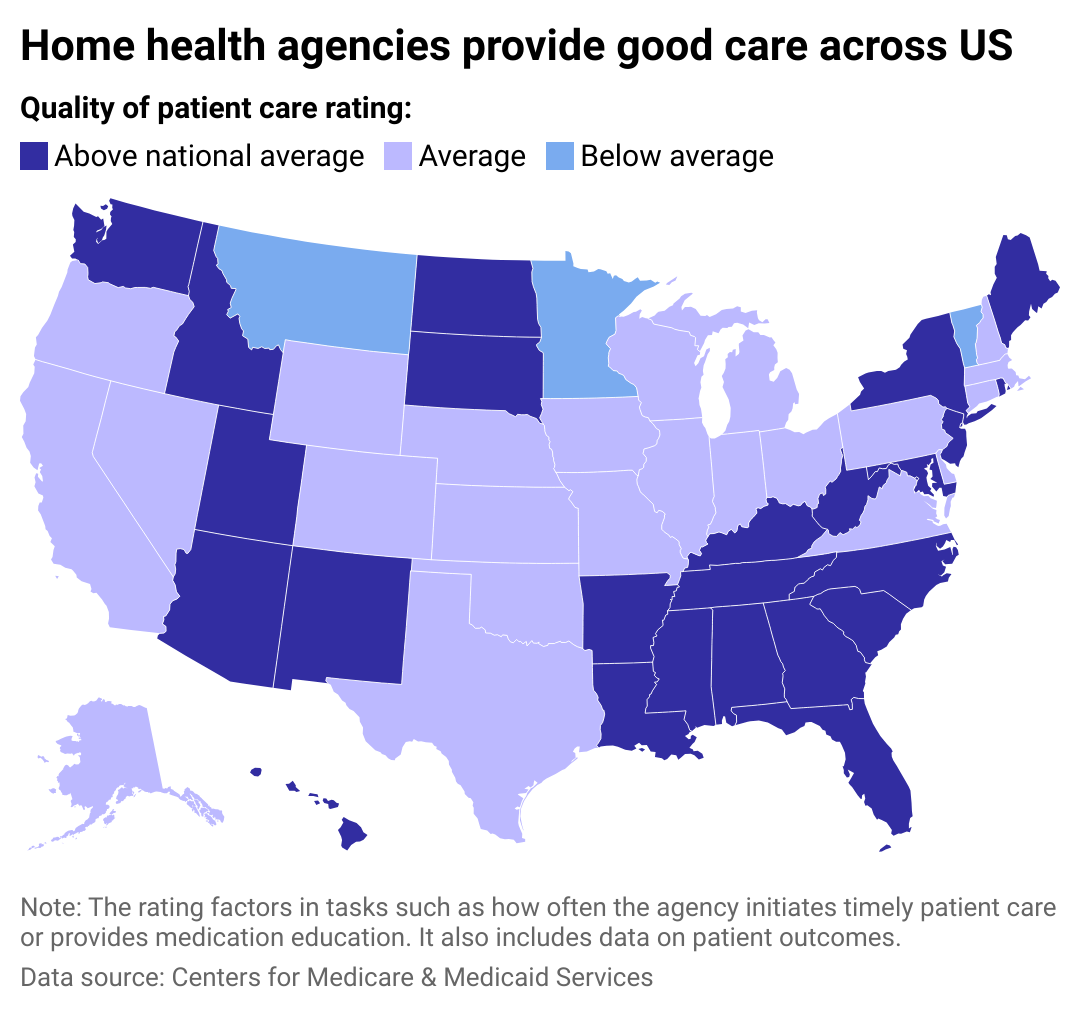
The federal government maintains the CMS Care Compare Tool, allowing the public to evaluate licensed home health agencies based on objective clinical data and consumer surveys.
Key public metrics include:
- Quality of Patient Care Star Rating: Evaluates 8 individual measures of clinical quality, including how often the agency initiated care in a timely manner, how frequently patients improved in mobility, and how well medications were managed.
- Patient Survey Star Rating (HHCAHPS): Based on the Home Health Care Consumer Assessment of Healthcare Providers and Systems survey, measuring real patient feedback regarding communication, care timeliness, and overall rating of agency performance.
- Acute Care Hospitalization Rates: Measures the percentage of home health patients who required emergency department visits or unplanned hospital readmissions during their care episode. Lower percentages reflect stronger disease management and preventive home intervention.
Patient Rights and Freedom of Choice
Under federal law (42 CFR § 484.50), healthcare facilities cannot force a patient to use a specific home health agency. Even if a hospital or physician recommends a specific provider, patients retain the absolute legal right to choose any licensed home health agency that is certified by Medicare and operating within their geographic service area.
Furthermore, patients receiving home health care hold specific statutory rights, including:
- The right to be fully informed of their care plan and participate in its creation.
- The right to refuse treatment or request changes in clinical personnel.
- Freedom from verbal, physical, mental, or sexual abuse, and financial exploitation.
- Confidentiality of personal medical records governed by HIPAA protocols.
- Access to direct contacts for submitting formal complaints to state regulatory survey agencies.
Frequently Asked Questions
What is the main difference between home health care and personal home care?
Home health care provides skilled medical and rehabilitative services prescribed by a doctor, delivered by licensed clinical personnel (such as Registered Nurses and Physical Therapists), and is covered by Medicare or medical insurance. Personal home care (custodial care) involves non-medical support, such as companionship, light housekeeping, and assistance with daily routines provided by non-licensed caregivers, which is typically paid out-of-pocket or through long-term care insurance.
How long can a patient receive care from Apicon Home Health Agency?
Home health care is authorized in 60-day certification episodes. There is no set overall limit on the total duration or number of 60-day episodes a patient can receive, provided a physician continues to certify that the patient remains homebound and requires medically necessary, intermittent skilled care to recover or maintain stability.
Does Medicare cover 100% of home health agency fees?
Yes, for eligible patients who meet homebound standards and require intermittent skilled care under a physician-approved plan, Original Medicare Part A and Part B cover 100% of approved skilled home health visits without copayments or deductibles. Durable medical equipment (DME) supplied during care is typically covered at 80% under Medicare Part B.
Can a patient switch to Apicon Home Health Agency if enrolled with another provider?
Yes, patients have the legal right to transfer their home health care to another certified provider at any point during their treatment. The process requires coordinating a formal transfer assessment between the current provider, the new agency, and the ordering physician to ensure continuous coverage without interruption of care.
What happens if a patient's medical condition deteriorates during home health care?
If a patient exhibits worsening symptoms or new clinical complications, the attending home health nurse or therapist performs an immediate clinical evaluation and notifies the ordering physician. The care plan may then be modified to increase visit frequency, add specialized therapy disciplines, adjust medications, or, if severe, arrange emergency transport to an acute care facility.
Practical Recommendations for Patients and Caregivers
Navigating home health services effectively requires clear communication and proactive planning:
- Verify Homebound Status Early: Discuss mobility limitations thoroughly with the ordering doctor prior to hospital discharge or home health setup to prevent administrative claim delays.
- Review the Plan of Care: Ensure the primary family caregiver and patient review the proposed visit schedule and functional targets outlined on Form CMS-485.
- Maintain an Active Medication List: Keep an up-to-date schedule of prescription drugs, over-the-counter supplements, and dosages readily accessible in the home for nursing reviews.
- Prepare the Living Space: Clear pathways, secure loose rugs, install adequate lighting, and place essential medical supplies near primary resting areas before clinical visits begin.
- Monitor Care Compare Metrics: Check official CMS ratings to verify performance statistics, patient feedback scores, and hospital readmission prevention records.
Medical Disclaimer: This guide is provided strictly for educational and informational purposes and does not constitute formal medical or legal advice. Patients should consult a qualified healthcare professional regarding specific medical conditions, diagnosis, and treatment plans.