Web Application Firewalls (WAFs) protect perimeter ingress by filtering known exploit patterns, signature-based attacks, and volumetric bot traffic across HTTP requests. Purpose-built API security platforms inspect granular API business logic, maintain stateful context across multi-step sessions, automatically discover hidden endpoints, and secure both North-South traffic and East-West microservice communication inside cloud-native architectures.
Understanding the Core Architectural Paradigms
Securing cloud-native applications requires protecting software that is distributed, ephemeral, and heavily reliant on application programming interfaces (APIs). Microservices communicate continuously over internal networks, while external clients interact with systems through API gateways and ingress controllers. Choosing between a Web Application Firewall (WAF) and a dedicated API security solution—or determining how to deploy both—requires understanding their underlying operational models.
- North-South Traffic:
- Client Request
- Perimeter Ingress / Edge WAF (Signature Matching, SQLi/XSS, Rate Limiting)
- API Gateway
- East-West Traffic:
- Cloud-Native Cluster / Service Mesh:
- Microservice A
- Microservice B (communicating with Microservice A)
- API Security Platform (eBPF / Sidecar / Sensor Telemetry):
- Behavioral baselining & BOLA detection
- Continuous API inventory & drift analysis
- Contextual business logic authorization
- Cloud-Native Cluster / Service Mesh:
What Is a Web Application Firewall (WAF)?
A Web Application Firewall operates primarily at Layer 7 of the OSI model, inspecting traffic passing between web applications and the internet. Traditional WAFs, as well as modern Web Application and API Protection (WAAP) services, act as reverse proxies or perimeter filters. They evaluate incoming HTTP/HTTPS requests against established rulesets, signature databases, and threat intelligence feeds.
WAFs excel at blocking classic web vulnerabilities identified in the OWASP Top 10, such as:
- SQL Injection (SQLi): Preventing malicious database queries embedded in web form fields or URL parameters.
- Cross-Site Scripting (XSS): Blocking malicious scripts injected into benign web page content.
- Cross-Site Request Forgery (CSRF): Preventing unauthorized commands submitted from trusted users.
- Volumetric Distributed Denial of Service (DDoS): Mitigating high-volume layer 7 flooding at the network edge.
While WAFs have evolved to include basic rate limiting, IP reputation scoring, and bot management features, their primary mechanism remains transactional: analyzing individual, isolated incoming requests against deterministic signatures or regex patterns.
What Is Purpose-Built API Security?
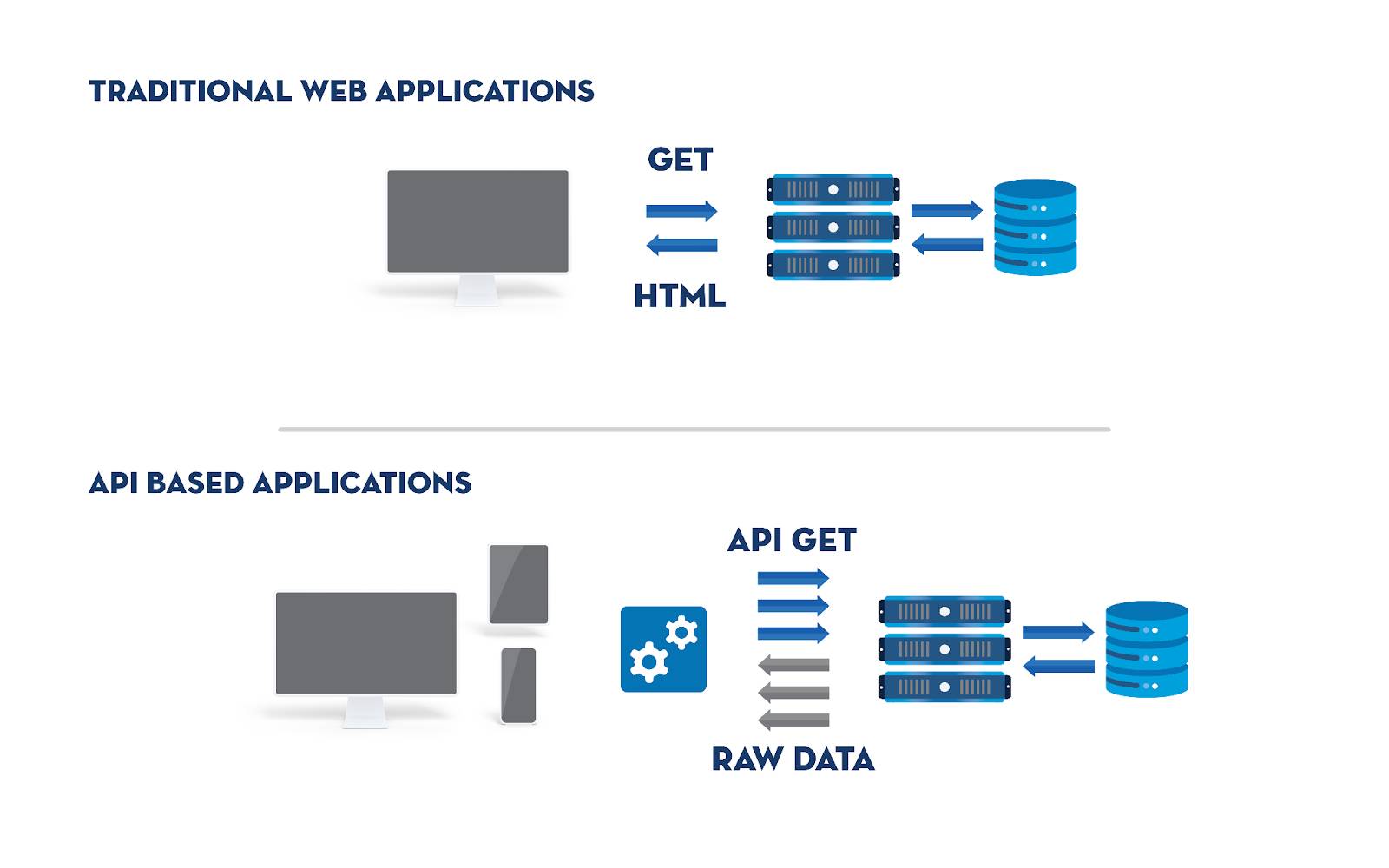
API security platforms address vulnerabilities inherent to modern API architectures. Unlike web applications that serve HTML pages to human users driving browsers, APIs expose structured data exchanges (JSON, XML, Protocol Buffers) directly to mobile apps, single-page applications (SPAs), third-party integrations, and internal microservices.
Instead of looking only at static signatures on incoming perimeter requests, API security platforms focus on contextual integrity, schema compliance, user behavioral baselines, and business logic execution. They monitor traffic continuously across time to establish what "normal" usage looks like for every unique API endpoint.
API security solutions address the specialized OWASP API Security Top 10, including:
- Broken Object Level Authorization (BOLA): Detecting when an authenticated user attempts to access data objects belonging to another user by manipulating IDs in API requests.
- Broken Object Property Level Authorization (BOPLA): Preventing unauthorized viewing or manipulation of sensitive object properties (such as changing an
is_adminboolean flag). - Unrestricted Resource Consumption: Identifying subtle, low-and-slow data scraping or resource exhaustion that evades coarse WAF rate limits.
- Broken Business Logic: Catching attackers who manipulate multi-step API workflows (e.g., skipping payment verification endpoints in a checkout sequence).
Why Cloud-Native Environments Alter the Security Perimeter
Cloud-native application stacks—built on Kubernetes, serverless platforms, container registries, and service meshes like Istio or Linkerd—dramatically alter how traffic flows and where vulnerabilities exist.
- Traditional Monolith:
- Client Browser
- Perimeter
- Single Monolithic Application
- Cloud-Native Microservices:
- Client / Mobile App / SPA
- Ingress WAF
- API Gateway
- East-West Microservices:
- Service A (connected to Database)
- Service B (connected to Cache)
- Service A and Service B intercommunication
- Database
- Cache
North-South vs. East-West Traffic Dynamics
In legacy monolithic architecture, security focused heavily on North-South traffic—data moving into and out of the data center. A perimeter WAF sat in front of the application, filtering incoming requests before handing them off to the application server.
In cloud-native architectures:
- North-South traffic passes through ingress controllers and API gateways.
- East-West traffic (service-to-service communication inside the cluster) constitutes up to 80% of total network volume.
Standard perimeter WAFs are blind to East-West traffic. If a container within a Kubernetes cluster is compromised through a software supply chain vulnerability or exposed credential, an attacker can pivot laterally between microservices using internal APIs without triggering perimeter WAF rules.
Ephemeral Infrastructure and Continuous Deployment
Cloud-native services scale dynamically. Pods and containers spin up and down in seconds, while CI/CD pipelines push code updates multiple times per day.
This velocity creates significant challenges for traditional security controls:
- Static WAF rulesets quickly become outdated as endpoints, parameters, and payloads change continuously.
- Developers frequently introduce new internal or external API endpoints without updating manual security documentation, creating shadow APIs (undocumented endpoints) and deprecated APIs (zombie endpoints that remain active but unmaintained).
- Rule tuning in a legacy WAF cannot keep pace with dynamic releases without producing high rates of false positives that disrupt legitimate deployments.
Deep Comparison: API Security vs. WAF
Evaluating these technologies side-by-side demonstrates why relying solely on a traditional WAF creates security blind spots in modern software stacks.
| Capability / Feature | Web Application Firewall (WAF) | Dedicated API Security Platform |
|---|---|---|
| Primary Focus | Perimeter defense against known exploit signatures (SQLi, XSS, volumetric attacks). | Application business logic, data structures, and authorization context. |
| Inspection Mechanism | Transactional, single-request matching against static patterns and signatures. | Stateful, multi-request behavioral baselining using machine learning and AI model analysis. |
| Traffic Scope | Ingress / North-South traffic at the perimeter network edge. | Comprehensive coverage: North-South ingress and East-West intra-cluster microservice flows. |
| OWASP Alignment | Designed for OWASP Web Application Top 10 vulnerabilities. | Designed specifically for OWASP API Security Top 10 vulnerabilities. |
| BOLA / BFLA Detection | Limited or non-existent (cannot infer user-to-object ownership state). | High (correlates user tokens, IDs, and resource ownership across sessions). |
| API Inventory & Discovery | Manual input or basic URI parsing; struggles with active schema drift. | Automated dynamic discovery of shadow, zombie, and modified API endpoints. |
| Protocols Handled | Standard HTTP/HTTPS, REST, basic GraphQL parameter inspection. | REST, GraphQL, gRPC, WebSockets, JSON-RPC, Kafka streams, Protocol Buffers. |
| Deployment Model | Reverse proxy, DNS redirection, cloud perimeter edge integration. | Sidecar proxies, eBPF agents, API gateway plugins, dynamic traffic mirroring. |
| CI/CD Integration | Post-deployment perimeter blocking and manual rule updates. | Pre-production schema verification, automated security testing, runtime drift feedback. |
Detailed Technical Analysis of Differentiating Vectors
1. Payload and Protocol Parsing Capabilities
WAFs parse incoming requests looking for suspicious character strings (such as ' OR 1=1 -- or ). They expect traditional web structures like URL query parameters, form fields, and basic HTTP headers.
Modern cloud-native microservices use structured binary or nested serialization protocols:
- GraphQL: Operates over a single HTTP POST endpoint (
/graphql). A WAF sees every request going to the exact same URL, making URI-based rules useless. GraphQL permits complex nested queries that can lead to denial-of-service (DoS) through recursive depth, which standard WAF signature engines cannot parse or limit effectively. - gRPC and Protocol Buffers: Modern cloud-native architectures use gRPC over HTTP/2 for low-latency microservice communication. gRPC payloads are serialized binary data. Traditional WAFs cannot inspect binary-encoded Protocol Buffers without performance-degrading decryption and custom deserialization plug-ins.
- Complex JSON Nesting: API payloads often carry multi-layered JSON documents. WAF engines struggle to parse deeply nested JSON arrays efficiently without suffering performance overhead or triggering false-positive regex matches.
API security solutions natively parse GraphQL schemas, evaluate query complexity, unpack binary Protocol Buffers via modern instrumentation (such as eBPF or specialized microservice sensors), and validate JSON parameters against structural schemas in real time.
2. Statefulness and Contextual Behavioral Analysis
A fundamental difference lies in how state is tracked across requests:
Stateful Context Analysis Example (BOLA Attack):
- Request 1: User "Alice" logs in: Assigned Token [Alice_JWT]
- Request 2: Alice requests GET /api/v1/users/1002/profile: Allowed (Alice owns ID 1002)
- Request 3: Alice requests GET /api/v1/users/1003/profile: BOLA Attack Detected!
Results:
WAF Result: Allowed (Valid HTTP GET request, clean syntax, valid JWT token).
API Security Result: Blocked (Token belongs to User 1002; access to User 1003 is unauthorized).
WAF (Stateless): Evaluates Request 3 independently. The request uses valid HTTP syntax, contains no SQL injection patterns, and includes a valid authentication bearer token. The WAF approves the request.
API Security (Stateful): Maintains a contextual map of user session history. It cross-references the identity in
Alice_JWTwith the requested resource identifier (1003). Recognizing that Alice does not own record 1003, the engine flags a Broken Object Level Authorization (BOLA) attempt and blocks the transaction or alerts security operations.
3. API Discovery and Schema Drift Management
Cloud-native environments frequently suffer from undocumented endpoint proliferation:
- Shadow APIs: Third-party libraries or fast-moving developer teams deploy microservices containing endpoints that were never documented in the enterprise central repository.
- Zombie APIs: Older versions of an API (e.g.,
/api/v1/) left running when/api/v2/is released. Attackers target these deprecated endpoints because they often lack recent security patches. - Schema Drift: When a release changes an endpoint's return parameters—such as inadvertently adding a user's full Social Security Number or API key to a JSON response payload—without updating the API contract.
Traditional WAFs rely on security administrators manually uploading OpenAPI/Swagger specs or configuring explicit URL paths.
Conversely, API security platforms passively mirror cluster traffic or hook directly into cloud ingress gateways. They automatically construct a live, dynamic API catalog, map every path and parameter, compare live traffic against declared OpenAPI specifications, and instantly flag schema drift or exposed sensitive data (PII/PHI).
Limitations of Traditional WAFs in Cloud-Native Environments
Deploying a WAF as the sole defense for cloud-native APIs introduces severe structural vulnerabilities.
Blindness to Logic Flaws
WAF signatures match known attack strings against raw request streams. However, business logic attacks use perfectly valid syntax.
Consider an e-commerce platform API:
POST /api/cart/add{ "item_id": 884, "quantity": 1, "price": 50.00 }POST /api/cart/checkout{ "item_id": 884, "quantity": 1, "price": -50.00 }
A WAF sees standard, clean JSON payloads. It cannot determine that a negative integer in the price parameter breaks the application's business logic, allowing a user to credit their own account. An API security engine tracking payload context and parameter ranges identifies this operational anomaly immediately.
Performance Degradation and Latency Introduced by Inline Proxies
Traditional WAFs act as inline reverse proxies. Every packet must pass through the WAF engine, undergo regex processing against hundreds of signature rules, and then be proxied to the downstream destination.
In microservice architectures where a single end-user request cascades into dozens of internal inter-service API calls:
- Placing inline WAFs in front of every internal service adds prohibitive latency (often tens of milliseconds per call).
- Complex inspection rules cause processing bottlenecks under high throughput.
- A failure in an inline WAF node disrupts downstream traffic availability.
High False Positive Rates in Dynamic Environments
Continuous Integration and Continuous Deployment (CI/CD) pipelines push updates hourly. When developers alter parameter names or introduce new data formats, static WAF rules often interpret these new patterns as threats, resulting in high rates of false positives.
To prevent legitimate traffic from being blocked, security teams are frequently forced to drop WAF rules into "learning" or "alert-only" modes, severely reducing their defensive value.
Modern Deployment Architectures for Cloud-Native Security
To effectively secure cloud-native environments, platforms must capture traffic efficiently without degrading application performance or requiring continuous manual configuration.
- Perimeter Ingress Gateway (Ingress Controller)
- Ingress WAF Proxy (Perimeter Signatures)
- Kubernetes Cluster
- Pod A: Microservice
- eBPF Kernel Probe (Telemetry Stream sent to API Security Engine)
- Pod A: Microservice
- Kubernetes Cluster
- Traffic Mirroring
- API Security Engine (Out-of-Band Analysis)
- Ingress WAF Proxy (Perimeter Signatures)
1. eBPF (Extended Berkeley Packet Filter) Integration
Extended Berkeley Packet Filter (eBPF) technology allows security software to run sandboxed programs directly within the Linux kernel inside cloud-native nodes without altering application source code or installing complex pod container wrappers.
Using eBPF for API security provides significant advantages:
- Zero Latency Overhead: eBPF reads network sockets directly at the kernel layer, streaming traffic asynchronously to the analysis engine without sitting inline to block network packets directly on the main execution path.
- Complete Visibility: eBPF captures both North-South ingress and East-West intra-cluster microservice calls automatically across all pod namespaces.
- Language-Agnostic Instrumentation: eBPF works at the OS kernel level, inspecting HTTP, gRPC, and database connections across applications built in Go, Java, Python, Node.js, or Rust without requiring application runtime modifications.
2. Service Mesh and Sidecar Proxies
In service mesh environments (e.g., Istio, Envoy), sidecar proxies run alongside application containers inside every pod.
- API security platforms integrate directly into Envoy sidecar proxies via WebAssembly (Wasm) modules or native plugins.
- This architecture allows the security system to inspect encrypted TLS traffic after it has been decrypted by the sidecar proxy, eliminating the need to manage duplicate TLS certificates across internal monitoring tools.
3. API Gateway Plugins and Out-of-Band Mirroring
For North-South entry points, API security systems connect directly to modern API gateways (such as Kong, Apigee, AWS API Gateway, or Traefik):
- Asynchronous Mirroring: The gateway forwards a duplicate stream of API traffic out-of-band to the API security platform. This prevents the security engine from adding processing latency to live transactions.
- Inline Policy Enforcement: When the out-of-band engine detects an active threat or anomalous session, it issues a signal back to the API gateway via an API or webhook to block the offending user token, IP address, or API key at the network ingress boundary.
Defense-in-Depth: Integrating WAF and API Security
A robust cloud-native application security posture does not treat WAF and API security as mutually exclusive alternatives. Instead, it combines both systems into a layered defense architecture.
- Incoming Internet Traffic
- Layer 1: Perimeter WAF / WAAP (Blocks SQLi, XSS, DDoS, Volumetric Bots, known malicious IPs at the edge)
- Layer 2: Ingress / API Gateway (Authenticates tokens (JWT/OAuth), enforces basic rate limits & TLS)
- Layer 3: API Security Platform (eBPF / Sidecars / Telemetry) (Analyzes stateful user behavior, BOLA, schema drift, and East-West traffic)
Strategic Division of Operational Responsibilities
Edge WAF (Front-Line Perimeter Defense):
- Acts as the primary operational filter for gross high-volume attacks.
- Absorbs volumetric Layer 7 DDoS floods before they reach application infrastructure.
- Filters out automated web scanners, credential stuffing bots, and known malicious IP addresses using shared threat intelligence feeds.
- Blocks low-hanging fruit vulnerabilities (SQLi, shell injection, XSS) using fast regex matching engines.
API Gateway (Access Control & Management):
- Manages authentication tokens (OAuth2, JWT validation).
- Enforces coarse, baseline rate limiting per client or API key.
- Handles TLS termination and structural request routing.
API Security Platform (Deep Behavioral Intelligence & Governance):
- Maintains real-time visibility into application business logic and data schema compliance across internal and external microservices.
- Performs continuous threat detection for stateful attacks like BOLA, authorization bypasses, and data exfiltration.
- Tracks runtime schema drift and automatically updates inventory catalogs across microservices.
- Integrates into CI/CD build pipelines to block deployment of code containing known security flaws or missing authorization checks.
Common Implementation Mistakes in Cloud-Native Environments
Security teams often run into predictable operational pitfalls when protecting cloud-native APIs:
- Relying Solely on WAF OpenAPI (Swagger) Import Features: Many WAF vendors offer the capability to import OpenAPI JSON files to enforce "positive security models." However, in fast-moving engineering organizations, published OpenAPI specs are often incomplete or outdated relative to production code deployments. If the WAF strictly enforces an outdated schema, it drops legitimate traffic from newly deployed features.
- Ignoring East-West Internal Traffic: Treating the internal Kubernetes cluster network as a trusted zone is a violation of Zero Trust principles. If an attacker gains access through a single compromised pod, missing East-West monitoring allows unhindered lateral movement across internal microservices.
- Failing to Correlate User Identity Across Microservices: Relying on IP addresses for behavioral baselining fails in cloud-native contexts. Client IP addresses are constantly masked by load balancers, NAT gateways, and ingress proxies. API security platforms must be configured to extract and correlate unique user identity markers (such as authenticated JWT claim IDs or session cookies) to track user behavior accurately across cloud deployments.
- Treating API Security as a Pure Ops Tooling Drop-In: Securing APIs requires active collaboration between security operations and software development teams. Insights generated by API security platforms—such as schema drift, broken business logic, or exposed PII parameters—must feed directly back into developer ticketing systems (e.g., Jira) and CI/CD pipelines to ensure vulnerabilities are remediated at the source code level.
Frequently Asked Questions
Can a modern Cloud WAAP replace a purpose-built API security platform?
While modern Web Application and API Protection (WAAP) platforms have added API features like schema validation and basic rate limiting, most still operate inline at the perimeter edge. They generally lack deep visibility into internal East-West microservice traffic, cannot baseline complex stateful business logic across multi-step API calls effectively, and struggle to detect sophisticated BOLA attacks operating deep within application workloads.
How does API security handle encrypted TLS traffic between microservices?
API security platforms inspect encrypted internal microservice traffic by deploying via eBPF probes in the Linux kernel (capturing plaintext buffers before encryption or after decryption), integrating directly into service mesh sidecar proxies (like Envoy) post-TLS termination, or hooking into API gateway execution points.
Why do WAFs fail to stop Broken Object Level Authorization (BOLA) attacks?
BOLA attacks occur when an authenticated user requests an object identifier belonging to another user using valid HTTP parameters and legitimate authorization syntax (e.g., changing GET /user/101/data to GET /user/102/data). Because the HTTP request syntax is completely clean and authenticates successfully, a stateless, signature-based WAF cannot determine that the requesting user lacks authorization for that specific object.
Does an API security platform add latency to production application requests?
Most dedicated API security platforms process traffic out-of-band. They use asynchronous network mirroring, eBPF kernel probes, or background gateway logging to analyze traffic without sitting in the direct network data path. This ensures that threat detection and continuous analysis add zero network processing latency to production live traffic.
How do API security tools assist with compliance frameworks like PCI-DSS and HIPAA?
API security platforms automatically inspect API request and response payloads to identify exposed Personally Identifiable Information (PII), Payment Card Industry data (PCI), or Protected Health Information (PHI). They highlight unauthorized endpoints transmitting unencrypted sensitive fields, track schema drift, and maintain continuous access audit logs required by regulatory frameworks.
Strategic Recommendations for Security Leaders
To build a resilient security architecture for modern API-driven application workloads, security leaders should execute the following implementation plan:
- Audit Existing Traffic Blind Spots: Evaluate current cloud architectures to map North-South and East-West network boundaries. Determine whether internal microservices communicate using unmonitored gRPC, GraphQL, or REST protocols behind the ingress gateway.
- Maintain a Layered Security Approach: Retain perimeter WAF/WAAP infrastructure to handle high-volume DDoS mitigation, IP reputation filtering, and basic web application signatures at the edge.
- Deploy Passive API Discovery First: Implement an out-of-band or eBPF-based API security solution in discovery mode. Establish a live baseline of all active, shadow, and deprecated APIs, and map where sensitive data flows across microservices.
- Implement Behavioral BOLA Detection: Configure identity-aware security controls that map application authentication tokens to object-level data requests. Ensure alerting focuses on logic abuse rather than pure signature matching.
- Shift-Left API Governance into CI/CD: Connect API security insights into software development workflows. Automatically analyze OpenAPI specifications and perform automated API security testing during pre-production build pipelines to catch logic flaws before code is released to production.