In APA Style, capitalization is governed by two primary formatting standards: title case and sentence case. Title case capitalizes all major words and is used for paper titles and headings, while sentence case capitalizes only the first word and proper nouns, primarily appearing in reference list titles.
Navigating the nuances of APA capitalization is essential for maintaining professional credibility in academic and psychological writing. As of 2026, the American Psychological Association continues to emphasize clarity and consistency to reduce reader distraction. While the rules may seem rigid, they follow a logical framework designed to distinguish between general concepts and specific entities. This guide provides an exhaustive breakdown of when to capitalize—and when to stay lowercase—to ensure your manuscript meets the highest scholarly standards.
The Dual Systems: Title Case vs. Sentence Case
The most fundamental concept in APA capitalization is the distinction between title case and sentence case. Choosing the wrong one is one of the most frequent errors in student and professional manuscripts.
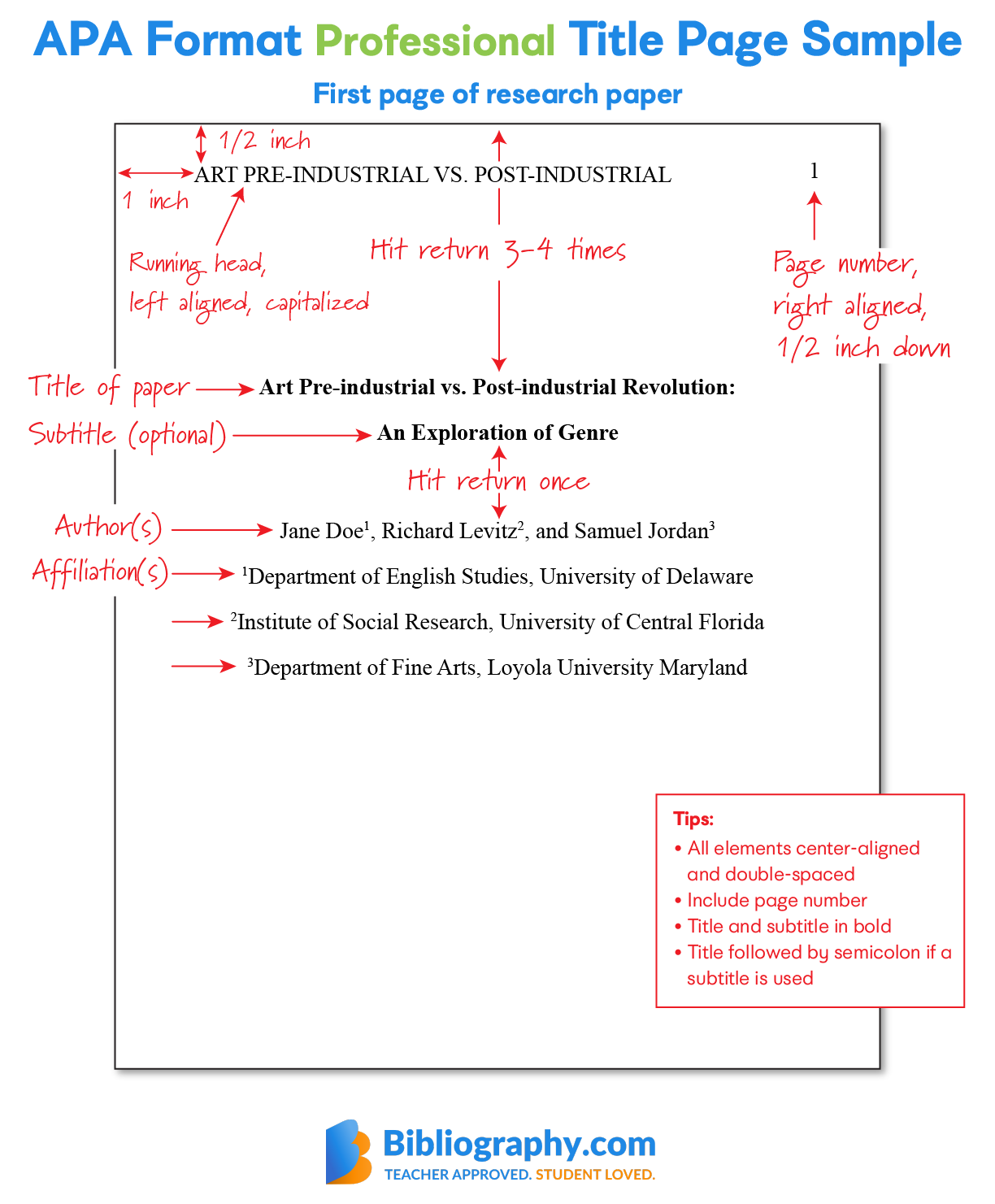
Understanding Title Case (Level 1–5 Headings and Paper Titles)
In title case, you capitalize the first word of the title (even if it is a minor word like "the" or "a"), the first word of a subtitle, and all "major" words. Major words include:
- Nouns and pronouns (e.g., Student, They)
- Verbs (e.g., Is, Write)
- Adjectives (e.g., Cognitive)
- Adverbs (e.g., Quickly)
- Any word with four or more letters (e.g., With, From, Between)
Minor words—defined as conjunctions, articles, and prepositions of three letters or fewer—are kept lowercase unless they are the first word of a title or subtitle. Examples include and, as, but, for, if, nor, or, so, yet, a, an, the, at, by, for, in, of, on, per, and to.
Understanding Sentence Case (Reference Lists)
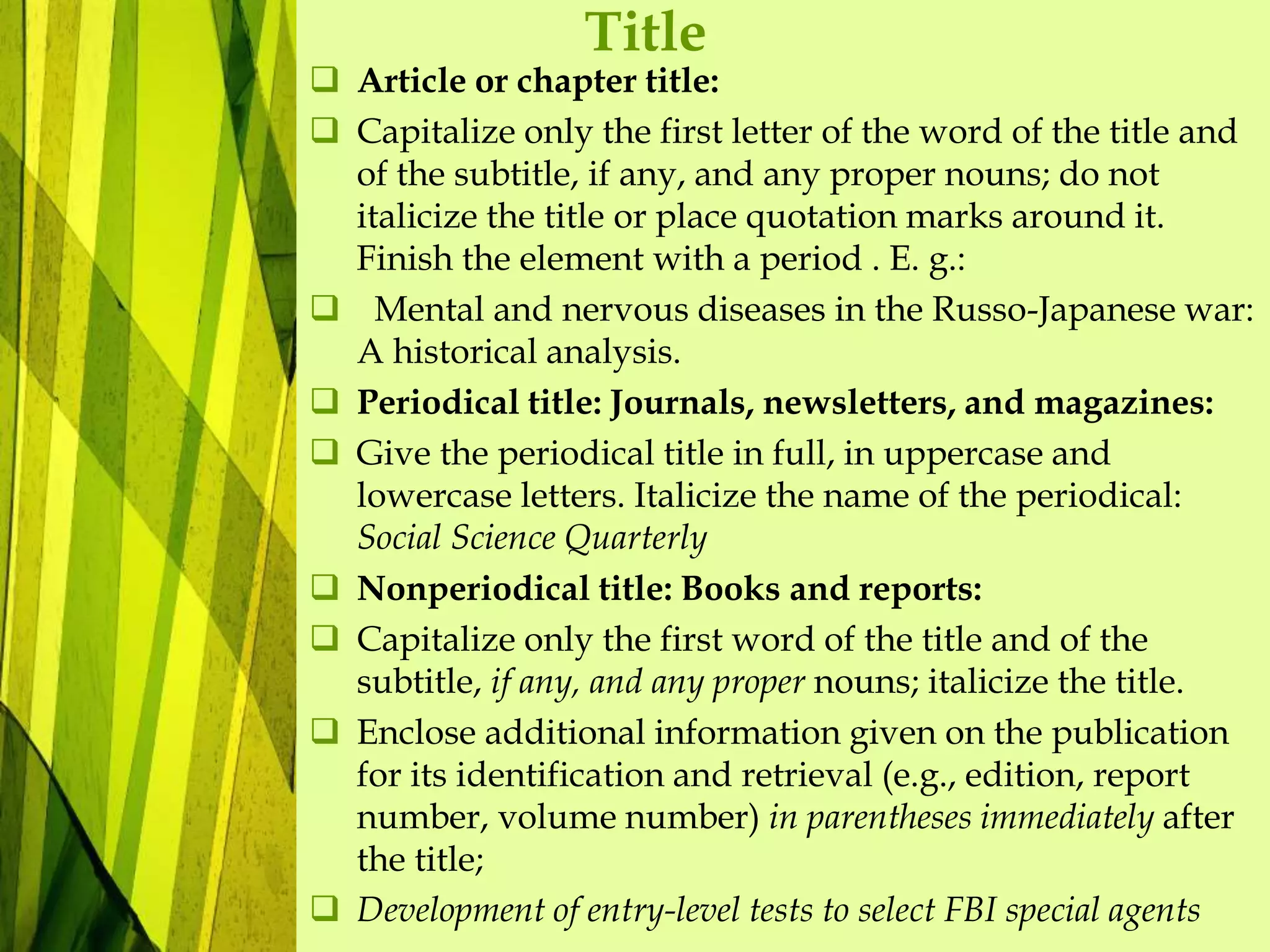
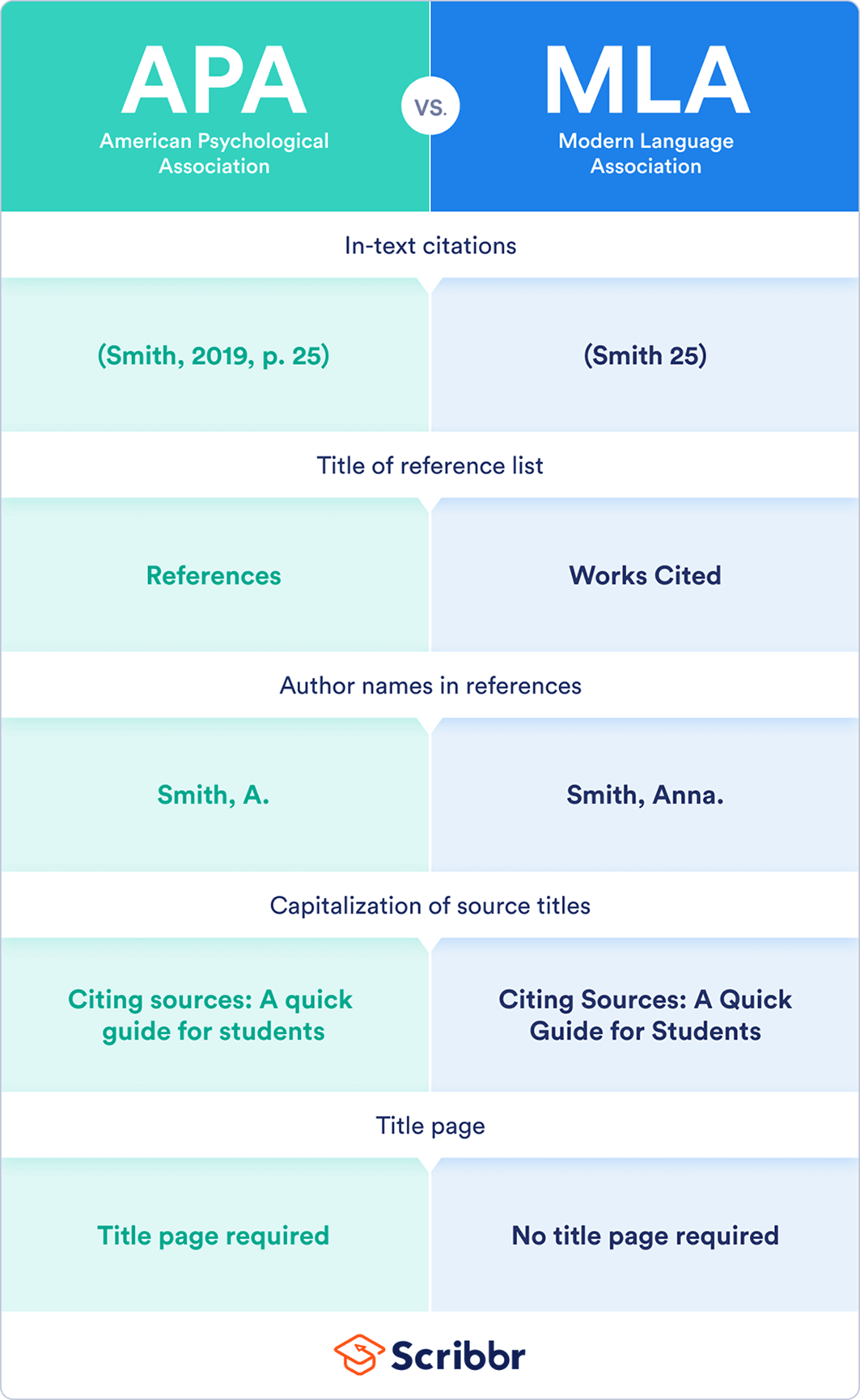
Sentence case is much more restrictive. You capitalize only the first word of the title, the first word of any subtitle (the word immediately following a colon or dash), and any proper nouns. This style is used almost exclusively for the titles of articles, books, reports, and webpages within your reference list.
The logic behind this distinction is visual hierarchy. Title case makes headings "pop" within the body of the text, signaling a change in topic. Sentence case in references keeps the focus on the author and the journal name (which remains in title case), preventing the bibliography from looking cluttered.
Capitalization in the Reference List
The reference list is where capitalization rules often become counterintuitive. It is the only place where the title of a complete work (like a book) or a part of a work (like an article) is written in sentence case.
Journal and Periodical Titles
Unlike article titles, the names of journals, magazines, and newspapers are always written in title case and italics. For example:
- Journal of Applied Psychology
- The New York Times
- Scientific American
Article and Book Titles
Whether you are citing a journal article or a whole book, the title itself uses sentence case. This means if you are citing an article titled "The Impact of Social Media on Adolescent Sleep Patterns," it would appear in your reference list as:
- The impact of social media on adolescent sleep patterns.
If there is a subtitle, it follows a colon and starts with a capital letter:
- Digital wellness: A study of modern habits.
Proper Nouns Within Titles
If a title contains a proper noun, that noun retains its capitalization even in sentence case.
- The influence of Freud on modern counseling.
- A comparative study of New York and London urban planning.
Rules for Proper Nouns and Trade Names
APA Style requires the capitalization of proper nouns—words that name specific people, places, or things. However, researchers often over-capitalize common nouns that they feel are "important" to their study.
People and Racial/Ethnic Groups
Names of individuals are always capitalized. In accordance with current inclusive language guidelines, racial and ethnic groups are also capitalized. This includes terms such as Black, White, Indigenous, Asian, and Hispanic. These are considered proper nouns because they represent specific identities and communities.
Organizations and Departments
Capitalize the names of specific organizations, such as the University of Oxford or the National Institute of Mental Health. However, do not capitalize the word "university" or "department" when used generically (e.g., "The department met on Tuesday" or "Students at the university were surveyed").
Trade Names and Brand Names
Brand names and trade names must be capitalized (e.g., Prozac, iPhone, Microsoft Windows). If a brand name starts with a lowercase letter (like iPad or eBay), retain that lowercase first letter even at the start of a sentence, though it is often better to rephrase the sentence to avoid starting with such a word.
Generic names of drugs or products should remain lowercase. For example, use fluoxetine (generic) instead of Prozac (brand) unless the specific brand is relevant to the research methodology.
Capitalizing Job Titles and Positions
One of the most confusing areas for writers is whether to capitalize a job title like "Professor" or "Director." The rule depends entirely on how the title is used.
When to Capitalize
Capitalize a job title only when it immediately precedes a name and acts as part of that name.
- Professor Jane Doe led the seminar.
- Director Smith approved the budget.
When to Lowercase
Lowercase the title if it follows the name, is separated by a comma, or is used generically.
- Jane Doe, a professor of biology, led the seminar.
- The director approved the budget.
- We interviewed several physicians for the study.
This same rule applies to academic ranks and professional roles. You would write "He is a senior lecturer," but "Senior Lecturer John Brown."
Capitalization After Colons and Punctuation
APA has specific rules for what happens after a colon. Unlike some other styles, APA requires a capital letter after a colon if the colon introduces a complete sentence.
Complete Sentences
If the clause following the colon can stand on its own as a full sentence, capitalize the first word.
- The results were conclusive: The participants showed significant improvement.
Lists and Phrases
If the colon introduces a list or a phrase that is not a complete sentence, do not capitalize the first word unless it is a proper noun.
- The study looked at three variables: age, weight, and height.
Titles and Subtitles
In any title (whether in the body of the paper or the reference list), the first word after a colon is always capitalized, regardless of whether it is a complete sentence.
- Healing the Mind: A Guide to Cognitive Behavioral Therapy
Scientific Terms, Diseases, and Statistics
In academic writing, technical terms often cause confusion. Many writers assume that because a term is technical or specialized, it must be a proper noun.
Diseases and Disorders
Most diseases and disorders are not capitalized.
- diabetes, leukemia, major depressive disorder, autism spectrum disorder.
However, if the name of the disorder includes a person's name (an eponym), that name is capitalized.
- Alzheimer's disease, Parkinson's disease, Non-Hodgkin lymphoma.
Theories and Models
Names of theories, laws, and models are generally not capitalized unless they contain a proper noun.
- the theory of relativity, cognitive dissonance theory, evolutionary theory.
- Maslow's hierarchy of needs, the Pareto principle.
Statistical Tests
Names of statistical tests and procedures are not capitalized.
- t test, chi-square test, analysis of variance, multiple regression.
However, specific variables or factors identified by a letter should have those letters capitalized and often italicized (e.g., F test, p value, N = 450).
Summary Table: APA Capitalization at a Glance
| Element | Style Used | Example |
|---|---|---|
| Paper Title | Title Case | The Impact of Stress on Memory |
| Level 1–5 Headings | Title Case | Methodology and Data Collection |
| Article Title (References) | Sentence Case | The impact of stress on memory. |
| Journal Name (References) | Title Case + Italics | Journal of Psychological Research |
| Racial/Ethnic Groups | Proper Noun | Black, Indigenous, White |
| Diseases (General) | Lowercase | cancer, hypertension, depression |
| Diseases (Eponymous) | Proper Noun | Huntington's disease, Down syndrome |
| Theories/Models | Lowercase | quantum theory, law of effect |
| Titles after a Name | Lowercase | Jane Doe, a professor of physics |
| Titles before a Name | Capitalized | Professor Jane Doe |
Common Mistakes and Troubleshooting
Even experienced editors encounter "gray areas" in APA capitalization. Below are some of the most common pitfalls and how to resolve them.
Hyphenated Words in Title Case
When a word in a title or heading is hyphenated, the general rule is to capitalize both parts if they are both major words.
- A Study of Self-Reported Symptoms
- The Dual-Process Model of Cognition
However, do not capitalize the second part if it is a minor word or a suffix (e.g., Anti-inflammatory).
Table and Figure References
When referring to specific tables or figures in your text, they become proper nouns and must be capitalized.
- "As shown in Table 1..."
- "See Figure 4 for the distribution."
Do not capitalize the words "table" or "figure" when referring to them in a general sense (e.g., "The tables in this section provide data on...").
Parts of a Book or Paper
Similarly, capitalize specific parts of a book or article when followed by a number.
- Chapter 5, Appendix A, Level 2.
- Note: Do not capitalize the word "page" (e.g., page 45) or "paragraph" (e.g., paragraph 3).
Working with Abbreviations
Abbreviations are almost always capitalized (e.g., APA, IQ, CBT). However, when you write out the full term for the first time, do not capitalize it unless it is a proper noun.
- Correct: cognitive behavioral therapy (CBT)
- Correct: American Psychological Association (APA)
- Incorrect: Cognitive Behavioral Therapy (CBT)
Frequently Asked Questions
1. Should I capitalize the first word after a dash?
In APA Style, if you use an em-dash to separate a subtitle or a distinct thought, the word following it is treated much like the word following a colon. In titles and headings, always capitalize the first word after a dash. In the body of a paragraph, you generally do not capitalize it unless it begins a complete sentence or is a proper noun.
2. Are the names of academic majors and subjects capitalized?
No, academic subjects and majors are not capitalized unless they are the name of a language or contain a proper noun.
- "She is majoring in psychology."
- "He took a course in English literature."
- "The neuroscience department is expanding."
3. Do I capitalize "the" in a journal title?
In the reference list, if "The" is part of the official title of the periodical (like The Lancet or The New York Times), it should be capitalized and italicized. In the body of your paper, however, "the" is often kept lowercase and not italicized when referring to the publication (e.g., "according to the New York Times report").
4. How do I capitalize titles of my own unpublished work?
If you are referring to your own paper's title within the text of the paper itself, use title case. If you are citing your own previous work in the reference list, follow the standard sentence case rules for articles or books.
5. Are seasons capitalized in APA Style?
No, the names of seasons (spring, summer, fall, winter) are never capitalized in APA Style unless they are part of a specific title or the first word of a sentence. This is a common error for writers who are used to other styles that might treat seasons as proper nouns.
6. Should I capitalize words like "Hypothesis 1" or "Question 2"?
Yes. Like Table 1 or Figure 4, when you assign a specific number or letter to a hypothesis, question, or trial, it becomes a proper noun.
- "We tested Hypothesis 1 using a regression analysis."
- "Participants were then asked Question 3."
Final Recommendations for Accurate Formatting
Mastering APA capitalization requires moving beyond "capitalizing for emphasis." The primary goal of the 7th edition guidelines is to ensure that the reader's attention remains on the content rather than the formatting.
To ensure your paper is 2026-compliant:
- Audit your Reference List: This is where the most points are lost. Check every book and article title to ensure they are in sentence case, while every journal name is in title case.
- Verify Job Titles: Double-check that you haven't capitalized "Professor," "Doctor," or "Researcher" unless it is directly attached to a name.
- Check Colons: Ensure that every complete sentence following a colon starts with a capital letter.
- Simplify Scientific Terms: Resist the urge to capitalize terms like "Standard Deviation" or "Natural Selection." Keep them lowercase unless they contain a person's name.
By applying these rules consistently, you create a professional, readable manuscript that allows your research findings to take center stage. For further verification, always refer to the latest official Publication Manual of the American Psychological Association or the APA Style website for specific edge cases.