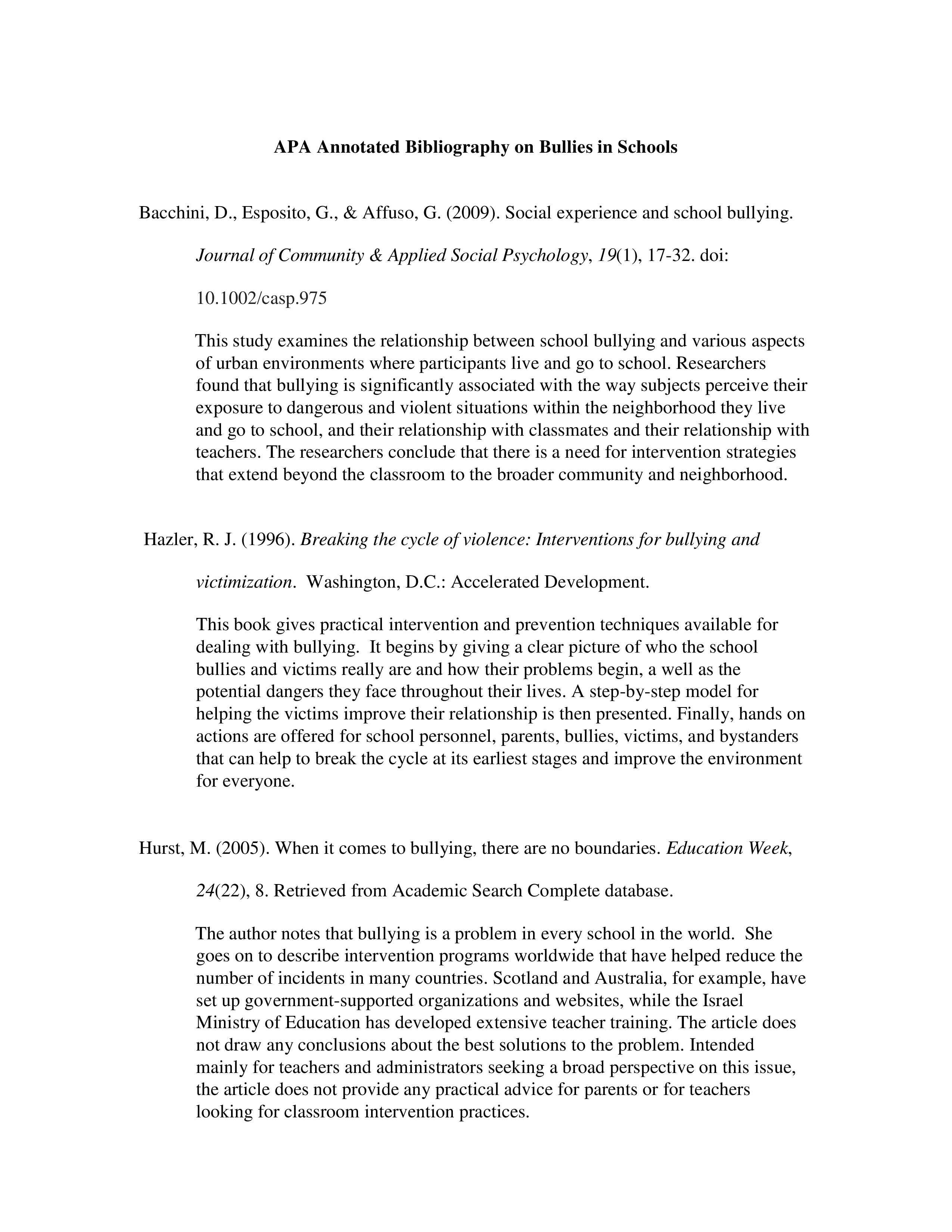
An APA style annotated bibliography is a structured list of citations followed by descriptive and evaluative paragraphs called annotations. To create one correctly in 2026, you must follow the APA 7th Edition guidelines, which require specific indentation, double-spacing, and a professional tone to inform readers of the quality and relevance of your sources.
Whether you are a graduate student or a professional researcher, mastering the annotated bibliography is essential for organizing literature reviews and establishing the credibility of your research. This guide provides the technical specifications, structural requirements, and a visual example that mirrors a standard PDF template.
The Purpose of an Annotated Bibliography in Academic Research
An annotated bibliography serves a much deeper purpose than a standard reference list. While a reference list simply tells the reader where you found your information, an annotated bibliography explains why you used that information and how it contributes to the broader academic conversation.
In 2026, academic rigor remains focused on the ability to discern high-quality, peer-reviewed data from the vast amount of information available online. By writing an annotation, you demonstrate your critical thinking skills. You are not just a consumer of information; you are an evaluator.
Strategic Benefits
- Organization for Literature Reviews: If you are writing a thesis or a long-form research paper, the annotated bibliography acts as a repository of ideas. When it comes time to write the actual paper, you can refer back to your annotations instead of re-reading every source.
- Evaluating Source Credibility: By forcing yourself to write about the author’s credentials and the study’s methodology, you naturally filter out weak or biased sources.
- Identifying Research Gaps: As you summarize multiple sources, you will begin to see what has been covered extensively and where the current research is lacking.
General Formatting Requirements (APA 7th Edition)
As of 2026, the American Psychological Association (APA) 7th Edition remains the gold standard for social sciences and education. The formatting of an annotated bibliography is precise, and deviations can lead to point deductions in academic settings.
Page Setup and Typography
- Margins: Use 1-inch (2.54 cm) margins on all sides of the document.
- Font Options: APA 7th allows for more flexibility than previous versions. You may use 12-point Times New Roman, 11-point Arial, or 11-point Calibri. The key is consistency; do not mix fonts within the document.
- Spacing: The entire document must be double-spaced, including the citations and the annotation paragraphs. Do not add extra spaces between entries.
- Page Numbers: Place page numbers in the top right corner of every page, starting with page 1.
- Title: At the top of the first page, center the words "Annotated Bibliography" in bold.
The Anatomy of an Entry
Each entry consists of two distinct parts: the citation and the annotation.
- The Citation: This follows standard APA reference list rules. It uses a hanging indent, where the first line is flush left and subsequent lines are indented 0.5 inches.
- The Annotation: This begins on a new line directly below the citation. The entire annotation is indented 0.5 inches from the left margin. If your annotation has multiple paragraphs, the second and subsequent paragraphs should have an additional 0.5-inch first-line indent.
Types of Annotations: Summary vs. Evaluation
Not all annotated bibliographies are created equal. Depending on your assignment or research goal, you may be required to write different types of annotations.
1. Descriptive or Informative Annotations
These are purely summaries. They describe the main arguments, the scope of the research, and the findings without judging the quality of the work. This is similar to a structured abstract but written in your own words.
2. Analytical or Critical Annotations
This is the most common type for upper-level university work. In addition to summarizing the content, you must evaluate the source's strengths and weaknesses. Is the sample size too small? Is the author biased? How does it compare to other works in your bibliography?
3. Reflective Annotations
Reflective annotations focus on how the source fits into your specific research project. You might explain how a particular chapter helped you refine your thesis statement or how the data provided the evidence needed for your primary argument.
Step-by-Step Instructions to Create Your Bibliography
Follow these steps to ensure your document meets professional standards before you export it as a PDF.
Step 1: Collect Your Sources
Ensure every source is relevant to your topic. In 2026, it is recommended to prioritize sources published within the last 5 to 10 years unless you are dealing with foundational "seminal" texts.
Step 2: Format the Citation
Use the APA 7th Edition format for the specific source type (book, journal, website). For example, a journal article requires:
Author, A. A., & Author, B. B. (Year). Title of the article. Title of the Periodical, volume(issue), pages. https://doi.org/xxxx
Step 3: Write the Annotation
Start the annotation on the line immediately following the citation. Do not leave an extra blank line. Ensure the block indent is applied. A standard annotation is typically 150 to 250 words.
Step 4: Alphabetize
Organize your entries alphabetically by the first author's last name. This is the same rule used for a standard Reference page.
Detailed APA Style Annotated Bibliography Example
Below is a visual representation of how your document should look. Imagine this formatted on a standard letter-sized page.
Annotated Bibliography Smith, J. A., & Williams, R. L. (2024). Digital ethics in the age of artificial intelligence. Journal of Modern Technology, 15(2), 102-118. https://doi.org/10.1037/0000123-456 The entire paragraph here is indented 0.5 inches. Smith and Williams provide a comprehensive overview of the ethical dilemmas facing software developers in 2026. They specifically focus on algorithmic bias and the transparency of machine learning models. The authors argue that without federal oversight, digital ethics will remain a secondary concern for major tech corporations. This article is highly relevant to my research because it provides a framework for analyzing the "black box" of AI decision-making. The methodology is robust, utilizing a meta-analysis of 50 previous studies, though the authors admit that their sample is skewed toward North American tech firms. Zhang, H. (2025). The future of remote education. Academic Press. Zhang’s book explores the long-term psychological impacts of remote learning on university students. Drawing on data collected between 2020 and 2024, the author suggests that while technical proficiency has increased, social cohesion among student cohorts has declined. Zhang provides practical strategies for educators to foster community in virtual environments. This source will serve as the primary counter-argument to my thesis that technology improves all aspects of education. The detailed case studies provide qualitative data that balances the quantitative nature of my other sources.
Comparison Table: APA vs. MLA Annotated Bibliographies
While APA is common in the sciences, you may encounter MLA (Modern Language Association) in humanities. Knowing the differences prevents common formatting errors.
| Feature | APA 7th Edition (Current 2026) | MLA 9th Edition |
|---|---|---|
| Title of Page | Annotated Bibliography (Bold, centered) | Annotated Bibliography (Centered, not bold) |
| Date Placement | In parentheses after the author (2026). | At the end of the citation. |
| Annotation Indent | Entire block indented 0.5 inches. | Entire block indented 0.5 inches. |
| Author Names | Inverted (Smith, J. A.). | Full names (Smith, John A.). |
| Header | Page number only (Top Right). | Last name and page number (Top Right). |
| Capitalization | Sentence case for article titles. | Title case for article titles. |
Common Mistakes to Avoid
Even seasoned researchers make mistakes when finalizing their bibliographies. Keep an eye out for these technical errors:
- Failure to Use Hanging Indents: The citation must have a hanging indent, but the annotation must be a full block indent. This creates a clear visual "staircase" effect.
- Using Abstracts: Never copy and paste the abstract from a journal database. This is considered plagiarism. The annotation must be your original analysis.
- Incorrect DOI Formatting: In 2026, the only correct way to present a DOI is as a full URL starting with
https://doi.org/. Do not use the olderdoi:10.xxxxprefix. - Inconsistent Spacing: Ensure you do not have single-spacing in the annotation and double-spacing in the citation. The entire document must be uniform.
- Vague Analysis: Avoid phrases like "This source is very good" or "I liked this article." Use professional language such as "This study provides empirical evidence" or "The author’s conclusions are limited by a small sample size."
Frequently Asked Questions
Does an annotated bibliography need a title page?
In professional APA style, a separate title page is required. However, for student papers, many instructors only require the title "Annotated Bibliography" at the top of the first page. Always check your specific assignment rubrics.
How many sources should be in an annotated bibliography?
There is no set number in the APA manual. Typically, an assignment will specify between 5 and 15 sources. For a dissertation or professional literature review, it could include 50 or more entries.
Can I use first-person pronouns like "I" or "my"?
In APA 7th Edition, the use of the first person ("I chose this source because...") is generally acceptable in the "Reflective" portion of an annotation. However, the summary and evaluation portions should remain in the third person to maintain a formal academic tone.
How do I cite a source with no date?
If a source has no publication date, use the abbreviation "(n.d.)" in place of the year. For example: Smith, J. (n.d.). Title of work.
Should the annotation be one paragraph or two?
Most annotations are a single, well-developed paragraph. However, if you are required to provide a very detailed summary followed by a separate detailed evaluation, you may use two paragraphs. Just remember to indent the first line of the second paragraph by an additional 0.5 inches.
Is a "PDF example" different from a Word document?
The content and formatting are identical. The reason researchers look for a "PDF example" is that PDF preserves formatting exactly as it should look on the printed page, whereas Word docs can shift based on different software versions. When you finish your work, always "Save as PDF" to ensure your indents remain intact when your professor opens the file.
Final Recommendations for Submission
Before you export your annotated bibliography to PDF and submit it, perform a final "cleanliness" check. Verify that your citations are in alphabetical order and that your DOI links are active. If you are using AI tools to help summarize sources, ensure you have manually rewritten the content to reflect your specific research lens; AI-generated summaries often lack the critical evaluation required for a high-grade annotated bibliography.
For the most accurate and up-to-date rules, you can consult the official APA Style Website or the Purdue Online Writing Lab (OWL), which provide updated examples for 2026.