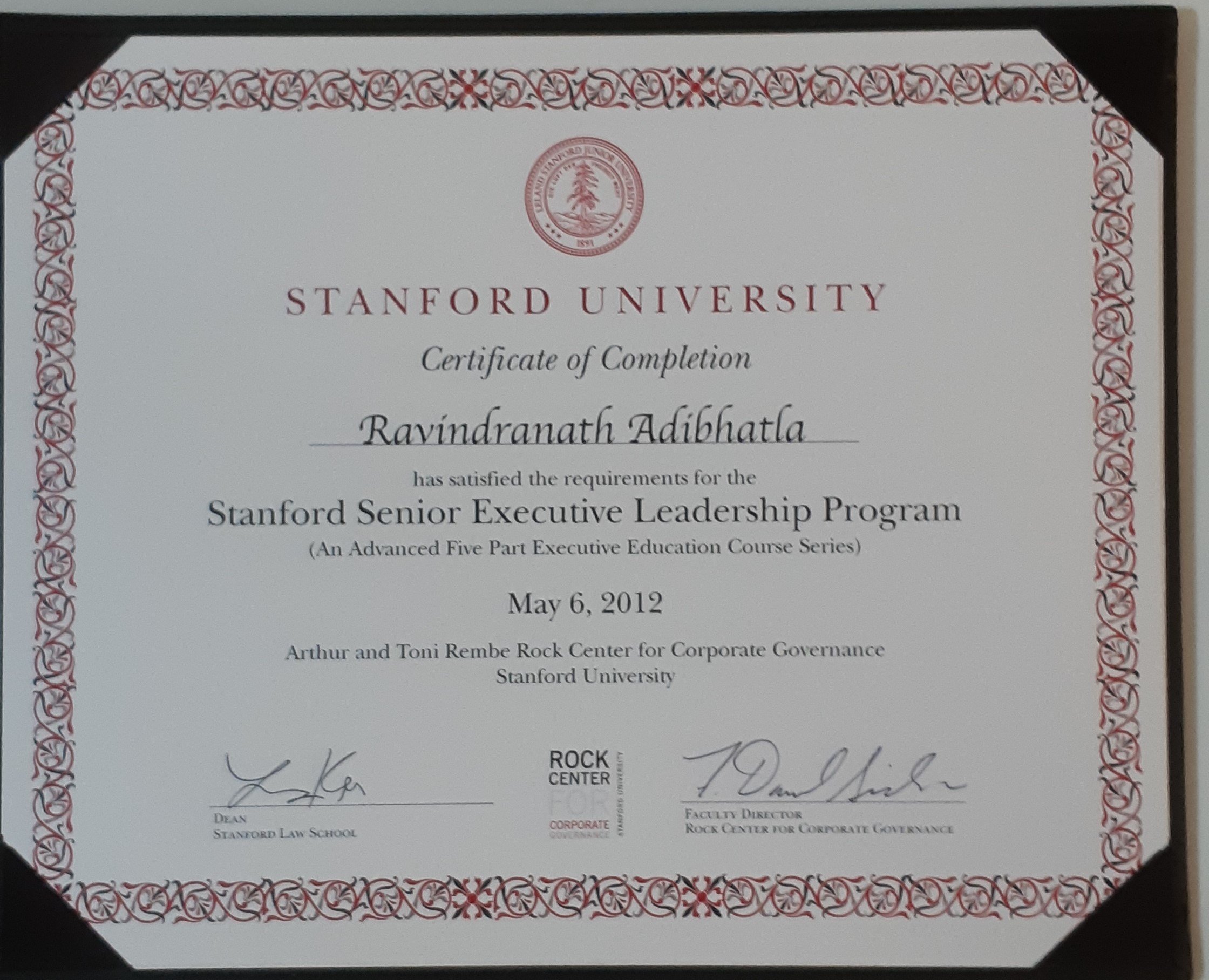
Stanford certificate programs are generally worth the investment for professionals seeking high-level skill pivoting, specialized technical knowledge, or brand association with a world-leading institution. While the ROI is highest in technology and executive leadership, the value depends heavily on whether you prioritize the Stanford network or specific curriculum over a traditional degree.
Understanding the Landscape of Stanford Professional Education in 2026
To determine if a Stanford certificate is a sound financial and professional decision, one must first distinguish between the various types of non-degree credentials the university offers. Stanford University does not offer a single "certificate"; rather, it provides a diverse array of programs through different schools and centers, each with varying levels of prestige, rigor, and cost.
The most prominent provider is the Stanford Center for Professional Development (SCPD), which manages the Stanford Online platform. This entity works across the university's schools—including Engineering, Medicine, and Humanities and Sciences—to deliver professional certificates. These are often composed of three to four graduate-level courses. Simultaneously, the Stanford Graduate School of Business (GSB) offers Executive Education certificates, which are frequently shorter, more intensive, and significantly more expensive, often targeting C-suite executives and senior management.
In 2026, the value of these credentials has shifted toward specialized "micro-mastery." As the global labor market increasingly prioritizes verified skills over general prestige, Stanford has adapted by integrating advanced topics like AI ethics, sustainable energy systems, and bio-engineering into their core professional offerings. Understanding which "bucket" a program falls into—Graduate Professional, Executive Education, or Non-Credit Professional—is the first step in evaluating its worth.
Analyzing the Financial Commitment: Costs and Fees
The "investment" in a Stanford certificate is not merely the tuition; it includes opportunity costs and material fees. As of 2026, tuition structures remain tiered based on the delivery model and the level of academic rigor.
Graduate Professional Certificates
These programs often require students to take courses for credit. In many cases, these credits can later be applied toward a full Master’s degree if the student is eventually admitted to the university.
- Cost Range: $10,000 to $20,000.
- Structure: Usually 3–4 courses, each costing between $3,500 and $5,000.
- Target: Engineers, data scientists, and specialized researchers.
Professional Certificates (Non-Credit)
These are shorter, skills-based programs that do not grant academic credit but provide a verified credential from Stanford.
- Cost Range: $3,000 to $8,000.
- Structure: Self-paced or cohort-based modules over 3–6 months.
- Target: Mid-level managers and individuals looking to upskill in specific tools or methodologies.
Executive Education Certificates
Offered primarily by the Stanford GSB, these are high-impact programs designed for networking and leadership development.
- Cost Range: $15,000 to $75,000+.
- Structure: Can range from a few days on-campus (intensive) to several months of hybrid learning.
- Target: Senior leaders and executives.
When assessing these costs, it is vital to check for corporate sponsorship. Many Fortune 500 companies have pre-approved Stanford as a tuition reimbursement partner. If your employer covers 50% to 100% of the cost, the ROI becomes an immediate "yes," as the personal financial risk is minimized while the career signaling remains high.
The Tangible and Intangible Benefits of the Stanford Brand
The primary reason professionals choose Stanford over more affordable alternatives like Coursera or local state university extensions is the "signaling effect." In a competitive job market, having "Stanford University" on a resume acts as a high-fidelity signal to recruiters regarding the candidate's intellectual caliber and commitment to excellence.
Resume Signaling and Credibility
A Stanford certificate serves as a proxy for quality. For a professional transitioning from a non-technical background into Artificial Intelligence or Product Management, the Stanford name provides immediate legitimacy. It suggests that the individual has been vetted by elite faculty and has mastered a curriculum that meets the university's rigorous standards. In 2026, with the proliferation of low-quality online badges, the "institutional moat" of a top-tier university provides a significant competitive advantage.
Access to Cutting-Edge Research
Unlike many bootcamps that focus on yesterday’s tools, Stanford’s professional programs are often taught by the same faculty conducting groundbreaking research in Silicon Valley. Students gain insights into emerging trends—such as quantum computing applications or regenerative medicine—before they become mainstream in the industry. This "information arbitrage" can be worth more than the certificate itself if it allows a professional to lead a new department or initiative within their company.
Networking and the "Affiliate" Status
It is a common misconception that certificate holders receive full alumni status. While they usually do not receive the same benefits as degree-holders (such as access to the full alumni directory or lifetime @stanford.edu email addresses), they do become part of a specific professional community. Stanford GSB Executive Education participants, for example, often gain "Associate Alumni" status, which provides access to certain networking events and regional clubs. The value of these connections in sectors like Venture Capital and Tech cannot be overstated.
Comparing Stanford Certificates with Industry Alternatives
To determine if the premium price is justified, we must compare Stanford’s offerings against other elite institutions and mass-market platforms.
| Feature | Stanford Professional Certs | Harvard Online / Executive Ed | MIT xPRO | Coursera/Udacity (Specializations) |
|---|---|---|---|---|
| Primary Focus | Innovation, Engineering, Tech | Leadership, Law, Strategy | Deep Tech, Systems Engineering | Applied Skills, Tool Mastery |
| Average Cost | $3,000 - $15,000 | $2,500 - $15,000 | $2,000 - $10,000 | $400 - $2,000 |
| Academic Credit | Often available for grad certs | Rarely for professional certs | Rarely | Almost never |
| Prestige Level | Tier 1 (Ultra-High) | Tier 1 (Ultra-High) | Tier 1 (Ultra-High) | Tier 3 (Skill-specific) |
| Networking | High (Silicon Valley focus) | High (Global Leadership) | High (Technical Networks) | Minimal to None |
| Best For | Tech Pioneers & Managers | Policy & Business Leaders | Research & Development | Individual Contributors |
As the table illustrates, Stanford competes most directly with Harvard and MIT. The choice between them usually comes down to geography and industry focus. Stanford is the undisputed leader for those looking to immerse themselves in the Silicon Valley ecosystem, whereas Harvard may carry more weight in traditional finance or international policy.
ROI by Industry: Where the Value Peaks
The "worth" of a Stanford certificate is not uniform across all professions. In 2026, the return on investment is highly segmented by industry.
Technology and Engineering
For software engineers, data scientists, and systems architects, a Stanford Graduate Certificate in something like Cybersecurity or Artificial Intelligence offers one of the highest ROIs. Because these courses are often for-credit, they prove the student can handle Stanford’s academic rigor. Many professionals report salary increases of 15% to 25% after completion, particularly when moving into lead architect or engineering manager roles.
Management and Leadership
The Stanford GSB’s "LEAD" program or similar executive certificates are highly valued in the corporate world. The ROI here is often measured in "promotion velocity." A mid-level manager at a global firm may find that a Stanford credential is the final piece of evidence needed for the executive committee to approve their move to a Director or VP role.
Innovation and Design Thinking
Stanford’s d.school (Hasso Plattner Institute of Design) influences many of its professional certificates in innovation. For professionals in product design, marketing, or UX, these certificates offer a specific methodology—Design Thinking—that has become a standard language in modern business. The "worth" here is found in the ability to facilitate high-level strategy sessions and drive product innovation.
Potential Drawbacks and Considerations
Despite the prestige, a Stanford certificate is not a magic wand for every career woe. There are specific scenarios where the investment may fail to yield the desired return.
- The "Certificate vs. Degree" Gap: Some employers still prioritize a full Master’s degree over a certificate. If a job description explicitly requires an MBA or an MS in Computer Science, a four-course certificate may not be enough to bypass the automated screening filters (ATS), regardless of the Stanford name.
- Time Commitment: These are not "easy" programs. Graduate-level certificates require 10–20 hours of work per week. For a working professional with a family, this can lead to burnout. If the student cannot maintain a high level of performance, the networking benefits diminish significantly.
- Cost Sensitivity: If you are paying $15,000 out of pocket and your goal is simply to learn how to use a specific software (like Python or AWS), you are better off with a $500 platform-specific certification. You pay the "Stanford Premium" for the theory, the brand, and the faculty—not just for technical tutorials.
How to Determine if it is Right for You
Before enrolling, use the following decision framework to ensure the investment aligns with your 2026 career goals:
- Audit Your Goals: Are you looking for a promotion, a total career pivot, or just to fill a specific knowledge gap? (Pivots and promotions justify the Stanford cost; gap-filling often doesn't).
- Verify the Instructor: Ensure the program is taught by Stanford faculty or senior practitioners. Some "Stanford-branded" programs are managed by third-party OPMs (Online Program Managers); verify that the certificate is issued directly by a Stanford school.
- Calculate the Break-Even: If the program costs $10,000, will the anticipated salary bump cover this cost within 18 months? In most high-tech and management roles, the answer is yes.
- Check the Alumni Policy: If networking is your goal, read the fine print on what "alumni" or "community" access you actually get.
Frequently Asked Questions
Does a Stanford certificate make me an alum?
Generally, no. Completing a professional or graduate certificate usually grants you "certificate holder" or "affiliate" status. While you may join certain alumni associations (like the GSB’s in specific cases), you are not considered a "Stanford Alumnus" in the same way a degree-earning graduate is. However, you can accurately list the credential on your LinkedIn and resume under "Education" or "Certifications."
Can I transfer certificate credits to a Master's degree?
Yes, for certain Graduate Professional Certificates. Programs offered through the Stanford Center for Professional Development often allow you to earn actual graduate credit. If you later apply and are accepted into a related Stanford Master’s program, these units can often be transferred, potentially saving you months of time and thousands of dollars on the full degree.
How hard is it to get into a Stanford certificate program?
It depends on the program type. Non-credit professional certificates are often "open enrollment," meaning anyone who pays and meets basic prerequisites can join. However, Graduate Certificates typically require an application process, including transcripts and a statement of purpose, as you are taking classes alongside degree-seeking students.
Is the certificate paper-based or digital?
In 2026, Stanford provides both a high-quality physical certificate and a verified digital credential (often via platforms like Parchment or Accredible). These digital badges are encrypted and can be directly embedded into your LinkedIn profile to provide instant verification to employers.
Are there scholarships available for these programs?
Direct scholarships for professional certificates are rare. However, Stanford often offers discounts for groups, Stanford Alumni (degree-holders), and sometimes for employees of non-profit organizations. The most common "scholarship" is actually employer-funded tuition assistance.
Final Recommendation
A Stanford certificate is a high-value asset for professionals in Tech, Engineering, and Executive Leadership who want to leverage a world-class brand to accelerate their career trajectory. It is particularly worth the investment if you can secure partial or full employer funding. If your goal is purely to learn a technical skill without the need for institutional prestige, more affordable platforms will suffice. However, for those looking to enter the inner circles of Silicon Valley or the global corporate elite, the Stanford name remains one of the most powerful door-openers in the professional world of 2026.