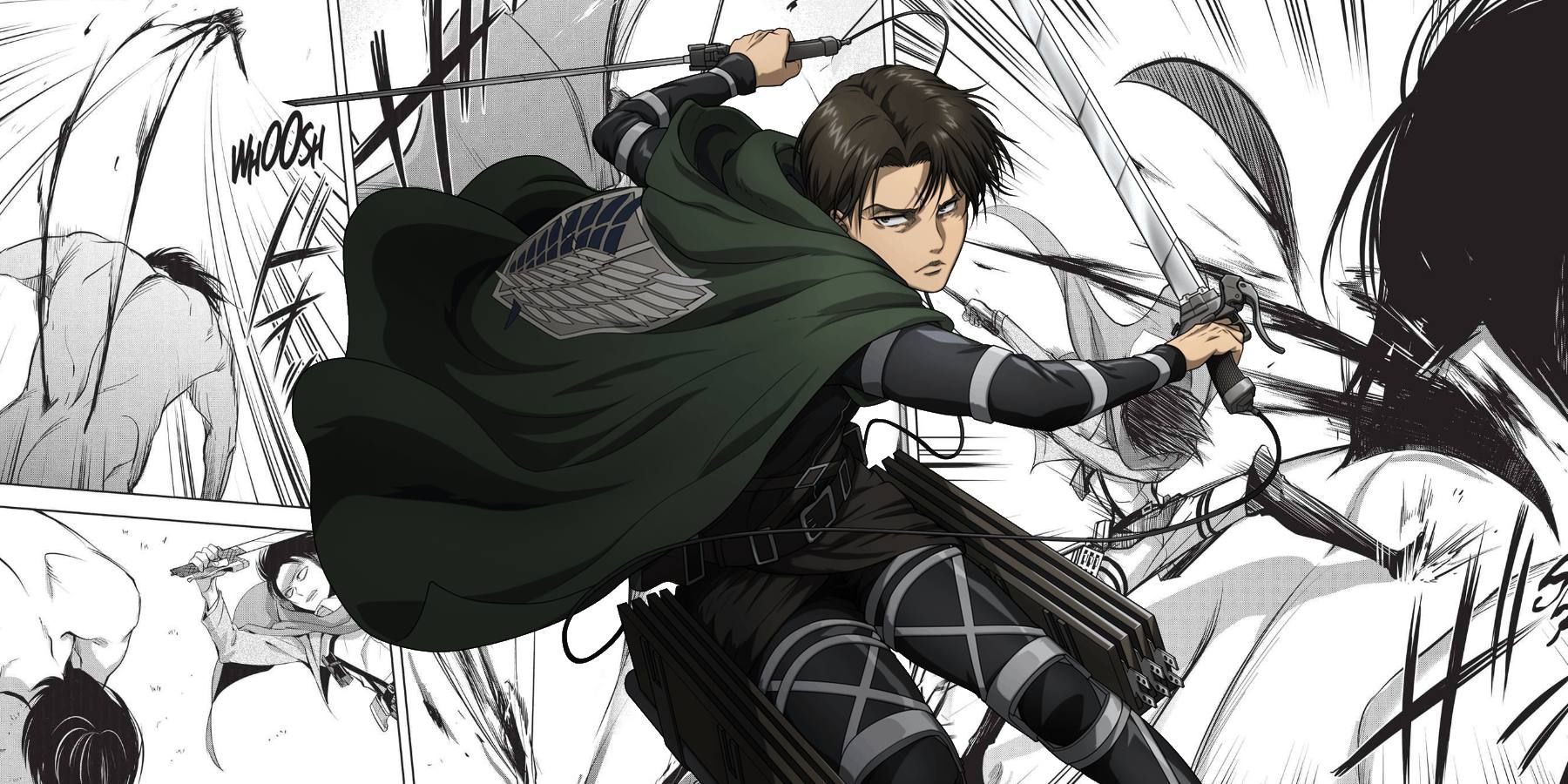
The military in Hajime Isayama’s Attack on Titan (Shingeki no Kyojin) is divided into three distinct branches—the Stationary Guard, the Garrison, and the Military Police Brigade—alongside the specialized training corps and the rebellious Yeagerist factions. Each branch serves a specific socio-political and tactical function within the Walls, reflecting the stratified nature of Eldian society and humanity's desperate struggle for survival against the Titans.
The Structural Hierarchy of the Eldian Military
Within the world of Attack on Titan, the military forces are organized to protect humanity from outside threats while maintaining internal order and resource distribution. Every citizen who chooses or is forced to join the military must first pass through a rigorous preparation phase before being sorted into their permanent assignment. This division of labor is not merely practical; it is deeply political, reflecting the safety, privilege, and corruption inherent in living closer to the center of the Walls.
To understand how society functions under the constant shadow of the Titans, one must examine the specific duties, recruitment processes, survival rates, and social status of each branch. The operational demands placed on these branches change dramatically as the series progresses, evolving from localized defense forces into global military instruments.
1. The 104th Training Corps
Before any soldier can join a specialized branch, they must pass through the 104th Training Corps. This is the foundational institution where raw recruits—primarily civilians from Wall Rose and Wall Maria—are transformed into combat-ready soldiers capable of utilizing Vertical Maneuvering Equipment (3D Maneuvering Gear).
Prerequisites and Training Curriculum
Recruits endure months of grueling physical and mental conditioning. The curriculum focuses heavily on:
- Vertical Maneuvering Equipment Proficiency: Learning to balance and propel oneself using gas-powered anchors and blades.
- Hand-to-Hand Combat: Based on techniques taught by instructor Keith Shadis, emphasizing leverage and counter-attacks against larger opponents.
- Titan Anatomy and Weak Spots: Identifying the nape as the sole vulnerable point capable of killing a Titan.
- Tactical Formation and Communication: Understanding smoke signal protocols and squad-based coordination during chaotic engagements.
Post-Graduation Placement
Upon graduation, recruits are ranked based on overall performance. Only the top ten graduates earn the right to apply for the prestigious Military Police Brigade, which guarantees a life of safety deep within the inner Wall Sina. The remaining majority must choose between the Scout Regiment and the Stationary Guard.
2. The Scout Regiment (Survey Corps)
The Scout Regiment (often translated as the Survey Corps or Scouting Legion) is the branch dedicated to venturing outside the Walls to research Titan origins, map uncharted territories, and reclaim lost human land.
Operational Purpose and Risks
Despite being the smallest and most famous branch, the Scout Regiment suffers the highest casualty rate by an overwhelming margin. For decades prior to the Fall of Shiganshina, virtually every major expedition resulted in heavy losses with little tangible progress, leading many citizens to view them as a wasteful and reckless use of tax money.
Tactics and Innovations
Led by commanders such as Erwin Smith and later Hange Zoë, the Scouts revolutionized anti-Titan warfare through strategic innovations:
- Long-Distance Enemy Scouting Formation: A grid-based formation designed to minimize direct contact with Titans while maximizing situational awareness across wide areas.
- Thunder Spears (Rupture Blades): Heavy explosive projectiles designed to pierce armored Titan skin, developed later in the series with assistance from Hizuru technology.
- Anti-Personnel Vertical Maneuvering Equipment: Adapted variants used to combat human opponents during the uprising arc.
3. The Stationary Guard (Garrison Regiment)
The Stationary Guard (frequently referred to simply as the Garrison) is the largest branch of the military. Their primary responsibility is the maintenance, reinforcement, and defense of the massive stone Walls (Maria, Rose, and Sina) that protect human civilization.
Duties and Responsibilities
Because humanity spent a century believing the Walls were entirely impenetrable, the Garrison gradually devolved into a state of lax discipline and complacency during peacetime. Their duties include:
- Wall Maintenance: Inspecting and repairing structural damage caused by weather, age, or minor impacts.
- Gate Security: Managing the flow of refugees, merchants, and cargo between districts.
- Civil Defense: Acting as the first line of defense if a Wall is breached, utilizing specialized artillery cannons mounted along the ramparts.
Notable Figures and Turning Points
While many Garrison soldiers struggled with morale, key leaders like Commander Dot Pyxis proved instrumental in crisis management, orchestrating the defense of Trost District and organizing civilian evacuations during critical breaches.
4. The Military Police Brigade
The Military Police Brigade is the elite internal security force responsible for maintaining public order within Wall Sina, protecting the royal family, and regulating the distribution of resources.
Privilege and Corruption
Membership in the Military Police is strictly limited to the top ten graduates of each training corps class, plus a select few who transfer from the Garrison after years of exemplary service. Because duty stations are located exclusively in the innermost capital, soldiers in this branch live safe, comfortable lives far removed from the terror of Titan attacks.
This insulation fostered widespread corruption, bribery, black-market trafficking, and political assassinations carried out by the Interior First Squad—a specialized sub-faction reporting directly to the Central Government and the Reiss family.
Comparison of Military Branches in Attack on Titan
| Branch | Primary Objective | Average Casualty Rate | Deployment Area | Social Prestige |
|---|---|---|---|---|
| 104th Training Corps | Basic military preparation and sorting | Moderate (during surprise attacks) | Training camps | Neutral |
| Scout Regiment | Reconnaissance and reclaiming lost territory | Extremely High | Outside the Walls | Low (pre-fall) / High (post-revelation) |
| Stationary Guard | Wall defense and local civil administration | Moderate to High | On and around the Walls | Moderate |
| Military Police | Internal security and royal protection | Very Low | Wall Sina (Interior) | Very High |
5. Splinter Factions and Later Developments
As the geopolitical landscape of Attack on Titan expands beyond the island of Paradis, traditional military structures undergo radical transformations.
The Yeagerist Movement
Formed in secret by radicalized members of the military and civilian populace loyal to Eren Yeager, the Yeagerists overthrew the existing military government to seize control of Paradis Island. Operating outside official command structures, they utilized military equipment and ideological fervor to execute the Rumbling, effectively rendering the traditional tripartite military system obsolete in favor of a centralized nationalist regime.
Frequently Asked Questions
Which branch of the military had the highest survival rate?
The Military Police Brigade had by far the highest survival rate because its members were stationed exclusively inside Wall Sina, safely away from Titan territory, where they performed policing and administrative duties.
Why did most recruits choose the Stationary Guard over the Scout Regiment?
Most recruits opted for the Stationary Guard because it offered relative safety, routine duties, and a low risk of being eaten by a Titan, whereas joining the Scout Regiment was widely considered a near-suicidal endeavor.
How did a recruit qualify for the Military Police Brigade?
Only the top ten ranked graduates from the Training Corps could immediately enlist in the Military Police. Soldiers from other branches could only join after earning exceptional merit over several years of active service.
What weapons were unique to the Scout Regiment?
The Scout Regiment pioneered the use of smoke signal guns for long-distance communication during formations and later adopted Thunder Spears—rocket-propelled explosive charges designed to destroy hardened Titan armor.
Did the military branches change after the basement secrets were revealed?
Yes. Once humanity learned that their true enemies were human nations across the sea rather than mindless Titans, the military shifted its focus from localized wall defense to naval warfare, anti-personnel combat, and global geopolitical strategy.
To fully appreciate the narrative arc of Attack on Titan, observe how individual characters navigate these institutional structures—moving from the rigid discipline of the training camps into branches that either uphold corrupt systems or fight desperately to dismantle them.