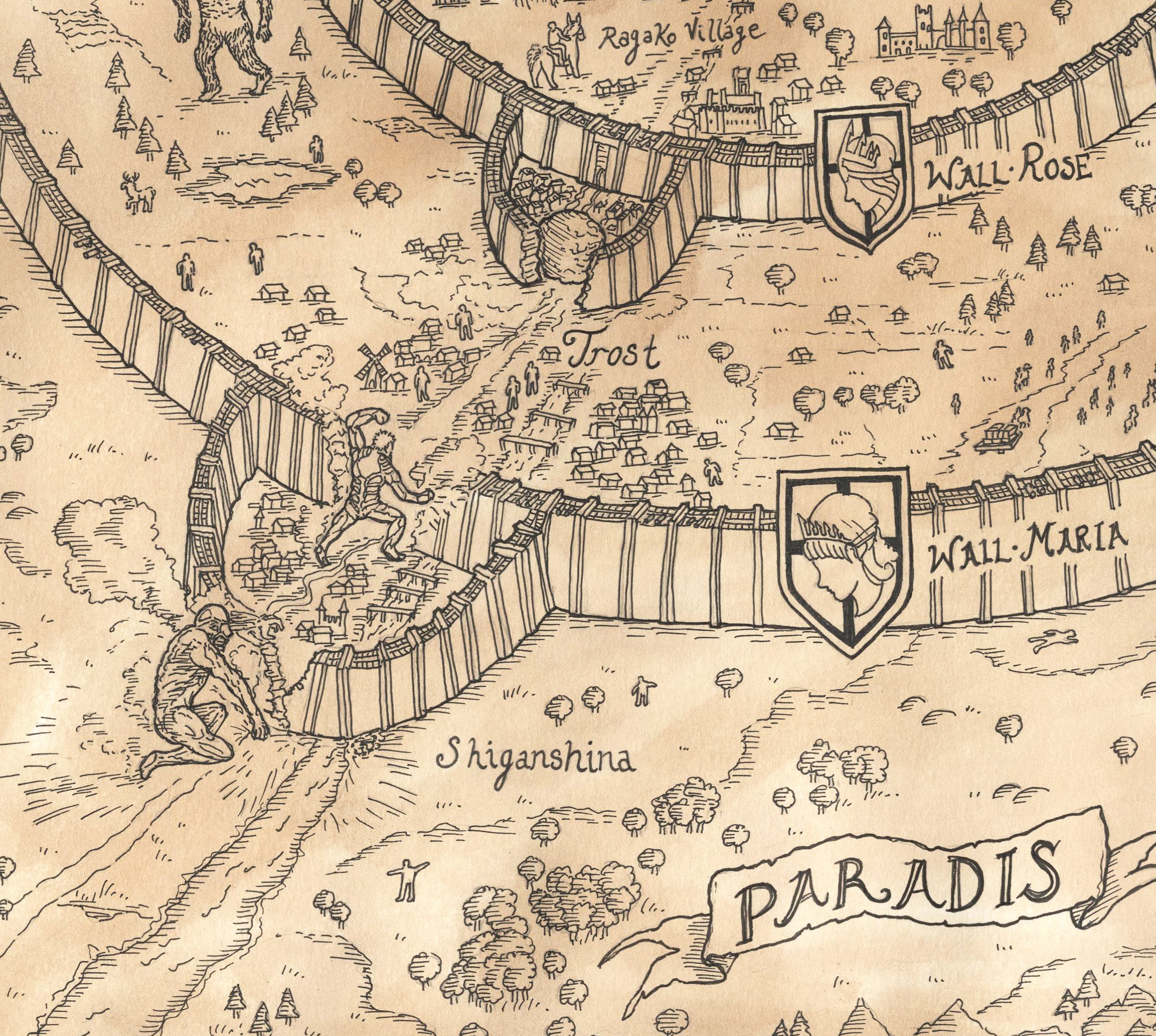
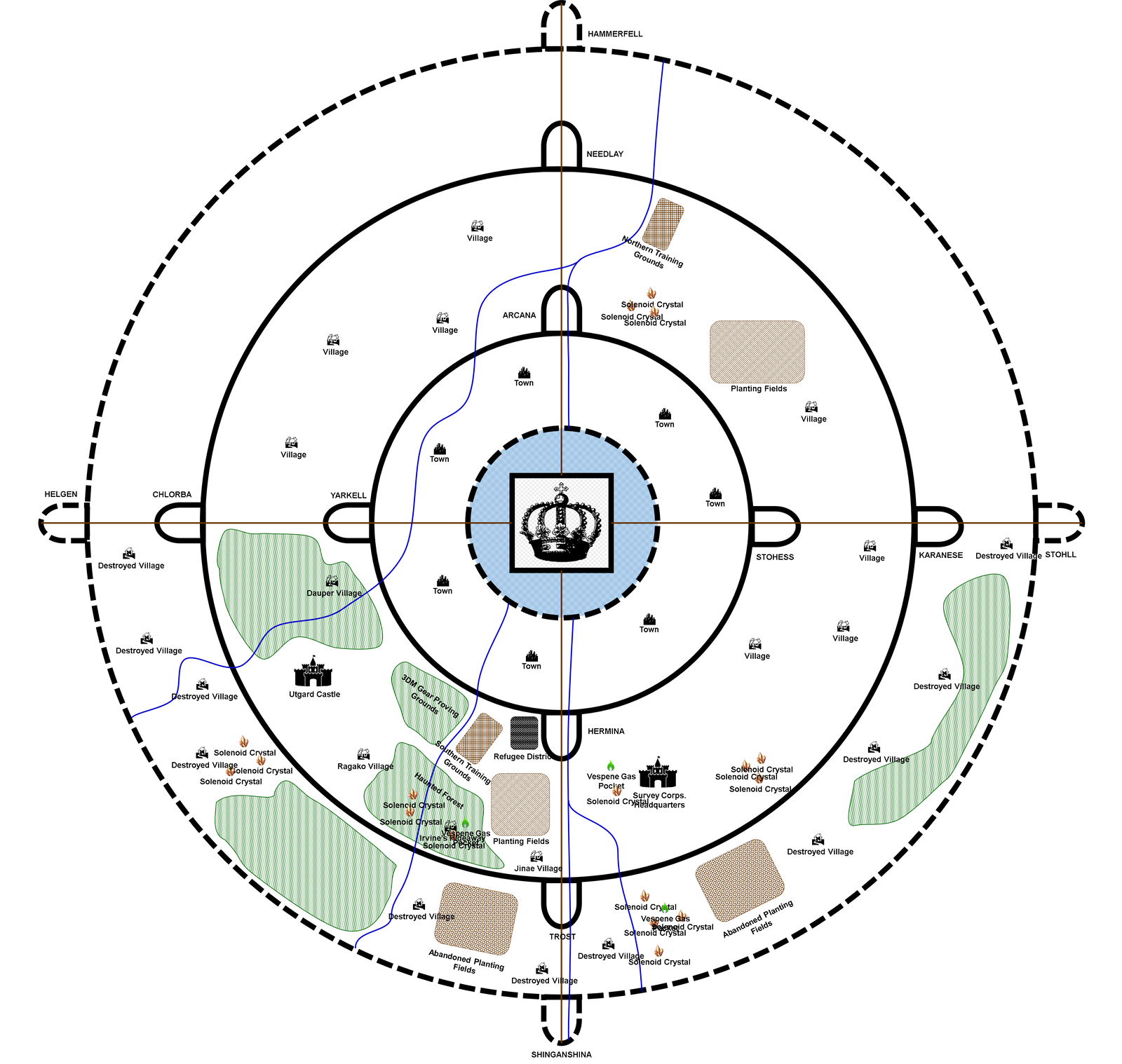
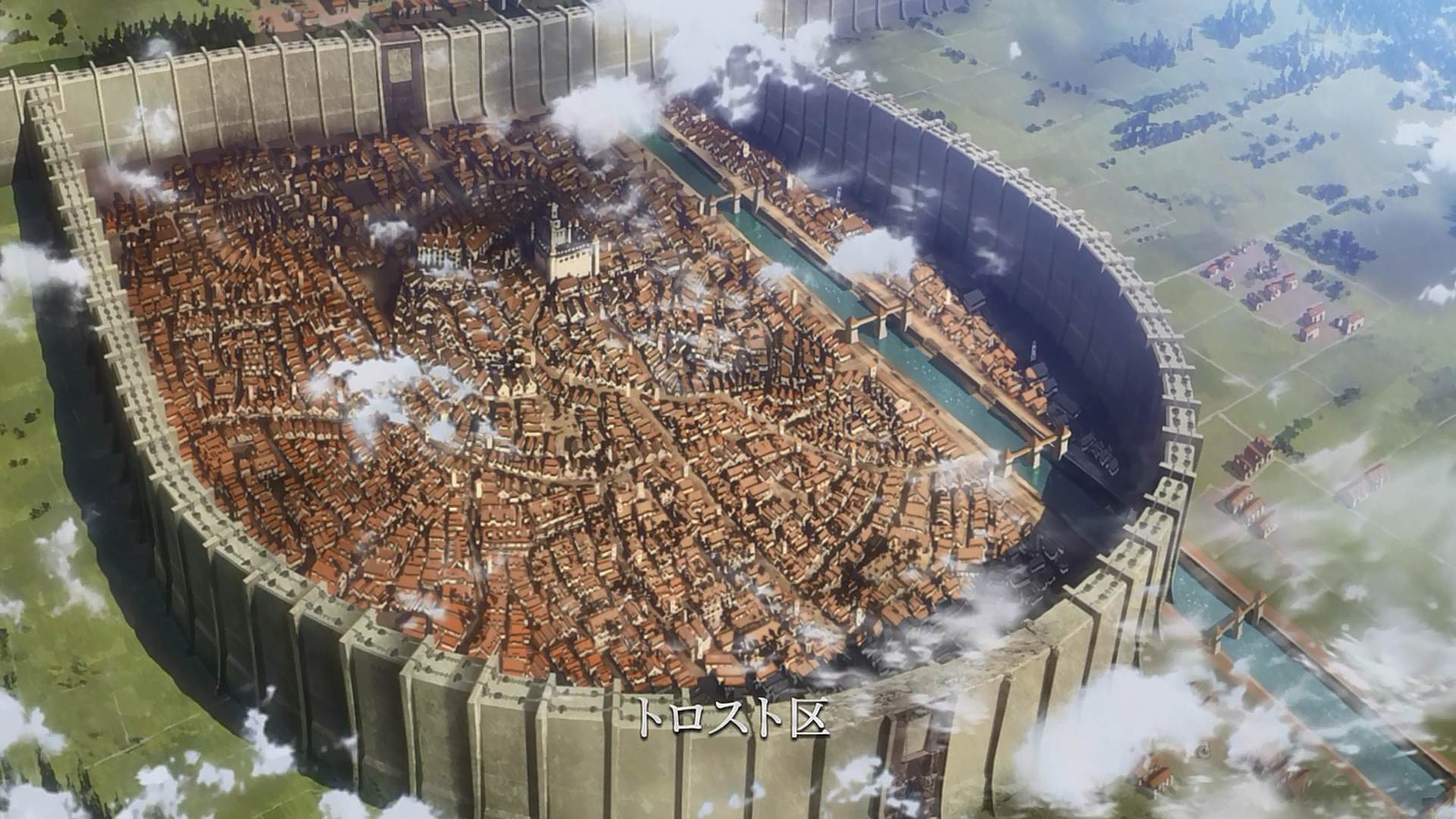
The fictional world of Attack on Titan (Shingeki no Kyojin), created by Hajime Isayama, is heavily inspired by real-world geography, particularly medieval and 19th-century European architecture, landscapes, and geopolitical history. While the island of Paradis and the continent of Marley exist within a distinct fictional realm, many of their most iconic settings—most notably Wall Rose, Wall Maria, Wall Sina, and the German-influenced town of Shiganshina—draw direct inspiration from actual European locations, such as the town of Nördlingen in Bavaria, Germany.
Introduction to the Geography of Attack on Titan
Understanding the geography of Attack on Titan requires examining both its in-universe layout and its real-world architectural and cultural influences. Hajime Isayama constructed a world that is essentially our own planet upside down, blended with architectural styles ranging from Germanic Gothic to Central European Renaissance design.
The story takes place primarily within three concentric circular walls on the island of Paradis: Wall Maria (the outermost boundary), Wall Rose (the middle tier), and Wall Sina (the innermost sanctuary protecting the royal capital). Beyond these walls lie the vast oceans, the Marleyan mainland, and other fictional nations that mirror historical 20th-century empires. For fans and researchers exploring these settings, separating the fictional cartography from its tangible real-world inspirations offers a deeper appreciation of the series' world-building depth.
Real-World Architectural Inspirations: Nördlingen and European Influence
The most famous real-world location associated with Attack on Titan is the medieval town of Nördlingen, located in Bavaria, Germany. Nördlingen shares a striking visual and structural resemblance to Shiganshina District and the inner walled cities depicted in the series.
The Nördlingen Connection
- The Crater Setting: Nördlingen was built inside a massive impact crater (the Ries crater) formed by a meteorite millions of years ago. This natural basin creates a circular geographic boundary that closely mirrors the circular layout of the Walls in Paradis.
- The Town Walls: Nördlingen is one of the few towns in Germany that still retains its completely preserved, walkable medieval town wall, complete with multiple defensive gates and towers. This fortification style heavily influenced the design of Wall Maria, Wall Rose, and Wall Sina.
- Half-Timbered Architecture: The residential and commercial buildings feature traditional timber-framing, steep gabled roofs, and narrow cobblestone streets, which were meticulously recreated in early episodes of the anime adaptation by Wit Studio and later MAPPA.
Beyond Nördlingen, Isayama drew inspiration from other European landscapes. The dense forests where the Survey Corps battles the Female Titan closely resemble the Black Forest (Schwarzwald) in Germany, known for its towering evergreen trees and dense canopies. Furthermore, the geopolitical conflicts, military uniforms, and technological progression of Marley mirror early 20th-century European powers during the industrial era.
In-Universe Locations: The Island of Paradis and the Walls
Within the narrative, the physical layout of the world dictates the survival strategies of humanity against the Titans. The spatial distribution of the districts and walls creates choke points that serve as critical battlegrounds throughout the series.
| Location / Zone | Description & Strategic Significance |
|---|---|
| Wall Sina | Innermost wall; protects the capital and royalty. |
| Wall Rose | Middle wall; contains rich agricultural districts. |
| Wall Maria | Outermost wall; breached in the series premiere. |
| Shiganshina District | Southern protruding town on Wall Maria. |
| Trost District | Southern protruding town on Wall Rose. |
The Three Walls
- Wall Sina: Spanning the innermost territory, Wall Sina houses the central government, the military police, and the king. Its inhabitants live in relative luxury, entirely shielded from the daily terror of Titan attacks until the later arcs of the story.
- Wall Rose: Acting as the middle buffer zone, Wall Rose contains fertile farming land, pastures, and several major commercial districts like Trost. It serves as the primary line of defense once Wall Maria falls.
- Wall Maria: The outermost perimeter wall. Its vast interior supported millions of citizens until the Colossal Titan and Armored Titan breached Shiganshina District, forcing humanity into a devastating refugee crisis.
Key Fictional Districts and Their Strategic Roles
Each district built into the massive walls serves a distinct purpose, acting either as a economic hub or a specialized military bait station designed to draw Titans away from weaker points.
- Shiganshina District: Located on the southern tip of Wall Maria, Shiganshina is the hometown of Eren Yeager, Mikasa Ackerman, and Armin Arlert. Because it juts out from the circular wall, it acts as a magnet for Titans, making it the primary focal point of the series' inciting incidents.
- Trost District: Situated on the southern projection of Wall Rose, Trost becomes the site of intense military engagement when Wall Maria falls and the breach must be sealed.
- Stohess District: Located within Wall Sina, Stohess is an urban center characterized by cobblestone alleys and multi-story stone buildings, serving as the backdrop for the covert operations and capture of the Female Titan.
The Marleyan Mainland and Beyond
As the narrative expands beyond the island of Paradis, the geographical scope shifts to the Marleyan continent and neighboring nations.
- Liberio: An internment zone located within the Marleyan mainland where Eldians are segregated. Liberio features industrial slums, tight row houses, and a strict military-controlled infrastructure that contrasts sharply with the rustic, European-medieval aesthetic of Paradis.
- The Middle East Allied Forces Conflicts: The geopolitical struggles depicted in the Marley arc reflect early industrial warfare, featuring trench combat, naval dreadnoughts, and the obsolescence of Titans against modern artillery.
Frequently Asked Questions About Attack on Titan Locations
Is the town of Shiganshina a real place?
Shiganshina is a fictional town created by Hajime Isayama, but its design and layout are directly inspired by the real medieval town of Nördlingen in Bavaria, Germany. Visitors to Nördlingen will notice the circular wall structure, defensive gates, and architecture that mirror the fictional setting.
Where is the real-world forest of giant trees located?
The Giant Tree Forest on Paradis Island is fictional, but its visual design is widely attributed to ancient European old-growth forests, such as Germany's Black Forest or the towering redwood and sequoia forests found on the West Coast of the United States.
Can tourists visit the Attack on Titan museum or inspiration sites?
Yes, fans frequently travel to Nördlingen, Germany, to see the architectural inspiration behind the walls. Additionally, the author's hometown of Hita in Oita Prefecture, Japan, features the "Attack on Titan in Hita" museum initiative, statues of the main characters, and permanent tourist installations.
How big is the territory inside the walls on Paradis Island?
According to official databooks and narrative exposition, the distance from the center of Wall Sina to the outer edge of Wall Maria spans hundreds of kilometers, enclosing an area roughly the size of Madagascar or a small European country, providing enough landmass to sustain millions of displaced people.
Final Recommendations for Fans and Travelers
For enthusiasts looking to explore the physical inspirations behind Attack on Titan, planning a trip to Nördlingen, Germany, offers the most authentic architectural experience of the walled cities. Visitors can walk atop the historic fortifications and observe the town layout that inspired the tragic prelude of the series. For those unable to travel to Europe, visiting the permanent exhibition spaces and creator-backed installations in Hita, Japan, provides a comprehensive look at the conceptual art, manuscripts, and world-building mechanics that brought these legendary locations to life.