In 2026, the average attic insulation cost ranges between $1,500 and $4,500, including materials and professional installation for a standard 1,000 to 1,500-square-foot space. Specific totals depend heavily on your chosen material—such as blown-in cellulose or spray foam—local labor rates, and whether old, contaminated insulation requires professional removal before the new layer is installed.
Improving attic insulation remains one of the most effective ways to lower utility bills and enhance indoor comfort. However, determining a precise budget requires an understanding of thermal resistance (R-value) requirements, the structural condition of your attic, and current market prices for specialized materials. As energy codes become more stringent in 2026, homeowners must balance initial expenditures against long-term energy savings and potential tax incentives.
Primary Factors Influencing Attic Insulation Costs
Several variables dictate where your project falls on the pricing spectrum. It is rarely as simple as buying a few bags of material; the complexity of the attic space and the thermal goals of the project play significant roles.
Square Footage and Attic Layout
The total area is the most obvious cost driver, but the layout is equally important. A wide-open attic with high gables is much easier—and therefore cheaper—to insulate than a cramped, low-clearance crawlspace. If installers must navigate around intricate ductwork, water tanks, or structural bracing, labor hours will increase significantly.
R-Value Requirements
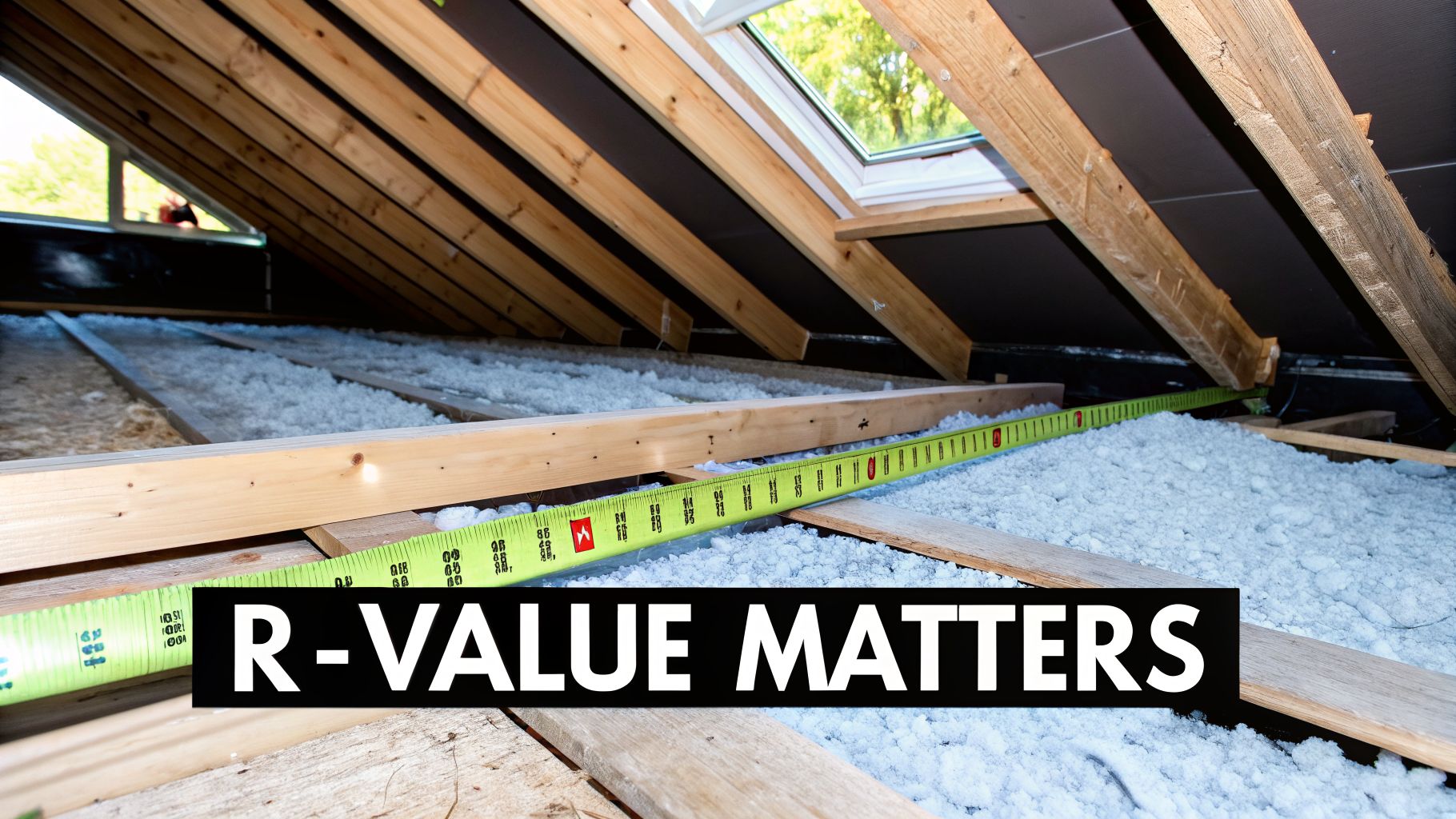
The R-value measures a material’s resistance to conductive heat flow. The higher the R-value, the better the insulation performance. In 2026, building codes in northern climates often recommend R-49 to R-60, while southern climates may require R-30 to R-38. Reaching a higher R-value requires more material thickness, which directly correlates to higher material costs.
Labor and Regional Variations
Labor typically accounts for 40% to 60% of the total project cost. In high-cost-of-living urban areas, hourly rates for certified insulation contractors are higher than in rural regions. Furthermore, contractors in 2026 are increasingly required to adhere to updated safety and environmental disposal standards, which are reflected in their service fees.
Breakdown of Insulation Materials and Pricing
The choice of material is the most significant technical decision you will make. Each material offers different thermal properties, moisture resistance, and installation requirements.
Blown-In Insulation (Cellulose and Fiberglass)
Blown-in insulation is the most common choice for existing homes. Using a mechanical blower, a technician distributes loose-fill material across the attic floor, filling small gaps and crevices that batts might miss.
- Cellulose: Made primarily from recycled newsprint treated with fire retardants (borates). It offers an R-value of approximately 3.2 to 3.8 per inch. It is generally more eco-friendly but can settle over time.
- Fiberglass: Composed of fine glass fibers. It has a slightly lower R-value per inch (approx. 2.2 to 2.7) compared to cellulose but is naturally fire-resistant and does not settle as much.
- Cost: Generally $1.00 to $2.00 per square foot installed.
Fiberglass Batts and Rolls
Batts are pre-cut sections of fiberglass insulation, while rolls are long, continuous strips. These are ideal for DIY projects in attics with standard joist spacing and no existing obstructions.
- Pros: Easy to handle and relatively inexpensive.
- Cons: Ineffective if gaps are left between the batts and the joists. They do not stop air leakage (convection).
- Cost: Generally $0.80 to $1.60 per square foot installed.
Spray Foam Insulation (Open-Cell and Closed-Cell)
Spray foam is a premium option that provides both thermal insulation and an air seal. It is applied as a liquid that expands into a solid foam.
- Open-Cell: More flexible and allows moisture to move through it, which can be helpful for detecting roof leaks. R-value is about 3.5 to 3.8 per inch.
- Closed-Cell: Much denser and acts as a vapor barrier. It provides the highest R-value (6.0 to 7.0 per inch) and adds structural strength to the roof deck.
- Cost: Generally $3.50 to $7.00 per square foot installed, depending on thickness.
Mineral Wool
Also known as rock wool, this material is made from volcanic rock and slag. It is highly resistant to fire and sound, making it a preferred choice for homeowners prioritizing safety and acoustic privacy.
- Cost: Generally $1.50 to $2.50 per square foot installed.
2026 Attic Insulation Cost Comparison Table
The following table provides a comparative overview of the most common attic insulation types based on 2026 market data.
| Insulation Type | Cost per Sq. Ft. (Installed) | R-Value per Inch | Estimated Lifespan | Primary Benefit |
|---|---|---|---|---|
| Blown-In Cellulose | $1.20 – $2.10 | 3.2 – 3.8 | 20–30 Years | Eco-friendly / Recycled |
| Blown-In Fiberglass | $1.00 – $1.90 | 2.2 – 2.7 | 80–100 Years | Moisture resistant |
| Fiberglass Batts | $0.80 – $1.60 | 2.9 – 3.8 | 80–100 Years | Low cost / DIY friendly |
| Open-Cell Spray Foam | $3.50 – $5.00 | 3.5 – 3.8 | 80+ Years | Excellent air sealing |
| Closed-Cell Spray Foam | $5.50 – $7.50 | 6.0 – 7.0 | 80+ Years | Highest R-value / Rigid |
| Mineral Wool | $1.50 – $2.50 | 3.0 – 3.3 | 80+ Years | Fire & Sound resistance |
Essential Additional Expenses
A successful attic insulation project often involves more than just adding fluff. To ensure the insulation performs as intended, you must address the surrounding environment.
Air Sealing: The Critical Step
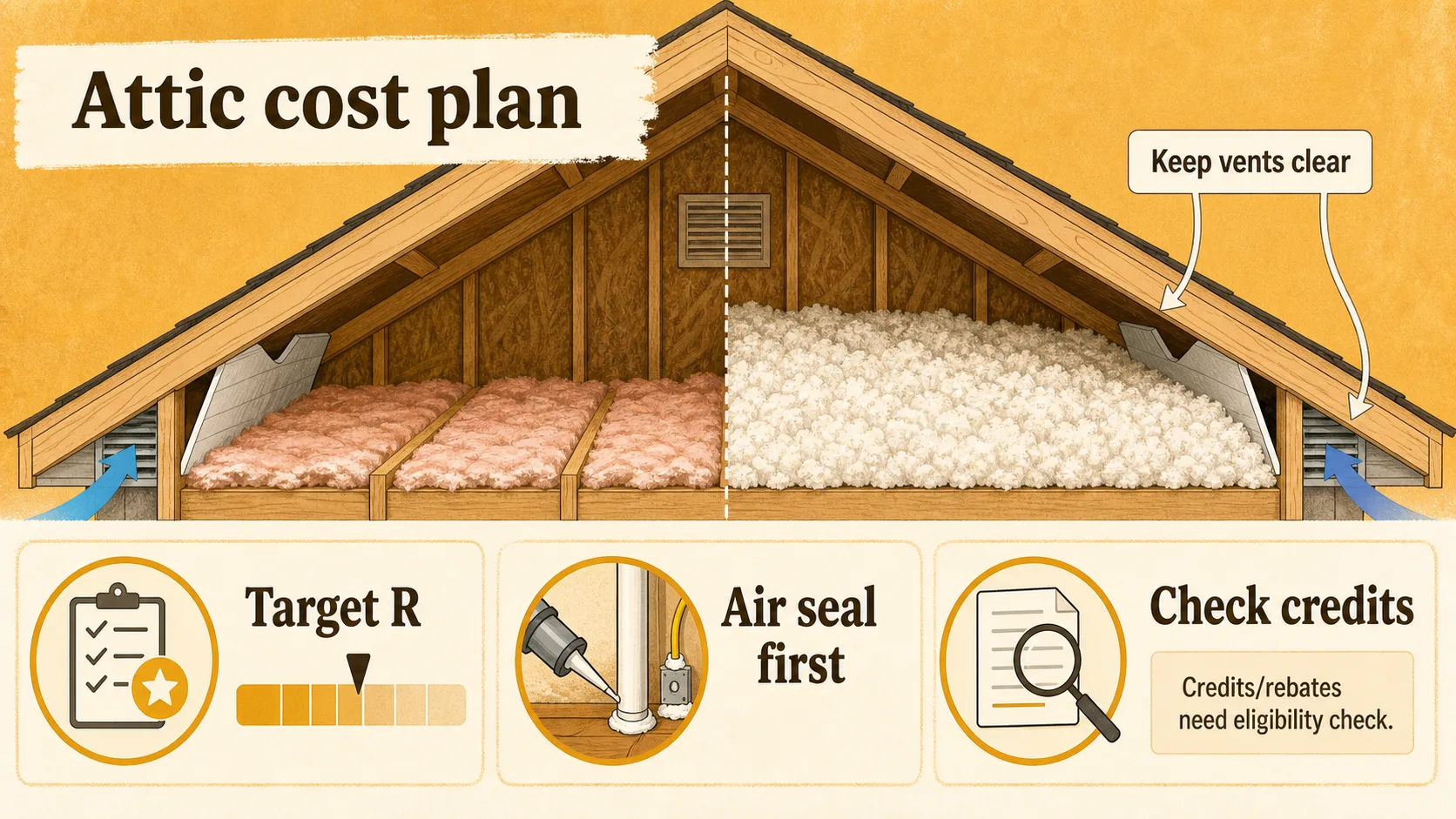
Insulation stops heat conduction, but it does not stop heat convection (air movement). Air sealing involves using spray foam, caulk, and weatherstripping to seal gaps around chimneys, plumbing stacks, light fixtures, and top plates.
- Estimated Cost: $400 to $1,200 depending on attic size and complexity.
Insulation Removal
If your existing insulation is water-damaged, infested by rodents, or contains hazardous materials like asbestos (common in pre-1990 homes with vermiculite), it must be professionally removed.
- Estimated Cost: $1.50 to $3.00 per square foot.
Attic Ventilation and Baffles
Proper ventilation prevents moisture buildup and ice dams. Installing "baffles" (rafter vents) ensures that the new insulation does not block the airflow from the soffit vents to the ridge vent.
- Estimated Cost: $200 to $600.
Return on Investment (ROI) and Energy Savings
While the upfront attic insulation cost can be significant, it is widely considered one of the home improvements with the highest ROI. According to the U.S. Department of Energy, homeowners can save an average of 15% on heating and cooling costs by air sealing and insulating attics.
In 2026, the financial benefits are further bolstered by federal and local incentives. Under the updated Energy Efficient Home Improvement Credit (established by the Inflation Reduction Act and continuing through 2026), homeowners may be eligible to claim a tax credit of 30% of the material costs, up to a specific annual limit (usually $1,200 for weatherization). Many local utility companies also offer rebates for reaching specific R-value targets, which can offset the total cost by several hundred dollars.
DIY vs. Professional Installation
Choosing between a DIY approach and hiring a professional depends on the material and your comfort with home repairs.
- DIY Suitability: Fiberglass batts and rolls are the most DIY-friendly. You can also rent a blower from many home improvement stores to install blown-in cellulose. DIY can save you 40% to 50% on the total project cost. However, it requires wearing protective gear (respirators, goggles, and suits) and carries the risk of stepping through the ceiling if you are not careful with joist placement.
- Professional Necessity: Spray foam installation requires specialized chemical rigs and precision timing; it should never be a DIY project due to the risk of improper off-gassing. Similarly, if your attic requires complex air sealing or asbestos remediation, professional expertise is mandatory for safety and code compliance.
Frequently Asked Questions
How do I know if I need more attic insulation?
A simple visual test is often enough. If you look across your attic and can see the floor joists, you likely need more insulation. In most climates, insulation should be thick enough to hide the joists completely. Other signs include uneven temperatures between rooms, high energy bills, and the presence of ice dams on the roof during winter.
Can I put new insulation over old insulation?
Yes, in most cases you can "top off" existing insulation. However, this is only recommended if the old insulation is dry and free of mold or pests. You should never lay "faced" batts (those with a paper or foil backing) over existing insulation, as this can trap moisture between the layers. Always use unfaced batts or blown-in material for topping off.
Is spray foam worth the extra cost compared to blown-in?
Spray foam is significantly more expensive, but it offers a dual benefit: it insulates and air-seals simultaneously. For homes with significant air leakage or those in extreme climates, the long-term energy savings and improved structural integrity often justify the higher initial attic insulation cost.
Does attic insulation help in the summer?
Absolutely. While many people associate insulation with keeping heat in during winter, it is equally important for keeping heat out during the summer. A well-insulated attic prevents the sun’s radiant heat from baking the living spaces below, reducing the workload on your air conditioning system.
How long does attic insulation last?
Fiberglass and mineral wool can last 80 to 100 years unless they become wet or compressed. Cellulose typically lasts 20 to 30 years before it settles significantly and loses some of its R-value. Spray foam is designed to last the lifetime of the home.
Next Steps for Homeowners
To get the most accurate attic insulation cost for your specific home, start by conducting a basic attic inspection. Measure the square footage and the depth of the current insulation. Check for signs of moisture or pests.
Once you have a baseline, contact at least three licensed contractors for quotes. Ensure these quotes are "apples-to-apples," specifying the exact material, the target R-value, and whether air sealing is included. Finally, check the Energy Star website and your local utility provider’s portal to identify available 2026 tax credits and rebates that can help lower your net investment.