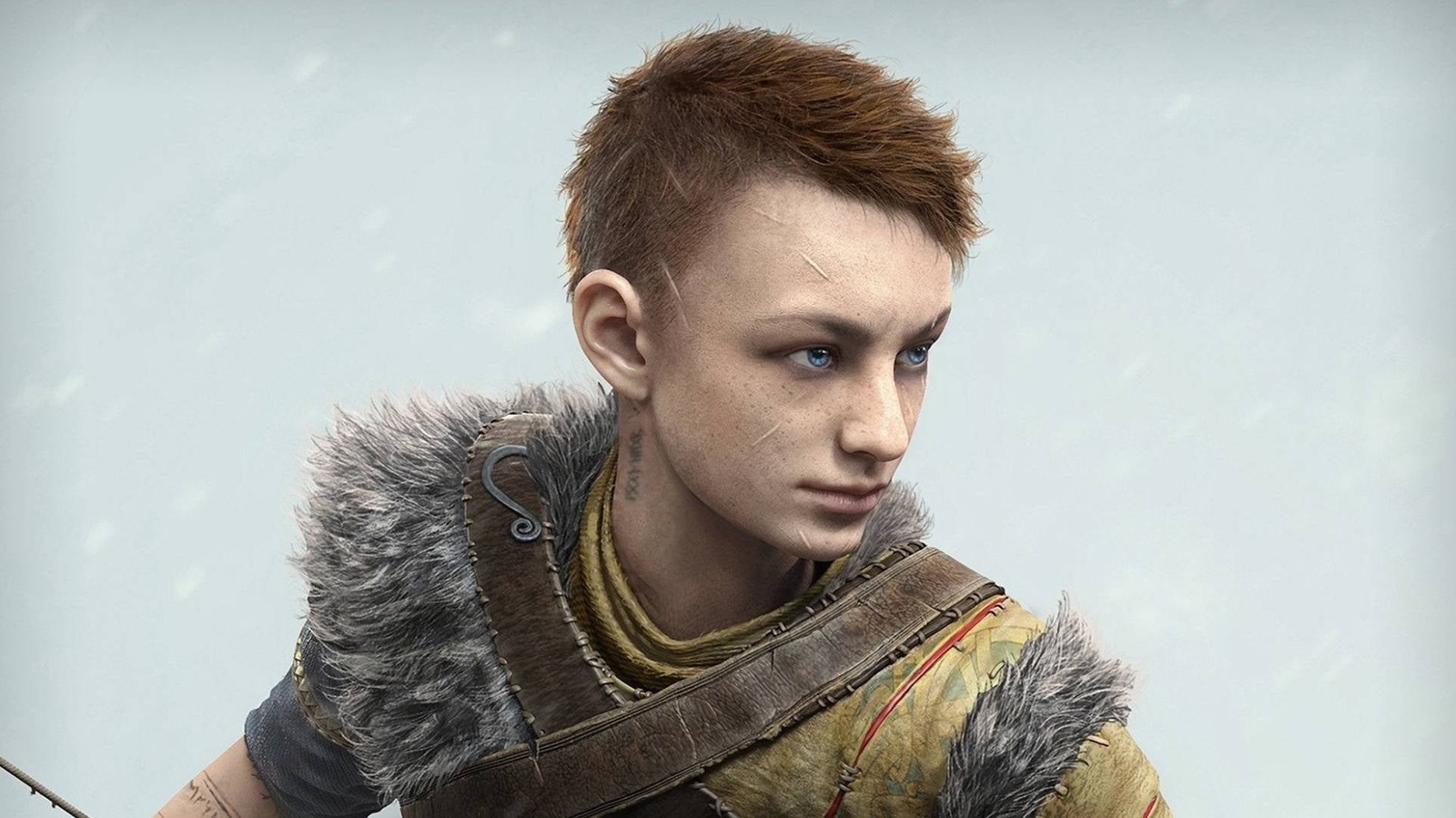
Atreus, the son of Kratos in Sony Interactive Entertainment's Norse era of the God of War franchise, represents a monumental shift in narrative depth, bridging Greek tragedy with Norse mythology through his identity as Loki. His journey traces a path from a sickly, sheltered boy to a pivotal figure capable of reshaping realms, carrying forward a complex, blood-soaked legacy while striving to forge a more compassionate future.
The intersection of divine heritage, mortal upbringing, and ancient prophecy defines the core of Atreus's narrative arc. Introduced in the 2018 God of War and expanded significantly in God of War Ragnarök (2022), Atreus is far more than a companion mechanic or a narrative vehicle; he is the emotional anchor of a sprawling mythic saga. Examining his legacy requires looking closely at his origins, his awakening divine powers, his role in the downfall of the Aesir, and what his individual path signifies for the broader universe established by Santa Monica Studio.
Origins and Dual Heritage: The Blood of Sparta and Jotunheim
To understand Atreus, one must first examine the dual nature of his lineage. Born to Kratos, the former Ghost of Sparta and God of War, and Faye ( Laufey the Just), a giantess of Jotunheim, Atreus carries two distinct, often conflicting mythic inheritances. For the majority of his early life, his divine nature was hidden from him, a protective measure by Faye to spare him the violent realities of Kratos's past and to keep him safe from the all-seeing eyes of Odin.
Kratos's Greek heritage infuses Atreus with a dormant, potent wrath and a capacity for physical resilience, though initially manifested as vulnerability due to his mortal upbringing and frail health. When Atreus falls violently ill in the 2018 title—triggered by the cognitive dissonance of his unconscious godhood conflicting with his belief that he was merely mortal—it exposes the profound cost of repressed identity.
Conversely, his maternal heritage ties him directly to the Jotnar, a race of powerful beings known for prophecy, wisdom, and deep magical affinity. Faye’s choice to name him Atreus—after a noble Spartan warrior from her husband's past whom she admired for his joy in battle—was an early sign of bridging two distinct worlds. Throughout the narratives, Atreus’s physical traits, such as his ability to read ancient runes instinctively and his latent shape-shifting abilities, stem directly from his giant lineage.
| Heritage Component | Source | Key Traits & Manifestations | Narrative Impact |
|---|---|---|---|
| Spartan / Greek | Kratos | Latent divine wrath, physical durability, combat instinct | Drives internal conflict regarding temper and violence |
| Jotun / Giant | Faye (Laufey) | Runes mastery, emotional empathy, soul-transference magic | Grants insight into prophecy and connection to other realms |
| Mortal Upbringing | Midgard (Human environment) | Compassion, illness under emotional stress, curiosity | Prevents him from becoming a purely destructive deity |
The Awakening: Rage, Prophecy, and the Burden of Loki
The narrative acceleration of Atreus's character occurs when he learns he is a god. This revelation triggers a dangerous psychological shift. Believing himself invincible, Atreus momentarily adopts the arrogance characteristic of the pantheons his father fought against. This phase, often termed his "god complex" period, sees him challenging Kratos's authority, treating mortals with disdain, and embracing a casual cruelty in combat that deeply alarms his father.
This temporary corruption is not just a standard adolescent rebellion; it is a manifestation of the "Spartan Rage" channeled through a child who lacks emotional regulation and historical context. Kratos, haunted by his own atrocities in Greece, sees the ghost of his past mistakes mirrored in his son's eyes. Their journey to the peak of Jotunheim to scatter Faye's ashes becomes a crucible, forcing both father and son to confront the generational trauma passed down through divine bloodlines.
Compounding this internal struggle is the revelation on the murals of Jotunheim: Atreus is known among the Giants as Loki. Unlike the trickster god of traditional Norse folklore, Santa Monica Studio's interpretation frames Loki as a seeker of truth, bound by prophecy yet determined to exercise free will. The wall paintings depict his journey, including ambiguous scenes that initially suggest he betrays Kratos. This prophecy hangs over the narrative of God of War Ragnarök, transforming Atreus's quest for identity into a race against a seemingly predetermined destiny.
Agency and Independence: The Quest for Answers
In God of War Ragnarök, Atreus steps out from under his father's protective shadow, driven by an urgent need to understand his purpose in the impending twilight of the Norse gods. This separation marks a vital maturation phase where Atreus actively investigates the prophecies surrounding Ragnarök, visiting Asgard under an assumed identity to parley with Odin.
His time in Asgard serves as a sharp contrast to his upbringing in the wild woods of Midgard. Odin, manipulative and desperate for knowledge of the rift between realms, offers Atreus validation, curiosity, and a library of forbidden lore. For a young god eager to prove his worth, Odin represents an intellectual peer, whereas Kratos often represents emotional restriction and caution. However, Atreus's innate moral compass—shaped by Faye's teachings and Kratos's hard-won wisdom—prevents him from fully succumbing to Odin's machinations.
This segment of his journey highlights several core themes:
- The Seduction of Knowledge: Atreus’s pursuit of answers blinds him momentarily to the dangers of trusting the Allfather.
- Diplomacy over Destruction: Unlike Kratos, who typically resolves divine disputes through combat, Atreus attempts to use negotiation, empathy, and listening.
- Mastery of Magic: His training with rune-craft, archery, and his unique ability to project his soul or shift forms solidifies his status as a formidable independent force.
The Climax of Ragnarök: Shaping a New Legend
When Ragnarök finally arrives, Atreus is no longer the hesitant boy hiding behind a magical bow. He is a primary combatant and a strategic leader. His role in uniting the realms—rallying the Vanir, the elves, and the resistance against Asgard—demonstrates a leadership style built on coalition rather than subjugation.
The emotional climax of his mythic legacy centers on how he handles the prophecy of Loki. Rather than allowing fate to dictate his actions, Atreus chooses to break the cycle. When the mask is shattered and the true nature of the tear in reality is revealed, he refuses to let Odin exploit it. In the final battle, Atreus traps the soul of the dying giant Sindri’s brother (or rather, uses his soul-transference magic to save souls from eternal damnation, placing them into marbles), demonstrating a profound evolution in his magical abilities and his ethical maturity.
Crucially, Atreus makes the painful decision to part ways with Kratos. Recognizing that he must find his own path and locate the remaining scattered Giants across the realms, Atreus embraces his identity as Loki not as a harbinger of doom, but as a guardian of possibilities. This separation is handled not with acrimony, but with mutual respect—a stark contrast to the distant, brutal relationships typical of pantheons past.
Comparative Analysis: The Two Paths of War
To fully appreciate Atreus’s unique place in mythic storytelling, it is useful to compare his developmental trajectory with that of his father, Kratos. While both bear the mantle of gods associated with conflict, their foundational philosophies diverge sharply.
| Attribute | Kratos (The Greek Era) | Atreus / Loki (The Norse Era) |
|---|---|---|
| Primary Motivation | Vengeance, anger, survival of grief | Truth, empathy, breaking generational cycles |
| Relationship to Fate | Defied the Gods to forge a path of destruction | Understands prophecy, chooses agency over determinism |
| Combat Style | Brute force, chains, raw physical dominance | Agility, archery, magic, tactical support, soul manipulation |
| View of Mortals | Pawns or collateral damage in divine struggles | Equals, companions, beings worthy of protection |
Frequently Asked Questions
Why is Atreus also called Loki?
Atreus was given the name Loki by his mother, Faye, before her death, reflecting his identity among the Giants of Jotunheim. While traditional Norse mythology depicts Loki as a purely chaotic and ultimately malicious trickster, the God of War franchise reinterprets him as a complex youth caught between prophecy, loyalty to his family, and a desire to save the realms from tyranny.
What are Atreus's core divine powers?
As the son of a Spartan God of War and a Giantess, Atreus possesses superhuman durability, exceptional marksmanship, advanced runic magic, and the unique ability to transfer souls into inanimate objects (such as soul marbles). Additionally, he possesses latent shape-shifting capabilities that connect him to his Jotun heritage.
Does Atreus permanently leave Kratos at the end of God of War Ragnarök?
Atreus does not sever ties permanently, but he does choose to forge his own path independent of his father. At the conclusion of God of War Ragnarök, he departs to search for the remaining surviving Giants scattered across the realms, symbolizing his transition into adulthood and his readiness to shoulder his own destiny.
How does Atreus's upbringing influence his moral compass?
Despite inheriting the volatile rage of his father, Atreus was raised primarily by Faye, who instilled in him deep empathy, curiosity, and respect for all living things. Even when tempted by the power and intellectual validation offered by Odin in Asgard, Atreus’s foundational morality prevents him from turning cruel.
Will Atreus star in future God of War games?
Sony Interactive Entertainment and Santa Monica Studio have not officially detailed the specific plot or protagonist of potential future installments in the franchise. However, Atreus's narrative separation at the end of God of War Ragnarök leaves an open narrative door for either a continuation of his personal adventures or a future reunion with Kratos.
Next Actions and Conclusion
Atreus’s mythic legacy is defined by transformation. He successfully bridges the gap between the scorched-earth tragedies of Greek mythology and the cyclical, doom-laden prophecies of Norse lore. For fans and scholars of narrative design, his arc serves as a masterclass in character growth, demonstrating how a protagonist can inherit immense power without succumbing to corruption.
For those engaging with the franchise or exploring its lore, the primary takeaway is the importance of agency over destiny. Atreus proves that a name or a prophecy does not dictate one's character; choices do. To explore this legacy further, examine the environmental storytelling embedded in the shrines of Jotunheim and review the codex entries within God of War Ragnarök that detail the subtle prophecies of the Giants.