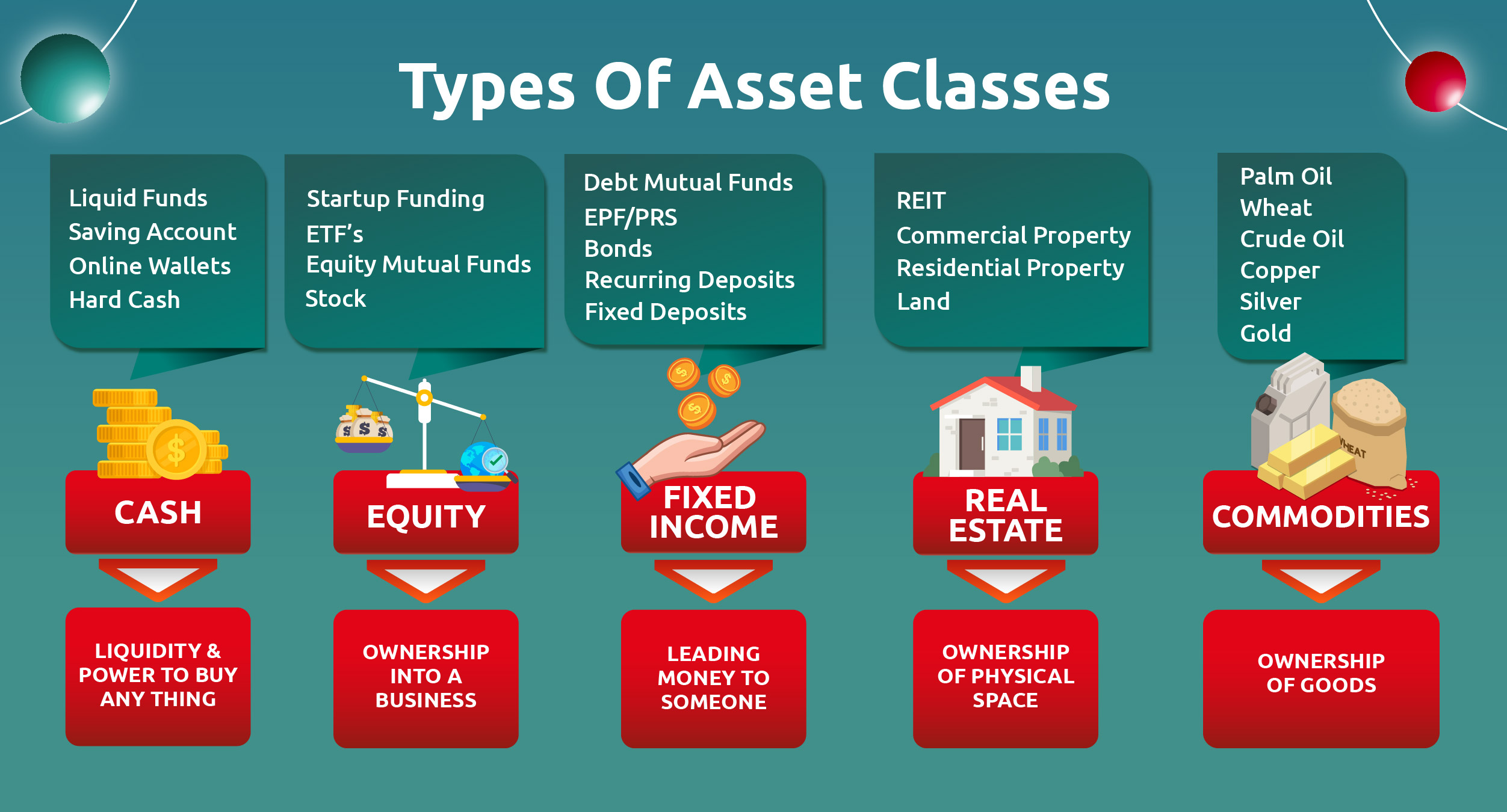
Asset classes for investment refer to broad categories of financial instruments or economic resources that exhibit similar characteristics, behave similarly in the marketplace, and are subject to the same laws and regulations. The primary traditional asset classes include equities, fixed income, cash equivalents, real estate, and commodities, each offering distinct risk-return profiles and reactions to economic cycles.
Introduction to Asset Classes and Portfolio Construction
When building a robust investment portfolio, understanding the foundational building blocks is essential. Asset classes for investment serve as the categorization framework that helps investors balance risk and potential return. By grouping similar investments together, individuals and institutions can analyze how different segments of the economy interact with market volatility, inflation, and interest rate fluctuations.
Diversification across multiple asset classes is widely recognized by financial professionals as a critical strategy for mitigating risk. Because different assets respond uniquely to economic events—such as a sudden spike in inflation or a recessionary contraction—holding a mix of investments helps smooth out overall portfolio performance. This comprehensive guide explores the primary asset classes, examines alternative investments, and provides a structural framework for selecting the right mix based on your individual financial goals, time horizon, and risk tolerance.
Disclaimer: This article is for informational and educational purposes only and should not be construed as professional financial, legal, or tax advice. Consult a certified financial planner or investment advisor before making significant financial decisions.
Traditional Asset Classes
Traditional asset classes form the backbone of almost all modern portfolios. These categories have extensive historical data, well-established regulatory frameworks, and broad market accessibility for both retail and institutional investors.
Equities (Stocks)
Equities represent ownership shares in a corporation. When you purchase a stock, you become a partial owner of that business, entitling you to a portion of its assets and earnings.
- Risk-Return Profile: Equities generally offer the highest historical long-term returns among traditional asset classes, but they also carry the highest degree of short-term volatility.
- Sub-categories: Stocks are typically categorized by market capitalization (large-cap, mid-cap, small-cap), geography (domestic versus international), and investment style (growth versus value).
- Income Generation: Many established companies pay dividends, providing a regular cash flow stream alongside potential capital appreciation.
Fixed Income (Bonds)
Fixed income investments, commonly referred to as bonds or debt securities, function as loans made by an investor to a borrower, such as a corporation, municipality, or national government.
- Risk-Return Profile: Fixed income generally offers lower returns than equities, accompanied by lower volatility, making it a stabilizing force in a portfolio.
- Income Generation: Bonds pay regular interest (the coupon) at predetermined intervals and return the principal amount upon maturity.
- Credit Quality: The risk of default varies significantly depending on the issuer. Government-issued bonds, such as U.S. Treasuries, are typically viewed as having minimal default risk, whereas high-yield (junk) corporate bonds carry higher default risk in exchange for higher yields.
Cash and Cash Equivalents
Cash equivalents are short-term, highly liquid investments that provide a safe haven for capital preservation and short-term liquidity needs.
- Components: This category includes Treasury bills, certificates of deposit (CDs), money market funds, and high-yield savings accounts.
- Purpose: While they offer minimal growth potential—often failing to outpace inflation over long horizons—they protect principal and provide immediate access to funds for emergencies or tactical investment opportunities.
Alternative Asset Classes
Beyond traditional stocks, bonds, and cash, alternative asset classes have gained substantial prominence. These investments often exhibit low correlation with traditional markets, providing unique diversification benefits.
Real Estate
Real estate involves the purchase, ownership, management, rental, or sale of land and physical buildings.
- Direct Ownership: Buying residential, commercial, or industrial property provides rental income and potential property appreciation.
- Indirect Investment: Investors can access real estate without managing physical properties through Real Estate Investment Trusts (REITs), which are publicly traded companies that own or finance income-producing real estate.
- Inflation Hedge: Real estate values and rental income tend to rise during inflationary periods, offering a natural hedge against purchasing power erosion.
Commodities
Commodities are physical goods traded in commerce, categorized primarily into agricultural products, energy resources, and precious or industrial metals.
- Examples: Crude oil, natural gas, gold, silver, wheat, and copper.
- Market Dynamics: Commodity prices are heavily driven by global supply and demand dynamics, geopolitical events, and weather patterns. They often perform well when inflation surges unexpectedly.
Private Equity and Venture Capital
Private equity involves investing capital directly in private companies or buying out public companies to take them private. Venture capital is a specialized subset focused on funding early-stage, high-growth startups.
- Accessibility: Historically restricted to institutional investors and ultra-high-net-worth individuals, newer fintech platforms have expanded access through specialized interval funds and accredited investor vehicles.
- Liquidity Constraints: These investments typically require long lock-up periods, meaning capital cannot be easily withdrawn on short notice.
Comparing Major Investment Asset Classes
The following table summarizes the primary characteristics, risk profiles, and typical roles of major asset classes within a diversified portfolio.
| Asset Class | Primary Function | Expected Return | Volatility / Risk | Liquidity | Typical Role in Portfolio |
|---|---|---|---|---|---|
| Equities | Long-term capital growth | High | High | High (Public markets) | Wealth accumulation and inflation beating |
| Fixed Income | Income and capital preservation | Moderate | Moderate | High to Moderate | Portfolio stabilization and regular cash flow |
| Cash Equivalents | Liquidity and capital safety | Low | Very Low | Immediate | Emergency funds and short-term expenses |
| Real Estate | Income, appreciation, inflation hedge | Moderate to High | Moderate | Low to Moderate | Diversification and passive income generation |
| Commodities | Inflation hedge, tactical diversification | Variable | High | High (via ETFs/Futures) | Hedging against currency devaluation and shocks |
Core Principles of Asset Allocation
Selecting individual assets is only part of the equation; how you distribute your capital across different asset classes is known as asset allocation. Research indicates that asset allocation is a primary driver of a portfolio's long-term returns and volatility profile.
Determining Risk Tolerance and Time Horizon
Your optimal asset allocation depends heavily on two personal factors:
- Time Horizon: The length of time you expect to invest before needing to withdraw funds. Younger investors with a multi-decade horizon can typically withstand higher volatility in exchange for the growth potential of equities. Investors nearing retirement often shift toward fixed income and cash to protect accumulated wealth.
- Risk Tolerance: Your psychological and financial ability to endure market downturns without panicking and selling assets at a loss.
Rebalancing Strategies
Over time, market fluctuations will cause your portfolio's actual asset allocation to drift from its target percentages. For instance, a strong stock market rally might turn a 60/40 stock-to-bond portfolio into an 80/20 allocation, exposing you to unintended risk. Periodic rebalancing—either calendar-based (e.g., annually) or threshold-based (e.g., when an asset class drifts by more than 5% from its target)—restores your portfolio to its intended risk profile.
Frequently Asked Questions
What is the difference between an asset class and an investment vehicle?
An asset class is a broad category of economic resources with similar characteristics, such as equities or real estate. An investment vehicle is the specific product or wrapper used to access that asset class, such as a mutual fund, Exchange-Traded Fund (ETF), brokerage account, or individual stock certificate.
How many asset classes should I include in my portfolio?
Most individual investors achieve sufficient diversification by combining the three primary traditional asset classes: equities, fixed income, and cash equivalents. Depending on net worth and investment experience, adding real estate or commodities can provide additional diversification benefits, but complexity should be balanced against management capability.
Are cryptocurrencies considered a distinct asset class?
Cryptocurrencies and digital assets are increasingly debated as a unique asset class due to their distinct decentralized architecture and correlation patterns. However, regulatory bodies and institutional frameworks are still evolving, and many financial professionals currently classify them as speculative alternative investments rather than a standard foundational asset class.
How does inflation impact different asset classes?
Inflation erodes the purchasing power of cash and fixed-income returns because fixed interest payments buy less over time. Conversely, equities of companies with pricing power, real estate, and commodities generally act as stronger hedges because their underlying values and revenues can adjust upward with rising price levels.
What is tactical versus strategic asset allocation?
Strategic asset allocation involves setting a long-term target mix based on your risk profile and sticking to it through regular rebalancing. Tactical asset allocation is a flexible strategy that temporarily adjusts those target weights to capitalize on perceived short-term market anomalies or macroeconomic trends.
Next Actions for Investors
To apply these concepts effectively, begin by assessing your current financial position, clarifying your long-term goals, and defining your exact investment timeline. Review your existing portfolio holdings to identify concentration risks or gaps in diversification. If you manage your own investments, consider establishing a target asset allocation policy statement that outlines your rebalancing schedule and risk boundaries. For complex financial situations or substantial net worth, schedule a consultation with a fiduciary financial advisor to ensure your asset allocation strategy aligns with your comprehensive wealth plan.