Arnold Schwarzenegger’s ascent in the 1960s transformed him from an obscure Austrian teenager into the world’s premier bodybuilder. By winning the Junior Mr. Europe in 1965 and moving to America in 1968, he revolutionized the sport, claiming multiple Mr. Universe titles and setting the stage for his record-breaking Mr. Olympia reign.
The 1960s represent the foundational decade for Arnold Schwarzenegger, a period of meteoric growth that saw him evolve from a weightlifting enthusiast in rural Austria to an international sporting icon. In 2026, looking back across six decades, it is clear that his trajectory during this era was not merely a matter of genetic luck, but a masterclass in psychological resilience, marketing savvy, and technical mastery of hypertrophy. This decade was defined by his departure from the Austrian military, his dominance in European competitions, and his pivotal move to the United States under the tutelage of Joe Weider.
The Formative Years in Thal and the Discovery of Bodybuilding
Born in 1947 in the small village of Thal, Austria, Arnold’s early 1960s were characterized by a search for identity outside the traditional paths of his community. While his father, Gustav, favored a career in the police or a focus on soccer, Arnold became captivated by the "strongman" aesthetic he saw in American magazines.
By 1962, at the age of 15, he made the definitive choice to abandon soccer for weightlifting. His early training was rudimentary, often occurring in unheated gyms or outdoors, which forged a level of mental toughness that would become his trademark. During this period, he encountered his first major influences: Reg Park and Steve Reeves. Reg Park, in particular, provided a blueprint that Arnold would follow with surgical precision. Park was not just a bodybuilder; he was a Mr. Universe winner who transitioned into film as Hercules. This multifaceted success became Arnold’s North Star, convincing him that the 1960s would be the decade he secured his exit from Europe.
1965: The Military Service and the Junior Mr. Europe Breakout
In 1965, Schwarzenegger began his mandatory one year of service in the Austrian army. Serving as a tank driver, he faced a significant dilemma: how to maintain his caloric intake and training volume while under strict military discipline. This year became legendary in bodybuilding lore when Arnold went AWOL (absent without official leave) to compete in the Junior Mr. Europe contest in Stuttgart, Germany.
The technical depth of his training during the military period was remarkable. He allegedly kept a set of dumbbells in his tank and performed bodyweight exercises whenever the unit was stationed. Winning the Junior Mr. Europe title was the catalyst for his professional career. Although he spent a week in military prison upon his return, the victory validated his obsession. It proved that he could dominate the European circuit, and it caught the attention of influential figures in the international bodybuilding community.
Moving to Munich and the Refinement of the "Austrian Oak"
Following his military discharge, Arnold moved to Munich in 1966 to work at a gym owned by Rolf Putzinger. This move was strategic; Munich was a hub for European strength sports, offering better equipment and higher-quality nutrition than Thal. It was here that the nickname "The Austrian Oak" began to take hold.
During his Munich years (1966–1968), Arnold refined his training split, moving away from full-body workouts toward a high-volume, high-frequency split that targeted specific muscle groups with unprecedented intensity. He began competing in the NABBA (National Amateur Body-Builders' Association) Mr. Universe competition in London, which was then considered the most prestigious title in the world.
In 1966, he placed second to Chet Yorton, a defeat that taught him a vital lesson about definition and symmetry. Yorton possessed a level of "ripped" muscle quality that Arnold had not yet achieved. This loss prompted Arnold to analyze the technical aspects of his physique, leading him to focus on his "weak" points, most notably his calves, which he famously began training with massive weight and high repetitions to ensure they matched his massive upper body.
1967: Becoming the Youngest Mr. Universe
In 1967, at the age of 20, Arnold Schwarzenegger returned to London and won the NABBA Amateur Mr. Universe title, becoming the youngest person ever to do so. This victory was a turning point. He defeated his idol, Reg Park, in later professional competitions, which was a psychologically complex moment for the young Austrian.
During his time in London, he was mentored by Wag Bennett, a key figure in the British bodybuilding scene. Bennett helped Arnold improve his posing, teaching him how to use music and flow to accentuate his massive frame. This technical improvement in presentation allowed Arnold to "out-show" competitors who might have had similar muscularity but lacked his charisma on stage.
1968: The American Dream and the Weider Influence
The most significant shift of the decade occurred in September 1968. Joe Weider, the "Master Blaster" and founder of the IFBB (International Federation of Bodybuilders), invited Arnold to move to California to compete in the IFBB Mr. Universe and help promote the sport in the United States.
Arnold arrived in Los Angeles with little money and limited English, but he possessed a physique that was unlike anything the American public had seen. However, his American debut did not go as planned. In the 1968 IFBB Mr. Universe, he was defeated by Frank Zane. Zane was significantly smaller but exhibited a level of definition and "vacuum" midsection control that Arnold lacked. This loss was foundational to his later dominance; it forced him to embrace the "science" of bodybuilding—dieting, tanning, and precise muscle separation—rather than relying solely on raw mass.
The Gold’s Gym Era and Technical Evolution
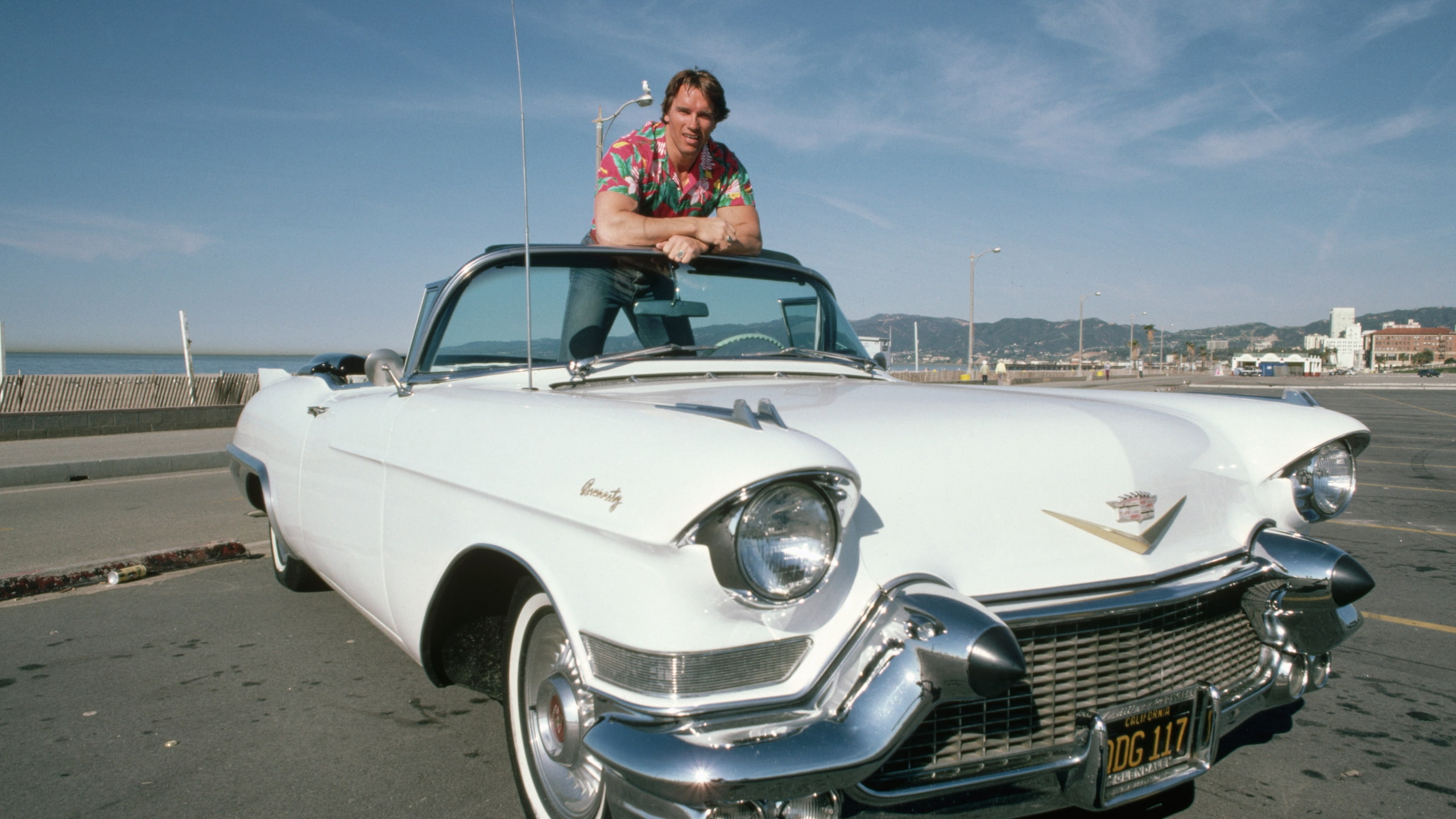
By 1969, Arnold had settled into Venice Beach, training at the original Gold’s Gym. This environment was the "Mecca" of bodybuilding, surrounding him with peers like Franco Columbu, Dave Draper, and Frank Zane. The synergy of this group pushed the boundaries of what was thought possible in terms of human muscular development.
Schwarzenegger's training in the late 1960s was characterized by the "Double Split" routine: training twice a day, six days a week. His sessions often lasted two hours each, focusing on high-volume sets (15–25 sets per body part). He emphasized the "mind-muscle connection," a concept where the athlete focuses intensely on the contraction of the muscle during the exercise to maximize fiber recruitment.
Bodybuilding Titles and Rankings (1965–1969)
The following table outlines the major competitive milestones that defined Arnold Schwarzenegger's rise during the 1960s.
| Year | Competition | Organization | Placement | Significant Impact |
|---|---|---|---|---|
| 1965 | Junior Mr. Europe | IFBB/National | 1st | Established international potential while in the military. |
| 1966 | Best Built Man of Europe | IFBB | 1st | Solidified status as the top amateur in Europe. |
| 1966 | Mr. Universe (Amateur) | NABBA | 2nd | Lost to Chet Yorton; highlighted need for better definition. |
| 1967 | Mr. Universe (Amateur) | NABBA | 1st | Youngest winner in history (age 20). |
| 1968 | Mr. Universe (Pro) | NABBA | 1st | Defeated idols and became the "King" of European bodybuilding. |
| 1968 | Mr. Universe | IFBB | 2nd | Lost to Frank Zane; prompted move to Gold's Gym and better dieting. |
| 1969 | Mr. Universe (Pro) | NABBA | 1st | Continued dominance in the London-based circuit. |
| 1969 | Mr. World | IFBB | 1st | Asserted dominance over the American professional field. |
| 1969 | Mr. Olympia | IFBB | 2nd | Lost to Sergio Oliva; his final loss in the Olympia until retirement. |
The 1969 Mr. Olympia: The Clash of Titans
The 1960s culminated in one of the most famous showdowns in the history of the sport: the 1969 Mr. Olympia. Arnold, having won the IFBB Mr. World and the NABBA Mr. Universe that year, challenged the reigning champion, Sergio "The Myth" Oliva.
Sergio Oliva was the only bodybuilder who could match Arnold in sheer mass while maintaining an impossibly small waist. In 1969, Oliva defeated Schwarzenegger in what would be Arnold’s first and only loss on the Mr. Olympia stage. Arnold later admitted that he was "intimidated" by Sergio's physique. This loss served as the final piece of the puzzle for Arnold; it ignited a competitive fire that would lead him to win the next six consecutive Mr. Olympia titles (1970–1975).
Business and Branding in the Late 1960s
While he was conquering the stage, Arnold was also laying the groundwork for his financial future. Alongside his training partner Franco Columbu, he started a bricklaying business in Los Angeles in 1969. This venture, combined with his savvy marketing of mail-order training booklets, ensured he was not just a subsidized athlete of Joe Weider but a self-made entrepreneur. This business acumen, developed in his early twenties, was as crucial to his "Rise of a Legend" status as his biceps.
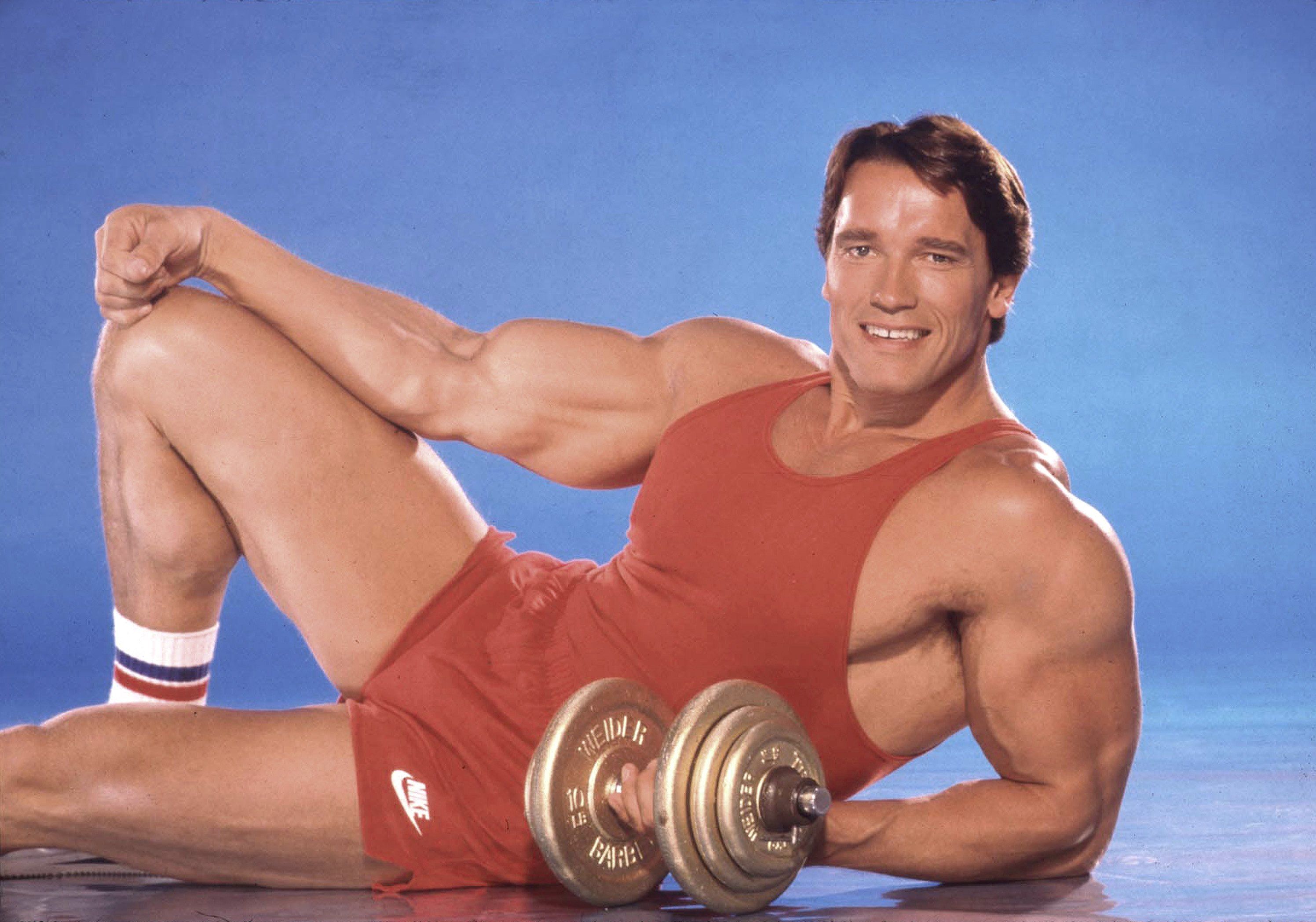
He understood that to become a legend, he needed to be more than just a body; he needed to be a brand. He worked closely with photographers like Artie Zeller to capture the "Golden Era" aesthetic that continues to influence fitness culture in 2026. The imagery produced in the late 1960s—Arnold posing on the beach or training in the sun—created a mythos that transcended the niche world of bodybuilding.
Common Questions Regarding Arnold's 1960s Career
How did Arnold Schwarzenegger train his calves in the 1960s?
After his 1966 loss to Chet Yorton, Arnold realized his calves were a significant weakness. He began a specialized routine where he trained them every day with extremely heavy loads, often exceeding 500-1,000 pounds on calf raises. He also famously cut his training pants into shorts to expose his small calves, using the embarrassment as a psychological motivator to force growth through consistent, high-intensity effort.
What was the "Double Split" routine Arnold used?
The "Double Split" was a grueling training methodology where Arnold would train in the morning (e.g., chest and back) and then return to the gym in the evening (e.g., legs or arms). This allowed him to maintain a high intensity for every body part without the fatigue that would come from a single four-hour session. This approach required massive caloric intake and superior recovery capabilities.
Why was Arnold's move to America in 1968 so significant?
Moving to America allowed Arnold access to the world’s best supplements, training partners, and the marketing machine of Joe Weider. In the late 1960s, Southern California was the epicenter of physical culture. Being there allowed Arnold to transition from a European star to a global celebrity, providing him the platform to eventually move into Hollywood and politics.
Who was Arnold's greatest rival in the 1960s?
His greatest rival was undoubtedly Sergio Oliva. While Frank Zane defeated him in 1968 by being more "aesthetic," Sergio was the only man who could beat Arnold in a "mass" battle. Their rivalry in 1969 defined the peak of the sport during that era and pushed Arnold to achieve a level of conditioning that eventually made him unbeatable in the 1970s.
How did military service affect his bodybuilding career?
Military service initially seemed like an obstacle, but it actually instilled a sense of discipline and routine that Arnold applied to his bodybuilding. The "AWOL" incident also gave him an early taste of fame and notoriety, proving his dedication to the sport over institutional rules, which helped build his "rebel" persona in the early fitness magazines.
Conclusion and Next Actions
The 1960s were the crucible in which the legend of Arnold Schwarzenegger was forged. From the rudimentary gyms of Austria to the sun-drenched platforms of California, he navigated the decade by evolving his technical approach to muscle building and his psychological approach to competition. His journey through this decade demonstrates that "rising to legend status" requires a combination of obsessive goal-setting, a willingness to learn from defeat (as seen in his losses to Yorton, Zane, and Oliva), and the foresight to build a professional brand.
For those looking to study the "Golden Era" of bodybuilding, exploring the specific training methodologies of 1960s-era Gold’s Gym remains a primary resource. Enthusiasts should look toward archival footage and the official records of the IFBB and NABBA to understand the standards of the time. Analyzing the transition between his 1968 "bulk" and his 1969 "definition" provides a practical roadmap for anyone interested in the science of physique transformation.