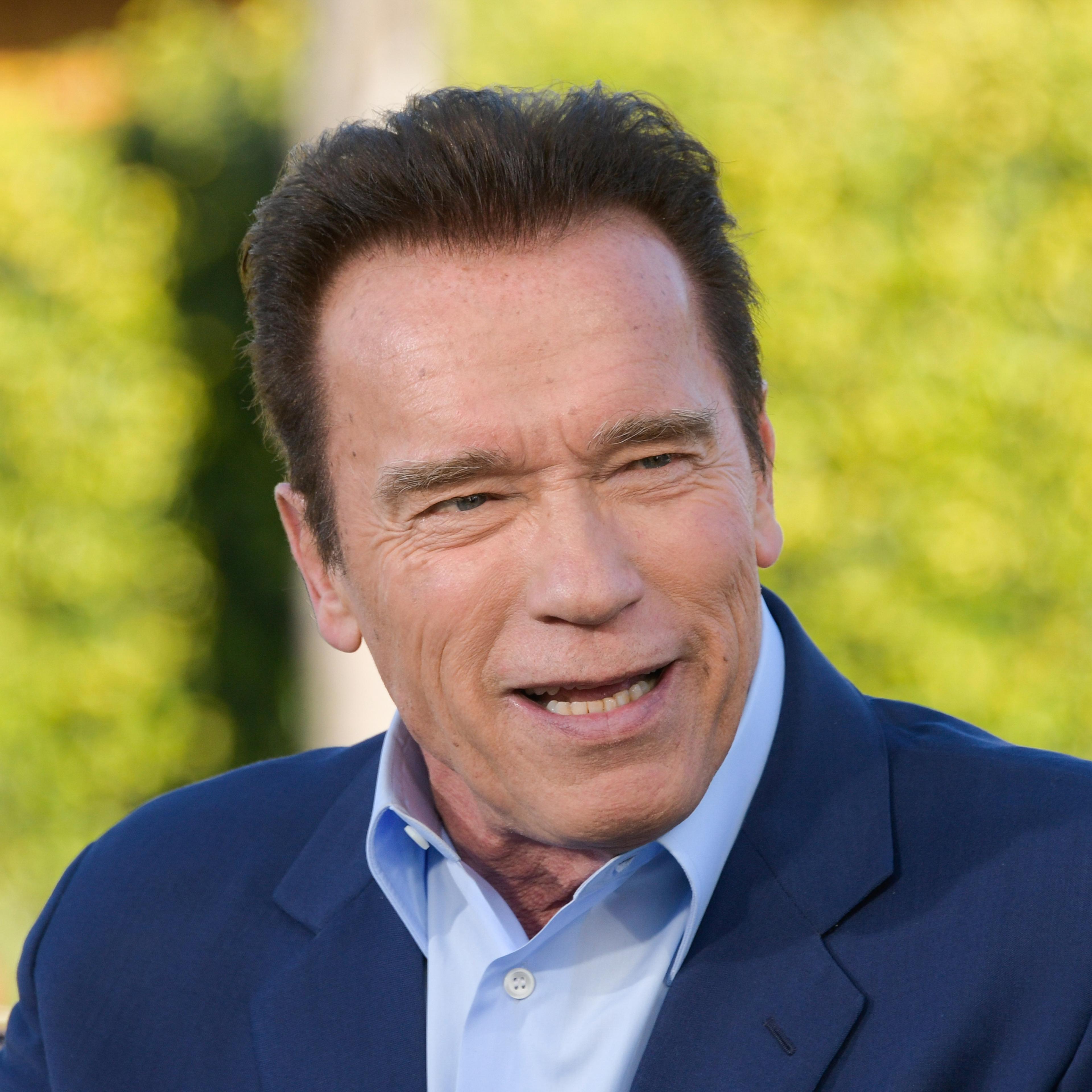
Arnold Schwarzenegger is not currently holding elected office, but he remains deeply active in politics as an influential advocate and policy leader. In 2026, his work centers on environmental protection, redistricting reform, and promoting bipartisan cooperation through the USC Schwarzenegger Institute for State and Global Policy, maintaining a significant impact on American governance.
While many former governors fade into the background or focus exclusively on private business, Schwarzenegger has leveraged his unique global platform to address what he calls the "broken" parts of the American political system. His transition from "The Governator" of California to a senior statesman has been defined by a refusal to adhere to traditional party lines, focusing instead on systemic reforms that he believes are necessary for a functional democracy.
From Executive Power to Global Advocacy
Arnold Schwarzenegger served as the 38th Governor of California from 2003 to 2011. His tenure began with a historic recall election and was marked by a commitment to environmental legislation, infrastructure development, and political reform. However, his departure from the governor's mansion did not signal an end to his political life; rather, it initiated a shift in how he exercises influence.
In 2026, Schwarzenegger’s political identity is defined by "post-partisanship." He frequently argues that the rigid binary of the American two-party system prevents progress on critical issues like climate change and economic stability. By operating outside the constraints of an elected office, he has gained the freedom to criticize both the Republican and Democratic parties, often positioning himself as a rationalist who prioritizes "the people" over "the party."
His current role is best described as a policy catalyst. He uses his celebrity, wealth, and deep understanding of the legislative process to fund litigation, support ballot initiatives, and educate the next generation of leaders. This evolution reflects a broader trend among high-profile former officials who find that they can sometimes achieve more through focused non-profit work than they could within the gridlock of state or federal legislatures.
The USC Schwarzenegger Institute: A Hub for Policy
A central pillar of Arnold Schwarzenegger’s political activity is the USC Schwarzenegger Institute for State and Global Policy. Launched in 2012 at the University of Southern California, the institute serves as a non-partisan tank dedicated to finding solutions to the challenges facing society.
In 2026, the institute remains a powerhouse for policy innovation, focusing on five key areas:
- Education: Improving access and quality in public schools.
- Energy and Environment: Transitioning to clean energy while maintaining economic growth.
- Health and Wellness: Addressing obesity and promoting fitness as a matter of public health policy.
- Political Reform: Combating gerrymandering and increasing voter participation.
- Economy: Fostering sustainable development and job creation.
The institute’s technical depth is notable because it brings together academic researchers with practical policymakers. Schwarzenegger himself often hosts forums that include leaders from across the political spectrum—ranging from former presidents to local mayors. These gatherings are not merely ceremonial; they are designed to produce actionable policy papers and legislative frameworks that can be adopted by states across the country.
The Fight Against Gerrymandering: Terminating Unfair Maps
Perhaps Schwarzenegger’s most significant political contribution in the post-gubernatorial era is his crusade against gerrymandering. He famously describes himself as the "Terminator of Gerrymandering," arguing that the practice of politicians drawing their own district lines is the primary cause of political polarization and legislative gridlock.
The Problem of Partisan Redistricting
Gerrymandering allows the party in power to manipulate district boundaries to ensure their own re-election. This leads to "safe" seats where the only real competition happens in the primaries, often pushing candidates toward extremist positions to appeal to their party's base. Schwarzenegger argues that this system ignores the needs of the "exhausted middle" of the American electorate.
Schwarzenegger's Technical Approach to Reform
His strategy involves several key components that remain active in 2026:
- Independent Redistricting Commissions: He advocates for the California model, where a non-partisan commission—not the legislature—draws the maps.
- Legal Challenges: Through his "Terminate Gerrymandering" fund, he has provided financial support for legal battles against partisan maps in states like Ohio, Pennsylvania, and North Carolina.
- Public Awareness Campaigns: Using social media and documentary film, he explains the complex math and geography of redistricting to a general audience, making a technical procedural issue a popular rallying cry for reform.
By 2026, his efforts have helped shift the national conversation. Several states have moved toward independent or semi-independent commissions, citing the "California Experiment" championed by Schwarzenegger as a primary evidence of success.
Environmental Advocacy and the R20 Regions of Climate Action
Schwarzenegger has long been a Republican outlier on the issue of climate change. During his governorship, he signed Assembly Bill 32 (AB 32), the Global Warming Solutions Act of 2006, which set a first-in-the-nation cap on greenhouse gas emissions.
In his current political capacity, he continues this work through the R20 Regions of Climate Action, a non-profit organization he founded in 2011. The R20's mission is to help subnational governments (states, provinces, and cities) implement low-carbon and climate-resilient economic development projects.
The Philosophy of Subnational Action
Schwarzenegger argues that while national governments often stall during international climate negotiations, local and regional governments are where the real work happens. In 2026, the R20 focuses on:
- Project Development: Helping local governments design green energy projects that are "bankable"—meaning they can attract private investment.
- Technology Transfer: Facilitating the sharing of green technology between developed and developing regions.
- The Austrian World Summit: An annual event in Vienna that Schwarzenegger hosts to bring together climate activists, scientists, and political leaders.
His message in 2026 remains consistent: environmental protection and economic growth are not mutually exclusive. He frequently cites California’s status as one of the world’s largest economies, achieved while maintaining some of the strictest environmental standards, as proof of his "green growth" model.
Why He Cannot Run for President
A common question regarding Schwarzenegger’s political future is why he has never run for the U.S. Presidency. The answer lies in Article II, Section 1, Clause 5 of the U.S. Constitution, which states that only "natural-born citizens" are eligible for the office. Since Schwarzenegger was born in Austria and became a naturalized citizen in 1983, he is legally barred from the presidency.
Schwarzenegger has spoken candidly about this limitation. While he has expressed that he would have liked to run—stating in various interviews that he believes he could bring the country together—he has also voiced a profound gratitude for the opportunities the United States has given him. Rather than lobbying for a Constitutional amendment (which is a nearly impossible legal hurdle), he has focused his energy on the reforms and advocacy mentioned above, proving that one can have a massive impact on federal and global policy without sitting in the Oval Office.
Comparison of Political Roles: 2003–2011 vs. 2026
To understand how his influence has changed, it is helpful to compare his powers and methods during his time as Governor versus his current status in 2026.
| Feature | Governor of California (2003–2011) | Political Advocate / Statesman (2026) |
|---|---|---|
| Source of Power | Statutory authority, veto power, budget control. | Soft power, celebrity, private funding, moral authority. |
| Primary Focus | State management, education, disaster response. | National political reform, global climate policy. |
| Key Methodology | Legislative negotiation and executive orders. | Litigation, public awareness, and non-profit initiatives. |
| Partisan Identity | Republican (moderate/centrist). | Post-partisan / Independent-aligned. |
| Geographic Reach | State of California. | Global (USA, Europe, Developing Nations). |
| Communication | Press conferences and official addresses. | Social media, viral videos, and academic forums. |
Schwarzenegger’s Stance on Democracy and the Rule of Law
In recent years leading up to 2026, Schwarzenegger has become an outspoken defender of democratic institutions. Following the events of January 6, 2021, he released a video that went viral globally, comparing the rise of political extremism to the "Kristallnacht" of his youth in Austria.
This signaled a new phase in his political life: the Defender of Democracy. In 2026, he continues to speak out against:
- Disinformation: Warning about the dangers of conspiracy theories to the stability of the republic.
- Political Violence: Calling for a return to civil discourse and the peaceful transfer of power.
- Voting Rights: Supporting measures that make it easier for citizens to vote while ensuring the security of the ballot.
His advocacy is often rooted in his personal history. Having grown up in the aftermath of World War II in a country devastated by the consequences of authoritarianism, his warnings carry a weight that resonates with many Americans who are concerned about the current state of domestic politics.
Frequently Asked Questions
Is Arnold Schwarzenegger still a member of the Republican Party?
As of 2026, Arnold Schwarzenegger remains a registered Republican, but he often refers to himself as a "moderate" or "Lincoln Republican." He has been highly critical of the party's direction on issues like environmental policy and the 2020 election results, frequently stating that the party has moved too far away from its core principles of fiscal responsibility and individual liberty.
What is the Schwarzenegger Climate Initiative?
The Schwarzenegger Climate Initiative is the organization responsible for the annual Austrian World Summit. It serves as a platform to showcase successful climate protection projects and to connect "doers" from around the world. It operates on the principle that the climate crisis can only be solved through a combination of technological innovation and political will at the local level.
Does he still have an impact on California politics?
Yes. Although he no longer holds office, his influence in Sacramento remains significant. His successful implementation of the "Top-Two" primary system and the Independent Citizens Redistricting Commission continue to shape how California elections are run. He is often consulted by California leaders on infrastructure and environmental policy.
Can Arnold Schwarzenegger run for the U.S. Senate?
Yes. Unlike the presidency, the U.S. Constitution does not require a senator to be a natural-born citizen; they only need to have been a citizen for nine years and be an inhabitant of the state they represent. However, as of 2026, Schwarzenegger has shown no intent to run for the Senate, preferring his current role as an independent advocate.
How does he fund his political activities?
Schwarzenegger’s political work is funded through a combination of his personal wealth, private donations to the USC Schwarzenegger Institute, and fundraising through various non-profit entities like the R20 and his "Terminate Gerrymandering" fund. He does not take a salary for his advocacy work.
Practical Recommendation for Following His Work
For those interested in the technical aspects of political reform or climate policy, the best course of action is to follow the USC Schwarzenegger Institute’s policy briefs. These documents provide the data and legal frameworks that underpin Schwarzenegger’s public statements.
If you are a voter in a state currently facing redistricting challenges, you can look to the resources provided by his "Terminate Gerrymandering" initiative to understand how independent commissions might be implemented in your jurisdiction. By focusing on these systemic "pipes" of democracy—rather than just the "water" of individual candidates—you can engage with the type of long-term political impact that Schwarzenegger advocates for in 2026.