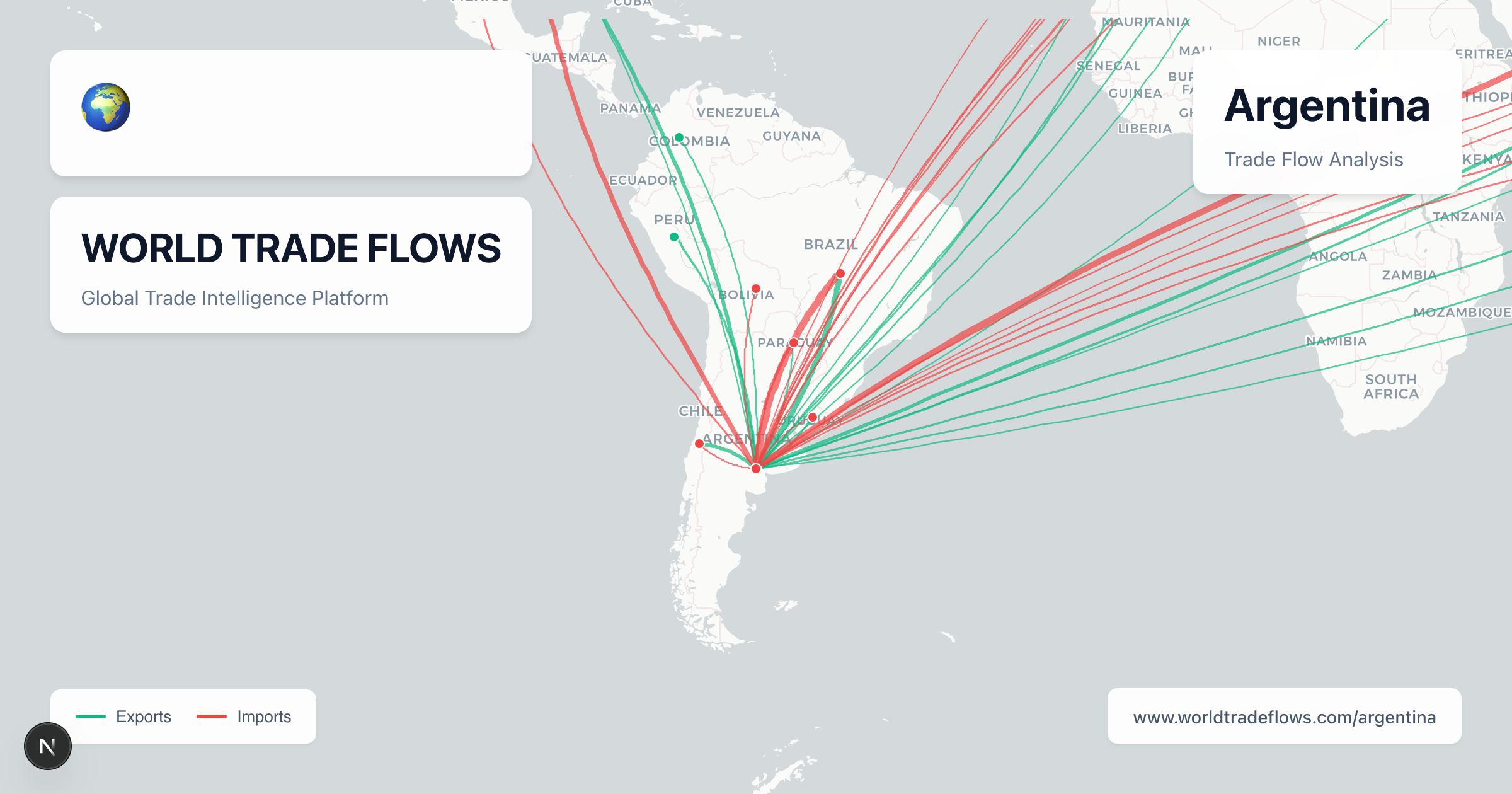
In 2023, Argentina recorded a significant trade deficit of approximately $6.93 billion, a sharp reversal from the surpluses of previous years. This decline was primarily driven by a historic drought that decimated agricultural yields, coupled with stringent import restrictions and a complex dual-exchange rate system that influenced all cross-border commercial activities.
The year 2023 stands as a pivotal moment in Argentina’s economic history, characterized by a convergence of environmental catastrophes and macroeconomic volatility. For analysts and businesses looking back from 2026, the 2023 trade data provides a clear roadmap of how climate dependency and regulatory frameworks can drastically shift a nation's balance of payments. To understand the intricacies of Argentina's trade profile during this period, one must examine the specific performance of the agricultural sector, the resilience of manufacturing, and the evolving energy balance.
The Impact of the 2023 Historic Drought on Exports
The defining factor of Argentina’s trade performance in 2023 was undoubtedly the "Sexta Sequía" (Sixth Drought), which was the most severe environmental event for the country in over 60 years. Since Argentina’s export economy is heavily weighted toward the "Pampa Húmeda" agricultural output, the lack of rainfall had a direct and devastating impact on the availability of foreign currency.
Agricultural Contraction
Agricultural exports, traditionally the backbone of the Argentinian economy, saw a reduction in value of nearly 35% compared to 2022. The "Soybean Complex"—which includes beans, meal, and oil—remained the top export earner, but its total volume plummeted. In a typical year, Argentina is the world’s leading exporter of soybean meal and oil. However, in 2023, the country was forced to import record amounts of raw soybeans from Paraguay and Brazil just to keep its crushing plants operational.
Corn and wheat followed a similar trajectory. Wheat exports were particularly hard hit during the 2022/2023 harvest cycle, with volumes dropping by more than 50%. This led to a situation where Argentina struggled to fulfill its traditional quotas with its main Mercosur partner, Brazil, which had to source wheat from alternative markets.
The Loss of "Agro-Dollars"
The loss in export revenue due to the drought is estimated to have been around $20 billion. This massive shortfall created a "dollar scarcity" that defined the secondary effects on imports. Without the usual influx of dollars from the harvest, the Central Bank of the Argentine Republic (BCRA) was forced to tighten capital controls, which in turn restricted the ability of other sectors to import necessary components.
Key Export Commodities and Sector Performance
Despite the agricultural crisis, other sectors showed varying degrees of resilience or growth. Total exports for the year 2023 reached approximately $66.79 billion. While this was a decrease from the record highs of 2022, the composition of these exports reveals the underlying structure of the Argentinian productive machine.
Manufactures of Industrial Origin (MOI)
Manufactures of Industrial Origin remained a critical pillar, representing nearly 30% of total exports. The automotive sector was the standout performer within this category. Argentina’s automotive industry, centered primarily in Córdoba and Buenos Aires province, exported over 320,000 units in 2023. Brazil remained the primary destination for these vehicles, particularly pickup trucks like the Toyota Hilux and Ford Ranger, which are manufactured locally with high regional integration.
The Energy Sector: A Turning Point
One of the few positive developments in 2023 was the improvement in the energy trade balance. Thanks to the continued development of the Vaca Muerta shale formation and the inauguration of the first stage of the Néstor Kirchner Gas Pipeline in mid-2023, Argentina significantly reduced its reliance on imported Liquefied Natural Gas (LNG).
Energy exports, including crude oil and natural gas (to Chile and Uruguay), reached approximately $7.9 billion. More importantly, the reduction in energy imports helped mitigate the trade deficit toward the end of the year. The transition from a net energy importer to a potential net exporter began to materialize in the 2023 data, signaling a structural shift in the country’s export profile.
Mining and Lithium
Although still a smaller percentage of the total compared to agriculture, the mining sector—specifically lithium—showed exponential growth in 2023. As part of the "Lithium Triangle," Argentina saw several new projects in the Puna region (Salta, Jujuy, and Catamarca) reach production or expansion phases. Export values for lithium carbonates surged, driven by global demand for electric vehicle batteries, making it a "bright spot" in a generally difficult year for commodities.
Primary Import Categories and the Regulatory Framework
Total imports in 2023 amounted to approximately $73.71 billion. Unlike exports, which were hampered by nature, imports were primarily shaped by government policy and the scarcity of foreign exchange.
The SIRA System
Throughout 2023, the SIRA (Sistema de Importaciones de la República Argentina) was the primary mechanism for controlling trade. This digital system required importers to obtain prior authorization before bringing goods into the country. The criteria for approval were often opaque, tied to the availability of Central Bank reserves and the "essential" nature of the goods.
This led to significant bottlenecks in the manufacturing sector. Many companies reported delays in obtaining intermediate goods—raw materials and components used in the production of finished products. This created a paradoxical situation where local production was sometimes halted because a small but essential imported component could not clear customs.
Breakdown of Import Categories
The structure of imports in 2023 was heavily weighted toward the industrial supply chain:
- Intermediate Goods: Represented the largest share (approx. 37%). These include chemicals, plastics, and processed industrial inputs.
- Parts and Accessories for Capital Goods: Essential for the maintenance of the country's industrial base and the automotive sector.
- Capital Goods: Machinery and equipment for long-term investment, which saw a slight decline due to the difficulty in financing long-term imports under the prevailing exchange rate volatility.
- Fuels and Lubricants: Despite the Vaca Muerta progress, Argentina still required significant imports of diesel and electricity during peak winter months and to fuel the transport fleet.
The "Commercial Debt" Phenomenon
A unique feature of 2023 was the accumulation of commercial debt with foreign suppliers. Because the Central Bank could not provide immediate access to dollars at the official rate, many importers were allowed to bring in goods on credit. By the end of 2023, this debt had ballooned to an estimated $50 billion, a liability that the subsequent administration had to address through specialized instruments like the BOPREAL bonds.
Trade Balance by Category and Value (2023 Summary)
The following table provides a breakdown of the major trade flows in 2023, based on official INDEC data.
| Category | Exports (Million USD) | Imports (Million USD) | Trade Balance (Million USD) |
|---|---|---|---|
| Primary Products (PP) | $14,484 | - | - |
| Manufactures of Agricultural Origin (MOA) | $23,799 | - | - |
| Manufactures of Industrial Origin (MOI) | $20,626 | - | - |
| Fuel and Energy (CyE) | $7,879 | $7,832 | +$47 |
| Capital Goods | - | $12,963 | - |
| Intermediate Goods | - | $27,088 | - |
| Parts & Accessories for Capital Goods | - | $14,491 | - |
| Consumer Goods | - | $7,748 | - |
| TOTAL (All Categories) | $66,788 | $73,714 | -$6,926 |
Note: Figures are rounded for clarity. "Primary Products" and "MOA" together constitute the bulk of the agricultural sector.
Main Trading Partners and Bilateral Relations
Argentina’s trade in 2023 remained concentrated among a few key partners, with the Mercosur bloc and China playing the most significant roles.
Brazil: The Indispensable Partner
Brazil continued to be Argentina’s largest trading partner. The relationship is deeply integrated, particularly in the automotive and food sectors. In 2023, the trade balance with Brazil was in a deficit for Argentina, as the demand for Brazilian industrial components and electricity (during peak periods) outweighed Argentinian exports of wheat and vehicles. Discussions throughout the year focused on a "common currency" for trade to bypass the need for US dollars, though this did not materialize in a functional capacity during 2023.
China: The Strategic Buyer
China remained the primary destination for Argentinian soybeans (when available) and beef. China is also a major supplier of electronics, machinery, and consumer goods. In 2023, the bilateral relationship was further cemented by the activation of the Currency Swap agreement. This allowed Argentina to pay for many Chinese imports using Yuan, providing a critical "safety valve" for the Central Bank’s depleted US dollar reserves.
The United States and the European Union
The U.S. remained a major partner, primarily through the export of petroleum, silver, and wines, while importing high-tech machinery and chemicals. The European Union, as a bloc, remained a vital market for Argentinian "bio-fuels" and high-quality beef (Hilton Quota), although trade was complicated by evolving EU environmental regulations regarding deforestation-free products.
Regulatory Challenges and Economic Transitions
The trade environment in 2023 cannot be understood without the context of the political cycle. With a general election occurring in October and November, the first eleven months of the year were marked by "wait-and-see" behaviors.
Exchange Rate Multiplicity
Exporters faced a "crawling peg" official exchange rate that many considered overvalued. To incentivize the liquidation of agricultural stocks, the government implemented various versions of the "Programa de Incremento Exportador" (commonly known as the "Soy Dollar"). This offered a temporary, higher exchange rate for specific commodities, creating volatility in the monthly export figures as producers timed their sales to match these windows.
The December Transition
In December 2023, the inauguration of Javier Milei marked a radical shift in trade policy. One of the first major actions was the devaluation of the Peso and the announcement of the decommissioning of the SIRA system in favor of the more transparent SEDI (Sistema Estadístico de Importaciones). While these changes happened at the very end of the year, they were a direct response to the trade imbalances accumulated throughout 2023.
Sector Focus: Beef and Livestock
Argentina’s beef industry faced a complex 2023. While international demand remained relatively steady, particularly from China, domestic factors played a role. The drought forced many producers to slaughter cattle early because of a lack of pasture, which temporarily increased the supply of meat for export but raised concerns about herd liquidation and future availability. Despite these challenges, Argentina maintained its status as a top-tier global beef exporter, though the total value was tempered by lower international prices compared to the 2022 peaks.
Sector Focus: Knowledge-Based Services
Often overlooked in goods-focused trade reports, the export of Knowledge-Based Services (SBC)—including software development, professional services, and audiovisual content—remained a resilient sector. In 2023, these "invisible exports" contributed significantly to the economy. However, the exchange rate gap (brecha) led many service exporters to operate through unofficial channels, meaning the official 2023 figures likely understate the true vitality of this sector.
Frequently Asked Questions
Why did Argentina have a trade deficit in 2023?
The primary cause was the historic drought that reduced agricultural exports by approximately $20 billion. This loss of revenue could not be offset by other sectors, and because imports of essential industrial goods and energy remained necessary, the country moved from a surplus in 2022 to a $6.9 billion deficit in 2023.
What were the most exported products from Argentina in 2023?
The top exports were soybean meal and oil, corn, motor vehicles (primarily pickup trucks), and beef. Toward the end of the year, crude oil and lithium also began to represent a larger share of the export basket.
How did the SIRA system affect imports in 2023?
The SIRA system acted as a non-tariff barrier. By requiring discretionary government approval for imports, it often delayed the entry of raw materials and spare parts. This led to supply chain disruptions in local manufacturing and contributed to the accumulation of a significant "commercial debt" with foreign providers.
Which country was Argentina's largest trading partner in 2023?
Brazil remained the top trading partner, followed by China and the United States. Trade with Brazil is characterized by high integration in the automotive sector, while trade with China is focused on agricultural commodities and electronics.
How did the energy trade balance change in 2023?
The energy trade balance improved significantly in 2023. The completion of the Néstor Kirchner pipeline allowed for greater domestic gas distribution, reducing the need for expensive LNG imports. This brought the energy trade balance near equilibrium, a major improvement over the deficit of 2022.
Practical Recommendation for Trade Analysts
For those analyzing Argentina's 2023 trade data to project future trends, it is essential to decouple the "temporary" impact of the drought from the "structural" changes in the energy and mining sectors. While the 2023 deficit was severe, the underlying growth in Vaca Muerta and lithium projects suggests a much more robust export capacity for the 2024-2030 period.
When evaluating historical 2023 datasets, always cross-reference official INDEC trade reports with the Central Bank’s (BCRA) "Balance Cambiario." The latter shows the actual movement of currency, which often differed from the customs declarations in 2023 due to the buildup of commercial debt and the various "export incentive" exchange rates. This dual-lens approach provides a more accurate picture of the liquidity challenges faced by the country during that turbulent year.